
July 15, 2026
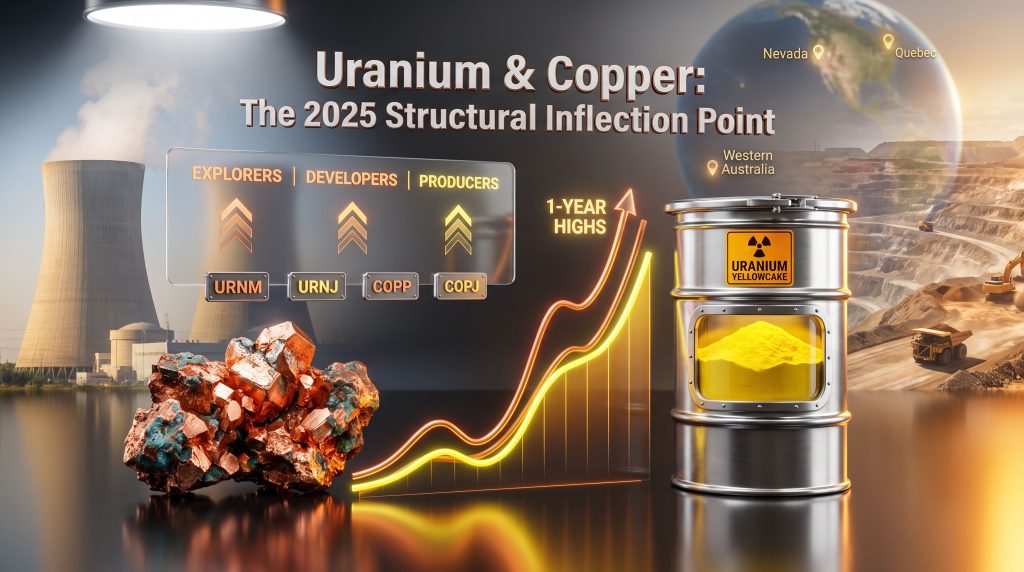
The Commodity Cycle Has Reset: Why Uranium and Copper Are the Standout Plays for Resources Fund Managers
Every major commodity supercycle eventually reaches a point of structural divergence, where some sectors exhaust their momentum while others are only beginning to accumulate theirs. Understanding where you are in that cycle is not just useful — it is arguably the most important determinant of long-term returns in resources investing. As 2025 unfolds, experienced resources fund manager uranium and copper stocks specialists are increasingly directing capital toward two commodities that sit at a distinctive convergence of demand acceleration and supply constraint.
This shift is not arbitrary. It reflects a disciplined, framework-driven approach that sophisticated investors apply when navigating a sector that punishes generalist thinking.
When big ASX news breaks, our subscribers know first
Why 2025 Represents a Structural Turning Point Across Commodities
The commodity investment landscape in 2025 has been fundamentally reshaped by two overlapping forces: the persistent geopolitical disruptions stemming from conflicts in the Middle East and Ukraine, and the structural demand transformation driven by artificial intelligence infrastructure buildout. Both forces are compressing supply while pulling forward demand in specific parts of the commodity complex.
Gold producers delivered strong performance through 2024, and gold developers outperformed in the early part of 2025. However, the trajectory anticipated at the start of the year has been disrupted. The conflict involving Iran has contributed to inflationary pressure, shifting the narrative away from interest rate reductions and toward the possibility of rates remaining elevated or rising further.
This paradoxically reduces gold's relative appeal as an inflation hedge in equity form, pulling institutional capital back toward producers and away from early-stage gold developers and explorers. Meanwhile, the copper and uranium outlook has continued to build structural momentum independent of short-term geopolitical noise, making them the preferred focal points for cycle-aware fund managers.
How Professional Resources Fund Managers Think About Commodity Cycles
The Explorer, Developer, and Producer Continuum
One of the most consequential mistakes investors make in the resources sector is treating all commodity stocks as equivalent. A geologist-led fund manager approaching the market applies a fundamentally different lens — one that segments the investment universe into three distinct tiers based on cycle positioning.
| Investment Tier | Risk Profile | What Managers Prioritise | Ideal Cycle Entry |
|---|---|---|---|
| Producers | Lower | Volume capacity, cost efficiency, balance sheet strength | Early-to-mid bull cycle |
| Developers | Medium | Speed to production, CapEx feasibility, processing access | Mid-cycle |
| Explorers | Higher | Discovery potential, mineral system quality, commodity momentum | Late-cycle surge phase |
The timing of capital rotation across these three tiers is what separates strong returns from average ones. Rick Squire of Acorn Capital, who runs the Acorn Capital Next Gen Resources Fund and brings a geological background to portfolio construction, describes the approach as following waves through the cycle. This wave-based thinking means that the same commodity can attract very different risk profiles depending on whether the market is in the early, middle, or late stages of a bull cycle.
For uranium and copper, the current cycle position points toward explorers and developers as the high-opportunity tier — a view that mirrors what occurred in lithium two to three years ago.
The Lithium Blueprint and What It Suggests About Copper and Uranium Explorers
The lithium cycle of 2021 to 2022 provides a useful historical reference point. Lithium producers ran first, followed swiftly by developers, and then in the final nine to twelve months of the bull phase, junior explorers experienced an explosive rerating. The discovery premium compressed the valuation gap between unproven exploration companies and established developers in a matter of quarters.
There is a credible case that copper and uranium explorers are entering a similar late-cycle phase. The number of established producers in both commodities is limited, the developer group is comparatively small, and capital is consequently being pushed further down the risk curve into exploration-stage companies. This dynamic creates asymmetric opportunity for investors who can identify the right assets before institutional flows fully arrive.
The key distinction is that uranium and copper explorers are not being bid up on speculation alone. They are attracting interest because the structural demand thesis for both commodities is multi-year and well-supported by independent supply and demand analysis.
Uranium Stocks: Building a Case Beyond the Headlines
The AI Energy Thesis and the Spot-to-Term Price Disconnect
The link between artificial intelligence infrastructure and nuclear energy demand is now widely discussed, but the investment implications are more nuanced than the headline narrative suggests. The surge in data centre construction globally has renewed institutional confidence in nuclear power as a reliable baseload energy source. Reactor construction timelines are extending across North America, Europe, and China, creating a demand runway that spans decades rather than a single market cycle.
What is less commonly appreciated is the disconnect that has opened between uranium equity performance and long-term contract pricing. Uranium spot prices rebounded approximately 10% from their March 2025 lows, yet uranium stocks in some cases have not fully reflected the strength of the term market, where utilities sign long-duration supply contracts. This kind of divergence historically precedes significant equity reratings, as the market eventually catches up to where contract pricing already sits. Furthermore, understanding uranium market trends helps investors anticipate where this rerating might occur first.
Key uranium market dynamics shaping the investment landscape:
- Spot uranium prices have partially recovered from early 2025 weakness, with the term market remaining structurally firm
- Reactor construction timelines across multiple regions extend the forward demand curve well beyond near-term cycle considerations
- The lead time from uranium discovery to first production is measured in decades, creating a supply ceiling that cannot respond quickly to price signals
- Junior uranium explorers are entering what experienced fund managers describe as a late-cycle surge phase, structurally analogous to the lithium explorer boom of 2021 to 2022
How Long the Supply Response Actually Takes
One of the most underappreciated dynamics in uranium investing is the symmetry between supply and demand timelines. Building a nuclear reactor takes many years. However, bringing a new uranium mine into production takes an equally long time — often longer when permitting, environmental approvals, and infrastructure development are factored in.
This means that even if new reactor capacity drives a sustained demand uplift, the supply response will lag significantly, supporting prices for an extended period. This asymmetry is a structural feature of the uranium market that distinguishes it from commodities with shorter development timelines. Consequently, it is a key reason why experienced resources fund manager uranium and copper stocks specialists are maintaining their exposure at the explorer and developer end of the spectrum. Reviewing uranium investment strategies in this context further reinforces the case for positioning early in the cycle.
Copper Stocks: Supply Constraints Are the Real Story
Why the Supply Side Deserves More Attention Than It Gets
Most market commentary on copper focuses on the demand side — electrification, AI data centre construction, electric vehicle adoption, and grid infrastructure expansion. These are real and important demand drivers. However, experienced resources fund managers are placing equal or greater weight on the supply side of the equation.
Operational ramp-up failures at existing copper operations, combined with declining ore grades at many of the world's major mines, are compressing available supply independent of demand growth. These are not temporary disruptions. They reflect deep structural challenges in bringing copper production online at the scale and speed the market requires. In fact, the copper supply crunch is increasingly being cited as the more powerful price driver over the medium term.
Copper market snapshot, mid-2025:
| Indicator | Current Status | Investor Implication |
|---|---|---|
| Spot Price Trend | Approaching one-year highs | Positive momentum for producers |
| Supply Disruptions | Elevated, ramp-up failures at key operations | Near-term price floor support |
| AI Infrastructure Demand | Structural, multi-year | Long-duration demand thesis intact |
| Explorer Activity | Accelerating in WA, Namibia, Americas | Late-cycle discovery premium emerging |
| Preferred CapEx Range | $200M to $500M | Filters out unfinanceable mega-projects |
The Scale Imperative in Base Metals
A critical and often overlooked principle in copper investing is the importance of deposit scale. Small-scale copper producers have historically been a difficult investment. The economics of base metal production at modest scale are unforgiving. Startup costs, operational complexity, and market pricing combine to make marginal copper producers particularly vulnerable.
This is why discerning resources fund managers screen for exploration companies targeting the types of mineral systems capable of hosting genuinely large deposits. The geological setting matters enormously. Certain mineralisation styles in copper — such as large porphyry systems or sediment-hosted deposits — carry the potential for multi-hundred-million-tonne resources. For those exploring copper investment opportunities, understanding this distinction between viable and marginal mineral systems is essential before committing capital.
When evaluating copper explorers, the starting question is not whether the company has found copper. The question is whether the mineral system is the type capable of growing into something that would matter to a mid-tier or major producer.
How Top Resources Fund Managers Evaluate Uranium and Copper Stocks
Four Non-Negotiable Criteria for Explorer Selection
Professional resources investors apply a disciplined filtering process before committing capital to exploration-stage companies. The sequence matters as much as the individual criteria.
- Commodity momentum confirmation — Capital is deployed only into commodities demonstrating confirmed price and demand momentum. In 2025, that means copper and uranium before most other options.
- Mineral system quality assessment — The geological setting must be capable of hosting a deposit large enough to attract development funding and institutional attention. Marginal systems are excluded regardless of other factors.
- Project scale thresholds — Discovery potential must be sufficient to justify the cost and risk of development. Companies with small-scale targets that could only ever support a marginal producer are systematically avoided.
- CapEx feasibility for single-asset companies — Projects requiring between $200 million and $500 million to develop are preferred. Those approaching or exceeding $1 billion introduce financing risk that is unacceptable for junior companies operating without a diversified asset base.
Developer Evaluation: Speed to Production as the Primary Value Driver
The developer tier operates under a fundamentally different set of criteria. The central question is not whether the asset is large enough — it is how quickly and cheaply the company can reach production. The ideal scenario is a company that has drilled out a resource adjacent to, or containing, an existing processing plant on care and maintenance. A refurbishment pathway can compress the development timeline dramatically compared to greenfield construction.
Where no plant exists on site, toll-treating arrangements with nearby facilities offer an alternative route to early cash flow without the capital burden of building new processing infrastructure. According to analysis of Australia's best mining stocks, developers with these characteristics are increasingly attracting institutional attention in 2025.
Developer evaluation checklist:
- Is there an existing processing plant on care and maintenance that could be refurbished?
- Is toll-treating via a nearby third-party facility a commercially viable option?
- Can the project realistically reach production within 12 to 18 months of a development decision?
- Is the total CapEx below $500 million for a single-asset company?
- Does the construction timeline avoid the multi-year build risk that creates cost overrun exposure?
- Does the management team have demonstrated equity capital markets experience, not just geological or engineering credentials?
The last point is frequently underweighted by retail investors. A company with technically excellent management but limited experience raising equity capital in junior markets can find itself diluting long-term shareholders significantly — or, worse, being outmanoeuvred by influential brokers or major shareholders acting in their own interests rather than the company's.
Why Capital Markets Experience Outweighs Technical Credentials in Junior Mining
This is one of the most counterintuitive insights that experienced resources fund managers emphasise. In the junior mining space, the ability to raise money efficiently, tell a compelling investment story, and navigate the equity capital markets without excessive dilution is often more valuable than technical brilliance. Technically gifted teams that lack this skill set frequently destroy shareholder value even when they are sitting on genuinely good assets.
The next major ASX story will hit our subscribers first
Jurisdiction Risk: The Hidden Variable That Separates Investable From Exceptional
Why Geology Alone Does Not Make a Project Worth Backing
Some of the most mineralogically remarkable deposits in the world exist in jurisdictions where development is commercially untenable, socially fraught, or ethically impossible. Experienced resources fund managers apply a jurisdiction overlay before any geological assessment reaches serious consideration.
South Africa provides an instructive case study. It is one of the most geologically endowed countries on earth, with mineral wealth that dwarfs many of the jurisdictions where international capital more comfortably flows. Yet the social tension, governance complexity, and structural challenges around project development make it difficult for many fund managers to allocate capital there, regardless of the underlying asset quality.
By contrast, West African nations such as Ghana, Cote d'Ivoire, and Guinea attract more comfortable institutional investment despite having less exceptional geology than South Africa. The investability calculus is not purely geological.
Comparative jurisdiction framework:
| Jurisdiction Tier | Examples | Geological Endowment | Investability Assessment |
|---|---|---|---|
| Tier 1 – Preferred | Western Australia, Namibia, Quebec, Nevada | High | Strong, clear permitting pathways |
| Tier 2 – Selective | West Africa (Ghana, Cote d'Ivoire, Guinea) | Moderate to High | Viable with strong local partnerships |
| Tier 3 – Cautious | South Africa, Zimbabwe | Exceptional | Constrained by social and governance complexity |
| Tier 4 – Avoided | High-conflict or sanctioned regions | Variable | Excluded regardless of asset quality |
Mining Lease Status and Its Impact on Development Timeline
An often-overlooked project-level variable is whether a company's exploration ground sits within an existing mining lease. Projects located on mining leases can move through the permitting phase significantly faster than those starting from a raw exploration licence. This can compress years off the development timeline — a material advantage in a capital-intensive sector where time is a direct cost driver.
Similarly, proximity to national parks, urban areas, or culturally sensitive land can override favourable country-level jurisdiction ratings. Site-level social licence risk is a distinct and important variable from national-level governance risk.
Institutional Landscape: Who Is Positioning in Uranium and Copper
Active Fund Managers and Their Current Allocations
The following table summarises the key institutional voices and investment vehicles currently active in uranium and copper allocation:
| Manager or Vehicle | Strategy Type | Primary Allocation | Investment Philosophy |
|---|---|---|---|
| Rick Squire, Acorn Capital Next Gen Resources Fund | Active small-cap resources | Copper and uranium explorers and developers | Cycle-aware, geologist-led stock selection |
| David Finch, Ixios Energy Metals Fund | Active energy metals | Copper (55%), tin, uranium | Supply-constraint thesis, five-year uranium horizon |
| Gjermund, Private Norwegian Fund | Concentrated active | Uranium (80%), copper (10%) | High-conviction uranium concentration |
| David Franklyn, Selective Offshore Portfolio | Value-focused active | Copper, uranium, lithium | Undervalued developers, Americas and Athabasca Basin |
| Lobo Tiggre, Independent | Analyst and investor | Copper and uranium | Copper as highest-confidence trade into 2026 |
| Adrian Day, Adrian Day Asset Management | Multi-commodity active | Gold, copper, uranium | Core holdings combined with speculative allocation |
Sprott's ETF Suite for Structured Exposure
For investors seeking diversified exposure without single-stock risk, Sprott Asset Management offers the most comprehensive ETF suite targeting these two commodities. Furthermore, resources funds have demonstrated strong performance over the past year, underscoring the value of structured vehicles in this space.
Uranium-focused:
- Sprott Uranium Miners ETF (URNM) — Large, mid, and small-cap uranium miners
- Sprott Junior Uranium Miners ETF (URNJ) — Exclusively junior-stage uranium companies
- Sprott Physical Uranium Trust — Direct physical uranium exposure via a closed-end structure
Copper-focused:
- Sprott Copper Miners ETF (COPP) — All-cap copper mining exposure
- Sprott Junior Copper Miners ETF (COPJ) — Junior copper miners with higher growth optionality
Diversified critical materials:
- Sprott Critical Materials ETF (SETM) — More than 130 positions spanning copper, uranium, and lithium
Scenario Analysis: What Could Surprise the Market Over the Next 12 Months
Resources investing is inherently forward-looking, and the range of macro outcomes over the next year is unusually wide. Three scenarios carry meaningfully different implications for commodity positioning.
Scenario 1: Geopolitical de-escalation and conflict resolution
If meaningful progress emerges in the Middle East toward stability, gold could outperform significantly. The fundamental setup for gold remains strong, and a reduction in inflationary pressure combined with renewed rate-cut expectations could trigger a powerful resurgence in gold equities. Copper demand confidence would also strengthen as infrastructure investment intentions return.
Scenario 2: Prolonged conflict and persistently elevated inflation
Gold producers remain the preferred defensive positioning. Copper supply constraints continue to support price floors. The uranium demand narrative remains intact regardless of macro direction, as the nuclear energy thesis is structural rather than cyclical.
Scenario 3: Unexpected supply shock in copper or uranium
A significant supply disruption in either commodity could trigger a sharp rerating of explorer valuations. Discovery premiums would compress the gap between exploration-stage companies and developers rapidly, replicating the explosive final phase of the 2021 to 2022 lithium cycle. This is a speculative but plausible scenario given existing operational fragility in copper supply chains. Indeed, resources funds are already betting on an explosive commodity rally in anticipation of precisely this kind of catalyst.
Disclaimer: Scenario projections represent analytical frameworks based on available information and should not be construed as financial advice. Commodity markets are subject to significant uncertainty, and actual outcomes may differ materially from any projections discussed.
A Decision Framework for Evaluating Copper and Uranium Stocks
Summary Evaluation Matrix
| Evaluation Factor | Explorers | Developers | Producers |
|---|---|---|---|
| Primary Focus | Commodity momentum and discovery scale | Speed to production and CapEx feasibility | Volume capacity and operational efficiency |
| Management Priority | Capital markets experience | Project execution track record | Cost management expertise |
| Geological Criteria | Mineral system capable of large deposits | Resource defined, permitting advanced | Proven reserve base |
| Jurisdiction Requirement | Tier 1 or 2 preferred | Tier 1 strongly preferred | Tier 1 essential |
| Key Risk | Discovery failure | Construction overrun and cost blowout | Commodity price exposure |
| Cycle Entry Point | Late-cycle surge phase | Mid-to-late cycle | Early-to-mid cycle |
The resources sector rewards investors who think in frameworks rather than headlines. The convergence of structural demand from AI infrastructure, nuclear energy expansion, and the energy transition — combined with supply constraints that cannot be quickly resolved — positions copper and uranium as the two commodities where resources fund manager uranium and copper stocks expertise is generating the highest-conviction ideas in 2025. Whether through direct stock selection or structured ETF exposure, the methodology for evaluating these opportunities begins with understanding where you are in the cycle, and acting before the crowd arrives.
This article is intended for informational purposes only and does not constitute financial advice. Investing in resources and mining stocks involves significant risk, including the potential loss of principal. Past commodity cycle performance is not indicative of future results. Readers should seek independent financial advice before making investment decisions.
Want to Catch the Next Major Copper or Uranium Discovery Before the Market Does?
Discovery Alert's proprietary Discovery IQ model scans ASX announcements in real time, instantly identifying significant mineral discoveries across copper, uranium, and more than 30 other commodities — giving subscribers an actionable edge at precisely the moment it matters most. Explore historic examples of major discovery returns and start your 14-day free trial at Discovery Alert to position yourself ahead of the next wave.