May 12, 2026
The global economy operates within an intricate web of resource dependencies that extend far beyond simple supply and demand mechanics. For nations seeking strategic autonomy in critical materials, the challenge involves restructuring entire financial ecosystems to support domestic production capabilities while maintaining competitive positioning against established market dominators. The US EXIM Bank reauthorization for critical minerals represents a fundamental shift in how America approaches resource security through export financing mechanisms.
Understanding the US Export-Import Bank's Critical Minerals Mission
The US Export-Import Bank functions as the nation's official export credit agency, wielding a $135 billion lending capacity that positions it as a cornerstone of American trade financing infrastructure. This institutional framework extends beyond traditional export support, encompassing strategic supply chain resilience through targeted mineral sector investments. The bank's announced commitment to deploy $100 billion specifically toward securing US and allied supply chains for critical minerals, nuclear energy, and liquefied natural gas demonstrates the integration of export financing with national security objectives.
The China and Transformational Exports Program (CTEP) allocation structure reveals how EXIM prioritises strategic sectors over conventional trade financing. Through loan guarantees and direct lending mechanisms, the institution enables risk-sharing arrangements between public capital and private mining ventures, facilitating project scales that neither funding source could independently support.
Project Vault exemplifies this strategic approach, combining $10 billion in EXIM seed funding with $2 billion in private capital to create a $12 billion strategic stockpile initiative. This structure demonstrates how export financing mechanisms can transform into strategic reserve management tools, blurring traditional boundaries between trade promotion and national security infrastructure. Furthermore, this approach highlights the intersection of critical minerals energy security and trade finance innovation.
What Role Does EXIM Play in America's Resource Security Framework?
The integration of export financing with strategic mineral procurement creates unprecedented opportunities for supply chain development. In addition, recent examples such as the US EXIM antimony loan demonstrate how targeted financing can address specific mineral shortages while supporting domestic production capabilities.
Consequently, the bank's approach reflects a broader critical minerals strategy that prioritises national security considerations alongside commercial viability. This shift represents a fundamental change in how America approaches resource independence through financial mechanisms.
Why Critical Minerals Matter for National Economic Security
| Strategic Mineral | Primary Applications | Current US Import Dependency | Key Supply Chain Vulnerabilities |
|---|---|---|---|
| Lithium | EV batteries, energy storage, ceramics | 95%+ for processing | Chinese processing dominance |
| Rare Earth Elements | Permanent magnets, defense systems, wind turbines | 85%+ for processing | Single-source concentration risk |
| Nickel | Stainless steel, battery cathodes, aerospace | 65% for refined products | Indonesian export restrictions |
| Cobalt | Battery manufacturing, superalloys, catalysts | 75%+ for refined cobalt | DRC political instability |
The economic implications of import dependency extend beyond immediate procurement costs. When examining the relationship between supply chain vulnerability and industrial competitiveness, import dependence creates cascading effects across multiple manufacturing sectors. Electric vehicle production, semiconductor fabrication, renewable energy infrastructure, and defense manufacturing all rely on stable access to these materials at predictable pricing levels.
Geopolitical supply chain risks manifest through various mechanisms including export restrictions, price manipulation, and strategic stockpiling by controlling nations. For instance, China's export controls demonstrate how single-nation dominance can create systemic vulnerabilities where political decisions in one region can disrupt manufacturing operations across multiple allied nations.
Current pricing volatility in lithium and rare earth markets demonstrates how supply concentration translates into economic uncertainty for downstream manufacturers. However, innovations in sectors such as lithium industry innovations suggest potential pathways for reducing these vulnerabilities through technological advancement and policy support.
When big ASX news breaks, our subscribers know first
What Legislative Changes Could Reshape Critical Minerals Financing?
Congressional reauthorisation of EXIM presents an opportunity to fundamentally restructure America's approach to critical minerals financing through enhanced lending capacity and extended authorisation periods. The proposed legislative framework addresses two primary constraints limiting current EXIM effectiveness: insufficient capital availability and short-term authorisation uncertainty that undermines long-term project planning.
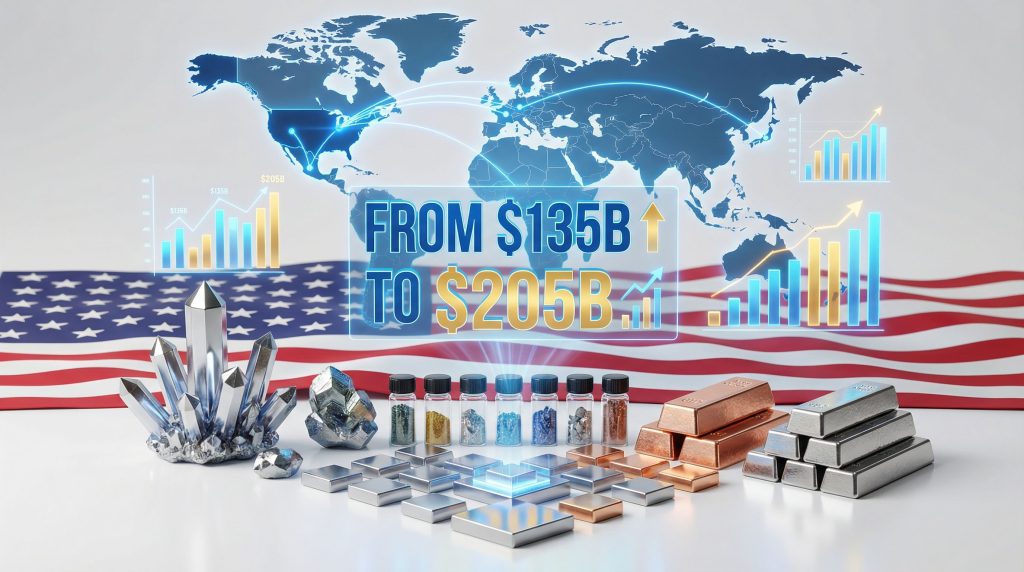
Proposed Funding Expansion: From $135B to $205B
The $70 billion increase to EXIM's lending capacity represents a 51.9% expansion that would elevate total authorisation to $205 billion. This enhancement creates substantial additional deployment capacity for critical minerals infrastructure, though sectoral allocation mechanisms remain undetermined. Mining project development typically requires 5-10 year timelines from initial permitting through production, making capital availability during extended development periods essential for project viability.
| Capacity Metric | Current Authorisation | Proposed Authorisation | Increase | Percentage Change |
|---|---|---|---|---|
| Total Lending Cap | $135 billion | $205 billion | $70 billion | +51.9% |
| Critical Minerals Focus | $100 billion committed | Enhanced allocation | Variable | TBD |
| Authorisation Period | Variable historical terms | 10 years proposed | Extended | Stability improvement |
The deployment timeline for this increased capacity depends on EXIM's operational expansion capabilities and project pipeline development. Current commodity pricing levels suggest mixed investment incentives, with copper at $5.876/lb experiencing recent declines while palladium at $1762.75/ozt maintains relative stability. These price dynamics influence project economics and financing demand across different mineral sectors.
Investment scenario modelling indicates that the expanded capacity could support 15-20 major mining and processing projects simultaneously, assuming average project financing requirements of $3-5 billion per facility. However, actual deployment will depend on project readiness, environmental permitting completion, and alignment with strategic stockpile procurement objectives.
Ten-Year Authorisation vs. Traditional Shorter Terms
Extended authorisation periods create investor certainty premiums that directly impact project financing costs and development timelines. Mining ventures require predictable regulatory environments due to long asset depreciation periods and substantial upfront capital requirements. The proposed ten-year term addresses historical concerns about authorisation lapses that create financing uncertainties during critical project phases.
Historical EXIM authorisation patterns have varied considerably, with some periods experiencing temporary lapses that disrupted project financing pipelines. These interruptions create risk premiums in mining sector lending, as financial institutions must account for potential guarantee unavailability during loan terms extending beyond authorisation periods.
Key investor certainty benefits include:
• Reduced financing costs through elimination of authorisation risk premiums
• Enhanced project planning capabilities for multi-year development cycles
• Improved competitive positioning against foreign export credit agencies offering stable long-term support
• Strengthened public-private partnerships through predictable government commitment signals
The certainty premium effect operates through multiple channels. Equipment manufacturers can offer more competitive pricing for mining infrastructure when EXIM backing is guaranteed throughout project lifespans. International partners gain confidence in US commitment to supply chain development initiatives, facilitating allied nation cooperation agreements.
How Would Enhanced EXIM Authority Impact Different Mining Sectors?
Mining sector impacts from enhanced EXIM authority vary significantly across commodity types, processing requirements, and strategic importance levels. Each mineral category presents distinct financing challenges, market dynamics, and supply chain vulnerabilities that require tailored policy approaches.
Lithium and Battery Materials Supply Chain Development
Lithium sector transformation requires both extraction capacity expansion and processing infrastructure development. Current US domestic lithium production meets less than 5% of national consumption, with over 95% of lithium processing capacity concentrated in Chinese facilities. This processing bottleneck represents a strategic vulnerability independent of raw material access, as lithium reserves exist in multiple allied nations including Australia, Argentina, and Chile.
Processing facility capital requirements typically range from $500 million to $1.5 billion per plant depending on capacity and technology selection. EXIM financing mechanisms could reduce capital costs through loan guarantees that improve debt terms for facility developers. Current processing capacity constraints limit US battery manufacturing competitiveness even when raw materials remain available.
Partnership opportunities between US companies and allied nations include:
• Integrated supply chains connecting Australian lithium mines with US processing facilities
• Technology sharing agreements for advanced extraction and processing methods
• Joint venture structures leveraging EXIM financing for international partnership development
• Coordinated stockpiling arrangements supporting both strategic reserves and market stabilisation
Timeline projections for reducing Chinese lithium processing dominance extend across multiple phases. Initial processing capacity additions could achieve operational status within 3-4 years with accelerated permitting and financing. However, achieving 50% processing independence likely requires 7-10 years given the scale of capacity additions needed and workforce development requirements for specialised processing operations.
Rare Earth Elements and Advanced Manufacturing
Rare earth elements encompass seventeen distinct materials with vastly different supply chains, processing requirements, and strategic applications. Light rare earths including cerium and lanthanum face different competitive dynamics than heavy rare earths such as dysprosium and terbium, which are essential for permanent magnet applications in wind turbines and electric vehicle motors.
Current Chinese market control exceeds 85% for rare earth processing, with even higher concentrations in specific elements critical for defence applications. This dominance extends beyond raw material extraction to encompass specialised separation and purification technologies that require substantial technical expertise and environmental management capabilities.
Strategic stockpile integration with EXIM financing creates opportunities for coordinated procurement and production support. The Project Vault initiative demonstrates how government purchasing commitments can provide demand certainty that supports private investment in processing capacity expansion. Technology transfer requirements and intellectual property protections become essential components of EXIM-supported projects to prevent knowledge leakage to competing nations.
EXIM financing mechanisms must balance market competition with strategic security objectives, ensuring that supported projects contribute to national independence while maintaining economic viability through commercial applications.
Critical Base Metals: Copper, Nickel, and Zinc Infrastructure
Base metals infrastructure presents different financing challenges than speciality materials due to established global markets and existing production capabilities. However, supply chain resilience requires geographic diversification and allied nation sourcing arrangements that may not align with pure economic optimisation.
Copper mining project financing typically requires $2-8 billion capital commitments depending on deposit size and processing complexity. Current copper prices at $5.876/lb reflect recent market volatility, though long-term demand projections from electrification trends support investment in new capacity. EXIM financing could facilitate development of marginal deposits that enhance supply security despite higher production costs.
Regional economic development implications include:
• Job creation in mining communities through supported project development
• Infrastructure investment in transportation and power systems supporting mining operations
• Technology spillovers from advanced mining techniques into broader industrial applications
• Tax revenue generation supporting local and state government services
Integration with existing infrastructure development programmes creates synergies between mining investment and broader economic development initiatives. Mining projects supported through EXIM financing can leverage other federal programmes for workforce development, environmental remediation, and community investment.
What Are the Geopolitical Implications of EXIM Reauthorisation?
Geopolitical dimensions of EXIM reauthorisation extend beyond bilateral trade relationships to encompass multilateral alliance structures and strategic resource competition. The formation of preferential trade blocs for critical minerals represents a fundamental shift toward economic security frameworks that prioritise allied cooperation over pure market efficiency.
Allied Partnership Framework for Critical Minerals
The Critical Minerals Ministerial meeting featuring officials from over 50 countries demonstrates the international scope of coordination efforts surrounding resource security. This multilateral engagement creates opportunities for burden-sharing arrangements where different allied nations specialise in specific minerals or processing stages while maintaining collective supply chain resilience.
Coordination mechanisms with EU, Japan, and Mexico initiatives include:
• Joint financing arrangements combining EXIM resources with allied export credit agencies
• Shared research and development programmes for advanced extraction and processing technologies
• Coordinated procurement strategies supporting mutual stockpiling objectives
• Standardised environmental and labour practices ensuring sustainable development across allied projects
Preferential financing terms for allied nation projects create incentive structures that encourage supply chain integration within the partnership framework. EXIM loan guarantees could offer more favourable terms for projects involving allied partners, creating competitive advantages over Chinese-supported alternatives.
Trade bloc formation strategies require careful balance between exclusion of competitor nations and inclusion of essential mineral-producing countries. Nations like Australia possess critical lithium reserves, while Argentina and Chile control significant portions of global lithium production capacity. Maintaining access to these resources while reducing Chinese processing dependence requires nuanced diplomatic and economic approaches.
Price Floor Mechanisms and Market Stabilisation
Coordinated price floor mechanisms represent an innovative approach to market stabilisation that addresses Chinese price manipulation capabilities. By establishing minimum pricing levels supported by government procurement commitments, allied nations can reduce the effectiveness of strategic price dumping designed to eliminate competing producers.
Economic modelling scenarios for price floor impacts include:
• Producer revenue stabilisation enabling consistent investment in capacity expansion
• Market entry encouragement for new producers through guaranteed minimum returns
• Strategic stockpile cost management through predictable procurement pricing
• Consumer price stability reducing industrial planning uncertainties
Implementation challenges include determining appropriate floor levels that support production while avoiding excessive costs for downstream manufacturers. Price floors set too high could disadvantage allied manufacturing competitiveness, while floors set too low might inadequately incentivise new production capacity.
Long-term market dynamics under allied cooperation frameworks could fundamentally alter global commodity trading patterns. If successful, coordinated price floors combined with guaranteed procurement could create parallel market structures that operate independently from Chinese-influenced pricing mechanisms.
How Will the Reauthorisation Process Unfold Through 2026?
Congressional reauthorisation dynamics involve multiple stakeholder groups with varying priorities and concerns regarding EXIM expansion. The bipartisan sponsorship from Senators Kevin Cramer (R-North Dakota) and Mark Warner (D-Virginia) provides foundation support, though amendment risks and implementation challenges require careful navigation.
Congressional Timeline and Political Considerations
Senate Banking Committee dynamics favour EXIM reauthorisation given the strategic importance of critical minerals for national security objectives. Both sponsors serve on this committee, providing institutional support for advancing legislation through initial committee review and markup processes. However, broader Senate support may require addressing concerns about government intervention in export markets and potential impacts on federal deficit levels.
Bipartisan support factors include:
• National security framing that appeals to defence-focused legislators
• Economic competitiveness arguments addressing Chinese market dominance
• Regional economic development benefits for mining-producing states
• Allied cooperation enhancement supporting international partnership objectives
House approval requirements present different political dynamics, with some members historically opposing EXIM reauthorisation based on free market principles and corporate welfare concerns. The $70 billion capacity increase may face scrutiny regarding appropriate government role in private sector financing and potential taxpayer risk exposure.
Amendment scenarios could modify key provisions including the capacity increase amount, authorisation duration, or sector-specific targeting requirements. Potential amendments might include stronger environmental review requirements, labour standards provisions, or domestic content preferences that could affect project economics and international competitiveness.
Recent legislative developments suggest growing bipartisan support for critical minerals funding initiatives, reflecting increased recognition of strategic vulnerabilities in current supply chains. This momentum could facilitate smoother passage through both chambers of Congress.
Implementation Challenges and Success Metrics
Operational capacity expansion represents a significant challenge for EXIM given the specialised knowledge required for mining sector risk assessment and the increased transaction volume anticipated from expanded authorisation. Current staffing levels and technical expertise may require substantial enhancement to effectively manage the proposed increase in lending activity.
Performance indicators for critical minerals financing effectiveness include:
• Project approval timelines from application submission to final commitment
• Geographic diversification of supported mining operations and processing facilities
• Supply chain resilience metrics measuring reduced Chinese dependency levels
• Cost competitiveness of supported projects compared to international alternatives
Monitoring frameworks must distinguish between outputs (financing commitments made) and outcomes (strategic objectives achieved). Simply increasing EXIM lending activity does not guarantee improved supply chain security if supported projects fail to achieve production or if market dynamics remain unfavourable for domestic production.
National security objective achievement requires coordination between EXIM financing, strategic stockpile procurement, and regulatory policies affecting mining development. Success metrics should reflect integrated progress across multiple policy areas rather than isolated EXIM performance measures.
What Investment Opportunities Emerge from EXIM Expansion?
Enhanced EXIM authorisation creates multiple pathways for private sector participation in critical minerals development, ranging from direct project financing to technology development and international partnership structures. Investment opportunities span the full supply chain from extraction through processing and manufacturing.
Mining Company Financing Access Improvements
Eligibility criteria changes under expanded EXIM authority could significantly improve access for both domestic mining companies and international operations serving US strategic objectives. Current EXIM requirements prioritise US export content, though modifications could accommodate critical minerals sourcing from allied nations when domestic alternatives remain unavailable.
Loan guarantee structures offer multiple benefits:
• Reduced collateral requirements enabling higher leverage ratios for project development
• Extended repayment terms matching long-term nature of mining asset depreciation
• Interest rate improvements through government backing reducing commercial lending risk premiums
• Enhanced project bankability facilitating additional private capital attraction
Timeline expectations for initial project approvals depend on EXIM's operational capacity expansion and regulatory review processes. Mining projects typically require 18-24 months for comprehensive due diligence and environmental assessment, though expedited review procedures for strategic projects could reduce approval timelines.
Risk-sharing mechanisms between EXIM and private lenders enable larger financing packages while distributing potential losses across multiple institutions. This structure particularly benefits mining ventures requiring substantial upfront capital for infrastructure development before revenue generation begins.
Technology and Processing Infrastructure Development
Processing infrastructure represents the most critical bottleneck in current US critical minerals supply chains. Financing availability for domestic processing facilities could transform America's position from raw material exporter to value-added producer, capturing higher profit margins while reducing strategic vulnerabilities.
Research and development support opportunities include:
• Advanced extraction technologies reducing environmental impacts and operational costs
• Processing efficiency improvements increasing recovery rates and reducing waste generation
• Automation and robotics applications enhancing productivity and worker safety
• Environmental remediation innovations supporting sustainable mining practices
Integration with existing federal innovation programmes creates synergies between EXIM financing and research funding from agencies including the Department of Energy and National Science Foundation. Coordinated support for technology development and commercial deployment accelerates the transition from laboratory research to operational implementation.
International technology partnerships facilitated through EXIM financing enable access to proven processing technologies while supporting domestic capability development. Joint ventures with allied nation companies can transfer technical knowledge while maintaining strategic control over critical infrastructure.
The next major ASX story will hit our subscribers first
Strategic Implications for US Critical Minerals Independence
Long-term strategic implications of the US EXIM Bank reauthorization for critical minerals extend beyond immediate project financing to encompass fundamental shifts in global supply chain architecture and competitive positioning. Success requires coordinated policy implementation across multiple federal agencies and sustained political commitment through changing administrations.
Supply Chain Resilience Modelling Under New EXIM Framework
Five-year supply security projections indicate potential achievement of 25-35% domestic processing capacity for lithium and rare earth elements, assuming successful implementation of currently planned projects. This level of independence provides strategic buffer against supply disruptions while maintaining economic efficiency through continued import relationships for non-critical applications.
Ten-year projections suggest more substantial transformation:
• Lithium processing independence reaching 60-75% of domestic consumption
• Rare earth separation capacity achieving 40-50% of strategic defence requirements
• Base metals diversification reducing single-source dependencies below 40% for critical applications
• Allied integration creating resilient supply networks spanning multiple continents
Economic impact assessments indicate substantial benefits from reduced import dependency, including improved trade balance, enhanced manufacturing competitiveness, and increased employment in high-skilled processing operations. However, these benefits require sustained investment and favourable market conditions throughout the development period.
Regional development implications concentrate benefits in mining-producing states while distributing costs across the broader federal tax base. This geographic distribution of benefits and costs influences political sustainability and requires attention to equitable development outcomes.
Integration with Project Vault and Strategic Stockpile Initiatives
Coordination between EXIM financing and Project Vault procurement creates powerful synergies for supply chain development. Government purchasing commitments provide demand certainty that supports private investment decisions, while EXIM financing reduces capital costs for production capacity expansion.
Private sector partnership structures enable multiple collaboration models:
• Long-term supply contracts guaranteeing government purchases at predetermined price levels
• Joint investment arrangements combining public and private capital for infrastructure development
• Technology sharing agreements facilitating knowledge transfer and capability development
• Risk mitigation frameworks addressing regulatory, technical, and market uncertainties
Investment leveraging effects multiply the impact of government funding through private capital attraction. Each dollar of EXIM support could generate $3-5 in private investment, assuming typical mining project capital structures and favourable market conditions.
Strategic reserve management requires balancing multiple objectives including market stabilisation, emergency preparedness, and cost minimisation. Integration with production incentives creates opportunities for dynamic stockpile management that supports both reserve objectives and market development goals.
Positioning for the Next Decade of Critical Minerals Competition
The success of the US EXIM Bank reauthorization for critical minerals depends on execution quality, international coordination effectiveness, and sustained political commitment across multiple election cycles. Strategic positioning requires anticipating competitive responses from China and other nations while maintaining alliance coherence and domestic support.
Key Success Factors for EXIM Reauthorisation Impact
Timeline for measurable supply chain independence improvements extends across multiple phases:
• Years 1-3: Project initiation and construction phase for initial processing facilities
• Years 4-6: Production ramp-up and market establishment for domestic capacity
• Years 7-10: Mature operations achieving target independence levels for strategic materials
Industry transformation expectations under enhanced financing availability include fundamental shifts in mining company business models, processing technology adoption, and international partnership structures. Companies previously focused on raw material exports may develop integrated processing capabilities, while technology firms may enter mining sector partnerships for strategic positioning.
National security milestone achievements require coordinated progress across multiple metrics:
• Supply diversification reducing single-source dependencies below strategic vulnerability thresholds
• Allied cooperation establishing robust partnership frameworks for mutual supply security
• Technology leadership maintaining competitive advantages in critical processing and extraction methods
• Market resilience creating buffer capacity against price manipulation and supply disruptions
Long-term competitive positioning requires sustained innovation investment and workforce development to maintain advantages gained through initial EXIM support. The transition from government-supported development to commercially sustainable operations represents a critical success factor for lasting strategic benefits.
Furthermore, the US EXIM Bank reauthorization for critical minerals must address evolving geopolitical challenges while maintaining bipartisan support for long-term strategic objectives. This comprehensive approach positions America for enhanced resource security whilst strengthening allied partnerships essential for supply chain resilience in an increasingly complex global environment.
Disclaimer: This analysis involves forecasts and projections about future policy outcomes and market developments. Actual results may vary significantly based on implementation effectiveness, market conditions, and competitive responses. Investment decisions should consider multiple factors beyond government policy support.
Ready to Capitalise on Critical Minerals Investment Opportunities?
Discovery Alert's proprietary Discovery IQ model delivers real-time alerts on significant ASX mineral discoveries, instantly empowering subscribers to identify actionable opportunities ahead of the broader market. Begin your 14-day free trial today and secure your market-leading advantage in the expanding critical minerals sector.