June 11, 2026
When Diplomacy and Warfare Operate on the Same Clock
History rarely presents situations where the same two nations are simultaneously exchanging airstrikes and negotiating a preliminary peace framework through multiple intermediary channels. Yet this is precisely the architecture of the current US-Iran confrontation as of June 2026. The conflict defies conventional geopolitical categories: it is neither a full-scale war nor a contained standoff.
It occupies an unstable middle ground where military escalation and diplomatic outreach are not opposites but parallel instruments, each being wielded in ways that directly undermine the other.
Understanding why the US-Iran diplomatic efforts and strikes dynamic has reached this paradoxical state requires looking beyond the immediate exchange of hostilities and examining the structural forces that make both full war and clean peace equally difficult to achieve.
When big ASX news breaks, our subscribers know first
The Architecture of Simultaneous Mediation
What makes the current diplomatic situation structurally unusual is not merely that talks are happening during a conflict. It is that three distinct mediation channels are operating in parallel, none of which has collapsed despite sustained military action by both sides.
Pakistan's ministerial-level engagement stands out as the most formally committed of these tracks. Pakistan's interior minister travelled directly to Tehran and delivered a written communication from the Pakistani prime minister to Iranian leadership, confirming that Islamabad has elevated its mediation role to the ministerial level. Pakistan's Foreign Ministry spokesman Tahir Andrabi publicly stated that Islamabad has not lost hope and that curtains should not be drawn on Pakistan's mediation approach, according to reporting by Arab News on June 11, 2026.
Qatar's overnight shuttle diplomacy represents the second active channel. Qatari negotiators remained in Tehran for discussions that extended into the early morning hours before departing on June 11, 2026. These talks were conducted in coordination with Washington, according to a diplomat cited by AFP, meaning Qatar is functioning not as a neutral party but as a logistical bridge between the two sides.
Direct backchannel US-Iran discussions form the third track. A diplomatic source cited by CNN confirmed that deal-focused talks between Washington and Tehran remained on track following the overnight negotiating sessions. Separately, three Iranian sources confirmed to Reuters that efforts to finalise a preliminary agreement had intensified, with specific discussions underway around the mechanics of releasing frozen Iranian financial assets.
The simultaneous operation of Pakistani, Qatari, and direct backchannel mediation tracks suggests that neither Washington nor Tehran has formally abandoned the diplomatic pathway, even as both continue to conduct active military operations against each other.
The frozen assets question is significant beyond its surface-level financial meaning. Iran holds tens of billions of dollars in assets frozen under long-standing US sanctions architecture. A mechanism allowing phased or conditional release of these funds could serve as a confidence-building measure without requiring either party to make immediate concessions on the core nuclear or military dimensions of the dispute. It is a potential entry point precisely because it is transactional rather than strategic.
How the Self-Defense Framing Reshapes the Diplomatic Calculus
Washington's decision to characterise its second wave of airstrikes as self-defense operations rather than offensive escalation is not merely a rhetorical choice. It carries significant structural consequences for the diplomatic process. Furthermore, the broader geopolitical mining landscape and commodity markets are increasingly sensitive to how this framing evolves.
When a party engaged in active negotiations frames its military actions as purely reactive, it removes the political cost associated with continued strikes. There is no admission of aggression, no formal acknowledgment that the military track contradicts the diplomatic one, and no clear threshold at which the self-defense justification expires. This creates an asymmetry at the negotiating table: the US can maintain the posture of a defensive actor while applying continuous military pressure.
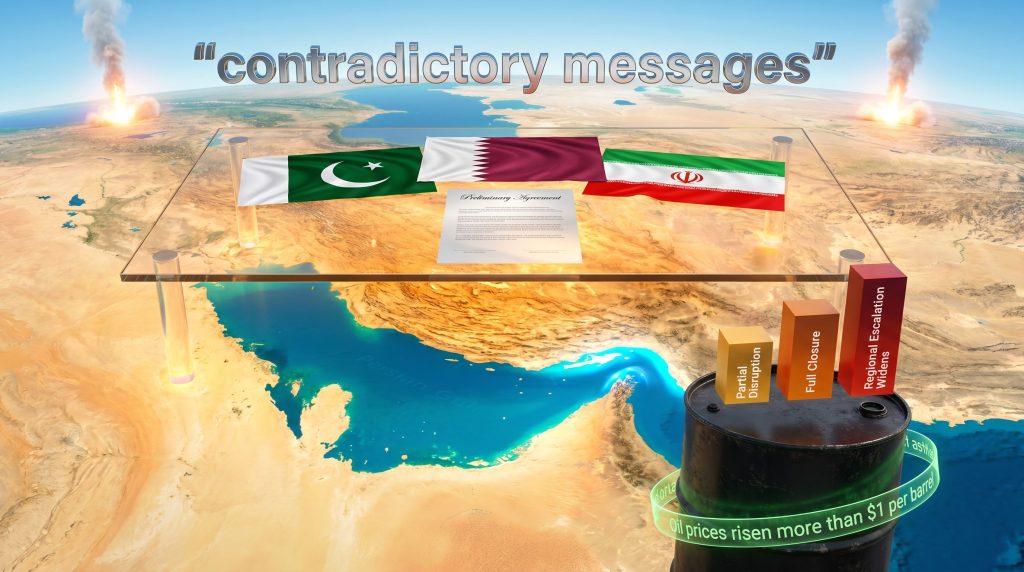
Iran's foreign ministry has explicitly challenged Washington's approach, characterising it as delivering contradictory messages and accusing Washington of repeatedly shifting its stated demands in ways that destabilise any emerging agreement framework. From Tehran's perspective, it is structurally impossible to negotiate a ceasefire in good faith with a party that is simultaneously conducting airstrikes under a legal justification that places no ceiling on further military action.
When military operations are framed as purely defensive, they carry no inherent endpoint. This makes ceasefire agreements significantly harder to formalise because the striking party faces no internal political pressure to stop.
This is not a new dynamic in US-Iran relations. The broader history of this bilateral relationship follows a recognisable cycle:
- Sanctions pressure builds over nuclear or proxy conflict disputes
- Proxy warfare and asymmetric confrontations replace direct engagement
- Episodic retaliatory strikes create escalation flashpoints
- Diplomatic outreach follows, often collapsing under the weight of unresolved structural issues
- Renewed sanctions and isolation replace failed agreements
What distinguishes the current moment is that all five phases are compressed into a single simultaneous event. The conflict is not progressing through these stages sequentially. It is experiencing all of them at once, which is historically unprecedented in the US-Iran relationship.
The Strait of Hormuz: Geography as Geopolitical Weapon
No analysis of the current US-Iran diplomatic efforts and strikes dynamic is complete without addressing Iran's most powerful non-nuclear bargaining instrument: its operational control over the Strait of Hormuz.
The Strait is the world's most consequential maritime chokepoint. Approximately 20% of global daily oil supply transits this narrow passage, along with significant volumes of liquefied natural gas. Consequently, any sustained disruption to Hormuz traffic is not merely a regional energy problem. It is an immediate global inflation event, with direct implications for the crude oil market dynamics and global LNG supply chains that underpin energy security worldwide.
| Conflict Scenario | Hormuz Status | Estimated Oil Price Impact |
|---|---|---|
| Diplomatic breakthrough | Fully reopened | Normalisation, $5-$10/barrel decline |
| Continued stalemate | Partial disruption | Sustained $1-$3/barrel premium |
| Full Hormuz closure | Complete blockade | Potential $20-$40/barrel spike |
| Regional escalation widens | Multi-country conflict | Severe supply shock, unpredictable ceiling |
Oil markets have already demonstrated this sensitivity. Prices rose by more than $1 per barrel in direct response to the latest round of US-Iran strike escalation, according to Arab News reporting on June 11, 2026. This price movement reflects not actual Hormuz disruption but anticipated disruption risk, illustrating how the mere credible threat of closure is itself a market-moving instrument. In addition, OPEC market influence over production decisions adds another layer of complexity to how prices respond to regional tensions.
For Iran, the strategic logic of maintaining Hormuz leverage is straightforward. Relinquishing it under active military pressure would remove Tehran's most powerful non-military negotiating instrument without any guaranteed reciprocal concession from Washington. Iran's insistence on retaining this chokehold is therefore less about operational military necessity and more about preserving bargaining power in a negotiation where it faces significant asymmetric military disadvantage.
Regional Fractures: The Arab World Responds
The geographic expansion of Iranian retaliatory strikes has introduced a new and complicating dimension to the conflict. Iran's strikes targeting Bahrain, Kuwait, and Jordan mark a deliberate strategic choice to impose costs on US-aligned Arab states rather than limiting retaliation to direct US assets.
The diplomatic consequences of this expansion have been immediate. Both Qatar and Egypt issued formal condemnations of Iran's strikes against Arab neighbours, according to Arab News reporting. This represents a significant fracture in regional Arab solidarity. Qatar, which simultaneously serves as a backchannel mediator between the US and Iran, finds itself in the contradictory position of formally condemning Iranian military actions while its negotiators sit across the table from Iranian officials in Tehran.
This fracture matters for the mediation architecture. If Arab-world condemnation of Iranian strikes deepens, the regional diplomatic space available to Tehran narrows. Gulf states that might otherwise pressure Washington toward a negotiated settlement have instead been pushed toward formal opposition to Iran's conduct, reducing the number of parties who can constructively pressure both sides simultaneously.
Scenario Pathways: Where the Conflict Goes From Here
Any responsible analysis of the current situation must acknowledge that the trajectory of US-Iran diplomatic efforts and strikes remains genuinely uncertain. Three distinct pathways are plausible based on current conditions.
Pathway One: Preliminary Agreement Within 60 Days
The frozen assets mechanism provides a concrete, transactional entry point that neither requires full nuclear resolution nor demands either party abandon core strategic positions. If Qatar and Pakistan can formalise ceasefire language around this mechanism, a preliminary agreement is structurally achievable. The key risk is that any fresh strike cycle before signing collapses the framework entirely.
Pathway Two: Extended Stalemate With Managed Escalation
Neither side achieves decisive military advantage. Diplomatic channels remain formally open but produce no binding agreement. Hormuz disruption continues at partial levels, sustaining elevated energy prices. Domestic pressure builds in both Washington and Tehran to either escalate decisively or accept a face-saving preliminary deal. This scenario is currently the most probable baseline given the structural rigidities on both sides.
Pathway Three: Uncontrolled Regional Escalation
A single high-casualty Iranian strike in Bahrain, Kuwait, or Jordan triggers a qualitative shift in US military response, potentially including strikes on Iranian nuclear infrastructure. Gulf states invoke mutual defence arrangements. Hormuz is fully closed. The conflict becomes multi-party and the diplomatic architecture built around Pakistani and Qatari mediation collapses entirely. Energy markets face a supply shock with no defined ceiling. Furthermore, gold safe-haven demand would surge dramatically under this scenario as investors seek refuge from market volatility.
Disclaimer: The scenario analyses presented above are speculative projections based on current reported conditions as of June 11, 2026. Geopolitical situations of this complexity carry high uncertainty, and actual developments may diverge significantly from any projected pathway.
The next major ASX story will hit our subscribers first
The Deeper Structural Problem Diplomacy Cannot Easily Solve
Even if a preliminary agreement is reached, it is worth understanding what such an agreement would and would not resolve. Historical precedent from the JCPOA process illustrates the challenge clearly. The 2015 nuclear agreement took nearly two years of formal negotiation to produce, involved multiple world powers as guarantors, and still collapsed in 2018 under US withdrawal.
A preliminary agreement reached under active military pressure, through backchannel mediation, without formal guarantor architecture, faces structurally greater fragility than anything the JCPOA represented.
The frozen assets mechanism, while useful as an entry point, does not address Iran's nuclear programme, its proxy network architecture across the Middle East, or Washington's long-term strategic objective of preventing Iranian nuclear weapons capability. Any preliminary deal that excludes these dimensions is effectively a pause rather than a resolution, creating the conditions for a subsequent escalation cycle once the immediate military pressure subsides.
Pakistan's mediation role, while valuable, also carries inherent limitations. Islamabad's leverage over Tehran is relational rather than structural. It has no enforcement capacity, no economic relationship significant enough to serve as genuine conditionality, and no security guarantee to offer either party. Its primary value is as a trusted communication channel at moments when direct contact is politically impossible.
What the current US-Iran diplomatic efforts and strikes dynamic ultimately reflects is a conflict where both parties have concluded that military pressure is a precondition for, rather than an obstacle to, a negotiated outcome. This belief, whether or not it proves correct, ensures that the military and diplomatic tracks will continue operating simultaneously for the foreseeable future, creating the paradoxical situation in which the world currently finds itself.
For continuous updates on the War in Iran and related regional developments, Arab News provides ongoing coverage at arabnews.com.
Want To Stay Ahead Of The Market Moves Driven By Geopolitical Shocks Like This One?
Discovery Alert's proprietary Discovery IQ model delivers real-time alerts on significant ASX mineral discoveries the moment they hit the market, turning complex commodity and exploration data into actionable insights — particularly valuable when geopolitical tensions are reshaping energy and resources sectors. Explore how historic mineral discoveries have generated substantial returns and begin your 14-day free trial today to position yourself ahead of the broader market.