
June 12, 2026
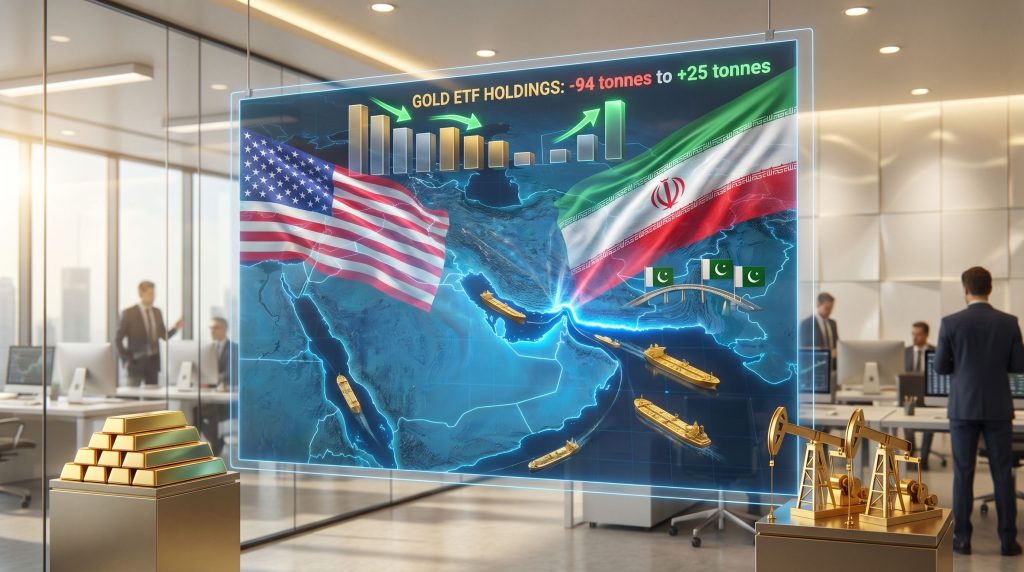
The current global economic landscape reflects unprecedented complexity, where traditional market relationships are being challenged by evolving geopolitical dynamics. US-Iran peace talks have emerged as a critical factor influencing everything from precious metals pricing to energy market stability. Central bank policies worldwide face mounting pressure from competing forces: energy price volatility, currency stability concerns, and political interference in monetary independence. Understanding these intersecting pressures becomes essential for investors navigating an environment where conventional safe-haven assets no longer follow predictable patterns.
Understanding the Broader Market Context
Current diplomatic initiatives between Washington and Tehran have created significant volatility across multiple asset classes, with precious metals markets experiencing particularly dramatic sentiment reversals. The commodity complex now reflects a sophisticated interplay between traditional inflation hedging, currency debasement concerns, and geopolitical risk premiums that extends far beyond simple conflict-resolution scenarios.
Market participants are grappling with fundamental questions about asset correlation structures as traditional relationships break down. The $4,808 per ounce gold price level on April 16, 2026, represents not just a recovery from earlier weakness, but a recalibration of how institutions approach portfolio insurance during periods of monetary policy uncertainty. This gold price forecast reflects broader market positioning strategies.
Key performance metrics illustrate the complexity of current positioning:
- Gold intraday high: Nearly $4,839/oz (1% daily gain)
- Silver advancement: 0.7% to $79.5/oz
- Brent crude stability: Above $96/barrel with modest gains
- Global equity markets: Record highs despite geopolitical tensions
The Bloomberg Dollar Spot Index remained relatively unchanged during this period, suggesting that currency markets are pricing in a more nuanced scenario than simple risk-on or risk-off positioning. This stability indicates sophisticated institutional positioning rather than panic-driven flows.
Energy market dynamics provide additional context for understanding broader economic implications. The 1% advance in Brent crude above $96 per barrel reflects market expectations that supply disruptions will remain contained, even as naval enforcement continues in the Persian Gulf region.
When big ASX news breaks, our subscribers know first
How Do Diplomatic Developments Impact Gold Market Dynamics?
Exchange-traded fund flows represent one of the most reliable indicators of institutional sentiment shifts, and recent data reveals a dramatic reversal in precious metals positioning. The transition from 94 tonnes of outflows in March to 25 tonnes of inflows in April represents a 119-tonne swing that signals fundamental changes in risk assessment methodologies.
This ETF flow reversal coincides with statements from Standard Chartered's commodities research team emphasising that gold is transitioning away from correlation with broader risk assets. The analysis suggests that competing risks of inflation and slower growth will make central bank policy responses the primary determinant of precious metals trajectories.
| ETF Flow Analysis | March 2026 | April 2026 (Partial) | Net Change |
|---|---|---|---|
| Holdings Change | -94 tonnes | +25 tonnes | +119 tonnes |
| Market Sentiment | Panic liquidation | Cautious accumulation | Reversal pattern |
| Institutional Positioning | Risk reduction | Defensive rebuilding | Strategic reallocation |
The 8% decline in gold prices since the conflict began on February 28 initially reflected liquidity-driven selling rather than fundamental demand destruction. Early conflict phases typically generate forced liquidation as institutional investors cover margin calls and rebalance portfolios under stress conditions.
ACG Metals Ltd. leadership has articulated a perspective that recent geopolitical developments may accelerate central bank gold acquisition strategies as monetary authorities diversify away from dollar-denominated reserves. This thesis suggests structural rather than cyclical demand drivers supporting precious metals markets.
Furthermore, interest rate expectations continue influencing precious metals positioning, with swap markets pricing Federal Reserve rates to remain stable throughout 2026. St. Louis Federal Reserve President Alberto Musalem and Cleveland Federal Reserve President Beth Hammack have reinforced expectations for extended policy stability, creating a framework where real yield calculations become critical for gold valuation models.
The relationship between diplomatic progress and commodity repricing demonstrates how quickly markets incorporate changing geopolitical scenarios. When US-Iran peace talks showed advancement, gold rallied 1% while crude oil prices moderated, illustrating the complex transmission mechanisms between conflict resolution expectations and financial market positioning.
What Role Does Energy Market Volatility Play in Investment Strategies?
Energy market dynamics serve as a critical transmission mechanism for broader economic effects, with oil price movements directly influencing inflation expectations and monetary policy calculations. The current environment presents unique challenges as supply disruption risks intersect with diplomatic uncertainty and naval enforcement actions, requiring sophisticated market volatility hedging strategies.
US Navy operations have resulted in 13 ships being turned back since blockade enforcement began, with Joint Chiefs of Staff Chairman Dan Caine clarifying that operations target Iranian ports specifically rather than broader Strait of Hormuz transit. This distinction matters significantly for global energy markets, as approximately 20% of global oil transit occurs through the Strait of Hormuz.
The blockade framework announced by President Trump on April 11 created initial market confusion, which was later clarified by US Central Command to focus on Iranian ports and coastline rather than the broader maritime chokepoint. This specification helped moderate crude oil price reactions and provided greater predictability for energy market participants.
Energy Market Transmission Mechanisms:
- Supply disruption magnitude: Limited to Iranian port access rather than regional transit
- Refining capacity impacts: Regional processing constraints during enforcement periods
- Alternative routing costs: Economic implications for energy-intensive operations
- Strategic reserve utilisation: Government stockpile release considerations
Federal Reserve policy calculations face competing pressures from energy price volatility, with officials expressing confidence that inflation impacts will remain manageable. Fed Bank of Cleveland President Beth Hammack specifically indicated rates would remain on hold for a considerable period, suggesting central bank comfort with current energy price levels.
The political dimension adds complexity to monetary policy frameworks. Trump's stated intention to remove Federal Reserve Chair Jerome Powell and pursue Department of Justice investigations creates institutional uncertainty that markets are carefully monitoring for independence implications.
In addition, energy-intensive mining operations face particular exposure to sustained higher oil prices, though current levels above $96 per barrel remain within operational tolerance ranges for most major producers. The key consideration becomes whether energy costs remain elevated long enough to affect production economics across the global mining complex.
Critical Supply Chain Vulnerabilities
The ongoing situation has highlighted the importance of critical minerals & energy security, particularly as nations reassess their strategic resource dependencies. Companies across various sectors are implementing enhanced risk assessment protocols to address potential disruptions.
How Are Regional Powers Positioning for Post-Conflict Economic Opportunities?
Pakistan's emergence as the primary diplomatic facilitator represents a significant strategic development with long-term economic implications extending beyond immediate conflict resolution. The inconclusive talks over the weekend of April 12-13 demonstrated Pakistan's central role in mediating between Washington and Tehran, positioning Islamabad for enhanced regional influence.
The diplomatic framework involves complex positioning by multiple regional actors, each calculating post-conflict opportunities while managing immediate risks. Iran's Foreign Ministry has maintained communication channels with Washington following the Islamabad discussions, while simultaneously preparing contingency scenarios for negotiation failure.
Iranian Strategic Calculations
Iranian leadership faces competing pressures between diplomatic engagement and maintaining strategic deterrence. Adviser Mohsen Rezaei has indicated Tehran could target US naval assets if blockade enforcement continues, while Foreign Minister Abbas Araghchi has warned of consequences for US actions in the Gulf during communications with Chinese counterpart Wang Yi.
The Iranian position, as articulated by analyst Abas Aslani, emphasises conditional openness to nuclear transparency provided Washington demonstrates serious commitment to comprehensive agreement terms. However, ongoing US sanctions and port blockade enforcement continue generating distrust that complicates diplomatic progress.
Regional Power Dynamics:
- Pakistan's mediation advantage: Enhanced Middle Eastern energy partnership potential
- Gulf state recalibrations: Shipping route security and export diversification priorities
- Chinese involvement: Diplomatic support and economic opportunity assessments
- US alliance considerations: NATO and regional partner coordination requirements
The nearly seven-week conflict duration has provided sufficient time for regional powers to assess long-term strategic implications and begin positioning for various resolution scenarios. Trump's characterisation that the conflict is "close to over" suggests accelerating timeline pressures that may influence negotiating positions.
Consequently, Pakistan's strategic positioning extends beyond diplomatic mediation to potential economic benefits from enhanced regional stability. Successful facilitation could strengthen Pakistan's role in Central Asian trade corridors and energy transit arrangements, particularly for China-Middle East commercial relationships.
Economic Opportunities Assessment
Regional economic integration prospects in the Middle East depend heavily on security framework establishment and energy transit route normalisation. According to recent analysis from The Guardian, the current diplomatic efforts represent the most significant opportunity for regional stabilisation in decades.
What Are the Structural Implications for Commodity Market Architecture?
Global commodity markets are experiencing fundamental stress-testing of supply chain resilience assumptions, revealing critical vulnerabilities in just-in-time inventory systems and single-point-of-failure dependencies. The current crisis demonstrates how quickly theoretical chokepoint risks can translate into operational market disruptions, highlighting the broader supply chain crisis facing multiple industries.
| Risk Category | Current Impact | Medium-term Adaptation | Long-term Structural Change |
|---|---|---|---|
| Maritime Chokepoints | Limited to Iranian access | Route diversification investment | Infrastructure redundancy development |
| Inventory Management | Adequate buffer stocks | Strategic reserve accumulation | Technology-driven monitoring systems |
| Alternative Sourcing | Some substitution occurring | Supplier diversification programs | Regional production capacity development |
The enforcement of Iranian port blockades while maintaining Strait of Hormuz transit has created a natural experiment in partial supply chain disruption. This scenario provides valuable data for understanding how markets adapt to constrained but not eliminated supply routes.
Currency Market Realignment Dynamics
Dollar strength patterns during this crisis differ significantly from historical precedents, as traditional safe-haven flows compete with concerns about Federal Reserve independence and political interference in monetary policy. The Bloomberg Dollar Spot Index stability despite geopolitical tensions suggests markets are pricing complex scenarios rather than simple risk-off positioning.
Institutional investors are reassessing currency hedging strategies based on potential for sustained political pressure on US monetary policy independence. This represents a structural shift in how markets evaluate dollar-denominated asset stability over longer investment horizons.
Technology and Market Evolution
Digital monitoring systems and predictive logistics platforms are gaining importance as traditional supply chain assumptions prove inadequate for current risk environments. Investment in alternative routing capabilities and real-time supply chain visibility becomes essential for maintaining operational flexibility.
The integration of satellite monitoring, blockchain-based tracking, and artificial intelligence-driven logistics optimisation represents emerging solutions to supply chain resilience challenges highlighted by current geopolitical tensions.
How Do Peace Talks Influence Federal Reserve Policy Calculations?
Monetary policy decision-making frameworks face unprecedented complexity as diplomatic developments intersect with political pressure on central bank independence. The Federal Reserve's traditional inflation-employment dual mandate becomes more challenging when energy price volatility stems from geopolitical rather than economic factors.
Interest Rate Decision Scenario Analysis
Scenario A: Successful Diplomatic Resolution
- Reduced inflation pressures from stabilised energy costs
- Potential for accommodative monetary policy flexibility
- Dollar strength from reduced safe-haven demand
- Economic growth support through lower input costs
Scenario B: Negotiation Breakdown and Conflict Escalation
- Renewed inflationary pressures from energy price spikes
- Hawkish Federal Reserve response to combat price instability
- Flight-to-quality supporting both dollar and gold simultaneously
- Economic growth constraints from energy cost increases
The political economy dimension adds significant complexity to traditional monetary policy frameworks. Trump's explicit statements about removing Jerome Powell and pursuing Justice Department investigations create institutional uncertainty that extends beyond typical central bank independence concerns.
Federal Reserve Independence Considerations
- Market confidence implications: Long-term credibility for inflation fighting
- International institutional standing: Global central bank coordination capabilities
- Policy predictability concerns: Forward guidance effectiveness under political pressure
- Democratic institution stability: Constitutional separation of powers questions
Federal Reserve officials have maintained consistent messaging about extended rate stability, with Beth Hammack indicating rates will remain on hold for a considerable period. This communication strategy suggests confidence that current energy price levels will not generate sustained inflationary pressures requiring policy response.
However, the intersection of geopolitical developments with monetary policy creates unique challenges for forward guidance effectiveness. Markets must simultaneously evaluate diplomatic progress, energy market dynamics, and political pressure on Fed independence when assessing future rate paths. These considerations are further complicated by potential Trump tariff effects on inflation dynamics.
Policy Transmission Mechanism Analysis
Traditional monetary policy transmission through credit markets, asset prices, and economic expectations faces disruption when energy price volatility stems from supply disruption rather than demand dynamics. This requires more nuanced policy responses that account for temporary versus persistent inflationary pressures.
The next major ASX story will hit our subscribers first
What Investment Positioning Strategies Emerge from Current Dynamics?
Portfolio allocation frameworks require substantial modification to address the unique combination of geopolitical uncertainty, monetary policy independence concerns, and energy market volatility. Traditional asset correlation assumptions prove inadequate for current market dynamics where safe-haven assets exhibit complex behavioural patterns.
Defensive Portfolio Positioning Strategies:
- Precious metals allocation: 5-10% portfolio weighting during uncertainty periods
- Energy sector exposure: Selective positioning in operationally resilient companies
- Currency diversification: Multi-currency exposure reducing dollar concentration risk
- Volatility management: Options strategies capitalising on elevated uncertainty premiums
Opportunistic Investment Approaches:
- Event-driven trading: Capitalising on diplomatic development price reactions
- Sector rotation timing: Moving between defensive and growth positioning based on conflict resolution progress
- Regional arbitrage opportunities: Exploiting price differentials across global markets
- Credit spread strategies: Corporate bond positioning based on energy cost exposure
| Risk Category | Probability Assessment | Impact Magnitude | Mitigation Strategy |
|---|---|---|---|
| Negotiation Failure | Medium | High | Diversified safe-haven positioning |
| Energy Price Shock | Low-Medium | Very High | Strategic petroleum exposure |
| Currency Volatility | High | Medium | Multi-currency hedging programs |
| Fed Independence Erosion | Medium | High | Interest rate volatility protection |
Corporate treasury management strategies require reassessment based on heightened currency volatility expectations and energy cost planning assumptions. Companies with significant energy exposure are implementing more sophisticated hedging programs and supply chain risk mitigation measures.
For instance, institutional investors face complex decisions about maintaining traditional 60/40 stock-bond allocations when both equity and fixed-income markets exhibit unusual correlation patterns during geopolitical stress periods. Alternative asset allocation models emphasising real assets and international diversification gain importance.
Long-term Strategic Allocation Considerations
The current environment suggests permanent elevation in geopolitical risk premiums that require structural portfolio adjustments rather than tactical positioning changes. Investors are reassessing baseline volatility assumptions and incorporating higher uncertainty premiums into long-term planning models.
How Do Current Developments Reshape Long-term Strategic Planning?
Corporate strategic planning processes face fundamental reassessment as current developments demonstrate the interconnectedness of geopolitical risk, energy security, and financial market stability. Companies across industries are updating risk assessment methodologies and contingency planning frameworks to address elevated uncertainty baselines.
Corporate Treasury Evolution
Cash management strategies require enhanced sophistication to address currency volatility expectations and energy cost planning challenges. Treasury departments are implementing more advanced hedging programs and considering geographic diversification of cash holdings to reduce concentration risk.
Supply chain resilience investments gain priority as current events demonstrate the economic costs of single-point-of-failure dependencies. Companies are allocating increased capital toward alternative sourcing capabilities, strategic inventory management, and transportation route diversification.
Sovereign Wealth Fund Strategic Adjustments
National investment strategies evolve to address geopolitical risk diversification requirements while maintaining return generation objectives. Sovereign wealth funds are reassessing regional concentration limits and evaluating infrastructure investments that enhance energy security and supply chain resilience.
Energy Security Investment Priorities:
- Domestic production capacity: Reducing import dependency through local development
- Strategic reserve expansion: Government and corporate stockpiling programs
- Alternative energy acceleration: Renewable infrastructure reducing fossil fuel exposure
- Transportation infrastructure: Pipeline, port, and rail capacity diversification
The institutional investment community faces pressure to incorporate elevated geopolitical risk assumptions into long-term return expectations and asset allocation models. Pension funds and insurance companies are updating actuarial assumptions to reflect higher baseline uncertainty levels.
Moreover, international trade frameworks require reassessment as current events demonstrate how quickly diplomatic relationships can affect commercial arrangements. Companies are implementing more sophisticated political risk assessment methodologies and building flexibility into long-term commercial agreements.
What Are the Broader Economic Signaling Effects?
Market confidence indicators provide essential insights into how financial markets process complex geopolitical developments and their implications for long-term economic stability. Current developments generate multiple signalling effects that extend far beyond immediate commodity price movements.
Volatility Index Behaviour Analysis
Traditional volatility indices reflect elevated uncertainty premiums that extend beyond typical conflict-related spikes. The persistence of elevated volatility expectations suggests markets are pricing structural rather than temporary increases in geopolitical risk premiums.
Credit Market Risk Assessment
Corporate bond spreads exhibit differentiated behaviour based on energy exposure and supply chain vulnerability, indicating sophisticated risk pricing mechanisms. Investment-grade spreads remain relatively stable while high-yield markets show greater sensitivity to energy cost assumptions.
International Capital Flow Patterns
Emerging market flows demonstrate selective behaviour as investors evaluate regional exposure to energy price volatility and geopolitical spillover risks. Capital allocation increasingly emphasises political stability and institutional quality over traditional growth metrics.
Market Confidence Indicators Summary:
- Equity market behaviour: Record highs despite geopolitical tensions suggest confidence in resolution
- Fixed income positioning: Stable Treasury yields indicating Fed credibility maintenance
- Currency market stability: Dollar strength without excessive safe-haven demand
- Commodity differentiation: Energy versus precious metals exhibiting different risk pricing
The intersection of diplomatic progress signals with Federal Reserve policy uncertainty creates unique market dynamics where traditional safe-haven relationships show breakdown patterns. Gold and Treasury securities no longer move in perfect correlation during risk-off periods, suggesting more sophisticated institutional positioning strategies.
International Trade Implications Assessment
Bilateral trade relationship frameworks face potential transformation depending on conflict resolution outcomes. Successful US-Iran peace talks could enable significant commercial relationship restoration, while failure might strengthen alternative economic bloc formation. Reports from Al Jazeera suggest that mediation efforts remain ongoing despite recent setbacks.
Global Supply Chain Reconfiguration Drivers
Long-term sourcing strategy adjustments reflect permanent elevation in geopolitical risk assessment rather than temporary conflict response. Companies are implementing structural changes to reduce single-source dependencies and enhance operational flexibility across multiple scenarios.
Investment Disclaimer: This analysis incorporates publicly available diplomatic reporting, market data, and expert commentary from established financial institutions. Investment decisions should consider multiple risk factors beyond geopolitical developments, including individual financial circumstances and risk tolerance. Past performance and current market analysis do not guarantee future results. Readers should consult qualified financial advisors before making investment decisions based on geopolitical analysis.
Looking to Capitalise on ASX Small-Cap Opportunities During Market Volatility?
Discovery Alert's proprietary Discovery IQ model delivers instant notifications on significant ASX mineral discoveries, empowering investors to identify actionable opportunities ahead of broader market movements during these uncertain times. Begin your 14-day free trial today to secure a market-leading advantage while navigating complex geopolitical and economic dynamics.