July 21, 2026
The global energy infrastructure depends on a handful of maritime passages that connect producers with consumers across continents. These narrow waterways, known as chokepoints, represent vulnerable links in supply chains where disruption can trigger cascading effects throughout interconnected markets. Understanding their strategic importance requires examining both physical constraints and economic dependencies that have evolved over decades of international trade patterns, particularly concerning U.S.-Iran Strait of Hormuz tensions.
Strategic Geographic Positioning and Global Oil Transit Volumes
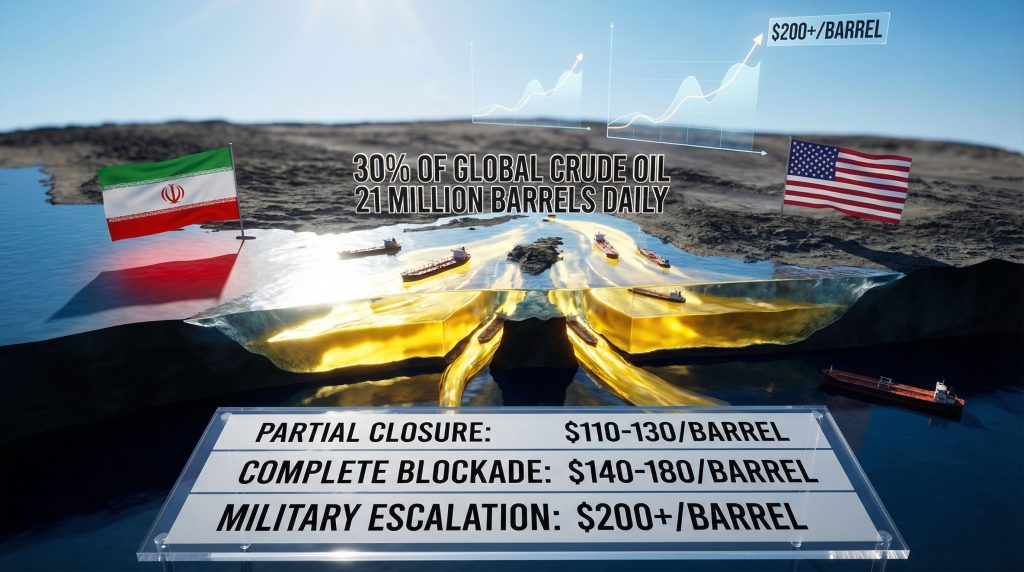
The Strait of Hormuz stands as the most strategically significant maritime passage for global energy flows. At its narrowest point, this 21-mile-wide channel connects the Persian Gulf to the Gulf of Oman and Arabian Sea, serving as the primary export corridor for Middle Eastern crude oil production. According to the Texas Independent Producers and Royalty Owners Association, approximately one-fifth of global oil and liquefied natural gas flows transit through this passage.
This transit volume represents a fundamental vulnerability in global energy security. Unlike land-based infrastructure that can accommodate multiple pipeline routes, maritime chokepoints create singular points of failure where alternative routing options require significant time and cost penalties. The geographic positioning means that major oil-producing nations including Saudi Arabia, Iraq, the United Arab Emirates, and Kuwait depend heavily on this corridor for export access to Asian markets.
When compared to other critical shipping lanes, the Strait demonstrates unique characteristics:
• Suez Canal: Handles approximately 12-13% of global seaborne oil with pipeline alternatives available through Egypt
• Malacca Strait: Carries 25-30% of seaborne oil but offers alternative routing through Sunda and Lombok straits
• Panama Canal: Primarily serves Atlantic-Pacific trade routes with limited relevance for Middle Eastern exports
The Asia-Pacific region represents the largest consumer base for Gulf crude oil, with import dependency rates creating significant exposure to Strait disruptions. China sources 45-50% of its oil imports from Middle Eastern producers, while Japan relies on 40-50% and India depends on 60-65% from the same regional suppliers.
When big ASX news breaks, our subscribers know first
Economic Vulnerability Assessment of Global Supply Chains
The economic implications of Strait restrictions extend far beyond simple supply-demand calculations. Asian refineries have been optimised over decades to process heavy sour crude primarily sourced from Saudi Arabia, Iraq, and Iran. This technological specialisation means refiners cannot rapidly switch to alternative light crude sources without significant operational adjustments and efficiency losses.
Infrastructure limitations compound these vulnerabilities. Alternative routing around the Cape of Good Hope adds approximately 3,500 nautical miles to shipping distances, increasing transit times by 15-20 days and transportation costs by $2-3 per barrel. For time-sensitive supply chains, this delay represents inventory carrying costs and potential production disruptions that cascade through manufacturing sectors.
Regional pipeline infrastructure offers limited relief capacity. The Trans-Arabian Pipeline system and East-West Pipeline networks can accommodate some volume redistribution, but lack the throughput capacity to replace seaborne exports entirely. Maximum alternative routing capacity represents approximately 30-40% of normal Strait transit volumes, creating unavoidable supply gaps during complete closure scenarios.
Currency and capital flow effects amplify economic vulnerabilities for oil-importing developing nations. Extended periods of elevated energy prices trigger currency depreciation, reduced foreign investment, and potential sovereign debt stress. These secondary effects often prove more economically damaging than the direct energy cost increases.
How Are Current Geopolitical Tensions Driving Oil Market Volatility?
Market psychology during geopolitical crises reflects the complex interplay between immediate risk perception and longer-term fundamental analysis. Current U.S.-Iran Strait of Hormuz tensions demonstrate how geopolitical uncertainty can overwhelm traditional supply-demand mechanisms, creating price premiums that persist beyond rational economic justification.
Risk Premium Quantification in Crude Oil Pricing
Energy markets currently reflect heightened geopolitical risk premiums driven by escalating tensions and uncertainty surrounding Strait access. Naeem Aslam, Chief Investment Officer at Zaye Capital Markets, emphasised that "oil markets continue to price elevated risk despite modest supply adjustments, keeping crude firmly above $100 per barrel levels."
The magnitude of potential premium unwinding demonstrates market sensitivity to resolution scenarios. John Coleman, Commodity Owner at Sparta Commodities, predicted that "ceasefire developments could trigger rapid geopolitical premium corrections, with Brent crude potentially declining $15-20 within days of de-escalation announcements."
Current market positioning reflects this binary risk assessment:
• WTI Crude: $111.29 (down 1%)
• Brent Crude: $105.88 (down 3.54%)
• Natural Gas: $2.84 (up 1.17%)
Historical precedent suggests geopolitical premiums typically range from $10-20 per barrel during regional conflicts. The 1980-1988 Iran-Iraq War demonstrated how sustained maritime threats could maintain elevated premiums for extended periods, while more recent incidents like the 2019 Aramco facility attacks showed rapid normalisation following conflict resolution.
Economic data releases increasingly take secondary importance during geopolitical crises. Furthermore, this creates an environment where mixed U.S. economic indicators pointing to slowing growth and persistent inflation create stagflationary concerns that paradoxically support higher energy prices. In contrast, stronger data provides limited downside given prevailing uncertainty, particularly when considering oil price movements influenced by broader geopolitical factors.
OPEC+ Production Response Strategy Analysis
The Organisation of Petroleum Exporting Countries and allies responded to current tensions with coordinated production increases totalling 206,000 barrels per day for deployment next month. This adjustment represents strategic spare capacity utilisation aimed at offsetting potential supply disruptions, as part of the broader OPEC production review.
Production increase breakdown by participating nations:
• Saudi Arabia: +62,000 bpd
• Russia: +62,000 bpd
• Iraq: +26,000 bpd
• UAE: +18,000 bpd
• Kuwait: +16,000 bpd
• Kazakhstan: +10,000 bpd
• Algeria: +6,000 bpd
• Oman: +5,000 bpd
This production adjustment reflects measured response rather than emergency mobilisation. OPEC+ maintains additional spare capacity beyond this 206,000 bpd increase, though accessing maximum production levels requires several months of infrastructure preparation. Current utilisation rates suggest the organisation retains 2-3 million barrels per day of theoretical spare capacity, though much of this requires extended lead times for activation.
Strategic petroleum reserve deployment capabilities represent another critical response mechanism. Major consuming nations maintain emergency stockpiles designed for precisely these disruption scenarios, though coordination mechanisms among allied countries require diplomatic activation protocols that can introduce delays during crisis periods.
What Are the Economic Scenarios if Strait Access Remains Restricted?
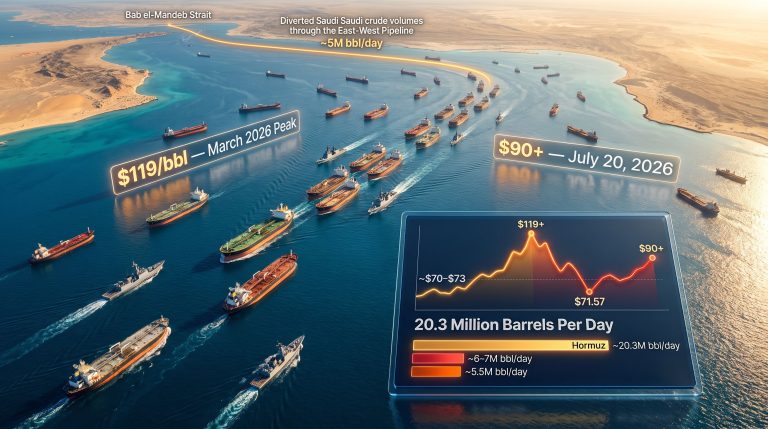
Economic scenario modelling for sustained Strait restrictions requires examining both immediate market dislocations and longer-term structural adjustments across multiple timeframes. The current crisis represents what the Texas Independent Producers and Royalty Owners Association characterised as "the largest supply shock in modern history," with Brent and WTI prices surging dramatically to exceed $100-120 per barrel by March 2026.
Short-Term Market Disruption Modelling (0-6 months)
Immediate economic impacts manifest through several transmission mechanisms that operate at different speeds. Energy-intensive industries experience immediate margin compression, while broader economic effects emerge over 3-6 month periods as elevated costs propagate through supply chains and consumer spending patterns.
| Disruption Level | Price Impact | Timeline | Primary Effects |
|---|---|---|---|
| Partial Access | $15-25 premium | 2-4 weeks | Insurance rate spikes, shipping delays |
| Significant Restriction | $25-40 premium | 1-3 months | Refinery utilisation cuts, industrial slowdown |
| Complete Closure | $40-60+ premium | 3-6 months | Strategic reserve drawdowns, demand destruction |
Transportation and logistics sectors face immediate operational challenges beyond simple cost increases. Maritime insurance rates historically increase 200-300% during regional conflicts, with potential escalation to 400-600% under severe disruption scenarios. These insurance premium spikes often persist weeks beyond conflict resolution as underwriters reassess risk models.
Manufacturing industries dependent on petrochemical feedstocks experience dual pressures from both higher energy costs and supply chain disruptions. Asian chemical complexes optimised for Middle Eastern crude inputs cannot rapidly substitute alternative feedstock sources without significant operational adjustments and efficiency penalties.
Long-Term Strategic Realignment Implications (6+ months)
Extended restrictions trigger fundamental shifts in energy infrastructure investment and trade relationship patterns. Import-dependent economies accelerate diversification strategies, while producing nations invest heavily in alternative export route development to reduce chokepoint vulnerabilities. These changes often reflect broader geopolitical considerations, such as the impact of Saudi licenses impact on regional energy dynamics.
Regional energy security frameworks undergo permanent modifications following sustained supply shocks. Historical precedent from the 1970s oil crises demonstrates how temporary disruptions catalyse long-term strategic petroleum reserve expansion, alternative energy source development, and diplomatic realignment toward energy-secure partnerships.
Currency market adjustments create lasting impacts on emerging economy development trajectories. Oil-importing nations with dollar-pegged currencies face particular vulnerability to sustained elevation in energy costs, often requiring fundamental monetary policy adjustments or currency regime modifications.
Investment capital flows redirect toward energy infrastructure projects with enhanced security characteristics. Consequently, North American shale development, African pipeline networks, and Central Asian export corridors receive accelerated investment as risk-adjusted returns improve relative to Middle Eastern alternatives.
Which Industries Face the Greatest Exposure to Strait Disruptions?
Industrial sector exposure to Strait disruptions varies significantly based on energy intensity, supply chain flexibility, and geographic positioning. Understanding these differential impacts provides insight into economic vulnerability patterns and potential adaptation strategies across diverse business environments.
Transportation and Logistics Sector Vulnerabilities
Maritime shipping represents the most directly exposed industry to Strait disruptions, facing both operational constraints and dramatically elevated insurance costs. Historical precedent suggests maritime insurance rates can increase 200-300% during regional conflicts, with potential escalation under severe disruption scenarios.
Shipping route diversification requires fundamental operational adjustments that extend beyond simple cost calculations. Alternative routing around the Cape of Good Hope increases voyage distances by 3,500 nautical miles, creating inventory carrying cost implications for just-in-time supply chains and time-sensitive cargo movements.
Airlines face dual exposure through both jet fuel cost increases and passenger demand sensitivity to broader economic uncertainty. Regional carriers serving Middle Eastern routes experience particular vulnerability through reduced passenger volumes and elevated fuel hedging costs.
Global supply chain reconfiguration requirements create operational challenges for logistics companies managing multi-modal transportation networks. Container shipping schedules, port capacity utilisation, and inland transportation coordination require extensive adjustment during extended disruption periods.
Manufacturing and Petrochemical Industry Risk Assessment
Asian refinery complexes demonstrate particular vulnerability due to technological optimisation for Middle Eastern crude processing. These facilities cannot rapidly switch to alternative crude sources without significant efficiency penalties and potential equipment modifications.
Petrochemical production faces cascading effects as both energy costs and feedstock availability become constrained simultaneously. Chemical manufacturers dependent on naphtha and other petroleum derivatives experience margin compression that often proves unsustainable during extended price elevation periods.
Industrial production patterns show historical sensitivity to energy cost shocks, with manufacturing sectors typically experiencing 10-15% production declines during sustained periods of elevated energy prices above $100-120 per barrel. These production adjustments usually manifest with 3-6 month lags as companies exhaust inventory buffers and adjust operating schedules.
Steel, aluminium, and other energy-intensive manufacturing sectors face particular exposure due to limited ability to pass through cost increases to downstream customers. These industries often implement production curtailments and facility shutdowns during extended high-price periods.
How Are Financial Markets Pricing Escalation vs. De-escalation Scenarios?
Financial market behaviour during geopolitical crises reflects complex risk assessment mechanisms where uncertainty premiums often exceed rational fundamental valuations. Current market positioning demonstrates how binary risk events can dominate traditional economic analysis frameworks, especially in the context of U.S.-Iran Strait of Hormuz tensions.
Commodity Futures Market Positioning Analysis
Options markets reveal significant positioning toward escalation scenarios, with volatility premiums remaining elevated despite recent modest price declines. Li Xing, Financial Markets Strategist Consultant to Exness, noted that "oil markets remain highly reactive to geopolitical developments, with any breakthrough potentially triggering substantial corrections."
The binary nature of current tensions creates unusual market dynamics where traditional technical analysis loses predictive value. Coleman emphasised that "Trump administration's deadline represents the primary binary trading consideration, with escalation paths remaining more probable than de-escalation scenarios based on current diplomatic positioning." This reflects broader concerns about potential Trump tariffs impact on international relations.
Institutional investor positioning shows defensive characteristics typical of late-cycle geopolitical uncertainty. Risk management strategies increasingly focus on tail-risk protection rather than directional positioning, reflecting uncertainty about probability distributions for various resolution scenarios.
Hedge fund positioning demonstrates elevated exposure to energy derivatives, though specific directional bets remain difficult to assess given conflicting signals from both fundamental supply-demand analysis and geopolitical risk assessment frameworks. Moreover, these strategies must account for broader market implications of US-China trade tensions.
Currency and Bond Market Correlation Patterns
Safe-haven asset flows during geopolitical uncertainty periods create predictable patterns where Treasury bonds, gold, and select currencies benefit from flight-to-quality positioning. These correlations often persist beyond rational fundamental justification as portfolio managers prioritise capital preservation over return optimisation.
Emerging market currencies face particular vulnerability during sustained energy price elevation, especially for economies with significant oil import dependencies. Currency depreciation creates inflationary pressures that compound the direct energy cost impacts, often triggering central bank intervention requirements.
Bond market behaviour reflects stagflationary concerns where elevated energy prices coincide with slowing economic growth prospects. This combination creates challenges for central bank policy frameworks designed around traditional inflation-growth trade-offs.
The next major ASX story will hit our subscribers first
What Alternative Energy Transit Routes Could Mitigate Supply Disruptions?
Alternative energy transit infrastructure provides limited but meaningful options for mitigating Strait disruptions, though capacity constraints and operational limitations prevent complete substitution for normal shipping routes. Understanding these alternatives requires examining both existing capacity and potential expansion timelines.
Existing Pipeline Infrastructure Capacity Assessment
Regional pipeline networks offer the most immediate alternative for maintaining some Middle Eastern energy exports during Strait disruptions. The Trans-Arabian Pipeline system provides direct access to Red Sea terminals, bypassing Gulf routing entirely for Saudi Arabian crude exports.
The East-West Pipeline network connecting Saudi Arabian oil fields to Red Sea ports represents the largest alternative routing capacity, capable of handling approximately 4-5 million barrels per day under maximum utilisation scenarios. However, current throughput levels operate below maximum capacity, requiring operational adjustments to achieve full utilisation.
Pipeline infrastructure limitations include:
• Capacity constraints: Maximum alternative routing represents 30-40% of normal Strait transit volumes
• Operational lead times: Full capacity utilisation requires 2-4 weeks of operational adjustments
• Geographic limitations: Pipelines serve only specific producing nations, not regional exporters
• Maintenance requirements: Extended high-capacity operation requires accelerated maintenance schedules
Regional pipeline interconnectivity remains limited, preventing flexible routing adjustments during crisis periods. Iraqi and Iranian exports lack meaningful alternative routing options, creating unavoidable supply gaps during complete Strait closure scenarios.
Strategic Petroleum Reserve Deployment Scenarios
Strategic petroleum reserves represent the primary short-term mechanism for offsetting supply disruptions, though release coordination among consuming nations requires diplomatic protocols that can introduce deployment delays. Major consuming nations maintain emergency stockpiles specifically designed for these disruption scenarios.
National reserve adequacy varies significantly among major oil-importing economies:
• United States: 600+ million barrel strategic petroleum reserve capacity
• China: 500+ million barrel estimated reserve capacity
• Japan: 320+ million barrel reserve requirement
• European Union: 90-day import equivalent requirement across member states
Emergency allocation protocols among allied nations provide mechanisms for coordinated reserve releases, though activation requires diplomatic agreement on burden-sharing arrangements and replacement strategies. Historical precedent suggests coordination timelines of 1-2 weeks for multilateral reserve deployments.
Reserve drawdown sustainability becomes critical during extended disruption periods. Maximum sustainable release rates typically range from 1-4 million barrels per day across major reserve holders, though these rates cannot be maintained indefinitely without depleting strategic stockpiles below minimum security levels.
How Might Resolution Scenarios Impact Long-Term Energy Geopolitics?
Resolution pathway analysis requires examining both immediate de-escalation mechanisms and longer-term structural changes in global energy security frameworks. Current tensions may catalyse permanent shifts in energy infrastructure investment and diplomatic relationships regardless of specific resolution timelines.
Diplomatic Settlement Probability and Market Implications
Historical precedent for similar maritime disputes suggests resolution timelines typically extend 2-6 months from initial escalation to negotiated settlement. The 1987-1988 Tanker War during the Iran-Iraq conflict provides relevant comparison, where international naval intervention and diplomatic pressure eventually restored commercial shipping access.
Market normalisation following diplomatic settlement typically occurs more rapidly than escalation phases. Coleman's assessment that "ceasefire announcements could trigger $15-20 barrel price corrections within days" aligns with historical precedent from similar geopolitical crisis resolution periods.
Negotiation frameworks require addressing underlying territorial and resource access disputes beyond immediate shipping lane reopening. Sustainable settlements typically include international monitoring mechanisms and mutual security guarantees that provide confidence for commercial shipping resumption. These considerations have become particularly relevant given recent escalations in regional tensions.
Stakeholder positioning creates complex diplomatic requirements where domestic political considerations often conflict with economic rationality. Resolution probability increases when economic costs exceed political benefits for primary participants, though this calculation process can extend over months of escalating impacts.
Structural Changes in Global Energy Security Architecture
Long-term energy security frameworks undergo fundamental reconsideration following major supply shocks, with permanent modifications to infrastructure investment priorities and diplomatic relationships. The current crisis may accelerate trends toward energy supply diversification and alternative transportation route development.
Regional energy alliance formation provides mechanisms for enhanced cooperation on reserve sharing, alternative routing development, and collective security arrangements. These partnerships often emerge from crisis periods and persist long after immediate threats subside.
Technology acceleration in renewable energy deployment receives additional impetus from fossil fuel supply security concerns. Energy transition investment timelines often accelerate following major supply disruption events as energy security considerations enhance the economic attractiveness of domestic renewable capacity.
Import-dependent economies implement diversification strategies extending beyond simple geographic supplier shifts. These typically include enhanced strategic reserve capacity, alternative energy source development, and energy efficiency improvements designed to reduce overall import vulnerability.
What Investment Strategies Are Emerging from This Crisis?
Investment strategy adaptation during geopolitical energy crises reflects both short-term tactical positioning and longer-term structural shift recognition. Current market conditions create opportunities across multiple asset classes while highlighting vulnerability exposures requiring portfolio protection strategies.
Energy Sector Portfolio Rebalancing Approaches
Upstream exploration and production companies demonstrate enhanced valuations during sustained high-price environments, though investor positioning must account for eventual normalisation scenarios. Non-Middle Eastern energy assets command premium valuations due to geographic risk diversification benefits.
Energy infrastructure investments receive accelerated attention as security considerations enhance risk-adjusted return profiles. Pipeline networks, storage facilities, and refining capacity located outside geopolitically vulnerable regions attract increased capital allocation.
Renewable energy infrastructure development timelines accelerate as energy security concerns supplement climate change motivations for alternative energy investment. Solar, wind, and energy storage projects benefit from enhanced economic justification during fossil fuel supply uncertainty periods.
Energy efficiency technology sectors experience increased investment flow as both commercial and residential users seek vulnerability reduction through consumption optimisation. Smart grid infrastructure, industrial efficiency systems, and transportation electrification receive enhanced attention.
Geographic Risk Diversification in Energy Investments
North American energy security positioning benefits from reduced geopolitical risk exposure and proximity to major consuming markets. Shale oil and gas development projects receive enhanced investment consideration despite higher production costs relative to Middle Eastern alternatives.
Latin American energy corridor development attracts increased attention from Asian importers seeking Middle East alternative suppliers. Brazilian offshore production, Guyana oil development, and regional pipeline infrastructure receive accelerated investment.
African energy infrastructure projects gain strategic importance for European energy security enhancement. West African oil production, East African natural gas development, and trans-Saharan pipeline networks receive elevated investment priority.
Central Asian energy export route development provides alternative pathways for regional energy supplies reaching Asian markets. Pipeline networks through Kazakhstan, Turkmenistan, and Azerbaijan offer geographic diversification benefits despite infrastructure development requirements.
This analysis is for educational purposes and does not constitute investment advice. Energy markets involve significant risk, and past performance does not guarantee future results. Investors should conduct thorough research and consider their risk tolerance before making investment decisions.
Ready to Navigate the Next Major Energy Discovery Opportunity?
Discovery Alert's proprietary Discovery IQ model delivers real-time alerts on significant ASX mineral discoveries, including energy-critical commodities that can surge during geopolitical crises like Strait of Hormuz disruptions. Visit Discovery Alert's dedicated discoveries page to understand how historic mineral finds have generated substantial market returns, then begin your 14-day free trial to position yourself ahead of the market for the next breakthrough opportunity.