August 6, 2026
US-Iran tensions and oil prices continue to dominate global energy market discussions as geopolitical developments create ripple effects throughout commodity trading systems. The global energy landscape operates on a delicate balance of supply, demand, and geopolitical stability. When tensions escalate between major powers and oil-producing nations, markets respond with volatility patterns that extend far beyond simple price fluctuations. The intricate web of sanctions, shipping routes, and strategic petroleum reserves creates a complex system where political developments can trigger cascading economic effects across multiple sectors and regions.
Understanding Energy Market Risk Premiums in Geopolitical Contexts
Geopolitical risk premiums in commodity markets represent additional pricing that traders build into oil futures to account for potential supply disruptions. These premiums function as insurance mechanisms, where market participants pay extra for crude oil contracts to hedge against unexpected geopolitical events that could constrain global supply.
The mechanics of risk premium calculation involve multiple variables including historical volatility patterns, current inventory levels, and the strategic importance of affected regions. When tensions escalate between the United States and Iran, energy markets immediately begin pricing in potential scenarios ranging from diplomatic breakthroughs to complete supply cutoffs.
Strategic petroleum reserves play a crucial stabilisation role during periods of heightened uncertainty. The United States maintains approximately 650 million barrels in its Strategic Petroleum Reserve, which can be released to offset supply disruptions. However, the effectiveness of these releases depends on the scale and duration of any potential supply interruption.
Recent market activity demonstrates this dynamic clearly. According to CNN reporting from February 2026, Brent crude futures traded near $71.27, while West Texas Intermediate crude reached $66.06. These price levels reflected market concerns about potential disruptions to Persian Gulf oil flows, with weekly gains of 5.1% for Brent and 5% for WTI indicating significant risk premium buildup.
When big ASX news breaks, our subscribers know first
Strategic Chokepoints and Global Energy Architecture
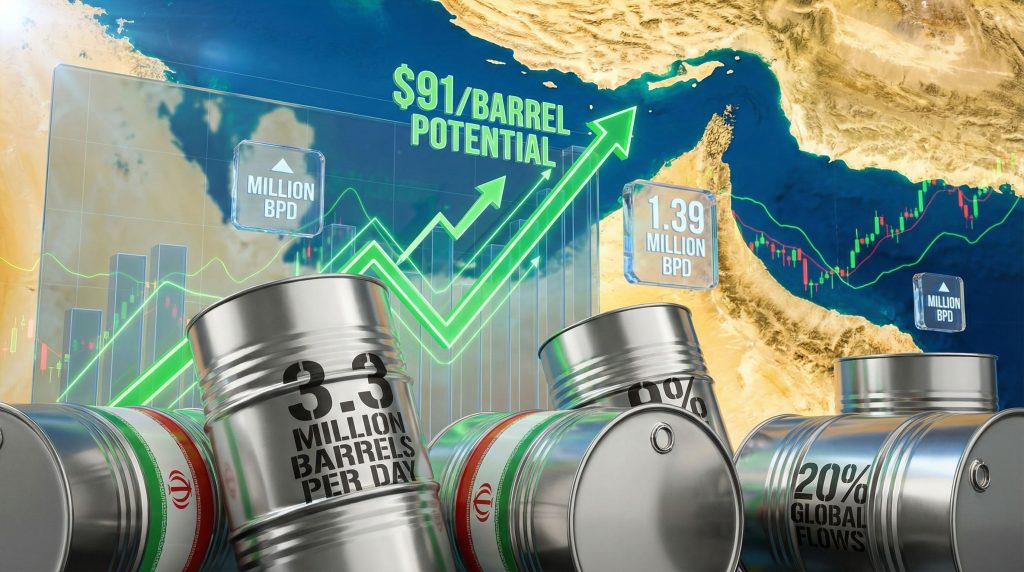
The Strait of Hormuz represents one of the world's most critical energy chokepoints, controlling approximately 20% of global oil supply according to energy industry data. This narrow waterway, measuring just 21 miles at its narrowest point, serves as the primary export route for crude oil from Iran, Iraq, Kuwait, Saudi Arabia, and the United Arab Emirates.
The economics of chokepoint control extend beyond simple geography. Alternative routing options exist but involve significantly higher transportation costs and longer delivery times. The Suez Canal and Panama Canal represent other critical bottlenecks in the global energy supply chain, but none carries the concentrated risk profile of the Hormuz passage.
Iran's strategic position opposite the oil-rich Arabian Peninsula creates unique leverage dynamics. The country's ability to threaten shipping lanes through military exercises or actual disruption attempts sends immediate signals through global energy markets. Recent reports of Iran-Russia joint naval exercises, as documented by local news agencies in February 2026, exemplify how military posturing translates into market volatility.
Regional energy interdependencies complicate simple supply-demand calculations. While Iran faces significant export restrictions, neighbouring countries maintain spare production capacity that could theoretically offset disruptions. However, the speed and scale of replacement supply depend on existing infrastructure and geopolitical relationships among producing nations.
Financial Market Response Mechanisms and Volatility Patterns
Options markets provide real-time indicators of trader sentiment regarding geopolitical risks. Call option purchases on Brent crude futures increased significantly during recent tension escalations, according to Saxo Bank analysis referenced in February 2026 market reports. These instruments allow traders to profit from upward price movements while limiting downside risk.
The relationship between options volatility and geopolitical events follows predictable patterns. When diplomatic tensions escalate, implied volatility measures spike as traders demand higher premiums for uncertainty. Furthermore, this creates feedback loops where higher volatility expectations can themselves contribute to actual price swings.
Currency markets also reflect geopolitical energy risks through complex transmission mechanisms. The US dollar typically strengthens during global uncertainty periods, which can partially offset oil price increases for American consumers while amplifying impacts for emerging market economies with dollar-denominated energy imports.
Futures curve shapes provide additional insight into market expectations. During geopolitical crises, oil futures often exhibit backwardation, where near-term contracts trade above longer-dated ones. This pattern suggests markets expect current disruptions to resolve over time, though prolonged tensions can maintain elevated pricing across all contract maturities.
Sanctions Architecture and Market Adaptation Mechanisms
Modern sanctions frameworks operate through layered approaches targeting multiple aspects of targeted countries' energy sectors. Primary sanctions restrict direct trade relationships, while secondary measures threaten penalties for third-party entities that continue business relationships with sanctioned actors.
The development of "shadow fleets" represents one market adaptation to sanctions pressure. These vessel networks, often utilising older tankers with complex ownership structures, facilitate continued oil trade despite official restrictions. However, shadow fleet operations typically involve significant discounts to benchmark pricing, reflecting additional risks and logistical complexities.
Insurance and shipping cost premiums create additional layers of sanctions impact. When major insurers withdraw coverage for vessels carrying sanctioned crude, alternative arrangements must be secured at higher costs. For instance, these expenses ultimately translate into wider price spreads between sanctioned and unrestricted oil supplies.
Digital payment systems and cryptocurrency networks have emerged as potential circumvention mechanisms, though their effectiveness remains limited by the scale requirements of international oil trade. Traditional banking relationships continue to dominate energy transactions, making financial sanctions particularly effective enforcement tools.
Inventory Dynamics and Supply Response Elasticity
Crude oil inventory levels serve as crucial buffers during supply disruption periods. According to Energy Information Administration data from February 2026, US crude inventories dropped by 9 million barrels as refining utilisation and exports climbed. These inventory drawdowns can indicate either strong demand or anticipatory positioning ahead of potential supply constraints.
The responsiveness of alternative suppliers varies significantly based on existing spare capacity and infrastructure constraints. OPEC price dynamics influence collective spare production capacity, though the exact levels and accessibility remain subjects of ongoing analysis. Saudi Arabia typically holds the largest single-country spare capacity, providing flexibility during crisis periods.
US shale drilling trends offer another supply response mechanism, though with different time horizons than conventional adjustments. Shale wells can be brought online relatively quickly compared to traditional projects, but financial returns depend heavily on sustained higher price levels to justify increased drilling activity.
Global refining patterns add complexity to simple supply-demand calculations. Regional refinery configurations affect the value of different crude oil qualities, meaning supply disruptions from specific sources can create localised pricing impacts even when total global supply remains adequate.
Regional Price Differentials and Market Segmentation
Asian energy markets often experience amplified impacts from Middle Eastern geopolitical tensions due to geographic proximity and import dependency patterns. Chinese refineries, in particular, maintain significant crude oil processing capacity calibrated for Middle Eastern crude qualities, making alternative supplier transitions more complex and costly.
European markets face different risk profiles based on diversified supply sources and strategic storage capabilities. The European Union's energy security policies emphasise supply diversification, though complete independence from Middle Eastern oil remains economically challenging given global market integration.
Price differentials between regional benchmarks reflect these varying risk exposures and logistical constraints. Dubai crude futures, Brent pricing, and WTI levels can diverge significantly during geopolitical crises as regional supply-demand balances shift independently.
Transportation costs and route security considerations further influence regional pricing patterns. Alternative shipping routes involve longer distances and higher fuel consumption, creating natural price floors for supply diversification efforts.
The next major ASX story will hit our subscribers first
Central Bank Policy Interactions and Macroeconomic Implications
Federal Reserve monetary policy considerations become more complex during energy price volatility periods. Higher oil prices contribute to inflation pressures, potentially influencing interest rate decisions and broader economic policy frameworks. Recent Fed communications referenced in February 2026 market analysis suggested concerns about persistent inflationary pressures affecting policy deliberations.
International Energy Agency coordinated response mechanisms provide multilateral tools for addressing supply disruptions. IEA member countries can authorise strategic reserve releases and implement demand management measures during severe supply constraints, though political coordination challenges can limit effectiveness timing.
The relationship between energy prices and broader economic growth follows well-established patterns, with higher oil costs typically reducing consumer spending power and increasing business input costs. However, energy-producing regions can experience offsetting positive effects from increased revenues and investment activity.
Exchange rate movements create additional complexity for energy-importing nations. Currency depreciation during crisis periods can amplify domestic energy cost increases, while stronger currencies provide partial buffers against global oil price spikes.
Investment Strategy Implications and Portfolio Risk Management
Energy sector allocation decisions become more complex during periods of heightened geopolitical uncertainty. Traditional oil and gas companies may benefit from higher commodity prices, while renewable energy investments can gain from accelerated transition policies driven by energy security concerns.
Commodity risk management tools include futures contracts, options strategies, and inflation-protected securities that can help portfolio managers hedge against energy price volatility. However, the effectiveness of these instruments depends on accurate assessment of risk duration and magnitude.
Geographic risk diversification involves evaluating exposure to different regional markets and supply chain dependencies. North American energy investments may benefit from reduced import dependency, while Middle Eastern positions face direct geopolitical risks despite potentially attractive valuations.
Infrastructure and logistics investments can provide alternative exposure to energy market dynamics without direct commodity price risk. Pipeline companies, storage facilities, and transportation networks often maintain more stable cash flows during volatile periods.
Long-term Structural Market Changes and Energy Transition Acceleration
Geopolitical energy crises historically accelerate longer-term structural changes in global energy systems. The 1973 oil embargo catalysed efficiency improvements and alternative energy research, while recent supply chain disruptions have reinforced energy security policy priorities across multiple regions.
Clean energy infrastructure investment often receives increased political and financial support during traditional energy supply crises. Government policies may accelerate renewable energy deployment timelines and provide additional financing mechanisms for energy transition projects.
Critical mineral supply chains for battery storage and renewable energy systems create new categories of geopolitical risk. Lithium, cobalt, and rare earth element dependencies can shift from Middle Eastern oil chokepoints to other geographic concentration risks in the energy system.
Technology development and deployment patterns may accelerate during crisis periods as higher energy costs improve the relative economics of alternative systems. Grid storage technologies, electric vehicle adoption, and industrial electrification can all benefit from sustained higher traditional energy prices.
Additionally, trade war oil impacts demonstrate how broader geopolitical conflicts can compound energy market volatility. Meanwhile, tariffs and market impact analysis reveals complex interactions between trade policy and commodity pricing that extend beyond traditional supply-demand dynamics.
The current situation involving US-Iran tensions and oil prices demonstrates how quickly geopolitical developments can reshape global energy market dynamics. Market participants must navigate multiple layers of uncertainty while positioning for various potential outcomes ranging from diplomatic resolution to prolonged supply chain disruptions.
According to Wall Street Journal reporting, ongoing tensions continue to support elevated risk premiums in energy markets, with traders closely monitoring diplomatic developments alongside traditional supply-demand fundamentals.
Consequently, oil price rally analysis provides additional context for understanding how policy changes and geopolitical developments interact to create complex market conditions that challenge traditional forecasting models.
Understanding these complex interactions between geopolitics, energy markets, and broader economic systems remains essential for investors, policymakers, and business leaders operating in an interconnected global economy where energy security continues to influence international relations and economic stability.
Disclaimer: This analysis is for informational purposes only and does not constitute investment advice. Energy markets involve substantial risks, and geopolitical developments can create rapid and significant price movements. Investors should conduct their own research and consult with qualified advisors before making investment decisions.
Looking to Navigate Volatile Commodity Markets?
Discovery Alert's proprietary Discovery IQ model delivers real-time alerts on significant ASX mineral discoveries, instantly empowering subscribers to identify actionable opportunities ahead of the broader market during periods of heightened geopolitical uncertainty. Begin your 14-day free trial today and secure your market-leading advantage as global events continue to reshape commodity trading patterns.