June 16, 2026
The US-Israel-Iran conflict has emerged as a defining factor in global energy market dynamics, creating unprecedented volatility that extends far beyond regional boundaries. Energy market dynamics have undergone fundamental shifts throughout history, driven by technological innovations, geopolitical tensions, and evolving supply chain architectures. The current landscape presents unprecedented challenges as traditional energy corridors face disruption while alternative pathways struggle to compensate for capacity constraints. Understanding these complex interdependencies requires examining both immediate market reactions and longer-term structural adaptations across global economies.
Global Energy Infrastructure Under Pressure
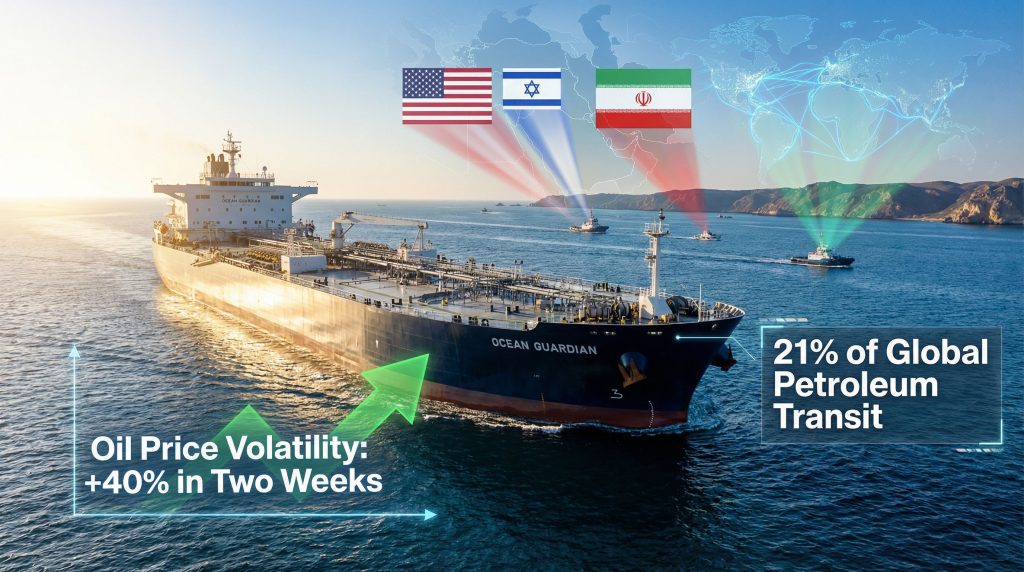
The world's energy transportation networks operate as interconnected systems where single-point failures can cascade across continents. Recent developments in the Middle East have highlighted the vulnerability of critical shipping lanes that facilitate approximately one-fifth of global petroleum transit. When key maritime chokepoints experience disruption, the ripple effects extend far beyond immediate supply concerns to influence currency markets, industrial production schedules, and strategic policy decisions across major economies.
Market participants have witnessed dramatic price movements as crude oil surged from approximately $73 per barrel to around $103 per barrel within a 15-day period, representing an absolute increase of $30 and a percentage increase of approximately 41.1 percent according to Economic Times reporting. This volatility timeline directly correlates with military escalation that began on February 28, when coordinated strikes targeted Iranian military assets and leadership, fundamentally altering regional security calculations.
Furthermore, the Strait of Hormuz serves as the world's most critical energy chokepoint, where any prolonged disruption to shipping could tighten global oil supplies and influence inflation expectations across Asia while keeping overall market risk sentiment fragile. This strategic waterway's importance cannot be overstated, as it represents a single point of failure capable of disrupting energy flows to the world's fastest-growing economies.
When big ASX news breaks, our subscribers know first
Market Psychology and Risk Premium Calculations
Energy commodity pricing reflects a complex interplay between physical supply constraints and speculative positioning driven by geopolitical uncertainty. Fear-based trading patterns emerge when market participants price in worst-case scenarios, creating artificial scarcity premiums that can persist even when physical supplies remain adequate. The current pricing environment demonstrates how psychological factors can amplify fundamental supply-demand imbalances.
Currency market correlations add another layer of complexity, as energy commodities traded in US dollars create feedback loops affecting exchange rates and purchasing power across importing nations. When oil prices spike, dollar-denominated transactions become more expensive for countries holding other currencies, potentially forcing central banks to intervene in foreign exchange markets to maintain economic stability.
Institutional investor repositioning during crisis periods can exacerbate price volatility as portfolio managers seek to hedge against further escalation while maintaining exposure to potential supply-side benefits. This creates bidirectional pressure where defensive positioning meets opportunistic speculation, amplifying price swings beyond what fundamental supply-demand metrics would suggest.
Strategic petroleum reserve releases represent one mechanism for dampening extreme price volatility, though their effectiveness depends on coordination between major consuming nations and the scale of releases relative to global demand. These reserves function as both market stabilisers and diplomatic tools, with release timing often synchronised with broader geopolitical objectives.
Regional Economic Adaptation Frameworks
Asian economies face particular vulnerability due to their heavy dependence on Middle Eastern energy imports, forcing rapid adaptation strategies across both public and private sectors. Industrial production scheduling optimisation becomes critical when energy costs spike, with manufacturers adjusting operations to minimise exposure during peak pricing periods while maintaining output targets.
Transportation networks experience cascading cost increases that affect everything from logistics planning to consumer goods pricing. When fuel costs rise dramatically, shipping companies implement fuel surcharges that flow through to end consumers, creating inflationary pressures across multiple economic sectors simultaneously.
However, manufacturing sectors dependent on petrochemical inputs face dual pressures from both energy costs and raw material price increases. This forces companies to evaluate supply chain alternatives, potentially accelerating shifts toward domestic production or alternative input sources that may have been economically unviable under previous pricing structures.
Agricultural systems encounter particular stress through fertiliser and fuel cost increases that affect both production expenses and food distribution networks. These pressures can create food security concerns in import-dependent regions, forcing governments to consider subsidy programmes or strategic agricultural reserve releases.
What Is the European Response to Energy Vulnerability?
European markets are implementing comprehensive energy transition security recalibration following recent lessons about supply chain vulnerability. Liquefied natural gas import capacity expansion represents one component of diversification strategies designed to reduce pipeline dependencies that proved problematic during previous supply disruptions.
Renewable energy deployment acceleration through policy frameworks creates investment opportunities while addressing long-term energy security concerns. These initiatives often receive expedited permitting and financing support during crisis periods, when energy independence becomes a national security priority rather than simply an environmental objective.
Investment Landscape Transformation
Traditional energy sector positioning benefits from sustained price premiums that improve operating margins across upstream, midstream, and downstream operations. Domestic oil production companies operating in stable jurisdictions experience particular advantages as their output commands premium pricing while avoiding geopolitical risk discounts applied to productions from unstable regions.
Refining capacity operators capture increased crack spreads between crude oil input costs and refined product prices, particularly when supply disruptions create regional pricing disparities. These margin expansions can persist for extended periods during geopolitical crises, creating substantial profit opportunities for companies with strategic refining assets.
Pipeline and storage infrastructure providers experience utilisation spikes as market participants seek supply security through inventory accumulation and alternative transportation routes. This increased demand for infrastructure services often translates to higher tariffs and improved capacity utilisation rates across energy logistics networks.
Energy service companies supporting accelerated drilling programmes benefit from increased activity levels as producers rush to capitalise on improved price environments. This creates opportunities across drilling services, completion technologies, and field development support services that may have been curtailed during previous low-price periods.
In addition, alternative energy investment acceleration gains momentum as comparative economics improve relative to fossil fuel alternatives. Solar and wind project development becomes more attractive when fossil fuel prices spike, improving internal rates of return and shortening payback periods for renewable energy installations.
Battery storage technology development receives increased attention as grid stability applications become more valuable during supply uncertainty periods. These systems provide insurance against supply disruptions while enabling greater renewable energy integration, creating multiple value streams for storage technology providers.
Currency Market Dynamics and Global Liquidity
The US dollar's role as the primary energy trading currency creates complex dynamics during price volatility periods, as petrodollar recycling patterns affect global liquidity flows. Higher oil prices generate increased dollar demand from importing nations while providing surplus dollars to exporting countries, influencing international monetary conditions.
Emerging market currencies face particular pressure from higher energy import costs that strain current account balances and foreign exchange reserves. These pressures can force central banks to implement capital controls or seek international monetary support to maintain currency stability during extended energy price spikes.
Consequently, safe-haven capital flows into dollar-denominated assets typically accelerate during energy-related geopolitical crises, as investors seek perceived stability amid uncertainty. This flight-to-quality phenomenon can create funding stress for countries dependent on foreign capital inflows to finance economic growth.
Central bank reserve management requires adjustment for energy security considerations, with monetary authorities potentially increasing holdings of energy-related assets or currencies from major energy-producing nations. These strategic adjustments reflect the intersection between monetary policy and energy security planning.
Regional currency impacts vary significantly based on energy trade balances, with energy-exporting nations experiencing currency strength while importers face devaluation pressures. Understanding these dynamics becomes crucial for international businesses planning cross-border operations during volatile energy periods.
Structural Changes in Global Energy Markets
Supply chain resilience building accelerates during crisis periods as companies and governments recognise the strategic importance of diversified energy sources. Regional energy hub development reduces single-source dependencies while creating redundancy in supply networks that can absorb future disruptions without catastrophic economic impacts.
Strategic alliance formation between energy producers and consumers creates long-term relationship frameworks that provide supply security for importers while guaranteeing demand for exporters. These partnerships often include technology transfer components and joint infrastructure development that strengthen bilateral economic relationships.
Market structure evolution reflects lessons learned from supply disruptions, with increased emphasis on spot market volatility management and enhanced risk management tools. Financial instrument development for geopolitical risk hedging becomes essential as traditional supply security assumptions prove inadequate for modern threat environments.
How Are Regulatory Frameworks Adapting?
Regulatory framework adaptation enables more rapid crisis response capabilities while maintaining market efficiency during normal operating conditions. This includes emergency response protocol standardisation across allied nations and coordination mechanisms for strategic reserve releases during supply emergencies.
Furthermore, understanding OPEC market influence becomes crucial during periods when traditional supply arrangements face disruption. The organisation's response to regional conflicts can significantly impact global price stability and market confidence.
"Current energy market disruption represents more than temporary price volatility. It signals fundamental shifts toward energy security prioritisation, supply chain resilience building, and accelerated transition planning across global economies. Market participants must prepare for multiple scenarios while maintaining operational flexibility in an increasingly uncertain environment."
The next major ASX story will hit our subscribers first
Forward-Looking Scenario Analysis
De-escalation scenarios would likely see oil prices gradually returning to pre-conflict ranges within 60-90 days, though risk premiums may persist longer as market participants reassess geopolitical stability assumptions. This pathway requires sustained diplomatic engagement and confidence-building measures that address underlying security concerns across the region.
Prolonged conflict scenarios present challenges for sustained economic growth, as elevated energy costs create inflationary pressures that force central banks to balance price stability against recession risks. These conditions typically accelerate energy transition investments while creating opportunities for alternative energy technologies that reduce dependence on volatile supply chains.
However, regional escalation scenarios could fundamentally alter global energy market structures, potentially triggering emergency economic coordination between allied nations and accelerated development of alternative supply sources. Such outcomes would likely catalyse permanent changes in energy infrastructure investment patterns and strategic planning frameworks.
What Factors Drive Long-Term Market Evolution?
The intersection of trade war oil impact and regional conflicts creates compounding effects on energy markets. Additionally, US‑China trade dynamics influence global energy demand patterns and supply chain configurations.
For instance, detailed oil price rally analysis reveals how geopolitical factors combine with trade policies to create sustained price volatility. These interconnected factors highlight the complexity of modern energy markets where the US-Israel-Iran conflict represents just one variable in a multi-dimensional risk matrix.
The intersection of geopolitical risk, energy security, and economic stability continues evolving as technological capabilities, military strategies, and economic interdependencies create new vulnerability patterns. Understanding these dynamics requires continuous analysis of multiple factors simultaneously while maintaining scenario planning flexibility for rapidly changing conditions.
Market participants who recognise these structural shifts and adapt strategies accordingly will be better positioned to navigate challenges while identifying opportunities emerging from fundamental energy market transformation. Success requires balancing immediate operational needs with longer-term strategic positioning for an energy landscape that may look substantially different within the next decade.
As this situation continues to unfold, further developments in the conflict between the United States and Iran will likely determine whether current energy market disruptions represent temporary volatility or the beginning of a sustained period of elevated prices and supply uncertainty.
Are You Positioned for Energy Market Volatility?
The US-Israel-Iran conflict demonstrates how geopolitical events can trigger dramatic energy price swings that create both risks and opportunities for investors. Discovery Alert's proprietary Discovery IQ model provides real-time alerts on significant ASX mineral discoveries, helping subscribers identify energy and resource sector opportunities ahead of broader market movements during volatile periods like these.