
May 15, 2026
Understanding America's Energy Wealth Transfer Mechanisms
The emergence of sophisticated financial instruments and global market integration has fundamentally altered how petroleum-derived wealth circulates through modern economies. Unlike traditional commodity markets where geographic proximity determined economic benefit distribution, today's energy markets operate through complex networks that can redirect financial flows across vast distances and diverse economic sectors.
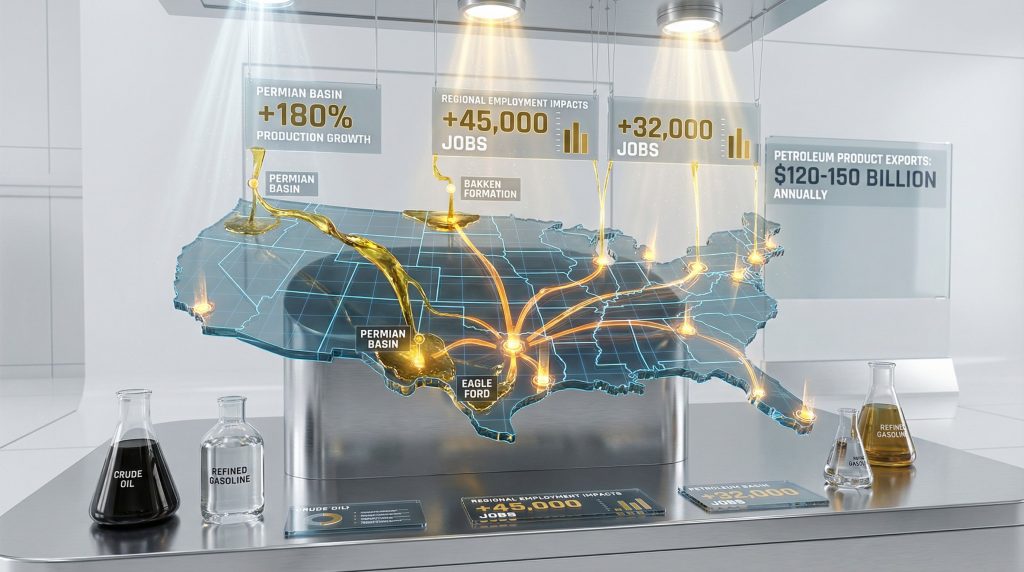
When examining US oil-driven redistribution patterns, the scope extends far beyond simple producer-to-consumer transactions. Modern energy markets function as massive wealth transfer mechanisms, moving capital between regions, income brackets, and economic sectors through interconnected financial channels that include federal taxation systems, state revenue capture frameworks, and international trade balances.
Federal Revenue Generation Through Energy Markets
The petroleum sector contributes to federal coffers through multiple overlapping revenue streams that create cascading redistribution effects throughout the American economy. Corporate income taxes from major energy companies represent just one component of this complex system, with additional contributions flowing through specialized mechanisms designed to capture resource extraction value.
These federal revenue channels operate independently of state-level taxation schemes, creating parallel wealth redistribution systems that can either complement or compete with regional benefit capture strategies. Furthermore, the timing and scale of federal revenue collection directly influences how petroleum wealth ultimately reaches different segments of the American population.
State-Level Resource Revenue Systems
Individual states have developed sophisticated approaches to capturing economic value from petroleum extraction within their boundaries. These mechanisms range from traditional severance taxes to innovative production-based revenue sharing agreements that distribute benefits across broader geographic areas than traditional point-of-extraction taxation.
The variation in state-level revenue capture creates significant disparities in how oil wealth benefits local communities versus broader state populations. Some jurisdictions prioritise immediate local benefits through direct payments to affected communities, while others channel revenues into statewide infrastructure projects or general fund contributions.
When big ASX news breaks, our subscribers know first
Economic Forces Driving Petroleum Revenue Redistribution
Price Transmission Mechanisms
Energy price fluctuations create immediate wealth redistribution effects that operate faster than traditional economic adjustment mechanisms. When crude oil prices increase by substantial margins, the economic impact ripples through consumer budgets within days, effectively creating what economists describe as a regressive taxation effect on household spending.
Analysis from major financial institutions reveals that sustained oil price increases above historical baselines can redistribute significant economic value from consumers to energy producers. According to research cited by Reuters columnist Mike Dolan, the United States maintained an annualised energy trade surplus approaching $100 billion in recent periods, fundamentally altering the traditional economic impact of energy price volatility.
This structural shift means that energy price increases now generate offsetting revenue streams within the domestic economy, contrasting sharply with previous decades when similar price spikes represented pure economic drains. Carlyle strategist Jason Thomas emphasised that unlike previous energy crises, current price increases benefit domestic producers who face no security threats or logistical barriers in bringing their products to market.
Economic Impact Modelling and GDP Effects
Table: Energy Price Shock Economic Impact Scenarios
| Scenario | Oil Price Level | GDP Impact | Inflation Effect | Unemployment Change |
|---|---|---|---|---|
| Baseline Projection | $100+ sustained through 2027 | -0.1% | +0.7 percentage points | +0.1 percentage point |
| Supply Shock Alternative | 25% price jump, 4 quarters | -1.5% | Significant | Substantial first 3 quarters |
| Historical Comparison | 2007-2008 levels | -1.0%+ | Major disruption | Extended adjustment |
Apollo Global Chief Economist Torsten Slok developed analytical frameworks demonstrating that even sustained crude oil prices above $100 per barrel through 2027 would produce relatively modest aggregate macroeconomic impacts. His models, derived from Federal Reserve analytical tools, suggest headline inflation effects could reach 0.7 percentage points, while real GDP, unemployment, and core inflation effects would remain limited to approximately 0.1 percentage point each.
The reduced economic sensitivity reflects two critical structural changes in the American economy. First, the United States has achieved net oil exporter status, creating domestic revenue offsets to consumer price increases. Second, significant improvements in energy efficiency mean the economy requires less petroleum input per unit of GDP compared to historical baseline periods.
However, alternative analytical frameworks suggest more substantial potential impacts. Morgan Stanley modelling indicates that a 25% oil price increase driven by supply disruption and sustained over four quarters could reduce real GDP by approximately 1.5%, with the most severe effects concentrated in the initial three-quarter period.
Regional Economic Impact Analysis
Energy-Producing Region Dynamics
The concentration of petroleum extraction in specific geographic regions creates intense economic effects that can overwhelm local economic capacity during price surge periods. These regions experience rapid wealth accumulation that often exceeds local investment opportunities, leading to complex spillover effects into surrounding economic areas.
Local employment markets in energy-intensive regions demonstrate extreme sensitivity to price fluctuations, with compensation levels often tracking petroleum prices more closely than traditional economic indicators. This creates boom-bust cycles that affect everything from real estate markets to local government revenue planning.
Consumer Region Impact Patterns
Areas with limited energy production but high energy consumption experience the wealth redistribution effects primarily through increased costs for transportation, heating, and electricity. These regions typically see immediate negative impacts from energy price increases, with effects concentrated amongst lower-income households that spend disproportionate percentages of their budgets on energy-related expenses.
The speed of price transmission means consumer regions feel energy price increases almost immediately, while any offsetting benefits from increased domestic energy production may take months or years to materialise through improved trade balances, federal tax revenue redistribution, or indirect economic effects.
Infrastructure and Value-Added Processing Effects
Transportation and Distribution Networks
The location of pipeline systems, export terminals, and refining facilities determines how petroleum wealth flows through regional economies beyond the initial extraction phase. These infrastructure investments create long-term economic anchoring effects that persist even through commodity price cycles.
Major infrastructure projects redistribute economic benefits through both construction phases and ongoing operational activities. Construction employment typically provides short-term regional economic boosts, while operational employment creates sustained, often high-paying positions that support broader local economic ecosystems.
Refining and Processing Value Capture
The geographic concentration of refining capacity creates additional layers of economic value capture beyond raw petroleum extraction. Refining facilities transform crude oil into higher-value products, capturing processing margins that represent significant economic value creation within specific regional economies.
Processing facilities typically require substantial supporting infrastructure and create industrial ecosystems that extend economic benefits beyond direct employment. These facilities often become economic anchors for their regions, generating sustained economic activity through supply chain relationships and supporting service industries.
Federal Policy Influence on Energy Revenue Distribution
Strategic Reserve Operations
Government involvement in petroleum markets through Strategic Petroleum Reserve purchases and releases creates additional demand and supply factors that influence market pricing and, consequently, US oil-driven redistribution patterns. The timing and scale of these operations can significantly affect regional economic impacts and overall market dynamics.
Strategic reserve activities operate independently of commercial market forces, creating government-directed wealth redistribution effects that may support specific policy objectives rather than pure market efficiency. These activities can provide price support during periods of low petroleum prices or additional supply during periods of market stress.
Energy Transition Policy Interactions
Federal policies supporting renewable energy development create competing investment opportunities that may redirect capital flows away from traditional petroleum development projects. In addition, this policy environment affects long-term regional economic planning and may influence how petroleum wealth redistribution patterns evolve over time.
The interaction between traditional energy markets and renewable energy policies creates complex investment decision frameworks that affect both current petroleum revenue distribution and future economic development patterns in energy-dependent regions. Similarly, Canada energy transition demonstrates how policy frameworks influence capital allocation decisions across North America.
Trade Balance and Global Market Position Effects
Export Revenue Growth Implications
America's transformation into a significant petroleum exporter has created new revenue streams that flow into the domestic economy from international markets. Based on verified data from Carlyle strategist analysis, the United States achieved an annualised energy trade surplus of approximately $100 billion, representing a fundamental shift from historical energy trade patterns.
This export revenue growth creates positive wealth redistribution effects that benefit domestic energy producers while potentially moderating the negative impacts of higher domestic energy prices on consumers. The net effect depends on the balance between export revenue gains and domestic price increases.
Global Market Integration Effects
Increased integration with global energy markets means domestic petroleum prices become more closely linked to international market conditions. This integration can create both opportunities and risks for domestic wealth redistribution patterns, depending on global supply and demand dynamics.
The development of export infrastructure connects domestic energy markets more directly to global demand, potentially providing price support during periods of strong international demand while exposing domestic markets to global supply disruptions or demand reductions. For instance, Saudi energy exploration activities demonstrate how global supply decisions affect international market conditions.
The next major ASX story will hit our subscribers first
Sectoral Economic Disruption Patterns
Transportation Industry Impact Mechanisms
Higher petroleum prices create immediate cost pressures throughout transportation-dependent industries, from freight trucking to passenger aviation. These cost increases propagate through supply chains, ultimately affecting consumer prices across broad categories of goods and services.
The redistribution effect operates through margin compression in transportation-intensive industries, with companies facing choices between absorbing higher fuel costs or passing them through to customers. The timing and extent of price pass-through determines how petroleum wealth redistribution ultimately affects different economic sectors.
Manufacturing Competitiveness Changes
Energy-intensive manufacturing sectors may benefit from lower domestic energy costs relative to global competitors during periods when export demand drives up international energy prices faster than domestic prices. This can create competitive advantages that support manufacturing employment and investment.
Conversely, transportation-dependent manufacturing faces margin pressure during periods of elevated fuel costs, potentially affecting production decisions and investment patterns. The net effect on manufacturing depends on the balance between energy cost advantages and transportation cost disadvantages.
Investment Flow and Capital Allocation Effects
Regional Development Finance Cycles
Energy price volatility creates cyclical patterns in regional development finance availability, with lending institutions adjusting their risk assessment and capital allocation based on current and projected petroleum revenue flows. These cycles can significantly affect long-term regional economic development patterns.
During periods of elevated energy prices, energy-producing regions typically experience increased capital availability for development projects, while consumer-focused regions may face tighter credit conditions due to reduced household disposable income and business profitability pressures. However, recent US economic policy developments may modify these traditional patterns through fiscal intervention measures.
Cross-Sector Capital Competition
Volatile energy markets affect investment decisions across multiple sectors by creating uncertainty about future operating costs and revenue potential. This uncertainty can redirect capital flows towards sectors with more predictable cost structures or away from energy-intensive business models.
The competition for investment capital between traditional energy projects and renewable energy alternatives creates additional complexity in capital allocation decisions, particularly during periods of significant energy price volatility. These dynamics intersect with broader market concerns, including tariff impact on markets, which can further influence investment decision-making.
Natural Gas Market Interactions
Price Correlation Effects
Petroleum and natural gas markets operate with complex interdependencies that affect wealth redistribution patterns across both energy sectors. When oil prices increase substantially, natural gas often experiences sympathy pricing effects, multiplying the regional economic impacts in areas with significant production of both commodities.
The US natural gas forecast indicates potential price volatility that could amplify US oil-driven redistribution effects in key producing regions. These correlated price movements create compounding wealth transfer effects that benefit energy-producing areas while increasing cost burdens for consumers.
Regional Production Synergies
Areas with both petroleum and natural gas production capabilities experience more significant economic impacts during energy price cycles due to diversified revenue streams. This dual production capacity can moderate boom-bust cycles by providing alternative revenue sources when one commodity experiences temporary price weakness.
Measurement and Analysis Frameworks
Economic Impact Assessment Methodologies
Comprehensive analysis of US oil-driven redistribution requires sophisticated modelling approaches that account for direct effects, indirect effects, and induced effects across multiple geographic scales and time horizons. These methodologies must capture the complex interactions between federal, state, and local economic systems.
Current analytical frameworks employed by major financial institutions provide valuable insights but may not fully capture the distributional effects across different income groups and geographic regions. Enhanced measurement approaches could provide better guidance for policy development and economic planning.
Distributional Analysis Techniques
Effective measurement of wealth redistribution effects requires detailed analysis of impacts across income quintiles, regional variations, and sectoral differences. This analysis helps identify which population segments benefit from petroleum wealth redistribution and which segments bear the primary costs.
The development of standardised measurement methodologies could improve public understanding of energy market impacts and support more informed policy discussions about energy development and regulation priorities. Furthermore, integration with broader economic indicators provides context for understanding petroleum's role within larger economic systems.
Frequently Asked Questions
How does current US oil-driven redistribution differ from historical patterns?
The fundamental difference lies in America's new status as a net energy exporter, which was last achieved in the 1950s. This creates domestic revenue offsets to consumer price increases that did not exist during previous energy crises. According to Reuters analysis, the US maintained approximately $100 billion in annualised energy trade surplus, representing a structural economic shift that changes how energy price increases affect overall GDP and wealth distribution.
Which regions experience the most significant economic impacts from energy price changes?
Energy-producing regions experience the most dramatic economic effects, with rapid wealth accumulation during price increases and sharp contractions during price declines. However, the analysis shows that consumer regions also experience significant impacts through increased transportation and heating costs, with effects concentrated amongst lower-income households who spend larger percentages of their income on energy-related expenses.
How do energy price increases affect different income groups?
Energy price increases create regressive effects, disproportionately burdening lower-income households through higher transportation and heating costs. Simultaneously, these increases benefit investors and workers in energy-producing regions. The net redistributional effect depends on the balance between these opposing forces and the extent to which domestic energy production offsets consumer cost increases.
What role does federal policy play in energy wealth redistribution?
Federal policy influences redistribution through Strategic Petroleum Reserve operations, federal tax collection from energy companies, and renewable energy transition policies that create competing investment opportunities. These policies can either amplify or moderate market-driven redistribution effects, depending on their timing and scale relative to market conditions.
How do export markets affect domestic energy wealth distribution?
Export revenue provides positive economic benefits that flow into domestic energy-producing regions and, through federal taxation and trade balance improvements, potentially benefit the broader economy. However, export market integration also links domestic prices more closely to global conditions, which can create additional volatility in domestic wealth redistribution patterns. According to Reuters commodity market analysis, export infrastructure development continues to strengthen these international linkages.
This analysis examines the complex dynamics of US oil-driven redistribution across regional economies, income groups, and economic sectors. The effects of America's transformation into a net energy exporter continue to reshape traditional patterns of energy-related wealth distribution throughout the domestic economy.
Ready to Capitalise on Energy Market Shifts?
Discovery Alert's proprietary Discovery IQ model delivers real-time alerts on significant ASX mineral and energy discoveries, enabling subscribers to identify actionable opportunities in the commodities sector ahead of the broader market. Begin your 14-day free trial today at Discovery Alert and secure your competitive advantage in navigating complex energy and resource markets.