August 5, 2026
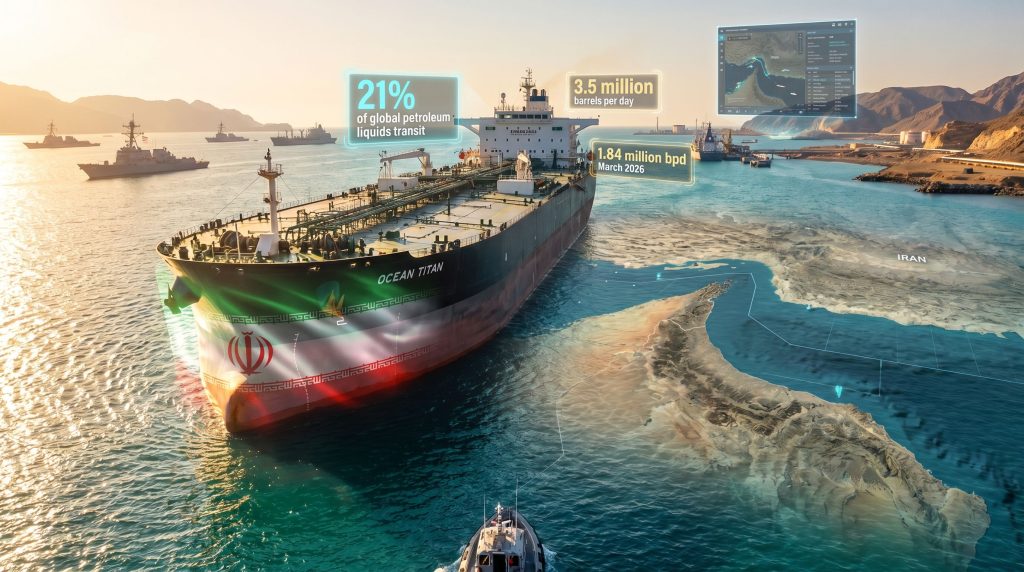
The global energy market faces unprecedented challenges as enforcement actions target critical shipping lanes, creating complex interactions between naval capabilities and commercial operations. Recent events demonstrate how US-sanctioned supertankers enter Gulf despite blockade enforcement efforts, revealing the intricate balance between geopolitical pressure and maritime commerce resilience.
Understanding Maritime Enforcement Mechanisms in Critical Shipping Corridors
The world's petroleum supply chains rely heavily on predictable transit through narrow waterways, where enforcement actions can create immediate market disruptions. These corridors represent strategic leverage points where relatively small naval forces can influence global energy flows far exceeding their direct military capabilities.
Furthermore, the interconnected nature of global energy markets means that disruptions in one region can trigger cascading effects across international petroleum distribution networks. This vulnerability has become increasingly apparent as geopolitical tensions escalate.
The Strategic Importance of the Strait of Hormuz in Global Energy Security
The Strait of Hormuz handles approximately 21% of global petroleum liquids transit, making it one of the most strategically significant waterways for energy security. This narrow passage, measuring just 54 kilometers at its widest point, constrains shipping traffic to roughly 3-4 kilometers of effective transit corridor per directional flow due to navigational safety requirements.
Recent operational data indicates that 15-20 tankers pass through the strait daily under normal conditions. During April 2026, this traffic pattern continued despite enforcement announcements, with multiple Very Large Crude Carriers (VLCCs) documented in transit.
Shipping intelligence tracked the VLCC Alicia successfully passing through the strait on April 15, followed by the VLCC RHN entering the Gulf on April 16. This demonstrates that US-sanctioned supertankers enter Gulf despite blockade conditions, highlighting enforcement gaps in maritime operations.
The geographic constraints create both vulnerability and defensive advantages for different stakeholders:
- Shallow-water limitations: Average depth of 90 meters with minimum 24-meter shipping lanes
- Chokepoint width: Effective transit corridor reduced to 6-8 kilometers total
- Traffic density: High vessel concentration creates collision avoidance complexity
- Navigational predictability: Limited routing options enable monitoring but also defensive positioning
Historical precedents show that enforcement actions in the strait trigger immediate market sensitivity. The 2019 tanker incidents resulted in temporary oil price increases of $5-8 per barrel within 48 hours, despite minimal actual supply disruption. Current enforcement capabilities suggest similar market psychology remains active, as detailed in our oil price rally analysis.
Sanctions Enforcement vs. Maritime Sovereignty: Legal Framework Analysis
The legal foundation for maritime enforcement in international waterways creates significant complexity when applied to economic sanctions rather than traditional navigational safety concerns. International maritime law under the United Nations Convention on the Law of the Sea (UNCLOS) provides framework for territorial sea enforcement within 12 nautical miles.
However, economic blockade authority in international waters remains contested. Recent enforcement statistics reveal the practical limitations of blockade operations.
US Central Command reported that 10 vessels were turned around during the initial enforcement period from April 14-16, 2026. They claimed that no ships successfully broke through the blockade. However, shipping data from LSEG and Kpler documented successful transit by multiple sanctioned vessels during the same timeframe, indicating enforcement coverage gaps.
The secondary sanctions framework expands potential enforcement scope beyond primary targets. US authorities warned of sanctions on buyers of Iranian oil, creating compliance complexity for international petroleum traders. This approach leverages financial system access rather than direct naval interdiction.
Consequently, it requires cooperation from allied banking systems and insurance providers. The US–China trade tensions have demonstrated how economic pressure mechanisms can create far-reaching market implications.
Key legal tensions in maritime sanctions enforcement:
- Flag state jurisdiction: Vessels operate under registration country authority
- Territorial water limits: Enforcement authority ends at 12 nautical mile boundary
- International transit rights: UNCLOS Article 38 guarantees passage through international straits
- Commercial law conflicts: Sanctions enforcement vs. existing shipping contracts
- Third-party liability: Insurance and financing provider exposure to sanctions violations
The timeline of policy changes reveals strategic positioning considerations. US enforcement of Iranian energy sanctions was loosened weeks prior to the April 2026 blockade announcement. This suggests tactical leverage development rather than consistent regulatory approach.
When big ASX news breaks, our subscribers know first
What Makes Certain Vessels Capable of Breaching Naval Blockades?
Large-scale petroleum transport vessels possess specific technical characteristics that influence their ability to operate in contested maritime environments. Understanding these capabilities requires examining both the physical specifications of modern tanker fleets and the operational methodologies that enable sanctions evasion.
Technical Characteristics of Very Large Crude Carriers (VLCCs)
VLCCs represent the largest category of petroleum tankers capable of transiting the Strait of Hormuz. Their 2 million barrel cargo capacity defines their strategic importance. Recent shipping data confirmed that both VLCC Alicia and VLCC RHN maintain this capacity specification, enabling significant volume transport per voyage.
VLCC Technical Specifications:
| Specification | Range | Strategic Implications |
|---|---|---|
| Length | 330-360 meters | Limited maneuverability in constrained waters |
| Beam (width) | 60 meters | Requires deep-water channels |
| Draft (laden) | 15-16 meters | Shallow-water navigation restrictions |
| Draft (ballast) | 3-4 meters | Enhanced maneuverability when empty |
| Transit speed | 12-15 knots | 3-6 hour Strait passage time |
| Fuel consumption | 250-350 tons/day | Economic pressure from route extensions |
The VLCC RHN entered the Gulf in empty configuration on April 16, 2026, demonstrating strategic pre-positioning capability. Empty vessels carrying only ballast water can achieve superior maneuverability and reduced detection signatures for cargo content. Moreover, they maintain legal transit rights through international waterways.
Modern VLCC construction includes double-hull design mandated after the Exxon Valdez incident. This provides structural resilience against minor collisions or boarding attempts. The segregated ballast tank system allows flexible weight distribution optimisation, enabling vessels to adjust draft characteristics based on operational requirements.
Navigation electronics systems provide multiple redundancy for route planning and communication:
- Integrated Navigation Systems (INS) with dual radar capability
- Electronic Chart Display and Information System (ECDIS) for precision routing
- Dynamic positioning systems for autonomous station-keeping during transfers
- Multiple communication arrays for coordination with support vessels
Sanctions Evasion Methodologies in Maritime Commerce
The operational history of vessels involved in sanctions evasion reveals sophisticated methodologies for circumventing enforcement mechanisms. Both VLCC Alicia and VLCC RHN maintain records of carrying Iranian oil in previous years according to Kpler historical data. This indicates established operational patterns rather than opportunistic violations.
Ship-to-ship (STS) transfer operations represent the primary mechanism for avoiding direct port enforcement. These operations typically occur 20-50 nautical miles offshore in international waters, beyond coastal state jurisdiction.
The process requires 18-48 hours for complete cargo transfer between vessels. It involves dual-anchoring systems and specialised pumping equipment.
The VLCC RHN entry as an empty vessel followed by unclear destination routing suggests STS preparation. This methodology enables cargo acquisition without direct port calls at sanctioned facilities, complicating enforcement identification and interdiction timing.
Ownership obfuscation structures create additional enforcement complexity:
- Beneficial ownership concealment through Luxembourg or Liberian corporations
- Management contract separation via Singapore or Hong Kong operators
- Bareboat charter agreements with Panama-flagged entities
- Cascading shell structures obscuring ultimate Iranian entity connections
AIS (Automatic Identification System) manipulation techniques provide operational security during critical transit phases. While explicit AIS tampering was not documented in recent enforcement periods, references to LSEG and Kpler shipping data suggest active monitoring systems are detecting vessel movements despite evasion attempts.
Digital tracking countermeasures include:
- GPS signal jamming creating false position reports
- AIS transceiver disconnection during sensitive passages
- IMO number manipulation for vessel identity changes
- False flag declarations in automated reporting systems
- Coordinated convoy operations to confuse tracking algorithms
How Do Geopolitical Tensions Impact Global Oil Supply Chain Resilience?
Energy market stability depends on predictable supply chain operations, but geopolitical enforcement actions create cascading effects across global petroleum distribution networks. Understanding these impacts requires analysing both immediate disruption mechanisms and longer-term supply chain adaptation strategies.
In addition, the broader implications of trade disputes extend beyond immediate maritime operations. The tariff impact on markets demonstrates how economic policy decisions can ripple through global supply chains.
Iran's Strategic Response to Economic Pressure
Iran's petroleum production infrastructure demonstrates significant resilience capacity for sustained operations despite enforcement pressure. Current production levels reach 3.5 million barrels per day (bpd), which analysts indicate can be maintained for weeks through onshore storage utilisation as buffer mechanisms.
Iranian Export Performance Data (2025-2026):
| Period | Export Volume (bpd) | Production Utilisation | Storage Strategy |
|---|---|---|---|
| 2025 Average | 1.68 million | 48% of production | Standard operations |
| March 2026 | 1.84 million | 53% of production | Increased export push |
| April 2026 (partial) | 1.71 million | 49% of production | Storage buffer activation |
The March 2026 export increase to 1.84 million bpd suggests anticipatory stockpiling by international buyers ahead of potential enforcement actions. This pre-positioning strategy indicates market participants expected supply chain disruptions and moved to secure inventory buffers.
Onshore storage infrastructure provides strategic flexibility for production continuation during transit disruptions. Iranian facilities can absorb several weeks of production output without requiring immediate export. This enables sustained operations while enforcement mechanisms are tested or circumvented.
The April export data showing 1.71 million bpd despite blockade announcements demonstrates continued commercial activity. This occurred through alternative routing or successful evasion operations. This performance level exceeds historical 2025 averages, suggesting enforcement effectiveness remains limited.
Alternative Route Development and Supply Chain Diversification
Geographic constraints in the Strait of Hormuz create incentives for alternative routing development. However, economic and technical limitations restrict immediate implementation options. Regional stakeholders are exploring multiple pathway diversification strategies to reduce chokepoint vulnerability.
Omani territorial waters present the most immediate alternative transit option. Iranian negotiators indicated willingness to allow ships to sail freely through the Omani side of the Strait of Hormuz without risk of attack. This was part of potential agreement structures. This approach leverages the 12 nautical mile territorial boundary to create enforcement-free transit corridors.
Pipeline infrastructure development represents longer-term supply chain diversification. Current capacity remains insufficient for large-scale petroleum volumes. Regional pipeline networks can handle refined products and limited crude volumes but cannot replace tanker-based transport for major export operations.
Strategic petroleum reserve implications for importing nations create additional market complexity. Countries maintaining strategic reserves can absorb short-term supply disruptions but face economic pressure from reserve drawdowns and subsequent restocking requirements.
Alternative routing economics show significant cost penalties:
- Cape of Good Hope routing: Additional 2,000+ nautical miles
- Transit time increase: 10-15 additional days per voyage
- Operating cost impact: $2-3 million per VLCC voyage
- Insurance premium increases: 15-25% higher coverage costs
- Financing complexity: Extended letter of credit requirements
According to recent analysis on US sanctions and tanker movement, enforcement challenges continue to evolve as market participants adapt their operational strategies.
What Are the Economic Implications of Maritime Blockade Enforcement?
Maritime enforcement actions create immediate market volatility through supply uncertainty rather than actual delivery disruptions. Understanding these economic mechanisms requires analysing both direct supply impacts and broader market psychology responses to enforcement announcements.
The broader context of global trade disputes, including Trump tariff implications, provides additional complexity to international petroleum markets facing multiple sources of economic uncertainty.
Market Impact Assessment of Supply Disruption Scenarios
Energy markets demonstrate high sensitivity to perceived supply threats even when actual delivery volumes remain largely unchanged. The enforcement period from April 14-16, 2026 provides data points for analysing market response mechanisms under different operational scenarios.
Supply Disruption Analysis Framework:
| Enforcement Scenario | Daily Volume Impact | Price Volatility Range | Market Duration |
|---|---|---|---|
| Partial Enforcement (Current) | 500K-800K bpd theoretical | Moderate (+$5-15/barrel) | 2-4 weeks sustainable |
| Comprehensive Blockade | 1.5-2M bpd maximum | High (+$20-40/barrel) | 1-2 weeks before circumvention |
| Alternative Route Activation | 200K-400K bpd actual | Low (+$2-8/barrel) | 8-12 weeks implementation |
| Negotiated Resolution | 50K-200K bpd residual | Minimal (-$2 to +$5/barrel) | Market normalisation |
The documented passage of VLCC Alicia and VLCC RHN during enforcement periods suggests actual supply disruption remains minimal despite official blockade announcements. This pattern indicates market price responses may exceed underlying supply fundamentals.
Compliance cost calculations for petroleum importers create additional economic pressure beyond direct supply pricing. International buyers face:
- Due diligence requirements: Enhanced vessel ownership verification
- Insurance premium increases: 15-25% higher coverage for contested routes
- Financing complications: Extended documentation and compliance review
- Legal consultation costs: Sanctions compliance advisory services
- Alternative sourcing premiums: Higher prices for guaranteed clean supply
Secondary Sanctions Risk Analysis for International Buyers
The threat of secondary sanctions creates cascading compliance complexity for international petroleum markets. US authorities announced potential sanctions on buyers of Iranian oil, expanding enforcement scope beyond direct shipping operations to include downstream commercial relationships.
Third-party liability exposure affects multiple market participants:
- Petroleum trading companies: Direct purchasing exposure
- Shipping companies: Vessel operation and charter risks
- Insurance providers: Coverage for sanctioned cargo operations
- Financial institutions: Trade financing and payment processing
- Flag state authorities: Registry compliance and vessel oversight
Canadian, Norwegian, and Greek vessel registries represent significant flag jurisdictions for international tanker fleets. Secondary sanctions could create regulatory conflicts between US enforcement requirements and flag state maritime law obligations.
The economic calculation for continued Iranian petroleum trade involves weighing commodity profit margins against potential sanctions penalties. For major international traders, sanctions violation fines can reach hundreds of millions of dollars. Meanwhile, typical trading margins remain in the $1-5 per barrel range.
Risk assessment framework for market participants:
- Probability of detection: Enforcement coverage gaps and evasion success rates
- Penalty severity: Historical sanctions violation fine structures
- Business continuity impact: Loss of US market access or dollar financing
- Reputation costs: Long-term relationship impacts with regulatory authorities
- Insurance availability: Coverage for sanctions-related commercial losses
The intersection of these factors with broader trade war commodity impact creates multiple layers of economic uncertainty for global energy markets.
How Do Naval Assets Enforce Maritime Blockades in Practice?
Naval enforcement operations in high-traffic commercial waterways require coordination between multiple vessel types and monitoring systems. Understanding these operational mechanisms reveals both the capabilities and limitations of maritime blockade implementation in contested strategic environments.
U.S. Central Command Operational Capabilities in the Persian Gulf
US naval presence in the Persian Gulf operates through the Fifth Fleet based in Bahrain, maintaining continuous deployment capability for rapid response operations. The enforcement infrastructure includes surface vessels, aircraft patrols, and satellite-based monitoring systems integrated through Central Command coordination.
Recent enforcement statistics indicate 10 vessels turned around during the initial blockade period. However, US-sanctioned supertankers enter Gulf despite blockade enforcement claims. This performance gap suggests operational limitations in comprehensive coverage of all commercial traffic through the strait.
Fleet composition for maritime enforcement includes:
- Guided missile destroyers: Primary interdiction platforms with boarding capability
- Fast attack craft: High-speed response for vessel interception
- Maritime patrol aircraft: Extended surveillance and vessel identification
- Support vessels: Logistics and extended deployment sustainability
- Allied naval coordination: Integration with partner nation assets
Real-time vessel identification systems combine multiple data sources for operational awareness. AIS tracking provides basic vessel information, while satellite imagery confirms physical positions and cargo loading status. LSEG and Kpler commercial data systems supplement military intelligence with shipping industry analysis.
Enforcement Challenges in High-Traffic Maritime Corridors
The Strait of Hormuz processes approximately 15-20 tankers daily under normal operational conditions, creating significant complexity for selective enforcement operations. Naval assets must distinguish between sanctioned and compliant cargo while maintaining commercial traffic flow and avoiding international incidents.
Operational challenges in maritime enforcement:
- Target identification: Distinguishing sanctioned cargo from legitimate shipments
- Boarding authority: Legal jurisdiction for vessel inspection in international waters
- Traffic management: Avoiding commercial shipping lane disruption
- Allied coordination: Integration with partner nation enforcement priorities
- Escalation prevention: Managing encounters with defensive or resistant vessels
The documented transit of VLCC Alicia heading to Iraq demonstrates identification complexity. Iraq operates as an intermediary market for Iranian crude, creating ambiguity about beneficial cargo ownership and sanctions applicability for third-party state purchases.
Diplomatic complications arise when enforcement actions involve neutral flag states or allied nation vessels. The VLCC RHN entry as an empty vessel highlights enforcement timing challenges. Interdiction authority may be limited when vessels carry only ballast water rather than sanctioned cargo.
Daily operational requirements include:
- Continuous surveillance: 24-hour monitoring of strait approaches
- Rapid response capability: Interception within 30-60 minute timeframes
- Documentation standards: Legal evidence collection for enforcement actions
- Safety protocols: Collision avoidance in congested shipping lanes
- Communication systems: Coordination with commercial vessels and allies
Intelligence gathering mechanisms provide advance warning for targeted enforcement operations. Commercial shipping schedules, port loading data, and vessel ownership analysis enable predictive positioning for interdiction attempts.
Recent reports from maritime security analysts indicate that enforcement effectiveness varies significantly based on operational conditions and vessel behaviour patterns.
What Strategic Options Exist for Resolving Maritime Trade Disputes?
Long-term resolution of maritime enforcement conflicts requires addressing underlying geopolitical tensions while maintaining energy market stability. Various negotiation frameworks and confidence-building measures offer pathways for de-escalation and sustainable commercial relationships.
Negotiation Frameworks for Energy Security Agreements
The weekend peace talks in Islamabad between the US and Iran that preceded the blockade announcement indicate active diplomatic engagement despite enforcement escalation. Understanding why these negotiations failed provides insight into structural obstacles and potential resolution pathways.
Key negotiation elements typically include:
- Production quota arrangements: Iranian output limits in exchange for sanctions relief
- Transit corridor guarantees: Safe passage agreements for commercial shipping
- Monitoring mechanisms: International oversight for compliance verification
- Graduated sanctions relief: Phased enforcement reduction tied to compliance milestones
- Regional stakeholder involvement: Third-party mediation and guarantee structures
Iranian proposals included allowing ships to sail freely through the Omani side of the Strait of Hormuz without attack risk. This suggests territorial water solutions may offer compromise frameworks. This approach leverages existing maritime law while addressing enforcement authority concerns.
Conditional transit arrangements could establish verification mechanisms for cargo origin and ownership. International shipping registries and inspection protocols might provide transparency while maintaining commercial confidentiality for legitimate trade operations.
Structural failure analysis suggests negotiations breakdown occurred over:
- Timeline disagreements: Sanctions relief sequencing vs. compliance demonstration
- Verification scope: International monitoring authority and access requirements
- Production ceiling disputes: Acceptable Iranian output levels and export quotas
- Secondary sanctions: Treatment of third-party buyers and intermediary markets
- Regional security: Broader Middle Eastern conflict resolution linkages
Long-term Implications for Middle Eastern Energy Geopolitics
Maritime enforcement actions in the Persian Gulf create precedents for future energy market governance and strategic waterway management. The outcomes of current enforcement efforts will influence regional alliance structures and infrastructure investment priorities for decades.
Iran's position in OPEC production quotas faces uncertainty from continued sanctions pressure. Current production of 3.5 million bpd represents significant market share that other producers might seek to capture through increased output if Iranian exports face sustained disruption.
Regional alliance shifts affecting energy partnerships could emerge from enforcement responses. Gulf Cooperation Council states may develop enhanced coordination mechanisms for energy security. Meanwhile, Iranian partnerships with China, Russia, and other sanctions-resistant buyers could strengthen alternative trading relationships.
Infrastructure investment priorities for supply chain security include:
- Pipeline expansion: Reduced maritime chokepoint dependency
- Storage capacity development: Strategic reserve enhancement for supply buffering
- Alternative port construction: Diversified loading and discharge facilities
- Technology systems: Enhanced vessel tracking and cargo verification capabilities
- Insurance mechanisms: Risk-sharing arrangements for contested route operations
Future scenarios for energy market structure depend significantly on enforcement precedent establishment. Successful maritime blockade implementation could encourage similar actions in other strategic waterways. Conversely, enforcement failure might reduce the credibility of sanctions-based pressure mechanisms.
The next major ASX story will hit our subscribers first
Maritime Chokepoint Management in an Era of Economic Warfare
The intersection of maritime commerce and economic sanctions represents an evolving challenge for global energy security. Understanding these dynamics requires integrating naval capabilities, international law, commercial operations, and market psychology into comprehensive risk assessment frameworks.
Key Takeaways for Energy Market Participants
Market participants must develop sophisticated risk management approaches that account for both immediate supply disruption potential and longer-term geopolitical trend evolution. The documented ability of US-sanctioned supertankers enter Gulf despite blockade conditions demonstrates enforcement limitation realities that affect strategic planning assumptions.
Critical monitoring indicators include:
- Enforcement effectiveness metrics: Vessel interception rates vs. successful transits
- Market price volatility: Supply disruption fears vs. actual delivery impacts
- Diplomatic engagement: Negotiation progress and breakdown risk factors
- Alternative routing development: Infrastructure capacity and economic viability
- Alliance coordination: International cooperation levels for enforcement support
Risk assessment frameworks must incorporate multiple scenario planning approaches. Partial enforcement with limited effectiveness represents the current operational environment. However, comprehensive blockade or negotiated resolution scenarios require different strategic responses.
Strategic planning considerations for energy security include:
- Supply chain diversification: Reducing chokepoint dependency through alternative sources
- Inventory management: Strategic reserve utilisation and restocking planning
- Contract structure: Force majeure provisions and delivery location flexibility
- Insurance coverage: Political risk and sanctions violation protection
- Regulatory compliance: Enhanced due diligence and documentation standards
Future Scenarios for Strait of Hormuz Transit
Long-term transit security depends on resolving underlying geopolitical tensions while maintaining commercial viability for international energy trade. Multiple pathway scenarios require different risk management approaches and investment strategies.
Probability assessment for sustained enforcement suggests limited durability for comprehensive blockade operations. High traffic volumes, international law constraints, and economic pressure from supply disruption create incentives for negotiated resolution or selective enforcement approaches.
Technology solutions for supply chain transparency offer potential frameworks for compromise arrangements. Enhanced vessel tracking, cargo verification systems, and international monitoring mechanisms could provide confidence-building measures while maintaining commercial confidentiality.
Regional cooperation mechanisms for crisis prevention include:
- Joint maritime patrols: Shared responsibility for shipping lane security
- Commercial traffic coordination: Advance scheduling and route optimisation
- Emergency response protocols: Rapid resolution procedures for enforcement incidents
- Information sharing systems: Coordinated intelligence for legitimate traffic verification
- Dispute resolution mechanisms: International arbitration for commercial conflicts
The precedent established by current enforcement efforts will influence global energy market governance for years to come. Successful maritime sanctions enforcement could encourage similar approaches in other strategic waterways. However, enforcement limitations might shift emphasis toward alternative pressure mechanisms.
Understanding these dynamics requires continuous analysis of naval capabilities, commercial adaptation strategies, and diplomatic engagement effectiveness. Energy market participants must balance immediate operational requirements with longer-term strategic positioning in an increasingly complex geopolitical environment where maritime commerce intersects directly with economic warfare mechanisms.
Looking to Navigate Complex Energy Market Disruptions?
Discovery Alert's proprietary Discovery IQ model helps investors capitalise on market opportunities arising from geopolitical tensions affecting energy and commodities markets. Our advanced AI technology monitors ASX announcements for discovery-rich opportunities that can benefit from supply chain disruptions and energy security concerns, delivering real-time insights to position your portfolio ahead of market movements.