
June 21, 2026
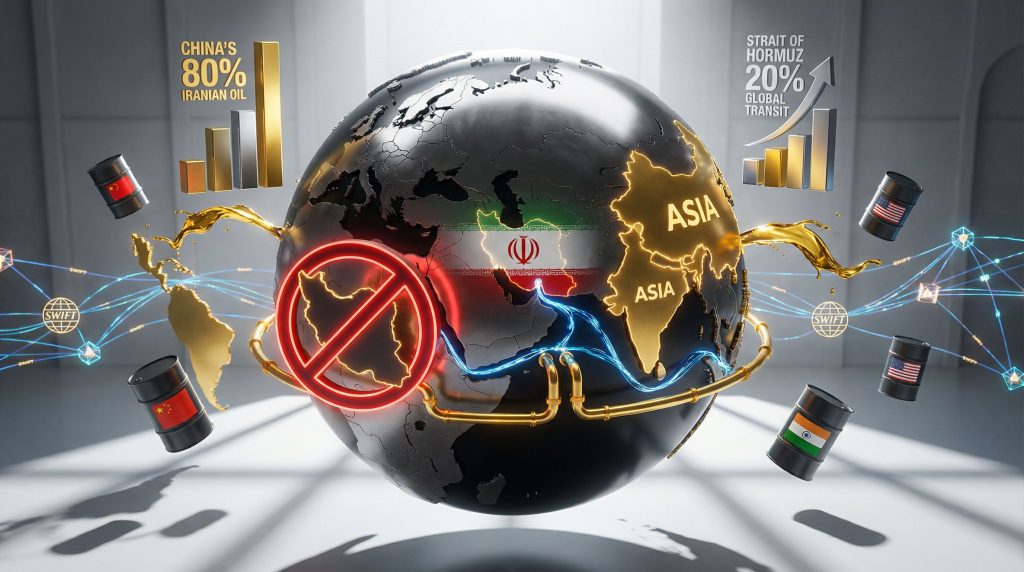
The complex landscape of international energy markets faces unprecedented challenges as US sanctions on Iranian oil continue to reshape global supply chains and trading relationships. Furthermore, these enforcement mechanisms create cascading effects across financial institutions, shipping routes, and strategic partnerships that extend far beyond traditional trade relationships. The sophisticated architecture of modern sanctions regimes incorporates secondary enforcement measures targeting financial flows rather than simply prohibiting direct transactions.
Recent enforcement actions demonstrate how treasury departments monitor financial flows through banking systems to identify sanctions violations. Moreover, the interconnected nature of global energy infrastructure means that disruptions in one region can trigger adaptation strategies worldwide, affecting everything from maritime insurance premiums to strategic petroleum reserve policies.
Understanding the Economic Architecture of Oil Sanctions
The modern sanctions framework operates through multiple enforcement layers that create compounding pressure on targeted economies and their trading partners. Secondary sanctions represent the most sophisticated evolution of this approach, targeting financial institutions and third-party entities rather than limiting enforcement to direct trade relationships.
The Mechanics of Secondary Sanctions in Energy Markets
Secondary sanctions function by creating compliance risks for financial institutions that process transactions involving sanctioned entities, even when those institutions are not directly subject to primary sanctions. This mechanism transforms banks into enforcement agents, as they must choose between maintaining access to US financial systems or facilitating transactions with sanctioned counterparts.
The enforcement approach revealed in recent Treasury communications demonstrates this strategy's operational focus. According to statements from Treasury Secretary Scott Bessent on April 16, 2026, the administration explicitly warned Chinese financial institutions that proving Iranian money flows through their accounts would trigger secondary sanctions measures. This represents a shift from monitoring trade transactions to scrutinising the financial consequences of those transactions.
Key enforcement mechanisms include:
- Financial flow monitoring through banking relationships
- Conditional sanctions authorisation based on transaction evidence
- Communication directly with foreign financial institutions
- Coordination with transportation infrastructure sanctions
The technical implementation involves Treasury Department monitoring of financial flows rather than solely tracking physical commodity movements. This creates dual pressure points: banks face compliance costs and reputational risks, while oil purchasers must navigate increasingly complex financial arrangements to complete transactions.
SWIFT banking systems become enforcement chokepoints in this architecture, as international wire transfers require routing through correspondent banking relationships that connect to US financial infrastructure. Financial institutions must implement enhanced due diligence protocols, transaction screening technologies, and compliance reporting systems to avoid inadvertent sanctions violations.
Market Concentration Risks in Global Oil Trade
The effectiveness of sanctions regimes often depends on concentrated market structures that create vulnerability points for both sanctioned countries and their primary trading partners. China's dominant position in Iranian oil purchases exemplifies this dynamic, with Chinese entities purchasing over 80 percent of Iran's shipped oil according to recent trade data.
This concentration creates mutual dependencies that sanctions policies attempt to exploit. Iran relies heavily on Chinese demand for foreign exchange earnings, while China benefits from discounted Iranian crude that supports its refining margins and energy security objectives. The 140 million barrels of Iranian oil that reached global markets during the March-April 2026 waiver period illustrates the scale of this trade relationship.
Market concentration factors include:
- Geographic clustering of demand in major importing regions
- Limited alternative supplier relationships for sanctioned producers
- Transportation infrastructure dependencies through specific routes
- Financial relationship concentration amongst regional banking systems
Price discovery mechanisms become distorted when large volumes of oil trade outside traditional market channels. Sanctioned oil typically trades at significant discounts to benchmark crude prices, creating arbitrage opportunities for entities willing to accept compliance risks. These discounted transactions can influence regional pricing even when volumes represent relatively small percentages of global oil trade.
Strategic petroleum reserve policies interact with these market dynamics as importing countries must balance current supply needs against future sanctions escalation risks. The timing of reserve releases, purchases, and inventory management becomes increasingly important when major suppliers face intermittent sanctions enforcement.
When big ASX news breaks, our subscribers know first
What Economic Pressures Drive Sanctions Escalation?
Sanctions escalation typically reflects calculated assessments of economic pressure thresholds, geopolitical leverage opportunities, and domestic political considerations. The timing and intensity of enforcement measures often correlate with broader strategic objectives rather than purely economic factors.
Geopolitical Risk Premium in Oil Pricing
Energy markets incorporate geopolitical risk premiums that fluctuate based on perceived supply disruption probabilities. These premiums reflect trader assessments of multiple factors including sanctions enforcement likelihood, alternative supply availability, and regional conflict escalation potential.
The maritime blockade implementation on April 14, 2026, during the seventh week of regional conflict demonstrates how sanctions timing can amplify market uncertainty. In addition, oil price movements during these periods often reflect broader trade tensions that compound regional supply concerns.
Risk premium factors include:
- Supply disruption probability calculations
- Alternative supply source availability assessments
- Transportation route vulnerability evaluations
- Insurance and shipping cost adjustment expectations
Market psychology during sanctions periods often reflects asymmetric risk assessments, where potential supply disruptions receive greater weighting than supply restoration possibilities. This creates upward price bias even when actual physical shortages do not materialise immediately.
Speculative trading activity typically increases during sanctions announcement periods as algorithmic trading systems and human traders attempt to position for volatility. Options markets often show increased activity in out-of-the-money calls on crude oil futures, reflecting tail risk hedging demand.
Supply Chain Vulnerabilities in Critical Waterways
Global energy transportation depends on maritime chokepoints that represent critical vulnerabilities during geopolitical tensions. The Strait of Hormuz handles approximately 20 percent of global oil and liquefied natural gas transit, making it a strategic focus for both sanctions implementation and evasion efforts.
Alternative routing through overland pipelines or other maritime channels typically involves significant cost increases and capacity constraints. These logistics costs become permanent features of sanctioned trade relationships, affecting long-term competitiveness even after sanctions removal.
Transportation vulnerability factors:
- Chokepoint capacity limitations during peak demand periods
- Insurance premium adjustments for sanctioned trade routes
- Port facility access restrictions in key transshipment hubs
- Vessel availability for sanctioned cargo transportation
Regional refinery capacity redistribution occurs as sanctions alter traditional supply relationships. Refineries optimised for specific crude oil grades must adjust operations when primary suppliers become unavailable, often resulting in reduced efficiency and higher processing costs.
Maritime insurance markets play crucial enforcement roles by adjusting premiums and coverage availability for vessels engaged in sanctioned trade. London-based insurance markets, which dominate global shipping coverage, typically implement sanctions compliance requirements that effectively extend US and European sanctions globally.
How Do Financial Institutions Navigate Sanctions Compliance?
Banking sector compliance with sanctions regimes requires sophisticated risk management protocols that balance regulatory requirements with commercial relationships. The complexity increases exponentially when sanctions target major economies with extensive global financial integration.
Banking Sector Risk Management Protocols
Financial institutions implement multi-layered compliance systems designed to detect, prevent, and report potential sanctions violations before they occur. These systems must process high-volume transaction flows while maintaining efficiency and customer service standards.
The Treasury Department's direct communication with Chinese banks regarding Iranian financial flows demonstrates the enforcement focus on detection rather than prevention. Banks must prove negative facts – that sanctioned money is not flowing through their systems – rather than simply implementing standard compliance procedures.
Compliance system components include:
- Real-time transaction screening against sanctions lists
- Enhanced due diligence for high-risk jurisdictions and customers
- Suspicious activity monitoring and reporting protocols
- Regular compliance training and system updating procedures
Technology solutions increasingly rely on artificial intelligence and machine learning to identify complex transaction patterns that may indicate sanctions evasion. These systems must balance detection sensitivity with false positive management to avoid disrupting legitimate commercial activity.
Correspondent banking relationships face particular scrutiny during sanctions periods, as these relationships provide the infrastructure for international financial transfers. Banks must continuously evaluate whether their correspondent partners maintain adequate sanctions compliance standards.
Currency and Payment System Adaptations
Sanctions enforcement drives innovation in alternative payment mechanisms as affected parties seek to maintain commercial relationships while avoiding compliance violations. These adaptations often outlast the sanctions periods that created them, permanently altering global financial infrastructure.
Regional clearing systems and currency swap arrangements become more attractive when traditional dollar-denominated transactions face sanctions risks. Central bank digital currencies and blockchain-based payment systems represent emerging alternatives that may reduce dependence on conventional banking channels.
Payment system developments include:
- Bilateral currency swap agreements between trading partners
- Regional payment systems independent of Western banking infrastructure
- Barter trading arrangements that minimise financial institution involvement
- Digital currency experimentation for cross-border transactions
Trade finance mechanisms must adapt to accommodate sanctions constraints while maintaining commercial viability. Letters of credit, trade financing facilities, and export insurance products require enhanced compliance protocols that increase costs and processing time.
Important Consideration: The effectiveness of alternative payment systems depends on achieving sufficient scale and network effects to compete with established international financial infrastructure.
What Are the Macroeconomic Implications for Key Economies?
Sanctions targeting major energy producers and consumers create macroeconomic adjustments that extend beyond immediate trade relationships. These effects compound over time as economies adapt their energy security strategies, investment priorities, and diplomatic relationships.
China's Energy Security Strategy Adjustments
China's energy import dependency makes sanctions against major suppliers a strategic vulnerability requiring policy responses across multiple sectors. The expectation of a pause in Chinese purchasing of Iranian oil reflects calculations about how compliance costs and financial risks affect Chinese decision-making.
Domestic refinery capacity utilisation becomes more complex when traditional supply sources face sanctions, as refineries optimised for specific crude grades must source alternatives or adjust processing capabilities. This flexibility comes at economic cost through reduced efficiency and higher operational expenses.
Strategic adaptation factors include:
- Supplier diversification to reduce single-source dependencies
- Strategic petroleum reserve expansion to buffer supply disruptions
- Domestic production capacity development where economically viable
- Alternative energy infrastructure investment acceleration
Belt and Road Initiative energy corridor development may receive increased priority when traditional maritime trade routes face sanctions constraints. Overland pipeline infrastructure provides more predictable supply chains less vulnerable to maritime sanctions enforcement.
Regional trade agreement negotiations often accelerate during sanctions periods as affected countries seek to establish alternative economic relationships. However, us-china trade strategies must consider how sanctions compliance affects broader commercial relationships.
Middle East Regional Economic Dynamics
Iranian government revenue structure depends heavily on oil export earnings, making US sanctions on Iranian oil a direct challenge to fiscal stability. The effectiveness of revenue diversification efforts determines how well the economy can withstand prolonged sanctions pressure.
Regional oil producer market share opportunities emerge when major suppliers face sanctions, though capturing this market share requires sufficient spare capacity and appropriate crude quality characteristics to serve specific markets.
Regional adjustment mechanisms:
- Spare production capacity deployment to capture market share
- Transportation hub competitive advantages for sanctions evasion
- Financial centre development to facilitate alternative trade
- Energy infrastructure investment to support regional integration
Shipping and logistics hubs in the region face complex calculations about facilitating sanctions evasion versus maintaining relationships with sanctions-imposing countries. These decisions affect long-term competitiveness and economic development strategies.
Energy infrastructure investment flows shift based on sanctions risk assessments, with projects in stable jurisdictions receiving preference over those in sanctions-vulnerable locations, regardless of underlying economic fundamentals.
How Do Sanctions Affect Global Energy Transition Timelines?
Sanctions-induced supply disruptions and price volatility create both obstacles and incentives for energy transition investments. The direction of impact depends on whether sanctions increase or decrease fossil fuel prices relative to renewable energy alternatives.
Investment Capital Allocation Shifts
Energy security concerns elevated by sanctions often accelerate domestic renewable energy development as countries seek to reduce import dependencies. This effect may be stronger than price-based incentives for energy transition investments.
Traditional energy infrastructure investment becomes more complex when sanctions create regulatory uncertainty about long-term asset viability. Projects with extended payback periods face additional risk premiums reflecting potential future sanctions exposure.
Capital allocation considerations include:
- Energy independence policy prioritisation over pure economic optimisation
- Technology transfer restrictions affecting renewable energy supply chains
- Green finance mechanism development to support transition investments
- Strategic mineral supply chain diversification for clean energy technologies
Critical minerals required for renewable energy technologies face their own supply chain vulnerabilities that sanctions can exacerbate. Lithium, cobalt, rare earth elements, and other materials essential for batteries, solar panels, and wind turbines often come from geopolitically sensitive regions.
Carbon pricing mechanisms interact with sanctions-induced energy price volatility in complex ways. Higher fossil fuel prices increase renewable energy competitiveness, but supply chain disruptions can affect renewable energy project costs simultaneously.
Strategic Resource Stockpiling Behaviours
National emergency reserve policies require updating when sanctions alter global energy market reliability. Strategic petroleum reserves must balance immediate supply security against budget constraints and storage capacity limitations.
Private sector inventory management strategies adapt to increased supply volatility through higher working inventory levels and diversified supplier relationships. These adjustments increase working capital requirements and operational complexity.
Stockpiling strategy factors:
- Optimal reserve size calculations based on supply disruption scenarios
- Inventory turnover management to maintain product quality
- Distributed storage systems to reduce single-point vulnerabilities
- Emergency allocation protocols for crisis management
Critical infrastructure protection becomes elevated priority when energy supplies face sanctions constraints. Cybersecurity, physical security, and operational resilience investments receive increased attention and funding.
International coordination of strategic reserve releases requires diplomatic cooperation that may be complicated by sanctions enforcement disagreements amongst allies and partners.
What Long-Term Market Structural Changes Are Emerging?
Sanctions periods often catalyse permanent changes to energy market structure that persist long after sanctions removal. These changes reflect adaptation investments and relationship adjustments that become economically rational independent of sanctions enforcement.
Trade Route Diversification Imperatives
Pipeline infrastructure development receives increased priority when maritime trade routes face sanctions enforcement uncertainty. Overland transportation provides more predictable supply chains, though typically at higher per-unit costs than maritime shipping.
LNG shipping capacity expansion becomes strategically important as flexible cargo allows supply source substitution when specific producers face sanctions. The ability to redirect LNG cargoes provides supply security benefits that justify infrastructure investment premiums.
Infrastructure development priorities include:
- Regional pipeline networks independent of vulnerable transit countries
- LNG liquefaction and regasification capacity expansion
- Strategic port development in sanction-resistant jurisdictions
- Transportation cost reduction through efficiency improvements
Regional energy hub establishment strategies focus on creating alternative trading and financing centres that reduce dependence on traditional markets. These hubs require supporting infrastructure including storage, transportation, and financial services capabilities.
Energy security considerations increasingly influence infrastructure investment decisions beyond pure economic optimisation. Projects may receive approval based on strategic value even when financial returns appear marginal under normal market conditions.
Regulatory Compliance Technology Evolution
Blockchain applications in sanctions monitoring represent emerging technology solutions that provide transparent, tamper-resistant transaction records. These systems could reduce compliance costs while improving enforcement effectiveness.
Artificial intelligence-powered trade surveillance systems become essential infrastructure for financial institutions and regulatory agencies managing complex sanctions regimes. Machine learning algorithms can identify suspicious transaction patterns across high-volume data streams.
Technology development areas include:
- Real-time compliance verification platforms for international trade
- International regulatory coordination mechanisms through shared databases
- Automated sanctions screening with reduced false positive rates
- Supply chain transparency systems for critical commodity tracking
Digital identity verification systems become more important when sanctions enforcement requires accurate identification of beneficial ownership and control relationships across complex corporate structures.
Cross-border regulatory cooperation improves through technology platforms that enable information sharing while protecting sensitive commercial and security information.
The next major ASX story will hit our subscribers first
Investment Strategy Considerations for Energy Markets
Portfolio diversification across energy sectors and geographic regions becomes essential when sanctions create concentrated risks in specific markets or supply sources. Traditional energy investment approaches require updating to account for geopolitical risk factors.
Risk assessment frameworks must incorporate sanctions exposure analysis alongside traditional market and operational risk evaluations. This includes direct exposure through asset location and indirect exposure through supply chain dependencies and customer relationships.
Investment framework considerations:
- Geographic diversification across sanctions-resistant jurisdictions
- Technology diversification across traditional and renewable energy sources
- Temporal diversification through flexible contract structures
- Counterparty diversification to reduce single-relationship dependencies
Long-term energy security planning requires scenario analysis that incorporates various sanctions enforcement outcomes. Investment decisions must consider performance across multiple geopolitical and economic scenarios rather than single-point forecasts.
Currency exposure management becomes more complex when energy trade involves sanctioned countries developing alternative payment mechanisms. Investors must evaluate exposure to both traditional and emerging currency arrangements.
Furthermore, trump tariffs global impact considerations intersect with sanctions policy in ways that affect energy sector investment strategies. Consequently, opec production impact decisions must account for how sanctions affect traditional supply-demand relationships.
The interconnected nature of global energy markets means that US sanctions on Iranian oil create ripple effects that extend to other strategic commodities. For instance, uranium import ban effects demonstrate how energy security policies across different fuel types can compound geopolitical risks.
Disclaimer: Energy market investments carry significant risks including commodity price volatility, regulatory changes, geopolitical developments, and technological disruption. Sanctions policies can change rapidly based on political and diplomatic developments. Investors should consult with qualified financial advisors and conduct thorough due diligence before making investment decisions. Past performance does not guarantee future results, and all forecasts and opinions expressed are subject to change without notice.
The evolution of global energy markets under sanctions pressure demonstrates the interconnected nature of modern economic systems and the cascading effects of geopolitical tensions on commercial relationships. Understanding how Iran sanctions interact with broader energy security strategies remains essential for market participants, policymakers, and investors navigating an increasingly complex global energy landscape where economic and security considerations intersect in unprecedented ways.
Are You Positioning Your Portfolio for Global Energy Market Disruptions?
Discovery Alert's proprietary Discovery IQ model delivers real-time alerts on significant ASX mineral discoveries, including critical energy transition metals affected by global supply chain disruptions and sanctions regimes. Access immediate insights into actionable opportunities across uranium, lithium, and other strategic commodities whilst major geopolitical events reshape traditional energy markets through Discovery Alert's dedicated discoveries page showcasing historic examples of exceptional returns during market volatility.