
August 7, 2026
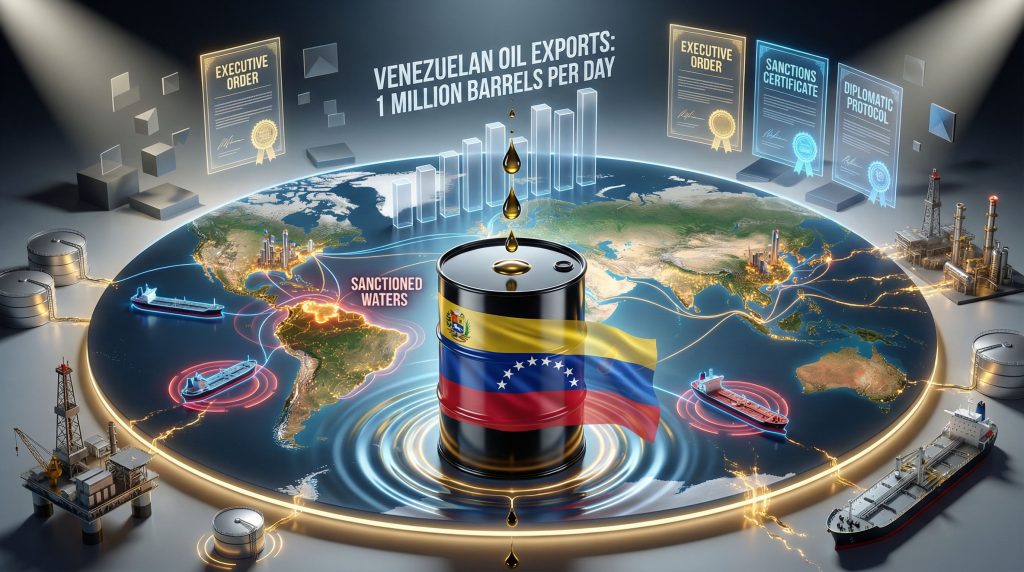
Economic sanctions emerge as blunt instruments in global diplomacy, yet their effectiveness often hinges on variables beyond policymaker control. Traditional embargo strategies assume predictable market responses and elite fragmentation under financial pressure. However, the intersection of energy markets, nationalist sentiment, and domestic political dynamics creates complex feedback loops that can undermine sanctioning nations' strategic objectives. Furthermore, the Trump tariffs impact on global trade demonstrates how economic pressure tools can produce unintended consequences.
The current landscape of U.S. sanctions on Venezuela oil represents a fascinating case study in this complexity. Unlike previous energy embargoes that relied primarily on diplomatic coordination and trade restrictions, today's approach combines sophisticated financial tracking with physical enforcement mechanisms in international waters. This evolution reflects both technological advancement and the limitations of earlier sanctioning frameworks. In addition, the broader context of the US–China trade war illustrates how economic conflicts reshape global energy partnerships.
Physical Enforcement Versus Financial Restrictions
Modern sanctions architecture differs fundamentally from historical precedents through its emphasis on operational disruption rather than diplomatic isolation. Traditional energy embargoes typically focused on restricting market access through coordinated international pressure, while contemporary approaches target the infrastructure of energy commerce itself.
Maritime Interdiction and Asset Seizure Protocols
The enforcement mechanisms governing Venezuela oil sanctions demonstrate a shift toward active intervention rather than passive restriction. Asset seizure operations now complement traditional financial blocking orders, creating multiple pressure points across the energy supply chain. Tanker interdictions in international waters represent a particularly significant escalation, as they transform sanctions from bureaucratic obstacles into physical barriers to trade.
This approach contrasts sharply with earlier embargo models that relied primarily on port restrictions and financing prohibitions. The legal framework supporting maritime enforcement draws on anti-money laundering authorities and national security provisions, enabling more aggressive intervention than traditional trade sanctions permitted. For instance, recent U.S. actions targeting Iranian and Venezuelan entities demonstrate the expanded scope of enforcement activities.
Escalation Timeline and Strategic Implementation
The evolution of Venezuela sanctions reveals a deliberate progression from targeted financial measures to comprehensive economic pressure:
- 2017-2019: Initial designation of state-owned enterprises and key officials
- 2019-2021: Expansion to sectoral restrictions affecting petroleum exports
- 2021-2023: Conditional relief mechanisms tied to political negotiations
- 2024-2025: Enhanced enforcement through vessel tracking and asset seizures
Each phase introduced new compliance burdens while maintaining existing restrictions, creating cumulative pressure on Venezuelan energy operations. The strategic objective remained consistent throughout: degrading the government's ability to finance domestic political networks through oil revenue.
However, the timeline's acceleration under different U.S. administrations reveals competing theories about optimal pressure application. Gradual escalation allows adaptation time but may enable sanctions circumvention, while rapid implementation risks nationalist backlash that strengthens rather than weakens targeted regimes.
When big ASX news breaks, our subscribers know first
Global Supply Chain Disruption Mechanisms
Venezuela's position in global energy markets creates ripple effects that extend far beyond its borders when sanctions disrupt normal commercial flows. The country's heavy crude production capacity of approximately 800,000 to 1.2 million barrels per day serves specialised refinery configurations, particularly in the U.S. Gulf Coast and Caribbean regions. Consequently, these disruptions affect broader oil price movements across international markets.
Production Bottlenecks and Export Constraints
Sanctions-induced export restrictions create artificial scarcity even when domestic production capacity remains intact. Floating storage strategies have become essential for Venezuelan operators seeking to maintain production while navigating vessel restrictions. This approach involves storing crude oil on anchored tankers for extended periods, waiting for market opportunities or regulatory changes.
The operational challenges of floating storage include:
- Vessel maintenance costs during extended anchoring periods
- Insurance complications for non-compliant cargo operations
- Quality degradation risks from prolonged storage
- Limited available vessels willing to accept sanctioned cargo
These factors combine to create significant cost escalations that reduce the economic attractiveness of Venezuelan crude for potential buyers, even when technical circumvention remains possible.
Regional Market Adaptation Strategies
Caribbean refineries historically configured for Venezuelan heavy crude have implemented sourcing diversification programmes to maintain operations. Alternative suppliers including Mexico, Colombia, and Middle Eastern producers now fill gaps previously served by Venezuelan barrels. This redistribution affects pricing dynamics across regional crude markets.
Chinese energy companies have emerged as primary alternative purchasers, developing specialised financing and logistics arrangements to continue Venezuelan oil imports despite U.S. sanctions pressure. These arrangements often involve:
- Barter transactions avoiding traditional banking channels
- Extended payment terms reducing immediate financial exposure
- Joint venture structures limiting direct sanctions exposure
- Alternative shipping routes minimising interdiction risks
The U.S. Gulf Coast refinery sector has successfully adapted to reduced Venezuelan supply through increased imports from Canadian oil sands and Mexican heavy crude. However, these alternative sources command premium pricing, affecting overall refinery margins and consumer fuel costs, contributing to broader oil price stagnation concerns.
Licensed Operations and Compliance Strategies
Despite comprehensive sanctions frameworks, licensed operations continue under specific regulatory exceptions that demonstrate the complex balance between economic pressure and energy market stability. These arrangements reveal how sanctions regimes accommodate competing policy priorities while maintaining overall enforcement credibility.
Chevron's Operational Framework
Chevron Corporation operates in Venezuela under General Licence 8A, which permits limited crude oil production and export activities under strict operational constraints. The licence framework includes:
- Production limits: Restrictions on expansion activities and new investment
- Revenue controls: Requirements for U.S. Treasury oversight of cash flows
- Operational boundaries: Limitations on joint ventures with sanctioned entities
- Reporting obligations: Regular compliance documentation and audit requirements
This structure allows continued U.S. energy company presence while preventing significant revenue enhancement for Venezuelan government entities. Chevron's strategy focuses on maintaining existing assets rather than expanding operations, preserving option value for potential future policy changes.
European Energy Company Adaptations
European operators including Repsol, Eni, and BP have implemented varied compliance strategies reflecting different regulatory environments and strategic priorities:
Repsol's approach emphasises debt-to-oil arrangements that convert existing Venezuelan obligations into crude oil deliveries, technically avoiding new investment while recovering previous commitments.
Eni and BP have largely suspended active operations while maintaining minimal technical presence to preserve contractual rights for potential future reactivation.
Shadow Fleet Economics and Circumvention
Vessel ownership obfuscation has become increasingly sophisticated as sanctions enforcement intensifies. Shadow fleet operations employ multiple techniques:
- Flag hopping: Rapid vessel re-registration in jurisdictions with limited enforcement cooperation
- Ownership layering: Complex corporate structures obscuring beneficial ownership
- Ship-to-ship transfers: Mid-ocean cargo transfers to clean vessels
- Document manipulation: False destination reporting and cargo documentation
Insurance and financing complications create additional costs for non-compliant operations. Traditional maritime insurers withdraw coverage for sanctioned cargo, forcing operators toward specialised insurance markets with significantly higher premiums.
The cost escalation factors in prohibited trade routes can add 15-30% to normal shipping expenses, eroding profit margins and reducing economic incentives for sanctions circumvention.
Unintended Political Strengthening Effects
Sanctions regimes often generate domestic political consequences that contradict their intended objectives. In Venezuela's case, external economic pressure has created opportunities for nationalist narrative consolidation that may actually strengthen rather than weaken government legitimacy.
Nationalist Sentiment and Opposition Credibility
The "oil theft" framing promoted by Venezuelan government media has gained traction across diverse political constituencies, including segments traditionally hostile to the current administration. This narrative positions sanctions enforcement as sovereignty violations rather than legitimate international pressure, transforming an economic policy dispute into a national dignity issue.
Opposition movement credibility faces particular challenges when external enforcement actions dominate domestic political discourse. Venezuelan opposition leader María Corina Machado's political leverage depends on being perceived as an agent of national restoration rather than foreign implementation. Visible U.S. sanctions on Venezuela oil enforcement risks delegitimising opposition activities by associating them with external intervention.
This dynamic creates a strategic timing dilemma: sanctions pressure must be sufficient to fragment elite support networks while avoiding nationalist rally effects that consolidate government support among previously neutral constituencies.
Elite Consolidation Mechanisms
Economic isolation often strengthens elite loyalty through shared adversity and reduced alternative opportunities. Sanctioned Venezuelan officials face limited exit options, making defection less attractive even as personal costs increase. This consolidation effect can persist longer than sanctions architects anticipate, particularly when targeted elites retain access to informal economic networks.
Patronage network sustainability depends on maintaining minimum revenue flows rather than maximising profits. Venezuelan government entities have demonstrated adaptation capacity through:
- Barter arrangements: Direct goods-for-oil exchanges avoiding financial system exposure
- Regional partnerships: Enhanced cooperation with non-aligned countries
- Parallel institutions: Development of alternative payment and trade systems
- Resource concentration: Prioritising core supporter maintenance over broader economic welfare
Comparative Analysis with Other Energy Embargoes
Understanding Venezuela sanctions effectiveness requires comparative assessment with other energy embargo experiences, particularly the ongoing Russia sanctions model and historical Iran sanctions architecture.
Russia Sanctions Framework Differences
The price cap mechanism applied to Russian oil exports represents a fundamentally different approach than the comprehensive prohibition model used for Venezuela. Russian oil continues flowing to global markets but at artificially reduced prices, while Venezuelan oil faces complete export barriers from compliant buyers.
Key structural differences include:
| Aspect | Russia Model | Venezuela Model |
|---|---|---|
| Primary Mechanism | Price caps + selective restrictions | Comprehensive export prohibition |
| Enforcement Approach | Multilateral coordination | Unilateral U.S. leadership |
| Market Integration | Continued global market participation | Complete market isolation |
| Revenue Impact | Reduced margins, maintained volume | Eliminated compliant market access |
International cooperation requirements differ significantly between these models. Russia sanctions depend on coordinated implementation across multiple jurisdictions, while U.S. sanctions on Venezuela oil rely primarily on U.S. enforcement capacity and third-party compliance pressure.
Iran Sanctions Architecture Parallels
The Iran nuclear sanctions programme offers instructive comparisons for Venezuela policy design, particularly regarding waiver system effectiveness and long-term economic isolation impacts.
Iran's experience demonstrates that:
- Technological circumvention methods become increasingly sophisticated over time
- Regional partnership development can offset Western market exclusion
- Domestic production capacity may actually increase during isolation periods
- Political consolidation effects often strengthen rather than weaken targeted regimes
Venezuela sanctions face similar adaptation challenges, with the additional complication of geographic proximity to the United States creating both enhanced enforcement opportunities and increased circumvention incentives.
Economic Impact Modelling and Revenue Projections
Quantitative assessment of sanctions effectiveness requires sophisticated modelling of revenue degradation pathways and their impact on domestic political sustainability. Venezuelan government financing depends heavily on oil export revenues, making energy sector disruption particularly consequential for political stability calculations. Moreover, broader market factors including OPEC production impact influence global pricing dynamics that affect sanctions effectiveness.
Revenue Stream Analysis
Pre-sanctions Venezuelan oil revenues typically ranged between $30-50 billion annually depending on production levels and global pricing. Current sanctions-constrained revenues are estimated at $8-15 billion annually, representing a 70-75% reduction from historical levels.
However, patronage network sustainability may require significantly lower revenue thresholds than external observers anticipate. Core supporter maintenance can be achieved through:
- Targeted resource allocation prioritising key military and political constituencies
- Import substitution programmes reducing foreign currency requirements
- Informal economy expansion creating alternative livelihood opportunities
- Regional cooperation agreements providing non-monetary support systems
Strategic Reserve Depletion Timelines
Foreign currency reserve management becomes critical during sustained sanctions pressure. Venezuelan reserves have declined from approximately $30 billion in 2013 to estimated $6-8 billion currently, though precise figures remain difficult to verify due to reporting restrictions.
Reserve sustainability modelling suggests current depletion rates could exhaust liquid foreign currency holdings within 18-24 months under continued sanctions pressure. However, this timeline assumes static adaptation capacity and may not account for:
- Alternative currency arrangements with regional partners
- Gold reserves mobilisation through non-traditional markets
- Debt restructuring agreements reducing immediate payment obligations
- Barter arrangement expansion minimising cash flow requirements
The next major ASX story will hit our subscribers first
Political Scenario Analysis and Policy Evolution
Future sanctions policy trajectories depend significantly on domestic political developments within both Venezuela and the United States. Multiple scenarios require consideration for effective strategic planning and risk assessment.
Regime Transition Probability Factors
Elite defection modelling identifies several variables that could accelerate political transition:
- Military loyalty erosion: Economic pressure on armed forces compensation and equipment maintenance
- Regional isolation: Loss of neighbouring country support for Venezuelan government
- Opposition consolidation: Unified alternative leadership with credible governance capacity
- International mediation: Credible transition guarantees reducing elite prosecution risks
Current assessment suggests elite defection probability remains low in the near term, as sanctions pressure has not yet reached critical thresholds for military institutional breakdown or widespread civilian unrest.
Sanctions Relief Implementation Frameworks
Democratic transition benchmarks for potential sanctions relief typically include:
- Free and fair electoral processes with international observation
- Political prisoner releases and civil society space restoration
- Independent media access and information freedom guarantees
- Economic reform commitments addressing corruption and transparency
Gradual relief mechanisms may prove more effective than comprehensive immediate lifting, allowing calibrated responses to political progress while maintaining leverage for continued reforms. The broader sanctions framework provides context for understanding these implementation challenges.
International oversight requirements would likely involve multilateral institutions including the Organisation of American States and United Nations, providing legitimacy for transition processes while reducing bilateral political risks.
Energy Security and Investment Implications
Long-term energy security planning must account for potential Venezuelan production restoration under changed political circumstances. The country's proven oil reserves of approximately 300 billion barrels represent significant strategic energy resources that could reshape global supply balances.
Portfolio Risk Assessment for Energy Investors
Energy investment strategies require comprehensive sanctions exposure evaluation covering:
- Direct operational risks from sanctions compliance requirements
- Counterparty risks from sanctioned entity relationships
- Regulatory change risks from evolving policy frameworks
- Reputational risks from association with controversial operations
Political risk insurance markets have significantly reduced coverage for Venezuela-exposed investments, reflecting elevated uncertainty about future policy directions and asset security.
Supply Chain Resilience Strategies
Alternative sourcing diversification has become essential for energy companies historically dependent on Venezuelan crude supplies. Strategic approaches include:
- Geographic diversification: Expanding supplier bases across multiple regions
- Contract flexibility: Negotiating substitution clauses for force majeure events
- Strategic inventory management: Maintaining higher reserve levels during geopolitical uncertainty
- Technology investment: Enhanced processing capabilities for alternative crude qualities
Heavy crude market dynamics have been permanently altered by Venezuelan supply disruptions, with Canadian oil sands and Mexican heavy crude gaining market share and pricing power.
The long-term outlook for U.S. sanctions on Venezuela oil remains highly uncertain, dependent on complex interactions between domestic political developments, international diplomatic initiatives, and global energy market dynamics. Effective policy evaluation requires continuous assessment of unintended consequences and adaptive strategy development as circumstances evolve.
Frequently Asked Questions About U.S. Venezuela Oil Sanctions
Are Venezuela oil sanctions affecting global gas prices?
Venezuela oil sanctions have modest direct impact on global petrol prices due to the country's reduced market share in recent years. However, indirect effects include increased costs for specialised refineries that process heavy crude, potentially affecting regional fuel pricing in the Caribbean and U.S. Gulf Coast.
How long do experts expect the current sanctions to remain in place?
Sanctions duration depends primarily on Venezuelan political developments rather than fixed timelines. Policy experts suggest current restrictions could persist for several years absent significant democratic reforms or regime change. Gradual modification appears more likely than comprehensive removal in the near term.
Which countries are most affected by reduced Venezuelan oil exports?
China represents the largest alternative market for Venezuelan oil despite sanctions, while Caribbean nations face supply disruptions affecting regional energy security. U.S. Gulf Coast refineries have successfully adapted through alternative sourcing, though at higher costs.
Can Venezuela completely circumvent U.S. oil sanctions?
Complete circumvention remains technically impossible due to U.S. financial system dominance and enforcement capabilities. However, partial circumvention through shadow fleet operations, barter arrangements, and regional partnerships continues, albeit at significantly higher costs and reduced volumes compared to pre-sanctions levels.
Note: This analysis is based on publicly available information and should not be construed as investment advice. Energy markets and sanctions policies are subject to rapid change, and readers should consult current sources for the most up-to-date information.
Want to Spot the Next Major Resource Discovery Before the Market Reacts?
Discovery Alert's proprietary Discovery IQ model instantly identifies significant ASX mineral discoveries, transforming complex geological announcements into actionable investment insights that could help position you ahead of market movements. Visit Discovery Alert's discoveries page to explore how historic mineral discoveries have generated substantial returns and begin your 30-day free trial today.