
August 2, 2026
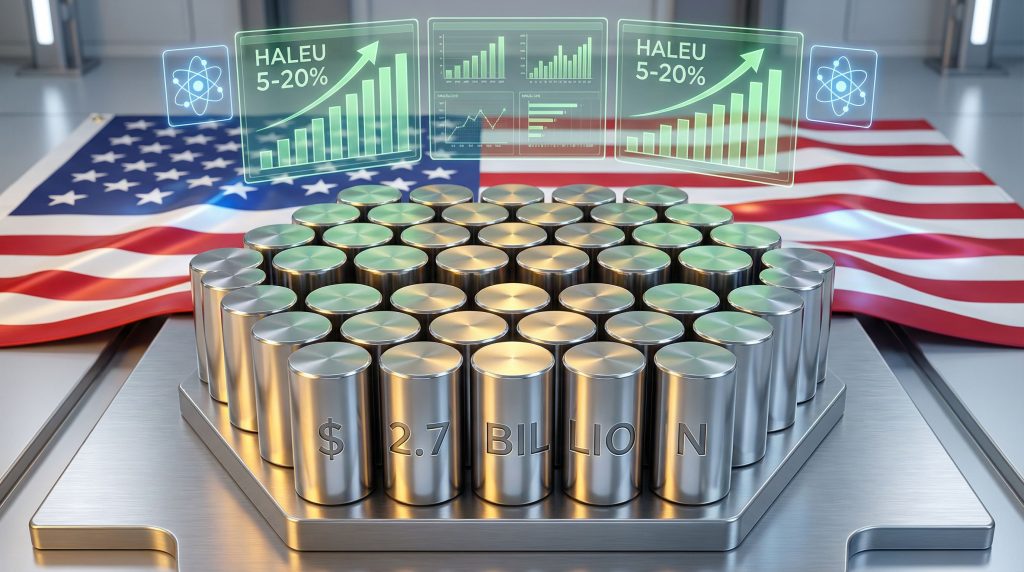
The strategic pursuit of domestic nuclear fuel independence has become a critical priority, with US uranium enrichment orders representing the largest investment in American fuel cycle capabilities in decades. The convergence of geopolitical tensions, supply chain vulnerabilities, and advanced reactor deployment creates unprecedented challenges for energy planners. Furthermore, traditional uranium enrichment markets, dominated by a handful of global suppliers, face disruption as nations prioritise domestic fuel cycle capabilities over cost optimisation alone.
Breaking Down America's Strategic Nuclear Fuel Investment Framework
The United States Department of Energy has structured a comprehensive $2.7 billion investment across multiple uranium enrichment technologies, representing the largest domestic fuel cycle commitment in decades. This investment targets both immediate supply chain security and long-term advanced reactor deployment capabilities through a diversified contractor approach.
Three-Company Consortium Strategy
American Centrifuge Operating secured $900 million to develop high-assay low-enriched uranium (HALEU) production using proven centrifuge technology. General Matter, backed by significant private investment, received an identical $900 million allocation for HALEU development through innovative approaches. Orano Federal Services obtained $900 million to expand conventional low-enriched uranium production capacity, addressing current reactor fleet requirements.
Global Laser Enrichment received a separate $28 million award for next-generation laser enrichment technology development, representing a substantially different funding tier that reflects either technological risk assessment or developmental timeline considerations. The company had initially sought a $900 million allocation, indicating significant variance between requested and awarded funding levels.
Milestone-Based Performance Structure
The contract framework requires companies to meet specific performance milestones to maintain funding eligibility and contract status. This accountability mechanism ensures taxpayer investment yields measurable results while providing DOE flexibility to adjust resource allocation based on demonstrated progress.
Moreover, the 10-year implementation timeline establishes clear expectations for achieving commercial-scale domestic enrichment capacity. Companies must demonstrate technical capability, production milestones, and quality assurance protocols throughout the contract period to maintain their funding streams.
Investment Allocation Analysis
| Company | Investment | Primary Focus | Technology Approach |
|---|---|---|---|
| American Centrifuge Operating | $900M | HALEU Production | Centrifuge Technology |
| General Matter | $900M | HALEU Development | Innovation-Based Methods |
| Orano Federal Services | $900M | LEU Expansion | Established Processes |
| Global Laser Enrichment | $28M | Laser Technology | Next-Generation Methods |
When big ASX news breaks, our subscribers know first
Understanding HALEU's Critical Role in Advanced Nuclear Technology
High-assay low-enriched uranium represents a fundamental shift in nuclear fuel specifications, enabling next-generation reactor designs while creating new supply chain complexities. HALEU contains uranium-235 concentrations between 5% and 20%, compared to conventional reactor fuel at approximately 5% enrichment levels.
Technical Specifications and Applications
The enhanced enrichment levels enable advanced reactor designs to achieve greater efficiency and smaller physical footprints. Small modular reactors and advanced reactor concepts require HALEU to optimise their neutron economy and extend fuel cycle lengths beyond conventional reactor capabilities.
However, current commercial HALEU production remains concentrated in Russian facilities, creating a strategic vulnerability for nations pursuing advanced reactor deployment. Russia maintains the only commercial-scale HALEU production infrastructure globally, establishing a de facto monopoly over this critical fuel type.
Proliferation Concerns and Security Protocols
Nuclear security experts have raised concerns about HALEU enrichment levels, recommending limitations between 10% and 12% for enhanced safety protocols. The 5-20% enrichment range requires sophisticated security measures and international monitoring compliance, balancing commercial efficiency with non-proliferation objectives.
Consequently, uranium enriched above 20% typically falls under weapons-grade material classifications in international non-proliferation frameworks, making HALEU's upper boundary particularly sensitive from regulatory and security perspectives.
Addressing Nuclear Supply Chain Vulnerabilities Through Domestic Production
America's nuclear fuel supply chain faces critical dependencies on foreign suppliers, particularly Russian enrichment facilities that currently dominate global HALEU production. The Russian uranium ban creates an urgent requirement for domestic capacity development.
Geopolitical Risk Mitigation Strategy
The investment directly addresses supply chain vulnerabilities identified in national security assessments. By establishing multiple domestic production pathways, the United States aims to eliminate single-point failure risks in nuclear fuel supply chains while addressing ongoing uranium market volatility.
Energy Secretary Chris Wright emphasised the strategic importance, stating that today's awards demonstrate administration commitment to restoring a secure domestic nuclear fuel supply chain capable of producing nuclear fuels needed to power current reactors and advanced reactors of tomorrow.
The three-company approach creates production pathway redundancy, ensuring continued fuel availability even if individual contractors experience technical challenges or operational disruptions. This strategy directly supports the expansion of US uranium production capabilities across multiple technological approaches.
Timeline Pressure and Strategic Urgency
The 2028 deadline for eliminating Russian uranium imports establishes a finite window for achieving commercial-scale domestic production. This compressed timeline requires rapid facility construction, technology deployment, and workforce development across multiple enrichment approaches simultaneously.
Furthermore, legislative funding included in uranium import ban legislation provides financial backing for domestic production development, connecting supply chain security directly with appropriated resources. The timing coincides with concerns over uranium spot prices and broader market dynamics affecting nuclear fuel availability.
Technical Challenges in Uranium Enrichment Scale-Up
Achieving commercial-scale uranium enrichment requires overcoming significant technical, logistical, and regulatory challenges. Each technology approach presents distinct advantages and implementation complexities that influence timeline and cost projections.
Centrifuge Technology Deployment
American Centrifuge Operating's approach leverages existing centrifuge technology for HALEU production scaling. Centrifuge enrichment requires precise rotor manufacturing, cascade design optimisation, and extensive quality control systems to achieve the 5-20% enrichment specifications required for advanced reactor applications.
The proven nature of centrifuge technology suggests lower technical risk compared to developmental approaches, though scaling from pilot to commercial operations presents significant engineering challenges.
Laser Enrichment Innovation Pathway
Global Laser Enrichment's $28 million development program represents next-generation enrichment technology with potentially superior efficiency characteristics compared to centrifuge methods. However, the substantially lower funding allocation suggests either higher technological risk or longer development timelines compared to centrifuge approaches.
Laser enrichment technology offers theoretical advantages in energy consumption and facility footprint, though commercial viability remains under development. The funding differential between laser and centrifuge approaches reflects DOE risk assessment of technology maturity levels.
Quality Assurance and Regulatory Compliance
HALEU production requires sophisticated quality assurance protocols to meet advanced reactor fuel specifications. Enrichment levels between 5% and 20% demand precise isotopic control and comprehensive testing throughout the production process.
Additionally, regulatory oversight for HALEU production involves enhanced security protocols, international monitoring compliance, and specialised handling procedures not required for conventional LEU production.
Impact on Nuclear Reactor Development and Deployment
Domestic HALEU production capabilities directly influence advanced reactor commercialisation timelines and deployment strategies. Fuel availability represents a critical bottleneck for small modular reactor projects and advanced reactor demonstration programs currently under development.
Small Modular Reactor Acceleration
SMR developers require reliable HALEU supply commitments to advance commercial deployment timelines. Current fuel supply uncertainties create project financing challenges and deployment delays across multiple advanced reactor concepts.
In addition, domestic production capabilities enable SMR developers to establish long-term fuel supply contracts, reducing project risk and improving commercial viability assessments for potential investors and utility customers. The US uranium market disruption further emphasises the importance of securing domestic supply chains.
Existing Fleet Support and Optimisation
The $900 million allocation to Orano Federal Services for LEU expansion addresses current nuclear fleet requirements across approximately 94 operating reactors in the United States. Enhanced domestic LEU production reduces import dependencies and provides fuel cost stability for existing reactor operations.
Moreover, domestic fuel production creates opportunities for fuel cycle optimisation through reduced transportation costs, enhanced supply reliability, and improved inventory management for utility operators.
Economic Implications Beyond Energy Security
The $2.7 billion investment generates significant economic multiplier effects through high-skilled employment, regional development, and industrial supply chain expansion. Uranium enrichment facilities require specialised workforce capabilities and sophisticated manufacturing infrastructure.
Regional Economic Development
Manufacturing employment opportunities in specialised nuclear technology sectors provide high-wage job creation in regions selected for facility development. Uranium enrichment operations require engineers, technicians, security personnel, and support staff with specialised nuclear industry training.
The 10-year contract timeline provides employment stability and workforce development opportunities in emerging nuclear technology sectors.
Industrial Supply Chain Expansion
Domestic enrichment facilities generate demand for specialised equipment, materials, and components throughout the nuclear supply chain. Centrifuge manufacturing, facility construction, and ongoing operations create opportunities for domestic suppliers and subcontractors.
Furthermore, research and development activities associated with advanced enrichment technologies foster innovation ecosystems and intellectual property development in nuclear technology sectors.
The next major ASX story will hit our subscribers first
Integration with America's Broader Nuclear Energy Strategy
US uranium enrichment orders align with comprehensive nuclear energy expansion objectives that extend beyond fuel production to encompass reactor deployment, grid integration, and international competitiveness goals. This strategic alignment demonstrates the interconnected nature of domestic fuel capabilities and broader energy independence objectives.
Advanced Reactor Deployment Strategy
Domestic fuel cycle completion enables technology export opportunities and strategic partnerships with allied nations pursuing nuclear energy development. Complete fuel cycle capabilities enhance American nuclear technology competitiveness against Chinese and Russian offerings in international markets.
The investment supports broader nuclear energy expansion objectives while establishing American leadership in advanced reactor technologies and fuel cycle services. This approach builds upon existing US Department of Energy funding initiatives to strengthen domestic capabilities.
Infrastructure Investment Requirements
Achieving large-scale nuclear capacity expansion requires coordinated investments in fuel production, reactor manufacturing, grid modernisation, and workforce development. The enrichment investment represents one component of comprehensive nuclear energy infrastructure requirements.
In addition, integration with renewable energy portfolios and grid modernisation initiatives creates synergistic opportunities for clean energy expansion across multiple technology pathways.
Risk Assessment and Implementation Challenges
Despite strategic importance and substantial funding commitments, the enrichment investment faces technical, regulatory, and execution risks that could impact timeline and cost projections.
Technical Execution Risks
Scaling enrichment technologies from pilot to commercial operations presents engineering challenges that may result in timeline delays or cost overruns. The milestone-based contract structure provides accountability mechanisms but cannot eliminate technical risks entirely.
Quality control requirements for HALEU production demand sophisticated testing and verification capabilities that add complexity to production processes and regulatory compliance obligations.
Regulatory and Security Considerations
HALEU enrichment levels require enhanced security protocols and international monitoring compliance that may impact operational efficiency and cost structures. Balancing commercial production requirements with non-proliferation objectives creates ongoing regulatory complexity.
The 5-20% enrichment range requires specialised handling, transportation, and storage capabilities that exceed conventional LEU requirements, adding operational complexity and cost implications.
Market Competition and Pricing Dynamics
Domestic HALEU production must achieve cost competitiveness with international suppliers while maintaining enhanced security and reliability characteristics. Initial production costs may exceed imported alternatives during capacity ramp-up periods.
Long-term pricing dynamics depend on production scale achievement, technology efficiency improvements, and market demand growth from advanced reactor deployment programmes. The broader context of mining industry funding reflects industry-wide recognition of these investment requirements.
Strategic Implications for Nuclear Energy Independence
The $2.7 billion uranium enrichment investment represents a fundamental shift toward strategic energy independence through domestic fuel cycle capabilities. Success in achieving commercial-scale production will influence American nuclear energy leadership, technology export opportunities, and national security objectives.
Production Capacity and Market Transformation
Domestic HALEU production capabilities will reshape global fuel markets by introducing American suppliers into a Russian-dominated sector. The 2028 import ban timeline accelerates market transformation while creating opportunities for allied nation partnerships and technology sharing agreements.
Commercial-scale production achievement will enable American nuclear technology companies to offer complete fuel cycle services, enhancing competitiveness in international reactor export markets.
Technology Innovation and Competitive Advantage
Investment in multiple enrichment approaches fosters innovation competition while reducing technology risk through pathway diversification. Success in laser enrichment development could provide long-term competitive advantages in efficiency and cost structure.
Intellectual property development and advanced manufacturing capabilities create spillover benefits for broader nuclear technology sectors and export opportunities. The comprehensive nature of US uranium enrichment orders positions America as a leader in next-generation nuclear fuel capabilities.
Disclaimer: This analysis is based on publicly available information and should not be considered as investment advice. Future developments in nuclear technology, regulatory changes, and market conditions may significantly impact the outcomes discussed. Readers should conduct independent research and consult qualified professionals before making investment or policy decisions related to nuclear energy investments.
Want to Identify the Next Major Uranium Discovery?
Discovery Alert's proprietary Discovery IQ model provides real-time alerts on significant ASX uranium and mineral discoveries, helping investors capitalise on market-moving announcements before the broader market responds. With domestic uranium production becoming increasingly critical for energy security, explore Discovery Alert's discoveries page to see how major mineral finds have generated substantial returns historically, then begin your 30-day free trial to position yourself ahead of emerging opportunities in the uranium sector.