
May 12, 2026
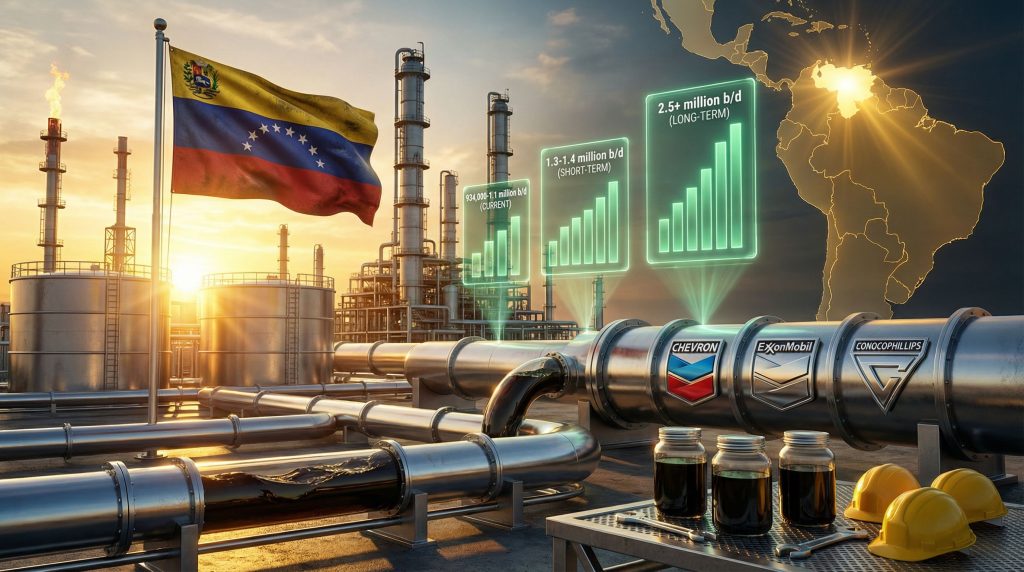
US Venezuela oil intervention represents a significant development in global energy markets, with far-reaching implications for regional supply chains and investment strategies. The complex intersection of military action, energy infrastructure, and international petroleum markets creates unprecedented challenges for analysts attempting to forecast market impacts and investment outcomes.
Understanding Military-Economic Resource Control Strategies
The intersection of military force and energy resource access represents a fundamental shift in how major powers approach energy security. Unlike traditional diplomatic or economic pressure mechanisms, direct intervention creates immediate operational control over production infrastructure while bypassing multilateral negotiation processes.
Strategic Resource Acquisition Models
Modern resource control strategies typically follow three distinct phases:
- Immediate stabilisation through security force deployment and infrastructure protection
- Operational continuity via existing personnel and minimal disruption protocols
- Long-term restructuring involving new investment frameworks and production expansion
This approach differs significantly from historical colonial extraction models, focusing instead on partnership frameworks that maintain local operational capacity while ensuring favourable resource allocation agreements. Furthermore, these strategies must account for oil price movements that can dramatically affect intervention economics.
Infrastructure as Strategic Leverage
Energy infrastructure becomes a critical bargaining chip in these scenarios, with pipeline networks, processing facilities, and export terminals serving as both economic assets and political control mechanisms. The condition of existing infrastructure directly impacts both immediate production capacity and long-term investment requirements.
However, oil price stagnation can significantly complicate the economic justification for maintaining expensive military operations alongside infrastructure investments.
When big ASX news breaks, our subscribers know first
Venezuela's Production Reality Check
Current Venezuelan crude output stands at 934,000 barrels per day as of November 2025, representing a dramatic decline from over 3 million barrels per day in the early 2000s. This 69% reduction illustrates the compound effects of underinvestment, sanctions pressure, and political instability on production capacity.
Technical Challenges of Extra-Heavy Crude
Venezuelan petroleum reserves consist primarily of extra-heavy crude characterised by high viscosity and elevated sulphur and metals content. These properties create specific operational challenges:
- Complex extraction requiring specialised equipment and enhanced recovery techniques
- Intensive processing demands for refining into marketable products
- Higher transportation costs due to viscosity management requirements
- Limited market appeal compared to lighter crude grades
The technical complexity of Venezuelan crude production means that rapid output increases would require not just political stability, but significant technological upgrades and specialised workforce development. In addition, the recent US oil production decline has created market opportunities that Venezuelan intervention seeks to address.
Investment Capital Requirements Analysis
| Infrastructure Category | Estimated Investment Need | Timeline for Results |
|---|---|---|
| Basic pipeline repairs | Hundreds of millions | 6-12 months |
| Power system restoration | $1-2 billion | 12-18 months |
| Production facility upgrades | $3-5 billion | 2-3 years |
| New drilling programmes | $5-10 billion | 3-5 years |
Note: These figures represent industry estimates based on comparable post-conflict reconstruction projects
Current Market Positioning
Chevron currently imports approximately 120,000 barrels per day from Venezuela under special sanctions waivers, demonstrating that some operational capacity exists despite broader restrictions. This baseline provides insight into immediate production potential while highlighting the gap between current output and historical peaks.
Major Oil Company Strategic Positioning
The competitive landscape for Venezuelan market access reflects both historical relationships and current operational capabilities. Understanding each company's position requires analysing past investments, legal claims, and existing infrastructure presence.
Chevron's Operational Advantage
As the only major US producer maintaining operations in Venezuela, Chevron possesses several strategic advantages:
- Existing infrastructure knowledge and operational continuity
- Established relationships with state-owned petroleum company personnel
- Current import volumes providing market access experience
- Regulatory compliance systems already adapted to sanctions environment
A Chevron representative's recent assessment that the state petroleum company remains operationally robust suggests confidence in existing production capabilities despite political transitions.
ExxonMobil and ConocoPhillips: The Compensation Question
Both companies lost significant assets during the 2007 nationalisation under Hugo Chavez, subsequently winning international tribunal awards for asset expropriation. Their re-entry strategies will likely depend on:
- Resolution of outstanding compensation claims
- New investment protection agreements
- Risk assessment of renewed asset seizure potential
- Comparative return expectations versus other global opportunities
Service Sector Investment Opportunities
Oil service companies including SLB and Halliburton face substantial infrastructure rebuilding opportunities, though specific revenue projections remain speculative without detailed damage assessments. The extra-heavy crude characteristics require specialised:
- Enhanced recovery equipment and techniques
- Customised drilling and completion technologies
- Heavy crude processing and transportation solutions
- Environmental compliance systems for high-sulphur content
Global Heavy Crude Market Dynamics
Venezuelan crude revival would significantly impact global heavy crude supply chains, currently dominated by alternative sources. Understanding these market dynamics requires examining existing supplier relationships and refining capacity utilisation.
Current Supply Chain Configuration
US Texas refiners currently source heavy crude from multiple suppliers:
| Source Country | Import Volume (b/d) | Market Share |
|---|---|---|
| Canada | 392,000 | 49% |
| Mexico | 224,000 | 28% |
| Colombia | 113,000 | 14% |
| Venezuela | 60,000 | 8% |
Data source: US Energy Information Administration, January-October 2025
Competitive Pressure on Alternative Suppliers
Canadian heavy crude producers face particular vulnerability to Venezuelan market re-entry, as both sources compete for the same Gulf Coast refining capacity. Recent equity market reactions reflect this concern, with major Canadian producers experiencing significant share price declines amid intervention speculation.
Consequently, the US Venezuela oil intervention creates ripple effects throughout North American energy markets, forcing established suppliers to reassess their competitive positioning.
Asphalt Market Implications
The heavy crude market extends beyond fuel production into specialty products, particularly asphalt manufacturing. Colombian asphalt exports rose 20% in 2025 to nearly 550,000 short tons, while Venezuelan exports increased 62% to approximately 489,000 short tons during periods of sanctions relief.
Gulf Coast asphalt prices recently dropped to $315 per short ton, the lowest level since early 2021, reflecting market anticipation of increased heavy crude availability. Market participants suggest that sustained increases in heavy crude supply could pressure asphalt pricing further.
Chinese Market Reconfiguration
Chinese refiners currently processing Venezuelan crude under existing arrangements face potential disruption if US intervention alters trade relationships. China holds approximately $12 billion in outstanding loan-for-oil arrangements with Venezuela, creating complex financial incentives for continued trade relationships despite geopolitical market impacts.
Chinese independent refiners are reportedly preparing contingency plans involving increased Iranian and Russian crude purchases, or potentially reduced refining capacity utilisation if Venezuelan supplies become unavailable.
How Will Political Risk Assessment Framework Function?
Investment decisions in volatile political environments require sophisticated risk assessment methodologies that account for multiple scenario outcomes and their probability distributions.
Governance Transition Uncertainties
The current political transition involves multiple power centres and unclear authority structures:
- Interim leadership under former vice president and oil minister roles
- Military and security apparatus loyalty questions
- Opposition leader marginalisation despite popular support
- US administrative control aspirations versus local governance reality
These factors create significant uncertainty regarding policy continuity and contract enforcement mechanisms. For instance, global economic uncertainty adds additional complexity to investment risk calculations.
Sanctions Framework Evolution Timeline
| Timeframe | Sanctions Status | Investment Implications |
|---|---|---|
| Current | Oil blockade maintained | Limited to existing waivers |
| 3-6 months | Potential selective relief | Cautious exploration investments |
| 6-12 months | Broader waiver expansion | Infrastructure repair projects |
| 12+ months | Possible comprehensive lifting | Major development programmes |
Legal Framework Considerations
International arbitration mechanisms provide some investment protection, though enforcement depends on stable governance structures. Historical asset seizures demonstrate the importance of diversified legal protections and political risk insurance arrangements.
According to recent analysis from The Guardian, the intervention raises questions about whether US companies will gain preferential access to Venezuelan oil assets and what compensation mechanisms might be established for previous nationalisation losses.
Security Risk Management
Operational security concerns extend beyond political stability to include:
- Personnel safety in remote production areas
- Infrastructure protection against sabotage or theft
- Supply chain security for equipment and materials
- Emergency evacuation procedures for international staff
What Are the Regional Energy Realignment Scenarios?
Venezuelan oil sector revival would trigger broader regional energy market adjustments, affecting trade flows, pricing mechanisms, and investment patterns across Latin America.
Canadian Competitive Response
Canadian oil sector reactions already demonstrate market sensitivity to Venezuelan competition. The Trans Mountain pipeline expansion to 890,000 barrels per day capacity provides Canadian producers with Pacific export alternatives, potentially reducing dependence on US Gulf Coast markets.
Canadian Prime Minister commitments to commodity export diversification reflect recognition of increased competition for US market access. Additional west coast pipeline capacity of at least 1 million barrels per day suggests long-term strategic planning for reduced US market dependence.
Colombian Market Positioning
Colombia's rapid expansion in asphalt production and export capacity positions the country to maintain market share regardless of Venezuelan revival. The 20% growth in asphalt exports during 2025 demonstrates operational flexibility and market responsiveness.
Colombian crude production increases could partially offset Venezuelan market re-entry impacts, though total volumes remain significantly smaller than Venezuelan potential production levels.
Mexican Strategic Adjustments
Mexico's Pemex strategy of reducing crude exports while increasing domestic refining utilisation provides some insulation from Venezuelan competition. However, heavy crude export volumes to US markets remain substantial and could face pricing pressure from increased Venezuelan supply.
The next major ASX story will hit our subscribers first
Investment Timeline and Capital Deployment Strategy
Realistic investment planning requires understanding both technical constraints and market conditions that would justify major capital commitments in Venezuelan oil infrastructure.
Phase-Based Development Approach
Immediate Stabilisation (0-12 months):
- Critical infrastructure repairs and safety system restoration
- Existing well maintenance and optimisation programmes
- Power system stabilisation and emergency backup installation
- Security protocol establishment and personnel safety measures
Capacity Expansion (1-3 years):
- New drilling programmes in proven reserve areas
- Processing facility modernisation and throughput optimisation
- Transportation network upgrades and bottleneck elimination
- Workforce training and technology transfer programmes
Large-Scale Development (3-10+ years):
- Greenfield exploration and development projects
- Advanced extraction technology deployment for heavy crude
- Export infrastructure expansion and diversification
- Integration with global supply chain networks
Market Condition Requirements
Sustained oil prices above $70-80 per barrel appear necessary to justify major capital investments, given the technical complexity and political risks associated with Venezuelan operations. Current market conditions below these levels suggest cautious investor approaches focused on minimal capital exposure.
Financial Return Expectations
Investment return requirements for Venezuelan projects likely exceed standard international benchmarks due to political risk premiums. Companies may demand internal rates of return 5-10 percentage points above normal project thresholds to compensate for uncertainty.
As industry experts note, the upstream sector may not see immediate gains from intervention, with infrastructure rebuilding taking years to materialise into meaningful production increases.
The combination of technical complexity, political uncertainty, and market conditions suggests that Venezuelan oil sector revival will follow a measured, multi-year timeline rather than the rapid production increases anticipated by some policymakers.
Broader Geopolitical Energy Security Implications
Venezuelan oil market changes extend beyond bilateral US-Venezuela relationships to affect global energy security frameworks and strategic resource allocation patterns.
Western Hemisphere Energy Integration
US energy security strategy increasingly emphasises Western Hemisphere resource integration, reducing dependence on Middle Eastern and African crude sources. Venezuelan integration supports this regional approach while creating new supply chain vulnerabilities.
Strategic petroleum reserve considerations may shift based on increased regional heavy crude availability, potentially affecting release mechanisms and inventory management strategies.
OPEC+ Market Coordination Challenges
Venezuelan production increases could complicate OPEC+ quota coordination, particularly if output rises significantly without corresponding quota adjustments. Saudi Arabia and Russia may need to adjust production strategies to maintain price stability objectives.
Climate Policy Intersection
Heavy crude carbon intensity implications create tension between energy security objectives and climate policy goals. Venezuelan extra-heavy crude typically generates higher emissions per barrel than lighter crude grades, potentially complicating environmental regulatory compliance.
Renewable energy transition timelines may influence long-term investment justification for Venezuelan oil infrastructure, particularly for projects with 20+ year payback periods. Furthermore, the US Venezuela oil intervention must be evaluated within broader climate commitments and carbon reduction targets.
Investment Risk Disclosure
The analysis presented reflects market conditions and political developments as of early 2026. Venezuelan oil sector investments involve substantial political, technical, and market risks that could result in significant capital losses. Past performance of oil sector investments in politically unstable regions provides no guarantee of future returns. Investors should conduct independent due diligence and consider political risk insurance arrangements before making investment decisions.
This strategic assessment suggests that while Venezuela possesses substantial oil reserves and production potential, the path to meaningful sector revival involves complex challenges that extend well beyond immediate political changes. Success requires sustained commitment from multiple stakeholders, favourable market conditions, and risk management strategies appropriate for the unique characteristics of Venezuelan heavy crude operations.
Ready to Capitalise on Energy Market Disruptions?
Geopolitical interventions like Venezuela create immediate market opportunities, but identifying actionable energy sector discoveries requires sophisticated analysis. Discovery Alert's proprietary Discovery IQ model delivers instant notifications when significant ASX energy and mineral discoveries are announced, helping investors position themselves ahead of market movements and capitalise on sector volatility. Begin your 30-day free trial today to gain the market advantage needed for informed investment decisions during these uncertain times.