
August 14, 2026
Argentina's unconventional energy sector has emerged as a transformative force in global hydrocarbon markets, demonstrating how advanced extraction technologies can unlock massive resource potential. The Vaca Muerta shale boom represents one of the most compelling success stories outside North America, fundamentally reshaping South America's energy landscape. This geological treasure encompasses 8.6 million acres in the Neuquén Basin, positioning Argentina as a rising energy powerhouse with implications extending far beyond regional markets.
Furthermore, the formation's development timeline illustrates how strategic investment and favourable geology can accelerate national energy transformation. Understanding these dynamics provides crucial insights for investors, policymakers, and industry stakeholders evaluating emerging unconventional resource opportunities worldwide.
Argentina's Unconventional Resource Transformation
The Vaca Muerta shale boom represents one of the most compelling unconventional energy success stories outside North America. This massive formation encompasses 8.6 million acres in the Neuquén Basin of northern Patagonia, roughly equivalent to Switzerland's total land area. The shale's geological characteristics position it among the world's premier unconventional hydrocarbon resources.
Resource Scale and Global Significance
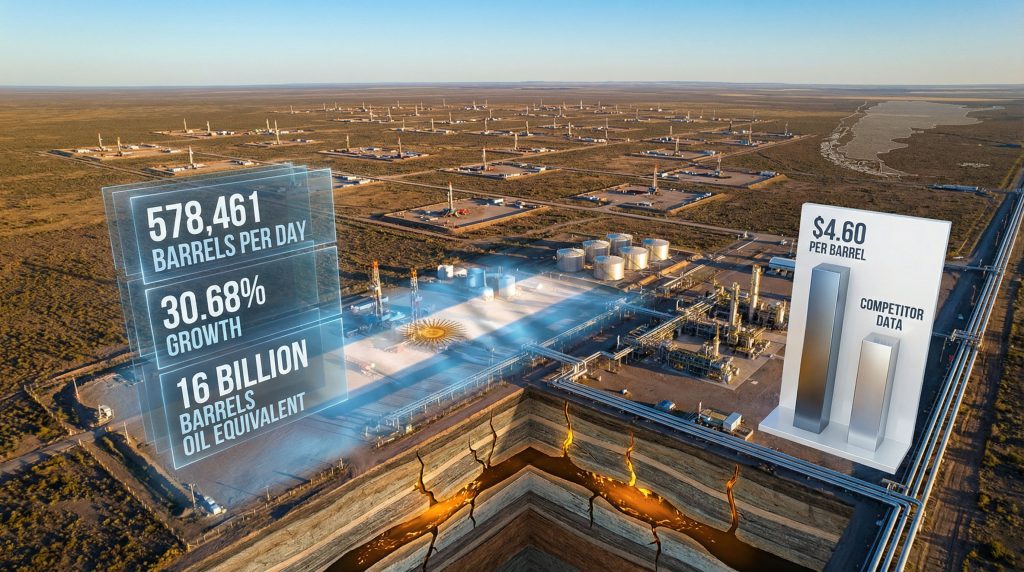
Industry estimates place Vaca Muerta's total resource potential at 16 billion barrels of recoverable tight oil and 308 trillion cubic feet of tight gas reserves. These figures establish the formation as the fourth-largest unconventional oil reserve globally and the second-largest unconventional gas reserve worldwide.
The formation's superior geological attributes distinguish it from established North American shale plays:
- Enhanced shale thickness providing greater reservoir volume
- Higher organic matter content supporting improved hydrocarbon generation
- Elevated reservoir pressures enabling sustained production rates
- Superior well productivity metrics compared to peer formations
These characteristics translate into operational advantages that support long-term production sustainability and enhanced economics relative to mature shale basins.
Development Timeline and Maturation
Commercial development of Vaca Muerta began following Argentina's 2012 nationalisation of YPF, which provided the strategic framework for unconventional resource development. The formation has progressed from initial exploration to becoming the backbone of Argentina's energy sector within approximately thirteen years.
Current development statistics reveal the formation's early-stage status:
- Less than 10% of total acreage under active development
- 69% contribution to Argentina's total oil production as of November 2025
- 65% contribution to national natural gas output
- Substantial undeveloped inventory supporting decades of future drilling
This limited development penetration indicates significant expansion potential as infrastructure constraints resolve and capital allocation accelerates.
When big ASX news breaks, our subscribers know first
Production Growth Trajectory Analysis
Argentina's hydrocarbon production profile demonstrates the transformative impact of unconventional resource development. Consequently, monthly production data reveals consistent growth patterns interrupted only by infrastructure limitations and market dynamics.
Oil Production Momentum
November 2025 marked a significant milestone with Argentina achieving 844,386 barrels per day of total crude production, representing a 12.5% year-over-year increase. Shale oil production specifically reached 578,461 barrels per day, establishing a new monthly record with 30.68% growth compared to November 2024.
This production surge enabled Argentina to surpass Colombia as South America's fourth-largest oil producer, demonstrating the formation's capacity to reshape regional energy dynamics. The 68.51% contribution of shale oil to total national production underscores the fundamental shift from conventional to unconventional resources.
Key production metrics include:
- October 2025 peak: 849,646 barrels per day (highest recorded level)
- First 11 months 2025 average: 787,395 barrels per day
- Conventional production decline offset by shale growth
- Infrastructure bottlenecks constraining higher output levels
Natural Gas Production Dynamics
However, natural gas production presents a contrasting trajectory, with November 2025 output declining 7% year-over-year to 4.2 billion cubic feet per day. This represents the lowest production level since December 2023, despite shale gas comprising 65% of total output.
Several factors contribute to gas production variability:
- Seasonal maintenance scheduling reducing operational capacity
- Reduced drilling activity responding to weaker spot pricing
- Pipeline capacity constraints limiting takeaway options
- Storage infrastructure gaps affecting production optimisation
- Market price volatility influencing development decisions
The July 2025 peak of 5.7 billion cubic feet per day demonstrates the formation's production potential when infrastructure and market conditions align favourably. Moreover, these fluctuations highlight the importance of natural gas price forecasts in development planning.
Economic Fundamentals and Cost Competitiveness
Operational Cost Analysis
YPF's third-quarter 2025 operational metrics demonstrate exceptional cost efficiency within the global unconventional sector. Company-wide lifting costs averaged $8.80 per barrel, while Vaca Muerta-specific operations achieved $4.60 per barrel, creating a $4.20 differential favouring shale operations.
| Cost Comparison | Lifting Cost | Breakeven Price | Competitive Advantage |
|---|---|---|---|
| Vaca Muerta | $4.60/barrel | $40-45/barrel | Superior geology |
| Permian Basin | $8-12/barrel | $45-50/barrel | Infrastructure maturity |
| Eagle Ford | $10-15/barrel | $50-55/barrel | Technology deployment |
These cost metrics position Vaca Muerta among the most competitive unconventional plays globally, providing substantial margin cushion during commodity price volatility.
Profitability Resilience
YPF CEO Horacio Marín's assessment of formation economics demonstrates management confidence in operational sustainability. The company maintains profitable operations at $40-45 per barrel oil prices, well below current market levels of approximately $58 per barrel (December 2025).
This economic resilience stems from:
- Optimised drilling and completion techniques reducing development costs
- Economies of scale in field operations and maintenance
- Superior reservoir characteristics supporting sustained production rates
- Operational learning curves improving efficiency over time
At current oil prices, Vaca Muerta operations generate approximately $53 per barrel gross margin before capital costs, providing substantial cash flow generation for reinvestment and expansion.
Investment Capital Deployment Strategy
YPF's Transformation Programme
YPF's $36 billion capital investment programme spanning 2025-2030 represents one of Latin America's most ambitious energy development initiatives. The programme targets $6.0 billion average annual investment, peaking at $6.8 billion during 2029.
This capital allocation strategy supports multiple strategic objectives:
- Acreage development across 2.9 million gross acres in Vaca Muerta
- Infrastructure expansion addressing pipeline and processing constraints
- Technology deployment enhancing drilling and completion efficiency
- Reserve replacement sustaining long-term production capacity
Reserve Position and Portfolio Evolution
YPF's end-2024 reserve position totalled 1.02 billion barrels, with 854 million barrels (83.7%) classified as unconventional Vaca Muerta reserves. This concentration reflects the strategic transition from conventional to pure unconventional operations.
The company's portfolio transformation includes:
- Divestiture of mature conventional assets with declining production profiles
- Concentration on high-return shale acreage with extended reserve lives
- Strategic partnerships for capital-intensive projects
- Technology investments supporting operational excellence
Infrastructure Development and Constraints
Pipeline Capacity Limitations
Infrastructure bottlenecks represent the primary constraint limiting Vaca Muerta production growth. Current takeaway capacity falls short of formation potential, particularly for natural gas transportation to domestic and export markets.
Major infrastructure projects addressing these constraints include:
- Oldelval Duplicar pipeline expansion completed April 2025
- Vaca Muerta Oil Sur pipeline scheduled for 2027 completion
- Natural gas processing facilities expanding treatment capacity
- LNG export terminal planning for international market access
Storage and Processing Requirements
The formation's rapid production growth necessitates proportional infrastructure investment in storage and processing capabilities. Current gaps in midstream infrastructure create operational inefficiencies and limit production optimisation during peak output periods.
Critical infrastructure needs include:
- Strategic storage terminals balancing seasonal demand variations
- Gas processing plants handling increasing volumes and impurities
- Petrochemical integration capturing value-added opportunities
- Export terminal development accessing international markets
YPF's Strategic Market Position
Production Leadership and Scale
YPF maintains dominant market share within Argentina's energy sector, producing 47% of national oil output and 22% of natural gas production as of November 2025. The company lifted 397,420 barrels of crude oil daily and 936 million cubic feet of natural gas.
Shale-specific production demonstrates operational focus:
- 315,937 barrels per day of Vaca Muerta oil (79.5% of company total)
- 725,716 million cubic feet per day of shale gas (77.5% of company total)
- First-mover advantages in acreage acquisition and development
- Operational expertise accumulated over decade-long development period
Competitive Advantages
YPF's market-leading position reflects several structural advantages:
- Largest acreage position with 2.9 million gross acres
- Established infrastructure supporting current operations
- Operational learning curves reducing development costs
- Strategic partnerships accessing capital and technology
- Government support through national energy policy alignment
The next major ASX story will hit our subscribers first
Energy Security and Trade Balance Impact
Argentina's Energy Independence
The Vaca Muerta shale boom facilitated Argentina's transformation from energy importer to net exporter during 2024. The country achieved its largest energy trade surplus in 18 years, fundamentally altering its balance of payments profile.
This energy security enhancement provides multiple economic benefits:
- Foreign currency savings reducing import dependency
- Export revenue generation supporting economic stability
- Energy price stability for domestic consumers and industry
- Strategic flexibility in international energy markets
Regional Supply Chain Integration
Argentina's emergence as a regional energy producer creates opportunities for increased South American energy integration. Potential export markets include neighbouring countries seeking energy security and diversified supply sources.
Strategic considerations include:
- Pipeline connections to Brazil, Chile, and Uruguay
- LNG export capabilities accessing global markets
- Regional price arbitrage opportunities during demand peaks
- Energy diplomacy strengthening regional relationships
Production Forecasts and Market Outlook
What Production Targets Are Realistic for 2030?
Industry forecasts anticipate Argentina achieving 1.0-1.5 million barrels per day of oil production by 2030, representing a 27-91% increase from current levels. Natural gas output projections exceed 6 billion cubic feet per day, supported by infrastructure development and market access improvements.
These production targets assume:
- Continued infrastructure investment resolving transportation constraints
- Stable regulatory environment supporting foreign investment
- Technology advancement improving drilling and completion efficiency
- Market access expansion through pipeline and LNG development
Global Market Integration
Argentina's integration into global energy markets depends on infrastructure development and competitive positioning. The country's low-cost production base provides advantages in price-sensitive markets, while superior resource quality supports premium pricing in selective applications.
In addition, the Vaca Muerta shale gas potential represents a significant opportunity for the country to become a major LNG exporter. This positions Argentina strategically within global energy flows.
Key market integration factors include:
- Transportation cost optimisation improving netback economics
- Quality specifications meeting international crude standards
- Supply reliability establishing long-term customer relationships
- Price competitiveness versus alternative supply sources
How Does Global Market Context Affect Argentina's Position?
The international energy landscape significantly influences Argentina's development trajectory. Furthermore, understanding global dynamics provides insight into competitive positioning and strategic opportunities.
Competitive Pressures and Opportunities
Despite massive potential, Argentina faces challenges from established producers. The US oil production decline creates opportunities for new suppliers, whilst the OPEC production outlook affects global pricing dynamics.
Similarly, oil price rally dynamics influence investment decisions and development timing. The Argentina oil output growth demonstrates how favourable market conditions accelerate development.
Market Volatility Management
Effective market volatility hedging becomes crucial for sustained development. Argentine producers must navigate price cycles whilst maintaining investment momentum.
Regulatory Framework and Investment Climate
Government Policy Support
Argentina's 2012 YPF nationalisation established the strategic foundation for unconventional resource development. Government policy continues supporting shale development through various incentive mechanisms and regulatory frameworks.
Policy support mechanisms include:
- Tax incentives for unconventional resource development
- Foreign investment protection ensuring capital security
- Regulatory streamlining reducing administrative barriers
- Infrastructure co-investment supporting critical projects
Economic Stability Considerations
Currency volatility and inflation pressures create operational challenges for dollar-denominated energy investments. However, energy asset development provides natural hedging against peso devaluation whilst supporting economic diversification beyond traditional agricultural exports.
Investment climate factors include:
- Political stability supporting long-term development planning
- Legal framework certainty protecting investor interests
- Economic diversification reducing commodity dependence
- International partnerships accessing capital and technology
What Are the Main Risk Factors?
Technical and Operational Challenges
Despite impressive production growth, several factors could constrain future expansion:
Infrastructure Development Pace: Transportation and processing capacity expansion must maintain pace with production growth to prevent bottlenecks.
Well Maintenance Requirements: Shale wells require ongoing maintenance and workover operations to sustain production levels, creating operational complexity and cost pressures.
Water Management: Hydraulic fracturing operations require substantial water volumes, necessitating sustainable sourcing and treatment capabilities.
Skilled Workforce Development: Rapid expansion requires continuous training and retention of specialised personnel familiar with unconventional operations.
Market Access and Competition
Argentina's emergence as a significant energy producer occurs within an increasingly competitive global marketplace. Success requires sustained cost competitiveness and market access improvements.
Competitive challenges include:
- U.S. shale production maintaining global market leadership
- OPEC supply management influencing international pricing
- Infrastructure bottlenecks limiting market access
- Technology transfer requirements for continued efficiency gains
The Vaca Muerta shale boom demonstrates how superior geology, strategic capital allocation, and operational excellence can transform national energy profiles within relatively short timeframes. Argentina's emergence as a regional energy powerhouse provides a compelling case study for other countries possessing significant unconventional resources.
Moreover, the formation's continued development will likely influence South American energy dynamics for decades to come, establishing Argentina as a critical player in global hydrocarbon markets.
Investment Disclaimer: This analysis is for informational purposes only and does not constitute investment advice. Energy investments involve substantial risks including commodity price volatility, regulatory changes, and operational uncertainties. Prospective investors should conduct thorough due diligence and consult qualified professionals before making investment decisions.
Could Argentina's Energy Boom Signal Global Commodity Shifts?
Discovery Alert's proprietary Discovery IQ model provides real-time alerts on significant ASX mineral discoveries, helping investors capitalise on emerging opportunities as commodity markets evolve with developments like Argentina's energy transformation. Start your 30-day free trial today to position yourself ahead of market movements and secure actionable insights into Australia's most promising mineral discoveries.