August 25, 2026
Global supply chains for critical minerals face escalating pressures as nations increasingly view strategic resources through security rather than commercial lenses. Resource nationalism policies have emerged across multiple jurisdictions, fundamentally altering traditional export-import relationships that sustained international manufacturing networks for decades. This transformation reflects deeper geopolitical realignments where commodity flows become instruments of economic statecraft, with Vietnam rare earth export restrictions representing the latest development in this evolving landscape.
Understanding Vietnam's Strategic Mineral Policy Framework
Vietnam's parliamentary approval of revised mineral legislation on December 11, 2025, establishes comprehensive oversight mechanisms for rare earth resource management. The regulatory framework creates distinct classification systems separating raw materials from processed products, with each category subject to different export protocols and state supervision requirements.
Furthermore, this legislative shift reflects broader patterns emerging in the mining industry evolution where nations increasingly prioritise domestic value addition over raw material exports. The timing also aligns with China's export controls on strategic minerals, creating ripple effects across global supply chains.
What Defines Vietnam's New Rare Earth Classification System?
The revised law implements strategic resource designation under direct state oversight, distinguishing between raw ore and processed material export protocols through specific qualification requirements. State-designated enterprise authorisation becomes mandatory for all rare earth activities, while geological data management systems place reserve information under centralised government control.
Key regulatory distinctions include:
• Raw ore status: Complete export prohibition maintained since 2021
• Processed materials: Subject to "modern industrial ecosystem" compliance requirements
• Deep processing activities: Must demonstrate domestic value chain integration
• Exploration and exploitation: Separate regulatory approval processes for each phase
The legislation mandates that deep processing of rare earths must be associated with building a modern industrial ecosystem to improve the domestic value chain and ensure autonomy. This regulatory language creates layered compliance requirements beyond simple export licensing, establishing indirect restrictions on processed material flows through infrastructure development prerequisites.
Moreover, state oversight mechanisms require that exploration, exploitation and processing activities must be strictly controlled, creating comprehensive government supervision across the entire rare earth value chain from geological surveys through final product manufacturing.
How Do Implementation Timelines Impact Market Planning?
Vietnam rare earth export restrictions approved in December 2025 reaffirm existing ore export prohibitions while introducing new constraints on refined material trade. The country maintains virtually no refining capacity currently, meaning immediate market impacts remain minimal despite the regulatory framework's establishment.
The legislation builds upon Vietnam's existing ban on rare earth ore exports, implemented since at least 2021, indicating a multi-year policy progression toward greater state control over strategic mineral resources. Implementation will likely occur in phases aligned with domestic processing capacity development rather than fixed regulatory deadlines.
Current processing limitations create a unique situation where Vietnam's restrictions will have no immediate impact as the country has virtually no refining capacity at the moment. This provides transition time for both domestic capacity building and international supply chain adaptation, though specific compliance framework deadlines remain undefined in publicly available documentation.
When big ASX news breaks, our subscribers know first
Why Is Vietnam Implementing These Export Controls Now?
What Economic Drivers Motivated This Policy Shift?
Vietnam rare earth export restrictions target value-added manufacturing ecosystem development as the primary economic objective. The policy framework aims to support a domestic industry that has struggled for decades to exploit its substantial reserves, transitioning from raw material exports to downstream processing activities that capture significantly higher economic value.
The regulatory structure follows resource nationalism theory where:
• Raw material exports capture minimal value through extraction costs only
• Processing and refining activities create substantially higher value-added employment opportunities
• Completed rare earth products such as magnets and alloys command premium pricing compared to refined oxides
• Domestic industrial capacity building becomes prioritised over export revenue maximisation
This policy architecture incentivises foreign companies to establish processing facilities within Vietnam rather than export raw materials for processing elsewhere. The economic logic emphasises domestic value chain development through mandatory technology transfer and joint venture structures with Vietnamese state-designated enterprises.
In addition, current Vietnamese refining capacity remains virtually zero, highlighting the ambitious nature of transforming from a raw material exporter to an integrated rare earth processing hub. Historical precedents suggest such transformations require substantial foreign direct investment, technology partnerships, and multi-year capacity building timelines.
How Do Global Geopolitical Tensions Influence These Decisions?
Vietnam's export restriction timing aligns strategically with heightened Western concerns over Chinese rare earth supply dominance. Beijing, which dominates global supplies, introduced export controls in April 2025 at the height of its trade war with the United States, creating supply security vulnerabilities for Western manufacturing sectors.
Consequently, the West is scrambling for alternatives to China's refined rare earths, used in cars, renewable infrastructure and other sensitive industries. Vietnam's positioning as a potential alternative supplier occurs precisely when global attention to rare earth supply chain resilience reaches peak intensity due to ongoing US-China trade tensions.
Strategic considerations driving Vietnam's policy include:
• Western dependency vulnerabilities on Chinese refined rare earth supplies for electric vehicles, renewable energy infrastructure, and defence applications
• Opportunistic market positioning to leverage heightened global attention to supply chain diversification
• National security framing treating rare earths as strategic resources rather than commodity exports
• Economic leverage maximisation during periods of international supply chain restructuring
The policy language emphasising "ensuring autonomy" and "strict control" of mineral activities reflects broader global trends where governments increasingly view critical minerals through national security rather than purely commercial frameworks. This approach mirrors similar resource nationalism policies implemented by other mineral-rich nations seeking to maximise strategic leverage.
What Are Vietnam's Actual Rare Earth Reserve Capabilities?
How Significant Are Vietnam's 3.5 Million Tonne Reserves Globally?
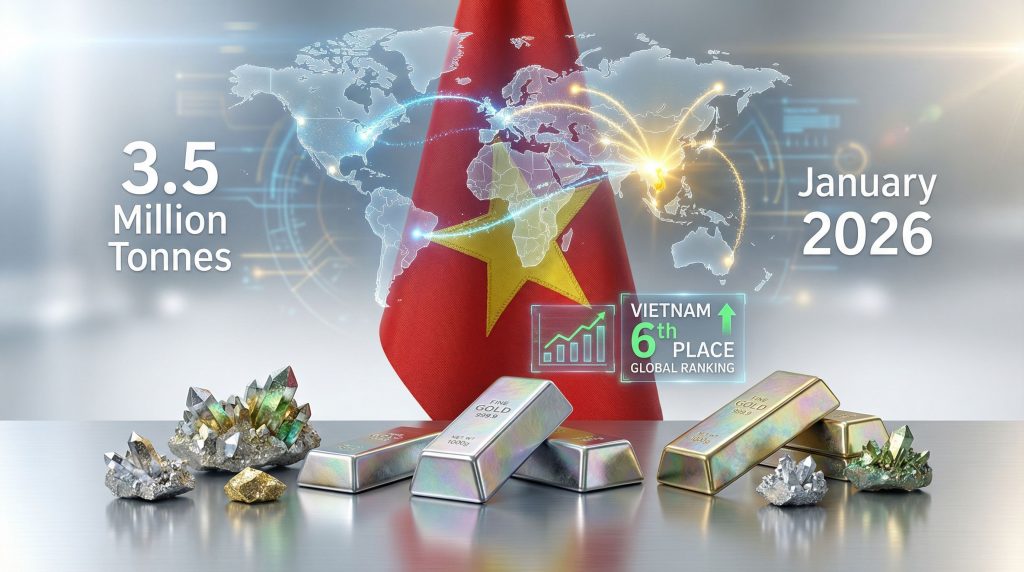
Vietnam maintains approximately 3.5 million tonnes of rare earth reserves according to the latest US Geological Survey assessment, representing roughly 3% of known global deposits. This positions Vietnam as a meaningful but not dominant player in global rare earth resource distribution.
| Global Ranking | Country | Reserves (Million Tonnes) | Market Share |
|---|---|---|---|
| 1st | China | ~44 | ~37% |
| 2nd | Brazil | ~21 | ~18% |
| 3rd | Russia | ~12 | ~10% |
| 6th | Vietnam | ~3.5 | ~3% |
Vietnam has some of the world's largest deposits of rare earths according to the US Geological Survey, though this designation must be understood within the context of highly concentrated global reserve distribution. China's 44 million tonnes represent over one-third of known global reserves, while Vietnam's reserves, though substantial, remain significantly smaller than the leading reserve holders.
Furthermore, the global rare earth market demonstrates extreme concentration, with the top three countries (China, Brazil, and Russia) controlling approximately 65% of known reserves. Vietnam's position as a secondary reserve holder provides strategic value for supply chain diversification efforts, particularly given its geographic proximity to major Asian manufacturing centres.
Geographic distribution advantages include Vietnam's location within established Asian supply chains, potentially reducing transportation costs and logistics complexity compared to reserves in more remote locations. However, reserve quantity alone does not determine market impact, as processing capacity, ore grades, and extraction economics prove equally critical for actual supply contribution.
Why Were Vietnam's Reserve Estimates Revised Downward?
The US Geological Survey significantly lowered its estimate of Vietnam's rare earth reserves to 3.5 million metric tonnes from 22 million tonnes earlier in 2025, representing an 84% downward revision. This substantial adjustment reflects methodological changes in reserve classification and improved geological understanding of Vietnamese deposits.
The revision distinguishes between:
• Theoretical reserves: Estimated total rare earth minerals in geological formations (22 million tonnes)
• Economically extractable reserves: Deposits profitable for extraction with current technology and economics (3.5 million tonnes)
• Technical feasibility constraints: Vietnamese geological conditions requiring specialised extraction methods
• Ore grade considerations: Lower rare earth element concentrations requiring higher tonnage processing
Reserve reclassifications commonly occur when geological surveys update estimation standards based on improved geological data and extraction feasibility studies. Deposits in difficult geological formations or requiring expensive processing technologies may be reclassified from economic reserves to non-economic resource categories.
In addition, Vietnamese deposits may contain lower concentrations of rare earth elements compared to more accessible reserves, necessitating more extensive mining and processing operations to achieve equivalent output levels. This economic reality influences both extraction costs and the commercial viability of large-scale mining operations under current market conditions.
The methodology revision highlights the distinction between geological presence of rare earth elements and their economic extractability, a critical factor for understanding Vietnam's actual potential contribution to global supply chains. Future reserve estimates may continue evolving as extraction technologies advance and market prices fluctuate.
How Will These Restrictions Impact Global Rare Earth Markets?
What Immediate Supply Chain Disruptions Should Industries Expect?
Vietnam rare earth export restrictions will create no immediate market disruptions due to the country's virtually nonexistent refining capacity. The policy represents a forward-looking regulatory framework rather than an immediate supply shock, establishing legal structures for future processing development while maintaining current supply chain stability.
The distinction between policy implementation and market impact proves critical:
• Ore export prohibition: Maintained since 2021 with minimal market disruption
• Refined material restrictions: New policy affecting non-existent current production
• Processing capacity: Vietnam currently lacks refining infrastructure for rare earth materials
• Timeline impact: Policy establishes incentive structure for future foreign investment rather than restricting existing supply flows
Current global rare earth supply chains remain largely unaffected as Vietnam contributes minimal processed rare earth materials to international markets. The country's role has historically focused on raw ore production, which already faced export restrictions, making the refined material policy primarily anticipatory rather than immediately disruptive.
However, industries dependent on rare earth supplies should monitor Vietnam's domestic processing capacity development timelines rather than preparing for immediate supply shortages. The regulatory framework creates conditions for future supply chain participation rather than restricting current material flows to international buyers.
Which Industries Face the Greatest Exposure to Vietnamese Supply Changes?
Electric vehicle manufacturers, renewable energy infrastructure developers, and defence contractors represent the primary industrial sectors potentially affected by Vietnam's long-term rare earth supply chain positioning. However, immediate exposure remains minimal due to current processing capacity limitations.
Key affected sectors include:
• Electric vehicle production: Battery technology and motor manufacturing requiring rare earth permanent magnets
• Wind energy systems: Turbine generators utilising rare earth magnetic materials
• Defence applications: Advanced electronics and guidance systems incorporating rare earth elements
• Consumer electronics: Smartphones, computers, and entertainment systems using rare earth components
The policy's long-term implications centre on Vietnam's potential emergence as a processed rare earth supplier rather than immediate supply chain disruption. Industries currently source refined rare earth materials primarily from Chinese processors, creating strategic vulnerability to geopolitical supply chain weaponisation.
Furthermore, Vietnam's domestic value chain development could provide alternative sourcing options for Western manufacturers seeking supply chain diversification away from Chinese dominance. However, this transformation requires substantial time, investment, and technology transfer to develop competitive processing capabilities from the current near-zero baseline.
Manufacturing sectors should evaluate Vietnam's industrial ecosystem development progress rather than immediate supply substitution possibilities, as processing capacity building typically requires multi-year development timelines and significant capital investment partnerships.
What Does Vietnam's Domestic Value Chain Strategy Entail?
How Will the "Modern Industrial Ecosystem" Framework Operate?
Vietnam's modern industrial ecosystem framework mandates that rare earth processing activities integrate with broader domestic manufacturing capabilities rather than operating as isolated export-oriented facilities. This approach requires foreign investors to establish comprehensive value-added production networks within Vietnamese territory.
The regulatory structure emphasises:
• Technology transfer partnerships with international processing companies
• Domestic manufacturing integration linking rare earth processing to end-product manufacturing
• State enterprise collaboration through joint venture structures with Vietnamese partners
• Closed-loop processing requirements maximising domestic value capture from raw materials
Export licensing protocols for processed materials will likely require demonstration of domestic industrial ecosystem contribution, creating compliance barriers for simple processing-and-export business models. The policy framework incentivises complete supply chain development within Vietnam rather than limited processing activities.
Consequently, infrastructure development supporting rare earth processing must align with broader industrial policy objectives, potentially including electric vehicle manufacturing, renewable energy equipment production, and electronics assembly capabilities. This integrated approach aims to capture maximum economic value from Vietnam's rare earth resources.
Foreign companies seeking Vietnamese rare earth access must navigate complex regulatory requirements while contributing to long-term industrial capacity building rather than simple commodity purchasing arrangements. This represents a significant shift from traditional extractive industry approaches toward integrated manufacturing partnerships.
What Investment Opportunities Emerge from These Policy Changes?
Vietnam rare earth export restrictions create substantial foreign direct investment opportunities in domestic processing facilities, technology partnerships, and integrated manufacturing operations. The regulatory framework incentivises international companies to establish comprehensive production capabilities rather than traditional commodity trading relationships.
Primary investment opportunities include:
• Processing facility development: Establishing rare earth refining and separation capabilities from minimal current baseline
• Technology partnership agreements: Providing advanced processing technologies to Vietnamese state-designated enterprises
• Integrated manufacturing projects: Developing complete supply chains from ore processing through end-product manufacturing
• Infrastructure investments: Supporting logistics, energy, and environmental management systems for processing operations
Joint venture structures complying with Vietnamese regulatory frameworks require careful navigation of state enterprise partnership requirements and technology transfer obligations. International investors must balance intellectual property protection with Vietnamese government expectations for substantial technology sharing.
In addition, the policy timeline creates first-mover advantages for companies establishing processing capabilities early in Vietnam's industrial ecosystem development, particularly given the multi-year lead times required for rare earth processing facility construction and commissioning.
Investment success will depend on understanding Vietnamese regulatory compliance requirements, building relationships with appropriate state-designated enterprises, and developing business models that contribute meaningfully to domestic value chain objectives rather than simple export-oriented processing.
How Do These Measures Compare to Other Resource Nationalism Trends?
What Similar Export Restriction Models Exist Globally?
Vietnam rare earth export restrictions align with broader global resource nationalism trends where mineral-rich nations implement export controls to develop domestic processing capabilities and capture greater economic value from natural resource endowments.
| Country | Resource | Restriction Type | Implementation Year |
|---|---|---|---|
| Indonesia | Nickel ore | Complete export ban | 2020 |
| China | Rare earths | Export quotas/licences | 2010-present |
| Vietnam | Rare earth ore | Complete export ban | 2026 |
| Chile | Lithium | State partnership requirements | 2023 |
Indonesia's nickel processing success provides the most relevant precedent for Vietnam's rare earth strategy. Indonesia implemented complete nickel ore export bans in 2020, successfully attracting substantial foreign investment in domestic smelting facilities and becoming a major stainless steel producer within several years.
Moreover, China's rare earth export control model demonstrates long-term strategic resource management, utilising export quotas, licensing requirements, and processing capacity restrictions to maintain global market dominance while developing domestic high-technology manufacturing capabilities.
This approach reflects how nations are developing their own critical minerals strategy to reduce dependence on traditional export models. Similarly, India's lithium strategy demonstrates another approach to securing strategic mineral resources through international partnerships.
Resource nationalism policies typically follow similar patterns:
• Export restrictions on raw materials to incentivise domestic processing investment
• Technology transfer requirements for foreign companies seeking resource access
• State enterprise partnerships mandating local collaboration and knowledge sharing
• Industrial ecosystem development linking resource processing to broader manufacturing capabilities
How Effective Are Raw Material Export Bans in Building Domestic Industries?
Indonesia's nickel processing transformation offers the most comprehensive evidence for raw material export ban effectiveness in building domestic industrial capacity. Following the 2020 nickel ore export prohibition, Indonesia attracted over $30 billion in foreign investment for smelting facilities and became a dominant global stainless steel producer.
Success factors from Indonesia's experience include:
• Large reserve base providing long-term supply security for processing investments
• Government policy consistency maintaining export restrictions despite international pressure
• Foreign investment attraction through clear regulatory frameworks and investment incentives
• Technology transfer achievement through mandatory partnership structures with international companies
However, Indonesia's success required substantial environmental and social costs, including deforestation, air pollution, and community displacement issues that Vietnamese policymakers must address in rare earth processing development.
Furthermore, timeline expectations for industrial capacity development typically span 5-7 years from policy implementation to significant production capability, based on Indonesia's nickel processing experience and similar resource nationalism initiatives globally.
Technology transfer requirements face implementation challenges as international companies balance intellectual property protection with host country expectations for substantial knowledge sharing and local capacity building.
Vietnam's success will depend on maintaining policy consistency, attracting appropriate foreign investment partnerships, and managing environmental and social impacts more effectively than some previous resource nationalism examples.
The next major ASX story will hit our subscribers first
What Are the Long-Term Implications for Global Rare Earth Security?
How Might This Accelerate Western Supply Chain Diversification?
Vietnam rare earth export restrictions could accelerate Western supply chain diversification efforts by creating both challenges and opportunities for reducing dependence on Chinese rare earth processing dominance. The policy forces international buyers to develop alternative sourcing strategies while potentially opening new supply channels through Vietnamese processing partnerships.
Diversification acceleration mechanisms include:
• Alternative source development in Australia, Canada, and African nations receiving increased investment attention
• Recycling technology advancement as supply constraints drive circular economy initiatives for rare earth recovery
• Strategic stockpiling policies in developed economies preparing for supply chain disruptions
• Processing capacity building outside China through technology partnerships and government support programmes
Western governments increasingly recognise rare earth supply chain vulnerability as a national security issue, driving policy support for domestic processing capabilities and international partnership development. Vietnam's restrictions may paradoxically support these diversification efforts by providing alternative processing locations with appropriate foreign investment.
Consequently, the timeline for meaningful supply chain diversification typically requires 7-10 years given the complexity of rare earth processing technology and the substantial capital requirements for establishing competitive production facilities outside established Chinese networks.
Success depends on coordinated government and private sector initiatives rather than market forces alone, as rare earth processing involves significant technological barriers and economies of scale that require strategic planning and substantial initial investment support.
What Scenarios Could Emerge from Vietnam's Policy Implementation?
Vietnam rare earth export restrictions implementation could follow multiple development pathways depending on foreign investment attraction success, technology transfer effectiveness, and global supply chain adaptation strategies.
Scenario Analysis:
Successful Processing Development (Medium Probability): Vietnam attracts substantial foreign investment and develops competitive rare earth processing capabilities within 5-7 years, contributing to global supply diversification while capturing increased economic value from domestic resources.
Limited Capacity Growth (High Probability): Processing facility development proceeds slowly due to technology transfer challenges, environmental constraints, or insufficient foreign investment, maintaining current global supply chain structures with minimal Vietnamese contribution.
Accelerated International Partnerships (Medium Probability): Western governments prioritise Vietnamese processing partnerships as part of supply chain diversification strategies, providing policy support and investment incentives that accelerate capacity building timelines to 2-4 years.
Market impact scenarios range from moderate global supply increases if Vietnam successfully develops processing capabilities to continued supply constraints if domestic capacity building fails to achieve policy objectives.
In addition, the most likely outcome involves gradual processing capacity development over 5-7 years with Vietnam emerging as a secondary rare earth processor serving regional Asian markets rather than competing directly with established Chinese processing dominance globally.
Success probability depends heavily on Vietnam's ability to attract appropriate technology partners, manage environmental impacts effectively, and maintain policy consistency despite potential international pressure or domestic economic challenges during the capacity building phase.
Regulatory Compliance and Market Adaptation Strategies
What Should International Buyers Do to Prepare for Policy Changes?
International rare earth buyers should develop comprehensive adaptation strategies addressing Vietnam's evolving regulatory framework while maintaining supply chain continuity through alternative sourcing and partnership development approaches.
Preparation strategies include:
• Alternative supplier qualification through accelerated due diligence and contract negotiations with non-Vietnamese rare earth processors
• Inventory management optimisation building strategic reserves during transition periods to buffer potential supply disruptions
• Vietnamese partnership exploration evaluating joint venture opportunities with state-designated enterprises for long-term supply access
• Technology transfer preparation developing intellectual property sharing frameworks acceptable for Vietnamese collaboration requirements
Supply chain resilience requires diversification beyond Vietnamese sources while simultaneously exploring opportunities for accessing Vietnamese rare earth resources through compliant processing partnerships and domestic manufacturing investments.
Furthermore, risk mitigation should address both immediate supply continuity needs and long-term strategic positioning as Vietnam develops processing capabilities that could provide alternative sourcing options within 5-7 years under successful implementation scenarios.
Due diligence processes must evaluate Vietnamese regulatory compliance requirements, potential technology transfer obligations, and the financial viability of processing partnership structures under current and anticipated future policy frameworks.
How Can Companies Navigate Vietnam's New State Enterprise Requirements?
Navigating Vietnam's state enterprise partnership requirements demands careful attention to regulatory compliance frameworks, joint venture structuring, and technology transfer agreement development that balances commercial objectives with Vietnamese government policy priorities.
Key navigation strategies include:
• State enterprise identification through Vietnamese government channels and industry associations to locate appropriate authorised partners
• Joint venture structuring balancing intellectual property protection with Vietnamese requirements for technology sharing and domestic capacity building
• Regulatory compliance frameworks ensuring all activities align with "modern industrial ecosystem" development objectives rather than simple commodity trading arrangements
• Technology transfer planning developing agreements that satisfy Vietnamese policy goals while protecting core intellectual property assets
Due diligence processes for authorised Vietnamese partners should evaluate technical capabilities, regulatory standing, and alignment with state policy objectives to ensure partnership sustainability and compliance throughout processing facility development timelines.
Moreover, successful partnerships require understanding Vietnamese industrial policy objectives and developing business models that contribute meaningfully to domestic value chain development rather than seeking minimal compliance with export restriction requirements.
Legal and regulatory advisory support becomes essential given the complexity of Vietnamese mineral law, state enterprise regulations, and the evolving nature of rare earth export restriction implementation across multiple government agencies and policy frameworks. Companies should also monitor Vietnam's comprehensive legal framework developments to ensure ongoing compliance with changing requirements.
Disclaimer: This analysis contains forward-looking statements and policy interpretations based on currently available information. Actual implementation of Vietnam's rare earth export restrictions may differ from outlined scenarios. Readers should consult current regulatory updates and seek professional advice before making investment or supply chain decisions.
Ready to Capitalise on Critical Mineral Supply Chain Disruptions?
While Vietnam's rare earth restrictions highlight the growing importance of resource nationalism in global supply chains, savvy investors are already positioning themselves ahead of these market-shifting developments. Discovery Alert's proprietary Discovery IQ model delivers instant notifications when ASX-listed companies announce significant mineral discoveries across all critical commodities, ensuring you never miss the next major breakthrough that could benefit from supply chain disruptions. Begin your 30-day free trial today and gain the market-leading edge needed to navigate an increasingly complex global minerals landscape.