August 20, 2026
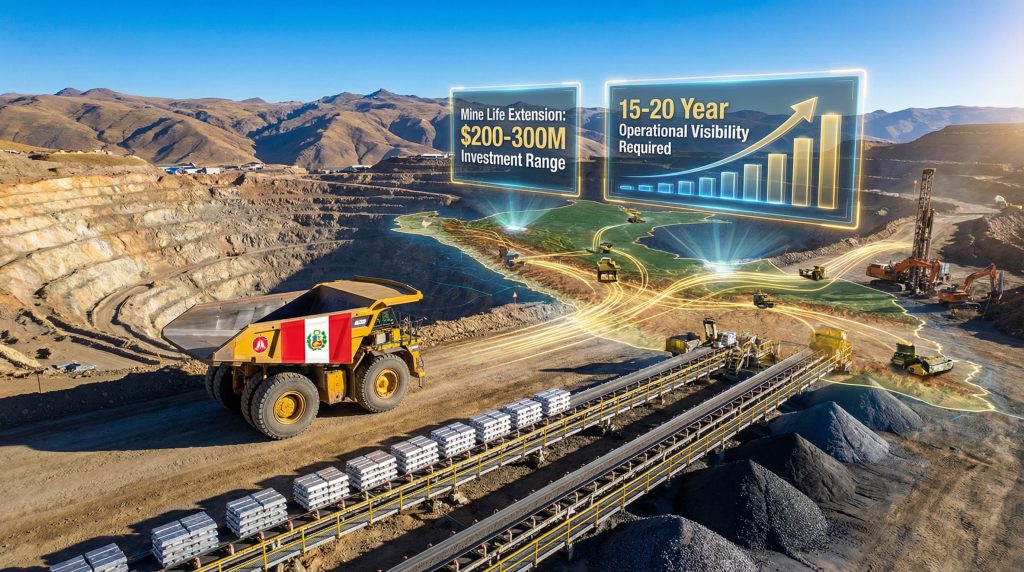
Volcan to invest in central Peru represents a significant strategic decision within Peru's dynamic mining landscape, where complex capital allocation frameworks determine investment viability. The interplay between geological fundamentals, regulatory environments, and market dynamics creates unique challenges for companies seeking to deploy substantial capital in Latin America's diverse mining landscape. Understanding these frameworks becomes essential when evaluating the strategic rationale behind major investment decisions in Peru's central mining regions.
Understanding Strategic Mining Investment Frameworks in Latin America
Peru's position as the world's second-largest copper producer and fourth-largest zinc producer establishes the foundation for significant capital deployment opportunities. The mining industry evolution sector represents approximately 10% of Peru's GDP and generates 60% of export revenues, creating a substantial economic framework that supports large-scale investment decisions. Foreign direct investment in Peru's mining sector reached $3.2 billion between 2020-2024, demonstrating sustained international confidence in the regulatory environment.
Capital Allocation Models for Mine Life Extension Projects
Investment threshold analysis for operational continuity requires sophisticated modelling that accounts for reserve depletion rates, production optimisation potential, and market price projections. Companies typically structure mine life extension investments when remaining reserves fall below 10-15 years of operational continuity at current production rates, creating urgency for capital deployment decisions as extended downtime becomes operationally inefficient.
The average capital expenditure for life extension projects in Latin American mining ranges from $150-350 million for mid-tier operations. Project approval timelines for major mining investments in Peru average 24-48 months from engineering completion to operational deployment, requiring careful coordination between technical planning and market timing considerations.
Risk-adjusted return calculations in emerging market mining typically require 2-4 percentage point premiums above developed market equivalents to account for political, currency, and regulatory uncertainties. This variance significantly impacts project viability assessments and influences the minimum investment thresholds required to justify major capital expenditure.
Brownfield vs. Greenfield Investment Strategy Comparison:
| Investment Type | Development Risk | Implementation Timeline | Capital Intensity |
|---|---|---|---|
| Brownfield (Mine Extension) | 60-70% lower | 3-5 years | 15-25% lower per unit |
| Greenfield (New Projects) | 40-60% higher | 5-10 years | Standard baseline |
Regulatory Environment Impact on Mining Investment Decisions
Peru's mining regulatory framework operates under Mining Law Decree 22038 and its modifications, with environmental standards established through Law 30327. For companies considering consolidation and joint ventures, investment incentives include stability agreements that lock in tax rates for qualifying projects, though recent political developments have created implementation uncertainties that affect investment planning.
Environmental compliance costs represent 8-12% of total capital expenditure for major mining operations in Peru's central regions, including water management systems, tailings storage facility improvements, and air quality monitoring infrastructure. Furthermore, the basics of mining permitting basics must be integrated into capital allocation models during the planning phase.
Social licence considerations in central Peru mining regions require community engagement budgets of $3-8 million annually, representing 1-2% of operating costs. The region has experienced 23-31 days annually of mining-related social mobilisation between 2020-2025, with production delays averaging 18-22 days per incident and operational costs increasing by 8-15% during unrest periods.
When big ASX news breaks, our subscribers know first
What Drives $200+ Million Investment Decisions in Base Metal Operations?
Major capital expenditures in base metal operations require demonstrable pathways to production increases of 15-25% over five-year periods, cost reductions of 12-18% per unit of production, or mine life extensions of 8-12 additional years of operations. Global zinc demand projections of 2.8-3.2% annual growth through 2030, driven by infrastructure development and energy transition applications, provide market fundamentals supporting substantial investment decisions.
Peru's zinc production represents approximately 11% of global supply, while lead production accounts for 5% of global output. This market position creates strategic value for companies capable of extending operational timelines through major capital investments, particularly when combined with operational optimisation initiatives.
Production Optimisation vs. Mine Life Extension Economics
The strategic choice between production optimisation and mine life extension represents fundamental capital allocation decisions with different risk-return profiles. Production optimisation typically delivers faster payback periods of 4-6 years but requires sustained metal prices above break-even thresholds, while mine life extension projects require longer payback periods of 6-9 years but provide operational stability for investors seeking 20+ year asset visibility.
Break-Even Analysis Framework for Central Peru Operations:
- Zinc operations: Cash operating costs range $850-1,050 per tonne
- Investment threshold: Zinc prices above $1,200-1,400 per tonne required
- Lead operations: Break-even costs vary by operational efficiency
- Market timing: Base metal price cycles operate on 7-11 year patterns
For zinc and lead operations in Peru, median cash operating costs for established operations have compressed due to operational maturation and technology integration advancements. Break-even production costs require zinc prices above $1,200-1,400 per tonne to justify major capital expenditures with acceptable return thresholds.
Market Timing Considerations for Strategic Mining Investments
Base metal price cycles influence investment timing through multiple mechanisms. Global economic growth cycles affect demand patterns, while production capacity additions create 3-4 year lags between investment decisions and operational impact. London Metal Exchange data shows 18-24 month inventory patterns that affect short-term pricing, while structural demand shifts from energy transition drive long-term commodity requirements.
Supply chain security factors increasingly influence expansion decisions as manufacturers seek reliable supply sources for critical materials. Peru's geographic position and established mining infrastructure create advantages for companies planning major investment programs in base metal production.
Technology upgrade requirements for aging mining infrastructure typically include:
- Comminution systems modernisation: $40-80 million for mid-scale operations
- Processing efficiency improvements: $30-60 million for flotation optimisation
- Automation and monitoring systems: $15-35 million for real-time controls
- Tailings management upgrades: $50-120 million for environmental standards
How Do Ownership Transitions Influence Mining Investment Strategies?
Latin American mining assets attracted approximately $8.2 billion in private equity investment between 2020-2025, with Argentina and Peru representing 18-22% of regional activity. Argentine institutional investors and capital groups deployed $2.1-2.8 billion in Peruvian mining assets over the past decade, reflecting geographic proximity advantages and capital availability.
Private Equity Ownership Models in Latin American Mining
Successful ownership transitions in the mining sector prioritise operational continuity maintenance, technical team retention, stakeholder communication with regulatory bodies and communities, and financial restructuring to reflect new ownership cost of capital. Integration success rates show 65-75% of acquisitions achieving operational targets when these elements receive strategic priority, compared to 40-50% success rates when integration planning lacks coordination.
Post-acquisition integration strategies typically focus on maintaining production schedules during ownership transfers whilst optimising operational procedures. Additionally, different approaches to capital raising methods become critical for preserving operational knowledge, particularly in mature mining operations where institutional knowledge affects production efficiency.
Asset Portfolio Optimisation During Ownership Transitions
Non-core asset divestiture strategies target exploration-stage properties without near-term production potential, pilot operations or early-stage development projects, and geographic outliers lacking synergy with core operations. Real estate monetisation approaches include office facility sales generating $15-40 million for major operations and land holdings with alternative development potential.
Asset Divestiture Categories and Typical Values:
- Exploration properties: $10-50 million transactions
- Early-stage developments: $25-100 million range
- Geographic outliers: $50-200 million range
- Real estate assets: $15-40 million for administrative facilities
Debt restructuring following ownership changes typically pursues maturity profile extensions, cost of capital reductions, and operational flexibility maintenance. Documentation shows 60-70% of post-acquisition debt restructurings reduce weighted average cost of debt by 150-250 basis points, improving project financing capacity for major capital investments.
Hydroelectric asset monetisation has gained significance as energy transition demand creates valuation premiums for renewable power generation. Divestiture of mature hydroelectric operations has generated $100-250+ million in capital proceeds for mining companies, representing strategic non-core asset monetisation that supports core mining investment programs.
What Are the Key Risk Factors in Central Peru Mining Investments?
Central Peru mining regions face documented infrastructure constraints that affect investment planning and operational execution. Only 35-40% of mining access roads meet quality standards for consistent year-round operation, whilst power supply reliability averages 88-92% uptime versus 99%+ available in developed mining jurisdictions. Water availability shows seasonal variation of 40-60% between rainy and dry seasons, creating operational planning constraints that must be addressed in major investment programmes.
Operational Risk Assessment Framework
Andean region mining operations experience 120-180 day rainy seasons with production impacts of 8-12%, whilst altitude-related operational challenges at 3,500-4,500 metres elevation affect workforce efficiency by 15-22%. Weather unpredictability has increased significantly, with 2020-2025 data showing 30-40% variance in annual precipitation versus historical 1990-2019 averages.
Risk assessment for central Peru mining evaluates social relationship indicators including community approval ratings and historical protest frequency, physical infrastructure capacity including road condition indices and power generation margins, and environmental monitoring covering air quality indices and compliance with Peru's Environmental Quality Standards.
Infrastructure Risk Factors:
- Road infrastructure: 35-40% meet year-round operation standards
- Power reliability: 88-92% average uptime
- Water availability: 40-60% seasonal variation
- Weather patterns: 30-40% variance from historical norms
Social unrest impact documentation shows Central Peru mining regions have experienced production delays of 5-45 days per incident, with operational costs increases of 8-15% during unrest periods. Community negotiation and mitigation costs range $2-8 million per incident resolution, representing manageable but recurring operational expenses that must be incorporated into investment planning.
Financial Risk Mitigation Strategies
Metal price volatility represents a primary financial risk, with annual price volatility for zinc ranging 25-40% and lead ranging 20-35%. Companies typically employ forward contracts covering 30-60% of future production, put options protecting against downside price movements whilst maintaining upside exposure, and collar strategies combining puts and calls to manage price bands.
Currency risk management becomes critical for USD-denominated investments operating in Peruvian Soles revenue environments. USD/PEN volatility has ranged 12-18% annually over 2020-2025, with direct earnings impacts of 6-9% for unhedged operations requiring sophisticated hedging strategies.
International lenders typically require mining companies to maintain minimum debt service coverage ratios of 1.5-2.0x EBITDA and maximum debt-to-EBITDA ratios of 2.5-3.5x for mine life extension projects. Maturity extension negotiations typically reduce near-term refinancing risk by spreading debt repayment over 15-20 year horizons versus 7-10 year standard terms.
Risk Management Insight: Major mining operations in Peru's central regions implement infrastructure redundancy investments including backup power systems and alternative transportation routes, combined with seasonal operational planning adjustments that reduce production during high-risk periods.
How Do Mining Companies Structure Multi-Asset Investment Programs?
Portfolio balancing through strategic asset management requires systematic approaches to core versus non-core asset classification. Geographic diversification strategies for mining portfolios must account for regulatory differences, operational synergies, and market access considerations when planning major investment programmes across multiple jurisdictions.
Portfolio Balancing Through Strategic Asset Management
Core asset classification methodologies typically evaluate production capacity, reserve quality, operational efficiency, and strategic market position. Non-core assets include exploration properties without defined development timelines, operations lacking scale advantages, and geographic outliers requiring separate management infrastructure.
Operational synergy identification between adjacent mining properties creates opportunities for shared infrastructure, consolidated processing facilities, and integrated transportation networks. These synergies can justify larger investment programmes by reducing per-unit capital requirements across multiple operations.
Multi-Asset Investment Structure:
| Asset Category | Investment Priority | Strategic Purpose | Typical Timeline |
|---|---|---|---|
| Core Production Assets | High | Operational continuity | 3-7 years |
| Development Projects | Medium | Growth platform | 5-12 years |
| Exploration Properties | Low | Option value | 10+ years |
Financing Structure Optimisation for Large-Scale Mining Investments
Bond market refinancing strategies for mining companies have evolved to incorporate ESG considerations, operational transparency requirements, and sustainability metrics. Bank consortium negotiations for project financing typically involve multiple international lenders with varying risk appetites and geographic expertise.
Equity versus debt financing decisions for expansion projects depend on existing capital structure, market conditions, and operational cash flow generation. Companies planning investments exceeding $200 million typically pursue hybrid financing structures combining debt facilities, equity contributions, and operational cash flow to minimise cost of capital whilst maintaining financial flexibility.
When Volcan to invest in central Peru operations, the financing structure must account for operational cash flow timing, capital expenditure scheduling, and debt service requirements. Large-scale mining investments require careful coordination between financing availability and construction timelines to avoid operational disruptions.
What Investment Patterns Emerge in Peru's Base Metal Mining Sector?
Regional development impact from major mining investments extends beyond immediate operational requirements. Local employment generation from $200+ million mining projects typically creates 800-1,500 direct positions during construction phases and 400-800 permanent operational roles. Infrastructure development spillover effects include road improvements, power grid expansions, and telecommunications upgrades that benefit broader regional development.
Regional Development Impact of Major Mining Investments
Community investment requirements and social impact programmes represent approximately 1-3% of total project capital expenditure, focusing on education facilities, healthcare infrastructure, and economic development initiatives. These investments create long-term social licence value that supports operational stability throughout mine life cycles.
Major mining investments in central Peru typically trigger secondary economic development including supplier networks, service provider establishments, and commercial activity expansion in regional population centres. The economic multiplier effect from large mining investments ranges 2.5-4.0x direct investment value when accounting for indirect and induced economic activity.
Regional Development Metrics:
- Direct employment: 800-1,500 construction positions
- Permanent roles: 400-800 operational positions
- Community investment: 1-3% of total capital expenditure
- Economic multiplier: 2.5-4.0x direct investment value
Comparative Analysis: Peru vs. Regional Mining Investment Climates
Peru's mining investment attractiveness benefits from established regulatory frameworks, proven geological potential, and existing infrastructure networks. Compared to Chile's 40% share of Latin American mining investment, Peru offers lower labour costs, competitive tax structures, and geographic proximity to Asian markets through Pacific port access.
Regulatory stability comparisons across major mining countries show Peru maintains moderate scores for permitting predictability and policy consistency. Tax regime analysis for international mining investors indicates effective tax rates ranging 28-35% depending on project structure and profit levels, competitive with regional alternatives.
Investment pattern analysis shows Peru's base metal sector attracts sustained capital deployment from international mining companies seeking operational diversification and production growth opportunities. The combination of geological potential, regulatory framework stability, and market access creates favourable conditions for major investment programmes.
The next major ASX story will hit our subscribers first
Future Outlook: Strategic Investment Trends in Peruvian Mining
Technology integration in traditional mining operations represents an emerging investment category requiring substantial capital allocation. Automation investment requirements for aging mining facilities typically range $50-150 million for comprehensive modernisation programmes, whilst digital transformation costs deliver operational efficiency gains of 10-20% when properly implemented.
Technology Integration in Traditional Mining Operations
Environmental technology upgrades driving capital expenditure include water recycling systems, emissions control equipment, and waste management optimisation. These investments respond to regulatory requirements whilst creating operational efficiencies that improve long-term profitability.
Automation systems implementation affects workforce requirements, operational procedures, and maintenance protocols. Companies planning major technology investments must account for training costs, change management requirements, and integration timelines that affect production scheduling during implementation phases.
Technology Investment Categories:
- Automation systems: $50-150 million for comprehensive programmes
- Digital transformation: 10-20% operational efficiency gains
- Environmental technology: Regulatory compliance and efficiency improvements
- Data analytics platforms: Real-time operational optimisation
Market Position Strengthening Through Strategic Investments
Production capacity expansion versus operational efficiency improvements represents strategic choices with different capital requirements and risk profiles. Market share protection strategies in competitive base metal markets require sustained investment in operational excellence, cost reduction initiatives, and production reliability.
Long-term supply contract negotiations following major investments create revenue stability that supports investment payback calculations. Companies with substantial capital investment programmes typically pursue long-term supply agreements covering 40-70% of increased production capacity to reduce market exposure.
The strategic landscape for Peruvian mining investment continues evolving as companies balance operational optimisation, market positioning, and financial performance objectives. Major investment decisions reflect comprehensive analysis of geological potential, market conditions, regulatory environments, and operational capabilities that determine long-term project viability.
How Do Mining Companies Evaluate Investment Success?
ROI measurement frameworks for mine life extension projects typically evaluate production target achievement against investment cost analysis over 5-10 year timeframes. Operational efficiency improvements following major capital deployment include processing throughput increases, cost per unit reductions, and environmental performance enhancements.
Success metrics extend beyond financial returns to include operational reliability improvements, safety performance enhancements, and community relationship development. These comprehensive evaluation frameworks ensure investment decisions align with long-term strategic objectives rather than short-term financial optimisation.
What Factors Determine Optimal Investment Timing?
Market cycle analysis for base metal pricing influences optimal investment timing through demand forecasting, supply balance projections, and price volatility assessment. Regulatory window opportunities for major project approvals require coordination between technical readiness, financing availability, and administrative processing timelines.
Financial market conditions affecting mining sector financing include credit availability, interest rate environments, and investor sentiment toward mining investments. Furthermore, Volcan's substantial asset sales demonstrate how companies planning major capital deployment must evaluate market timing factors alongside technical and operational considerations to optimise investment outcomes.
Disclaimer: This analysis is for informational purposes only and does not constitute investment advice. Mining investments involve significant risks including commodity price volatility, operational challenges, regulatory changes, and market conditions that may affect investment performance. Readers should conduct independent research and consult qualified advisors before making investment decisions.
Considering Opportunities in Small-Cap Base Metal Companies?
Discovery Alert's proprietary Discovery IQ model delivers real-time alerts on significant base metal discoveries across the ASX, instantly empowering subscribers to identify actionable opportunities ahead of the broader market. Understand why historic discoveries can generate substantial returns by exploring Discovery Alert's dedicated discoveries page, then begin your 14-day free trial to position yourself ahead of the market.