The Gina Rinehart-backed Vulcan Energy Resources European lithium project represents a fundamental shift in critical minerals economics, moving beyond traditional resource extraction toward integrated energy-commodity production models. As global supply chains face unprecedented disruption risks, the continent's pursuit of battery metal self-sufficiency has triggered billions in strategic investment, reshaping how institutional capital values resource security versus pure commodity exposure. This transformation reflects deeper macro-economic forces where energy transition & security imperatives converge with geopolitical supply chain vulnerabilities, creating entirely new investment paradigms that challenge conventional mining economics.
How Does European Lithium Production Reshape Global Supply Chain Economics?
Continental Resource Security vs. Import Dependency Models
Europe's lithium import dependency represents a strategic vulnerability costing the continent substantially in foreign exchange outflows. Current European lithium production capacity remains negligible, representing less than 1% of total EU demand according to the European Commission's Critical Raw Materials Assessment. This dependency exposes European manufacturers to price volatility and supply disruption risks from geographically concentrated sources.
The economic multiplier effects of domestic production extend beyond direct commodity value creation. Integrated lithium-renewable energy operations create dual revenue streams that enhance project economics while reducing energy infrastructure costs for regional consumers. Furthermore, these operations establish industrial clusters that attract downstream battery manufacturing investment, generating positive spillover effects throughout the value chain.
Strategic autonomy implications for EU industrial policy center on reducing critical dependency ratios below 50% for essential materials by 2030, as outlined in the European Commission's Critical Raw Materials Act. Domestic lithium production capacity directly supports this objective while creating jobs in high-value processing activities rather than raw material export dependency.
Geothermal-Integrated Resource Economics
Traditional lithium extraction operations face significant energy cost burdens, often representing 20-30% of total operating expenses. However, geothermal-integrated operations eliminate this cost center while creating additional revenue streams through renewable energy sales and district heating provision.
The Lionheart project exemplifies this integrated model, projecting annual revenues of €566 million across multiple streams:
- Lithium hydroxide monohydrate sales: €420 million
- Renewable energy sales: €95 million
- District heating revenue: €51 million
This revenue diversification reduces commodity price exposure while enhancing project creditworthiness for debt financing. The €427 million projected EBITDA represents a 75.5% margin, substantially higher than conventional mining operations that typically achieve 40-50% EBITDA margins during favorable commodity cycles.
Co-located renewable energy generation provides competitive advantages beyond cost reduction. In addition, European Union carbon border adjustment mechanisms increasingly penalise high-carbon imports, creating market premiums for domestically produced, zero-carbon lithium products. This regulatory framework enhances long-term pricing power for integrated European operations.
What Are the Macro-Economic Drivers Behind Multi-Billion Dollar European Lithium Investments?
EV Market Demand Projections and Supply Gap Analysis
European electric vehicle adoption trajectories indicate exponential lithium demand growth over the next decade. The European Automobile Manufacturers Association reported 1.24 million electric vehicle registrations in the first half of 2024, establishing momentum toward more aggressive penetration scenarios.
European EV Battery Demand vs. Lithium Supply Capacity Projections:
| Year | Projected EV Units (millions) | Lithium Demand (tonnes LCE) | Current Supply Gap |
|---|---|---|---|
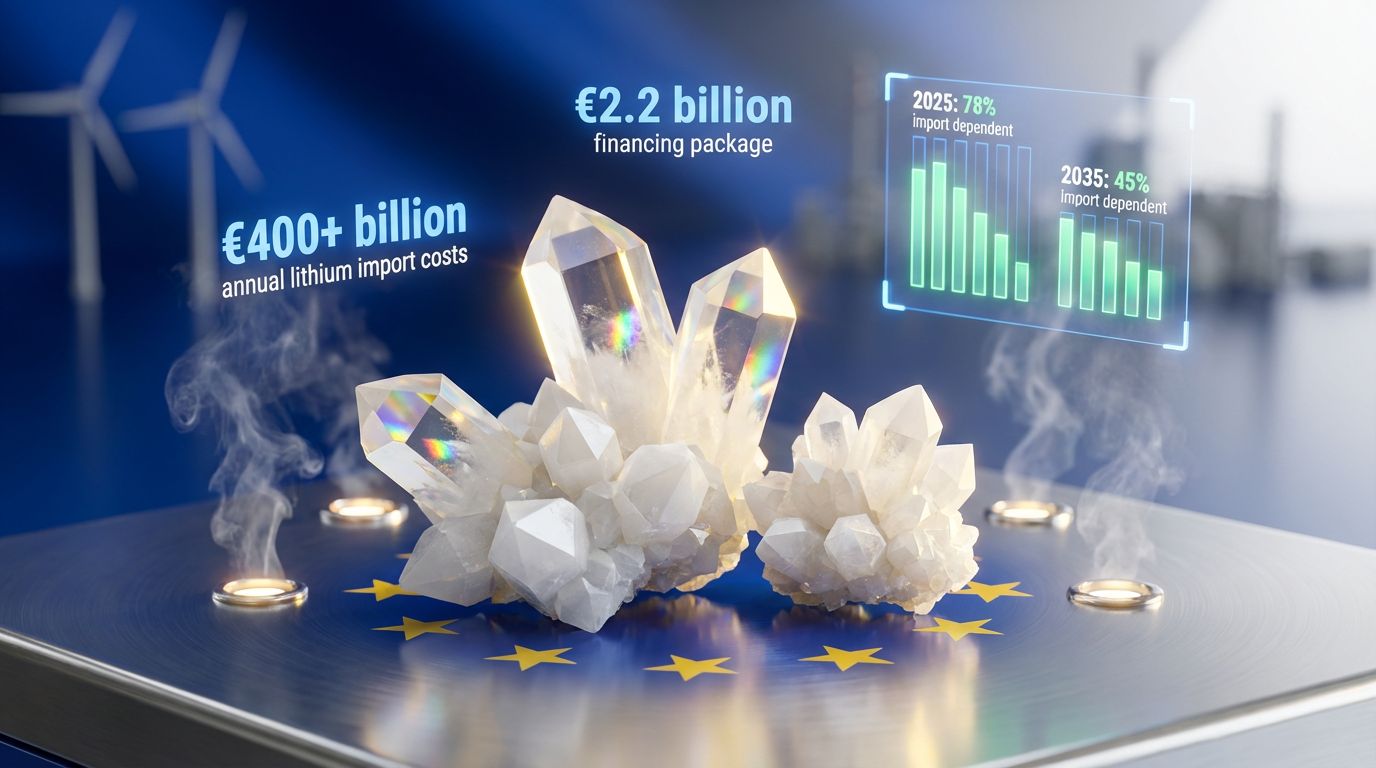
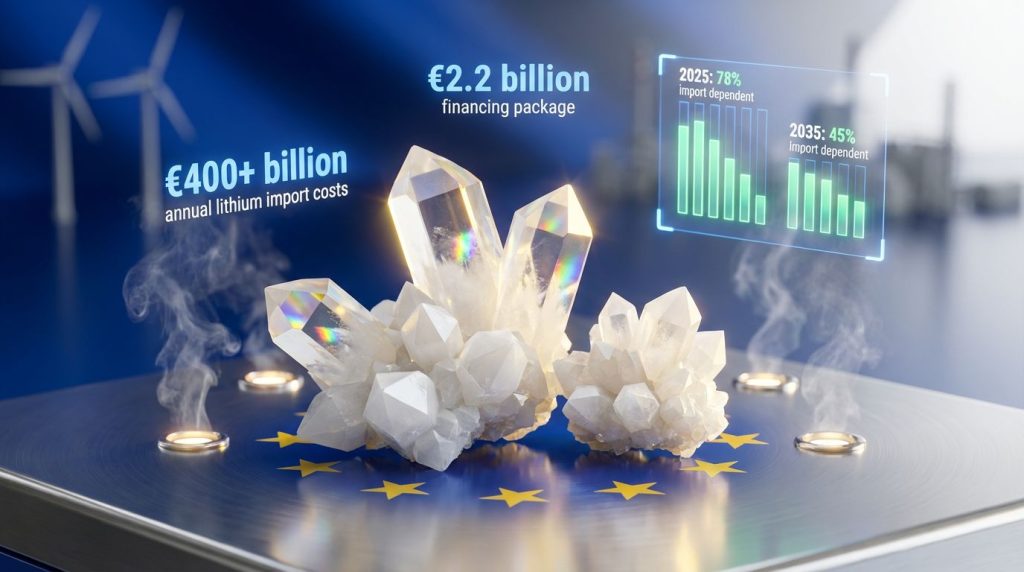
| 2025 | 3.2 | 85,000 | 78% import dependent |
| 2030 | 8.7 | 235,000 | 65% import dependent |
| 2035 | 15.2 | 410,000 | 45% import dependent |
These projections assume continued European Commission support for EV adoption through purchase incentives and internal combustion engine phase-out timelines. The International Energy Agency's Global EV Outlook 2024 supports similar demand trajectory forecasts, projecting EU battery demand reaching approximately 800 GWh by 2030.
Domestic production capacity additions, led by projects like Lionheart, begin addressing this supply gap but require sustained investment across multiple development sites. The 24,000 tonnes annual lithium hydroxide monohydrate production from Lionheart Phase 1 represents approximately 13,000 tonnes lithium carbonate equivalent, meaningful contribution toward reducing import dependency ratios.
Capital Allocation Patterns in Critical Minerals Development
Institutional investor appetite for strategic resource projects reflects evolving risk-return calculations that incorporate supply security premiums alongside traditional commodity exposure. The participation of sovereign wealth funds and export development agencies indicates government-level recognition of lithium as strategic infrastructure rather than speculative commodity investment.
For instance, government financing mechanisms increasingly support critical minerals development through concessional debt terms and political risk insurance. The project secured significant EU funding, with Export Finance Australia's A$214 million contribution, Export Development Canada's A$357 million facility, and the Export and Investment Fund of Denmark's A$179 million participation demonstrating cross-government cooperation in European supply chain development.
Risk-adjusted return profiles for integrated lithium-energy operations benefit from revenue diversification and regulatory support frameworks. Unlike conventional mining projects exposed to single commodity price volatility, integrated operations generate cash flows from multiple sources with different risk characteristics, enhancing overall investment stability.
How Do Financing Structures Reflect Changing Investment Paradigms in Critical Minerals?
Debt-to-Equity Ratios in Large-Scale Resource Development
The €2.2 billion debt financing package for Lionheart represents a significant shift in critical minerals project finance structures. Traditional mining projects typically secure 60-70% debt financing, while Lionheart achieved approximately 75% debt funding, reflecting enhanced lender confidence in integrated energy-commodity operations.
This financing structure included participation from 13 financial institutions, indicating broad syndication and risk distribution across multiple independent credit assessments. The European Investment Bank's participation provides institutional validation of the project's strategic alignment with EU energy transition objectives.
The debt package composition demonstrates evolving lender approaches to critical minerals financing:
- European Investment Bank (amount undisclosed)
- Export Finance Australia: €141 million
- Export Development Canada: €235 million
- Export and Investment Fund of Denmark: €118 million
- Commercial syndicate: €1.756 billion
Multilateral development bank and export credit agency participation totalling approximately €494 million (22% of debt package) provides political risk mitigation and demonstrates government-level support for strategic resource development.
Sovereign Wealth Fund and Strategic Investor Participation
Strategic investor participation in European lithium development reflects cross-border capital flows supporting supply chain diversification objectives. Hancock Prospecting's involvement through a 6.49% pre-capital raise stake represents Australian strategic capital supporting European resource development, indicating alignment between resource-rich and resource-dependent economies.
The equity raising structure accommodated multiple investor categories:
- Institutional placement: A$245 million at A$4.00 per share
- Institutional entitlement offer: A$465 million
- Retail shareholder offer: A$366 million
The A$4.00 placement price represented a 34.7% discount to the A$6.13 previous close, reflecting capital raising execution challenges but also providing attractive entry points for strategic investors seeking lithium exposure.
However, lithium market challenges continue to impact valuation metrics across the sector. Long-term supply agreement economics remain undisclosed in available documentation, though integrated operations with established customer relationships typically achieve premium pricing relative to spot market benchmarks through volume commitments and supply security value.
What Economic Models Drive Integrated Lithium-Renewable Energy Operations?
Revenue Stream Diversification Analysis
Integrated lithium-renewable energy operations represent a fundamental departure from traditional resource extraction business models. Rather than single commodity exposure, these operations generate cash flows from multiple sources with different demand drivers and pricing mechanisms.
Lionheart Phase 1 Projected Annual Revenue Breakdown:
- Lithium hydroxide sales: €420 million (74.2%)
- Renewable energy sales: €95 million (16.8%)
- District heating revenue: €51 million (9.0%)
- Total integrated revenue: €566 million
This diversification provides natural hedging against commodity price volatility. When lithium prices decline, renewable energy demand typically remains stable or increases due to energy transition momentum. Conversely, during lithium price upswings, the renewable energy component provides stable baseline cash flows supporting debt service requirements.
The 30-year project life enables long-term revenue visibility that supports attractive debt financing terms. Unlike conventional mining operations with finite ore body depletion, geothermal resources provide effectively unlimited operational duration, enhancing project net present value calculations.
Revenue quality differs substantially across the three streams. Lithium sales typically command spot pricing with quarterly or annual contract adjustments, while renewable energy sales often utilise long-term power purchase agreements providing decade-long price certainty. District heating revenues represent regulated utility-style cash flows with high predictability.
Operational Cost Advantages of Geothermal Integration
Traditional lithium extraction operations face substantial energy costs for brine processing, concentration, and chemical conversion. Hard-rock lithium mining operations typically consume 15-20 MWh per tonne of lithium carbonate equivalent, representing significant operational expense exposure.
Geothermal-integrated operations eliminate external energy purchases by utilising co-produced renewable energy for internal processing requirements. The 275 GWh annual renewable energy generation substantially exceeds Lionheart's operational needs, creating surplus capacity for grid sales rather than energy cost burden.
Carbon pricing exposure presents another operational advantage. European Union emissions trading system carbon prices averaging €80-100 per tonne CO2 create substantial cost penalties for high-carbon lithium imports. Domestic zero-carbon production eliminates this exposure while potentially qualifying for carbon credit revenues.
Enhanced ESG investment appeal translates to premium valuations in public equity markets. Investors increasingly apply ESG screening criteria that favour low-carbon resource operations, creating market premiums for sustainability-focused projects relative to conventional alternatives.
How Does This Development Impact Global Lithium Market Dynamics?
Supply Concentration Risk Mitigation
Global lithium supply remains concentrated in three primary regions: the South American lithium triangle (Argentina, Bolivia, Chile), Australian hard-rock operations, and Chinese processing facilities. This geographic concentration creates systemic supply risk during geopolitical tensions or natural disasters affecting key production regions.
European domestic production directly addresses this concentration risk by establishing processing capacity outside Chinese control and developing new geographic supply sources. The 24,000 tonnes annual lithium hydroxide monohydrate capacity represents meaningful diversification relative to current global production of approximately 600,000 tonnes lithium carbonate equivalent annually.
Processing capacity development represents particularly strategic value creation. While Australia dominates global lithium concentrate production, approximately 60% of global lithium chemical processing occurs in China. European processing facilities reduce this dependency while creating high-value manufacturing employment domestically.
Strategic reserve building for supply security becomes economically viable through integrated operations that generate positive cash flows during normal operations while maintaining strategic capacity during supply disruptions. This dual-use capability enhances national security while avoiding the carrying costs associated with traditional strategic stockpiles.
Pricing Power and Market Structure Evolution
European integrated lithium operations may command premium pricing relative to imported alternatives due to several structural advantages. Carbon border adjustment mechanisms increasingly penalise high-carbon imports, creating price premiums for low-carbon domestic production.
Long-term contract structures become increasingly attractive to European battery manufacturers seeking supply security. While spot lithium markets provide price transparency, strategic customers increasingly value supply certainty through decade-long agreements, particularly for critical battery-grade lithium hydroxide.
The development of European lithium hydroxide pricing benchmarks represents potential market structure evolution. Currently, lithium pricing references Asian markets despite growing European consumption. Domestic production capacity may establish regional pricing mechanisms that better reflect local supply-demand dynamics.
Impact on global lithium hydroxide pricing benchmarks depends on European production scale relative to global markets. While initial European capacity remains modest compared to global production, accelerated development across multiple projects could establish meaningful pricing influence within 5-7 years.
What Are the Broader Economic Implications for European Industrial Competitiveness?
Manufacturing Ecosystem Development Effects
Secure lithium supply enables European battery manufacturing investment by reducing input cost uncertainty and supply disruption risks. Major automotive manufacturers have announced over €100 billion in European battery manufacturing capacity, contingent on reliable raw material supply chains.
Industrial cluster formation around secure lithium supply creates agglomeration economies that enhance regional competitiveness. These clusters attract related industries including battery recycling breakthrough technologies, electric vehicle assembly, and renewable energy component manufacturing, creating positive economic spillover effects.
Technology transfer and innovation spillover effects emerge from integrated lithium-renewable energy operations. The combination of geothermal energy technology, direct lithium extraction processes, and battery-grade chemical production creates knowledge clusters that generate intellectual property and process innovations.
Downstream value chain development becomes economically viable with secure input supplies. Rather than exporting lithium chemicals for processing in Asia, European operations can capture additional value through battery cell manufacturing, pack assembly, and ultimately electric vehicle production.
Employment and Regional Economic Impact
Direct employment creation in high-value resource processing provides alternatives to traditional manufacturing employment that has migrated to lower-cost regions. Lithium chemical processing requires skilled technical positions that command higher wages than basic manufacturing roles.
Indirect economic multipliers in regional service sectors typically generate 2-3 additional jobs for each direct position in resource processing operations. These multiplier effects include transportation, maintenance, professional services, and retail activities supporting increased regional income levels.
Skills development and technology transfer opportunities create human capital advantages that extend beyond individual projects. Geothermal energy expertise, chemical processing capabilities, and integrated operations management skills provide transferable knowledge applicable to other industrial development initiatives.
Regional economic impact extends through tax revenue generation at multiple government levels. Corporate income taxes, property taxes, employment taxes, and indirect consumption taxes from employee spending provide sustainable public revenue streams supporting infrastructure and social services development.
How Do Regulatory Frameworks Shape Investment Economics?
EU Critical Raw Materials Act Implementation
The European Commission's Critical Raw Materials Act establishes binding targets for domestic sourcing that directly influence investment economics. The legislation requires 10% of critical raw materials consumption to originate from domestic sources by 2030, creating regulatory demand for projects like Lionheart.
Domestic sourcing targets create compliance economics for European manufacturers who must demonstrate supply chain resilience through diversified sourcing strategies. This regulatory requirement generates premium values for domestic production even when imported alternatives might appear cost-competitive on pure commodity pricing.
Regulatory incentives for strategic resource development include accelerated permitting processes, tax incentives, and access to public financing programmes. These incentives reduce development timelines and capital costs, improving project economics relative to conventional regulatory environments.
Environmental permitting advantages for low-carbon operations reflect regulatory priorities supporting energy transition objectives. Zero-carbon lithium production operations face fewer environmental restrictions and obtain permits more rapidly than conventional mining projects, reducing development risk and timeline uncertainty.
Carbon Border Adjustment Mechanism Implications
The European Union's Carbon Border Adjustment Mechanism (CBAM) creates competitive advantages for zero-carbon lithium production by imposing carbon costs on high-carbon imports. This mechanism effectively creates import tariffs proportional to the carbon intensity of foreign production processes.
Import cost increases for high-carbon lithium alternatives could reach €50-100 per tonne based on current carbon pricing levels, providing meaningful cost advantages for domestic zero-carbon production. These advantages increase over time as carbon prices rise and CBAM scope expands to cover additional products.
Market protection effects for domestic European production emerge through CBAM implementation without violating World Trade Organisation rules. Rather than direct import restrictions, carbon adjustment mechanisms create level competitive conditions between domestic and imported products based on environmental impact.
Long-term regulatory certainty supports investment decision-making by establishing predictable competitive frameworks. CBAM represents permanent trade policy rather than temporary protection, enabling long-term investment planning based on carbon advantages.
What Investment Risks and Opportunities Define This Sector?
Technology and Operational Risk Assessment
Geothermal extraction technology maturity varies significantly across different geological conditions and extraction methods. While geothermal energy production represents mature technology, direct lithium extraction from geothermal brines involves newer processes with limited long-term operational data.
Production ramp-up timelines present execution risks common to large-scale industrial projects. The 24,000 tonnes annual lithium hydroxide monohydrate capacity target requires successful commissioning of complex integrated systems with multiple interdependent components, creating operational complexity beyond traditional mining or energy projects.
Integrated operations complexity and management challenges emerge from coordinating lithium extraction, renewable energy generation, and district heating distribution simultaneously. Few management teams possess expertise across all three operational areas, creating human capital constraints and operational integration risks.
Technical risks include geothermal resource depletion, lithium grade variability in brines, and equipment reliability for continuous operations. While geological assessments indicate 30-year resource adequacy, actual production experience may reveal technical challenges requiring operational adjustments or additional capital investment.
Market and Commodity Price Risk Analysis
Lithium price volatility represents the primary commodity risk for integrated operations, despite revenue diversification benefits. Lithium carbonate equivalent prices have demonstrated extreme volatility, ranging from $5,000 to $80,000 per tonne over recent cycles, creating substantial cash flow uncertainty.
Long-term demand sustainability depends on continued electric vehicle adoption rates and battery technology evolution. While current projections indicate strong demand growth, technological developments in alternative battery chemistries could reduce lithium intensity per unit of energy storage capacity.
Competition from alternative battery chemistries, particularly sodium-ion and solid-state batteries, presents medium-term demand risks. While lithium-ion technology dominates current markets, alternative technologies achieving cost or performance advantages could reduce lithium demand growth rates.
Furthermore, examining lithium brine insights from established markets reveals the importance of understanding resource quality and extraction efficiency. Regulatory and policy change impacts on project economics include potential modifications to carbon pricing mechanisms, renewable energy incentives, or critical materials policies.
What Are the Key Success Factors for European Lithium Development?
Technology Integration and Process Optimisation
The Gina Rinehart-backed Vulcan Energy Resources European lithium project demonstrates the critical importance of seamless technology integration across geothermal energy generation, lithium extraction, and chemical processing operations. Successful integration requires substantial coordination between different engineering disciplines and operational expertise.
Process optimisation extends beyond individual components to system-wide efficiency improvements. The ability to optimise energy flows between geothermal generation and lithium processing creates competitive advantages through reduced operating costs and enhanced environmental performance.
Intellectual property development and technological innovation provide long-term competitive moats. Successful projects must continuously improve extraction efficiency, energy utilisation, and product quality to maintain competitiveness against evolving alternatives.
Regulatory Navigation and Stakeholder Management
European regulatory environments present both opportunities and challenges for lithium development projects. While supportive policies exist, complex permitting requirements across multiple jurisdictions create execution risks that require experienced regulatory navigation.
Community engagement and social licence maintenance represent critical success factors for large-scale industrial projects. Local communities increasingly expect substantial economic benefits and environmental protections in exchange for industrial development consent.
Government relations at multiple levels – municipal, regional, national, and European – require ongoing attention to maintain policy support and regulatory advantages. Changes in political priorities can significantly impact project economics through modified incentive structures or environmental requirements.
What Does This Mean for the Future of Critical Minerals Investment?
Investment Paradigm Evolution
The success of integrated lithium-energy projects like the Gina Rinehart-backed Vulcan Energy Resources European lithium project may establish new precedents for critical minerals development globally. This model combines strategic resource security with sustainable energy generation and carbon emission reduction objectives.
Portfolio diversification benefits for institutional investors emerge from projects that generate multiple revenue streams with different risk characteristics. Traditional commodity investments face single-product price volatility, while integrated projects provide natural hedging through revenue diversification.
Similarly, examining lithium tax innovations from other jurisdictions provides insights into how fiscal policies can support strategic resource development while maximising economic benefits for host communities.
ESG investment criteria increasingly favour integrated sustainability projects over conventional resource extraction operations. This preference translates to improved access to capital, lower borrowing costs, and premium equity valuations for qualifying projects.
Key Economic Indicators
The European lithium development sector represents a €3.9 billion test case for integrated critical mineral-renewable energy economics, potentially establishing a new paradigm for strategic resource development that combines supply security, environmental sustainability, and economic competitiveness. This financing achievement demonstrates institutional confidence in dual-commodity production models while addressing continental supply chain vulnerabilities through domestic capacity development.
Investment opportunities in this sector benefit from multiple supportive trends including European supply chain resilience policies, energy transition acceleration, and carbon border adjustment mechanisms that favour low-carbon domestic production. However, investors must carefully evaluate technology risks, commodity price volatility, and operational complexity associated with integrated energy-mining operations.
The success of pioneer projects like the Gina Rinehart-backed Vulcan Energy Resources European lithium project will establish precedents for similar developments across the continent, potentially reshaping global lithium market dynamics through geographic diversification and sustainable production methodologies. This transformation represents both significant opportunity and substantial execution risk for investors seeking exposure to critical minerals and renewable energy convergence.
Ready to Capitalise on the Next Major Mineral Discovery?
Discovery Alert instantly alerts investors to significant ASX mineral discoveries using its proprietary Discovery IQ model, turning complex mineral data into actionable insights. Whether you're focused on lithium opportunities or broader critical minerals exposure, explore Discovery Alert's discoveries page to understand how historic discoveries have generated substantial returns, then begin your 30-day free trial to position yourself ahead of the market.