August 24, 2026

The Evolution of Wealth Preservation in Asia's Ultra-Rich Circles
The fundamental principles governing wealth preservation among Asia's ultra-wealthy are undergoing a dramatic transformation. Traditional portfolio allocation models, once dominated by equity and fixed-income instruments, now face unprecedented challenges from geopolitical instability, currency debasement concerns, and jurisdictional risk. Against this backdrop, precious metals have emerged as cornerstone assets for sophisticated wealth management strategies, particularly among hong kong billionaire invests in gold strategies and their regional counterparts.
This shift represents more than tactical asset reallocation. It reflects a comprehensive reassessment of systemic financial risks and the growing preference for tangible wealth storage mechanisms that operate independently of traditional banking infrastructure. The convergence of multiple risk factors has created conditions where gold and silver serve not merely as portfolio diversifiers, but as primary wealth preservation vehicles for multi-generational family offices.
When big ASX news breaks, our subscribers know first
Strategic Asset Reallocation Among Asia's Financial Elite
The most compelling evidence of this transformation appears in the allocation decisions of seasoned investment professionals. Cheah Cheng Hye, the 71-year-old former fund manager who built Value Partners Group into a multi-billion dollar powerhouse, has allocated approximately 25% of his $1.4 billion family office portfolio to precious metals as of early 2026. This represents a dramatic increase from the 15% allocation maintained just one year prior, demonstrating a 67% proportional increase in precious metals exposure within a single twelve-month period.
To contextualise this allocation decision, the UBS Global Family Office Report 2025 indicates that the average allocation to gold and precious metals among global ultra-high-net-worth investors was merely 2% in 2024. Cheah's 25% allocation therefore represents approximately 12.5 times the global average, positioning him as a significant outlier in institutional wealth management practices.
Furthermore, when examining the broader context of this historic gold surge, it becomes clear that institutional investors are responding to unprecedented market conditions. This trend has contributed significantly to the gold record highs we're witnessing across global markets.
Table: Precious Metals Allocation Comparison
| Investor Category | Average Gold Allocation | Asian Family Offices | Ultra-High Net Worth Global Average |
|---|---|---|---|
| Traditional Family Offices | 2% | 15-25% | 2% |
| Sovereign Wealth Funds | 5-8% | 12-18% | 5-8% |
| Private Wealth Management | 3-5% | 20-30% | 3-5% |
The financial performance metrics supporting this allocation strategy are substantial. Cheah's precious metals investments have generated cumulative gains of $251.1 million, representing a 167% return over an investment period spanning approximately 18 years since initial positions were established in 2008. These returns translate to an average annualised performance of approximately 5.3% before compounding effects, demonstrating consistent wealth preservation during a period characterised by significant monetary policy volatility.
The "Vault Flight" Phenomenon in Regional Capital Markets
The systematic movement of capital from Western jurisdictions to Asian safe havens has accelerated following several catalytic events. The freezing of Russian assets in 2022, combined with recent tensions involving Venezuela and Iran, has created what industry professionals describe as massive vault flight among wealthy Asian families. This phenomenon extends beyond mere geographic diversification to encompass fundamental concerns about asset seizure vulnerability and sanctions exposure.
According to Mining.com, this trend represents a significant shift in how ultra-wealthy individuals are approaching asset protection and wealth preservation strategies. The movement has particularly accelerated among Asian billionaires seeking to insulate their assets from geopolitical risks.
Key Insight: Wealthy Asian families are systematically relocating assets from Western jurisdictions to regional safe havens, with gold serving as the primary vehicle for wealth preservation and jurisdictional risk mitigation.
The technical implementation of vault flight involves sophisticated custody arrangements designed to eliminate counterparty dependencies. Physical gold storage in regional jurisdictions, particularly Hong Kong government facilities, provides asset holders with direct ownership claims unmediated by financial intermediaries. This approach addresses concerns that paper gold instruments, derivatives, and Western vault systems may be subject to government intervention or institutional failure during crisis periods.
Geopolitical Risk Mitigation Through Precious Metals
Asset Seizure Protection and Jurisdictional Sovereignty
The strategic rationale for precious metals allocation extends beyond traditional portfolio theory to encompass geopolitical risk management. Current global tensions, including conflicts in Ukraine, potential Taiwan strait instabilities, and ongoing Middle East uncertainties, have created conditions where traditional safe haven assets may be subject to governmental interference.
Physical gold ownership provides unique characteristics that address these concerns:
- Direct Asset Control: Physical possession eliminates dependency on financial intermediaries
- Jurisdictional Selection: Regional storage options reduce exposure to Western sanctions regimes
- Counterparty Risk Elimination: No reliance on institutional performance or government guarantees
- Liquidity Preservation: Global recognition and acceptance for wealth transfer purposes
Currency Debasement Hedging Strategies
The monetary policy environment since 2008 has created unprecedented conditions for currency debasement across major developed economies. Quantitative easing programmes, negative interest rates, and fiscal expansion have systematically eroded the purchasing power of fiat currencies, creating compelling arguments for tangible asset allocation.
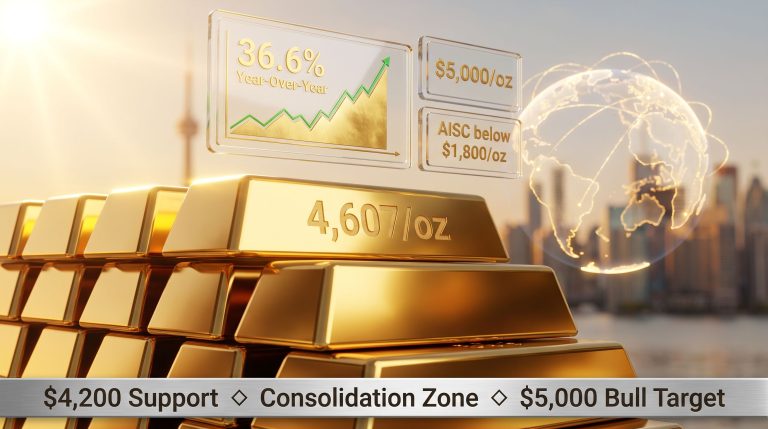
Gold's performance during recent monetary expansion cycles demonstrates its effectiveness as a currency debasement hedge. Current spot pricing reflects these dynamics, with gold futures trading at $4,681.4 per ounce and spot gold reaching $4,690.79 per ounce as of January 2026, representing multi-decade highs driven by monetary policy expectations and geopolitical tensions.
Professional Portfolio Construction Methodologies
The 60-20-20 Allocation Framework
Sophisticated wealth managers are advocating fundamental departures from traditional portfolio construction models. The emerging framework suggests 60% equities, 20% fixed income, and 20% precious metals, with gold serving as the primary precious metals component. This allocation represents a tenfold increase in precious metals exposure compared to conventional institutional recommendations.
Recommended Allocation Framework:
- 60% Equities: Growth-oriented equity positions across regional and global markets
- 20% Fixed Income: Government and corporate bonds for income generation
- 20% Precious Metals: Gold, silver, and strategic metals for wealth preservation
This framework acknowledges that traditional 2-4% precious metals allocations, whilst providing portfolio diversification benefits, may be insufficient for wealth preservation during periods of systemic financial instability or currency crisis. Additionally, the current gold price forecast supports these increased allocation strategies as market fundamentals continue to strengthen.
Investment Vehicle Selection and Implementation
The technical implementation of substantial precious metals allocations requires careful consideration of available investment vehicles and their respective characteristics. Professional wealth managers employ multiple vehicle categories to achieve desired exposure whilst maintaining liquidity and custody preferences.
Table: Gold Investment Vehicle Comparison
| Investment Type | Liquidity | Storage Requirements | Counterparty Risk | Regional Access |
|---|---|---|---|---|
| Physical Bars/Coins | Low | High | None | Limited |
| Gold ETFs | High | None | Moderate | Global |
| Mining Stocks | High | None | High | Global |
| Vault Storage Programs | Medium | Outsourced | Low | Regional |
Advanced practitioners often employ hybrid approaches combining multiple vehicle types to optimise for different objectives. Physical gold ETFs provide liquidity whilst maintaining claims on physical bullion, mining stocks offer leverage to gold price appreciation, and direct physical ownership provides ultimate counterparty risk elimination.
Central Bank Demand and Institutional Validation
Global Central Bank Purchasing Acceleration
The institutional validation for precious metals allocation appears in central bank behaviour patterns. Global central bank purchases totalled 1,037 tonnes in 2024, with Asian central banks leading this demand acceleration. This purchasing represents approximately 33.3 million ounces, equivalent to roughly 4.8% of all gold ever mined globally being accumulated by central banks in a single year.
Central Bank Demand Drivers:
- Reserve Diversification: Reducing dependency on USD-dominated reserve assets
- Sanctions Resistance: Developing alternative reserve mechanisms
- Inflation Protection: Hedging against domestic currency debasement
- Geopolitical Insurance: Preparing for potential financial system disruptions
Asian Central Bank Leadership in Gold Accumulation
Chinese and Indian central banks have emerged as dominant purchasers in global gold markets, reflecting broader Asian preferences for tangible reserve assets. This institutional buying provides fundamental demand support for precious metals pricing and validates the strategic rationale behind private wealth allocation decisions.
The coordination between central bank policies and private wealth management strategies creates mutually reinforcing demand dynamics. As central banks accumulate gold for national reserve purposes, private wealth holders benefit from both price appreciation and institutional validation of their allocation decisions.
Silver's Strategic Role in Precious Metals Portfolios
Industrial and Monetary Dual Function
Silver's unique characteristics as both an industrial commodity and monetary metal create compelling investment dynamics distinct from gold. Current pricing at $94.585 per ounce for silver futures and $94.10 for spot silver reflects the convergence of industrial demand growth and monetary demand acceleration.
Silver Demand Drivers:
- Solar Panel Manufacturing: Renewable energy infrastructure expansion
- Electronics Production: Semiconductor and technology applications
- Medical Applications: Antimicrobial and healthcare uses
- Monetary Demand: Alternative to gold for smaller transactions
Silver's performance has been particularly notable, with prices roughly tripling over the past year according to market observers. This outperformance relative to gold reflects both industrial demand acceleration and the metal's lower absolute price point, which makes it accessible for broader investor participation. However, market analysts are closely monitoring the potential silver market squeeze and its broader implications for global finance.
Gold-to-Silver Ratio Investment Strategy
Professional precious metals investors employ the gold-to-silver ratio as a tactical allocation tool. The current ratio of approximately 50:1 compares favourably to the historical long-term average of 70:1, suggesting potential silver outperformance opportunities.
Historical Ratio Analysis:
- Long-term average: 70:1 gold-to-silver ratio
- Current ratio: 50:1 gold-to-silver ratio
- Strategic implications: Silver may offer superior risk-adjusted returns
This ratio analysis provides sophisticated investors with tactical rebalancing opportunities whilst maintaining overall precious metals exposure targets.
The next major ASX story will hit our subscribers first
Regional Wealth Management Evolution and Storage Solutions
Direct Physical Trading Infrastructure
Asian family offices are increasingly bypassing traditional intermediaries to engage in direct physical gold trading. This evolution reflects both cost optimisation objectives and counterparty risk reduction strategies. Direct trading relationships with refiners, miners, and regional dealers provide better pricing and eliminate intermediary dependencies.
Regional storage infrastructure has expanded to accommodate this direct trading preference. Hong Kong and Singapore have emerged as preferred jurisdictions for vault facilities, offering political stability, legal frameworks supporting property rights, and geographic proximity to major Asian wealth centres.
Jurisdictional Custody Architecture
The technical implementation of regional storage strategies involves careful jurisdiction selection based on multiple criteria. Hong Kong's government warehouse facilities at the airport represent one approach, providing government-backed custody whilst maintaining regional accessibility. Singapore's private vault networks offer alternative structures with different risk-return characteristics.
Regional Storage Considerations:
- Political Stability: Long-term government continuity and property rights protection
- Legal Framework: Clearly defined ownership rights and transfer mechanisms
- Accessibility: Geographic proximity and transportation infrastructure
- Insurance Coverage: Comprehensive protection against theft and disaster
These custody decisions reflect sophisticated risk analysis extending beyond financial considerations to encompass geopolitical, legal, and operational factors.
Economic Drivers Behind Record Precious Metals Pricing
Federal Reserve Policy and Dollar Debasement
Current precious metals pricing reflects expectations of continued Federal Reserve monetary expansion and dollar debasement. Market participants anticipate further interest rate reductions and quantitative easing programmes, creating conditions favourable to tangible asset appreciation.
The relationship between real interest rates and gold prices remains fundamentally important. As nominal interest rates fail to keep pace with inflation expectations, real rates turn negative, creating opportunity costs for holding non-yielding assets like cash and bonds whilst favouring stores of value like precious metals.
Trump Administration Trade and Geopolitical Policies
Recent precious metals price acceleration has been attributed partially to policy uncertainty surrounding potential trade wars and geopolitical tensions. President Trump's initiatives regarding Greenland and broader trade policies with Europe have created additional safe haven demand for gold and silver.
As reported by Bloomberg, ultra-wealthy individuals are increasingly piling into centuries-old gold trading practices in Asia as a hedge against these policy uncertainties. These policy developments contribute to the broader narrative of declining confidence in existing international frameworks and increasing preference for assets that operate independently of government policy decisions.
Investment Implementation Strategies for Individual Investors
Risk-Adjusted Portfolio Integration
Individual investors seeking to implement precious metals allocation strategies must carefully consider their risk tolerance and investment objectives. The dramatic allocations employed by ultra-wealthy family offices may not be appropriate for all investor categories.
Allocation Guidelines by Risk Profile:
- Conservative Investors: 10-15% precious metals allocation
- Moderate Risk Tolerance: 15-20% precious metals allocation
- Aggressive Wealth Preservation: 20-25% precious metals allocation
These guidelines acknowledge that precious metals allocation serves different objectives for different investor categories whilst maintaining the principle that some allocation may be appropriate for most portfolios given current macroeconomic conditions.
Implementation Strategy Framework
Step-by-Step Implementation Approach:
- Portfolio Assessment: Comprehensive analysis of current asset allocation and risk exposures
- Vehicle Selection: Evaluation of physical vs. paper gold options based on objectives
- Storage Planning: Security and accessibility considerations for physical holdings
- Rebalancing Schedule: Systematic review and adjustment protocols
- Exit Strategy Development: Liquidity planning for various economic scenarios
Professional implementation requires careful attention to tax implications, custody arrangements, and integration with existing wealth management structures.
Long-Term Market Implications and Price Projections
Supply-Demand Fundamental Analysis
The long-term outlook for precious metals markets reflects structural changes in both supply and demand dynamics. Mining production faces increasing challenges from resource depletion, environmental regulations, and geopolitical jurisdictional risks, whilst demand acceleration from both institutional and private sources creates potential supply deficits.
Supply Side Constraints:
- Mining Production Plateau: Declining ore grades and resource exhaustion
- Geopolitical Mining Risks: Jurisdiction instability and nationalisation concerns
- Environmental Compliance: Increasing regulatory costs and operational restrictions
- Capital Investment Decline: Reduced exploration and development spending
Demand Side Accelerators:
- Central Bank Diversification: Continued reserve asset reallocation
- Asian Wealth Accumulation: Growing prosperity and wealth preservation needs
- Industrial Technology Demand: Electronics, renewable energy, and medical applications
- Monetary System Uncertainty: Declining confidence in fiat currency systems
Price Projection Modelling Scenarios
Professional market analysts employ scenario modelling to evaluate potential price trajectories under different macroeconomic conditions. These models incorporate multiple variables including monetary policy, geopolitical developments, and supply-demand fundamentals. The projection of all-time high gold prices becoming increasingly likely reflects these complex market dynamics.
Table: Gold Price Scenario Analysis (2026-2030)
| Scenario | Price Target | Key Drivers | Probability Assessment |
|---|---|---|---|
| Conservative | $5,200/oz | Steady institutional demand, controlled inflation | 40% |
| Moderate | $6,500/oz | Increased geopolitical tensions, monetary expansion | 35% |
| Aggressive | $8,000/oz | Currency crisis, major military conflict | 25% |
These projections reflect the range of potential outcomes whilst acknowledging the inherent uncertainty in forecasting financial markets over multi-year periods.
Disclaimer: The price projections presented above represent analyst estimates and should not be considered investment advice. Precious metals investments carry significant risk including potential for substantial losses. Past performance does not guarantee future results.
The Future of Precious Metals in Global Wealth Management
The strategic reallocation toward precious metals among ultra-wealthy Asian investors signals a fundamental shift in global wealth management paradigms. This transformation extends beyond individual portfolio decisions to reflect broader concerns about monetary system stability, geopolitical risk escalation, and the reliability of traditional financial infrastructure.
The leadership demonstrated by hong kong billionaire invests in gold strategies and their regional counterparts may represent the early stages of a broader institutional awakening to the vulnerabilities inherent in purely financial asset portfolios. As geopolitical tensions intensify and monetary policies become increasingly experimental, tangible assets that operate independently of government control and institutional intermediaries may become essential components of sophisticated wealth preservation strategies.
Key Strategic Takeaways:
- Allocation Evolution: Precious metals are transitioning from portfolio diversifiers to core wealth preservation assets
- Regional Leadership: Asian family offices are pioneering sophisticated precious metals investment approaches
- Storage Innovation: Regional custody solutions are developing to support direct ownership preferences
- Long-term Appreciation Potential: Structural supply-demand imbalances support continued price appreciation
The convergence of monetary policy uncertainty, geopolitical instability, and institutional demand acceleration creates conditions where precious metals may continue serving as primary wealth preservation vehicles for sophisticated investors. The success of early adopters like Cheah Cheng Hye may encourage broader institutional adoption of similar allocation strategies.
This evolution reflects a fundamental reassessment of the relationship between government monetary authority and private wealth preservation, with precious metals serving as the primary mechanism for maintaining purchasing power independence from centralised monetary control systems.
Want to Capitalise on the Next Major Gold Discovery?
Whilst ultra-wealthy Asian investors are reallocating billions into physical precious metals for wealth preservation, savvy investors are also focusing on gold discovery opportunities within the Australian market. Discovery Alert's proprietary Discovery IQ model delivers instant notifications when significant gold and precious metals discoveries are announced on the ASX, enabling subscribers to identify actionable investment opportunities before broader market awareness develops.