
August 11, 2026
Why West Africa's Gold Corridors Are Commanding Institutional Capital in 2026
There is a pattern that repeats itself across the history of major mineral discoveries: the most valuable ground is rarely available for long. Once a structural corridor proves its capacity to host large-scale gold deposits, the window for acquiring meaningful positions along strike narrows quickly. In West Africa, that window is closing along the Senegal-Mali Shear Zone, a geological feature that has quietly become one of the most sought-after gold addresses on the continent.
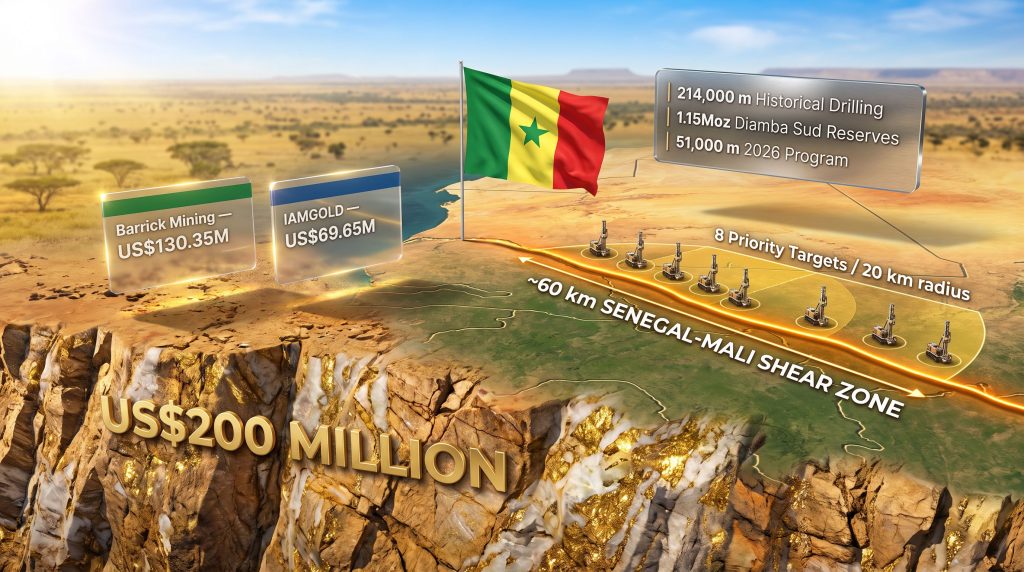
The movement of exploration capital toward Senegal in particular reflects more than speculative enthusiasm. It reflects a calculated reassessment of jurisdiction risk, geological prospectivity, and the scarcity of consolidated land positions in orogenic gold belts of this calibre. Against that backdrop, Fortuna acquires Bambadji gold exploration project in Senegal for US$200 million, completing one of the most significant land consolidation transactions the country's mining sector has seen.
When big ASX news breaks, our subscribers know first
Understanding the Geological Engine Behind the Senegal-Mali Shear Zone
What Makes Orogenic Gold Systems Unique?
Not all gold deposits are created equal, and understanding the distinction matters when evaluating a transaction of this scale. Orogenic gold systems, such as those hosted along the Senegal-Mali Shear Zone, form through deep crustal processes during periods of tectonic compression. Metamorphic fluids carrying dissolved gold travel upward along fault structures, depositing metal in structural traps over millions of years.
The result is often a series of high-grade, structurally controlled deposits distributed along predictable corridors, sometimes extending for hundreds of kilometres. This is fundamentally different from porphyry-style or sediment-hosted gold systems. Orogenic deposits tend to persist at depth, meaning exploration targets are not confined to near-surface anomalies. Drill intersections that remain open at depth are not a limitation; they are an invitation, suggesting mineralisation continues beyond tested intervals.
Comparing the Shear Zone to Other West African Gold Belts
West Africa hosts several world-class gold-bearing geological systems. Consequently, understanding how the Senegal-Mali Shear Zone compares with its peers is essential context for evaluating the current gold exploration trends shaping institutional capital allocation:
- The Birimian Supergroup underlies Ghana, Burkina Faso, and Ivory Coast, hosting the Ashanti Belt's prolific gold fields
- The Ashanti Belt specifically has produced over 50 million ounces of gold historically and continues to attract major producer activity
- The Senegal-Mali Shear Zone extends across the border region of both countries, hosting a series of structurally controlled gold deposits increasingly recognised as comparable in scale potential to the Birimian
What distinguishes the Senegal-Mali Shear Zone in 2026 is not just its geological endowment, but the relative scarcity of large, consolidated land packages still available along its most prospective segments. This scarcity premium is a key driver behind the valuation logic of the Bambadji transaction.
Senegal's Jurisdiction Advantage in a Difficult Regional Landscape
Key Insight: While much of the Sahel has experienced significant political disruption since 2020, with coups in Mali, Burkina Faso, and Niger reshaping the investment environment for miners, Senegal has maintained a functional democratic framework and a relatively stable regulatory environment for foreign investment.
This contrast matters enormously to capital allocators evaluating West African exposure. Mali and Burkina Faso, both of which host highly prospective geology, have seen foreign mining companies face operating restrictions, renegotiated contracts, and in some cases, asset nationalisation pressures. Senegal's comparative stability has, however, made it a preferred destination for exploration capital looking for shear zone exposure without equivalent political risk.
Senegal's mining code framework has also been broadly welcomed by foreign investors for its clarity around permitting timelines, royalty structures, and repatriation of profits, though investors should note that regulatory environments in any jurisdiction can evolve and carry inherent risks.
The Bambadji Project: Scale, Dataset, and Geological Complexity
Physical Footprint and Strategic Positioning
The Bambadji project encompasses approximately 190 km² across two contiguous properties, covering roughly 60 kilometres of strike length along the Senegal-Mali Shear Zone. Its eastern boundary connects directly to Fortuna Mining's Diamba Sud Gold Project, which currently holds mineral reserves of 1.15 million ounces of gold and is at the feasibility stage with a final investment decision anticipated in the near term.
The existence of established secondary road infrastructure between the two properties is a detail that carries more operational weight than it might initially appear. In remote West African exploration environments, access infrastructure can represent years of community engagement and capital expenditure. The ability to move personnel, equipment, and eventually ore between Bambadji and Diamba Sud without constructing new access corridors is a tangible, if underappreciated, asset embedded in this transaction.
Decoding the 214,000-Metre Historical Dataset
One of the most compelling aspects of the Bambadji acquisition is the depth of historical exploration work already completed across the project area. Approximately 214,000 metres of historical drilling have been conducted using three distinct methods. Furthermore, understanding how to interpret these drill results is critical to appreciating the project's true exploration potential:
| Exploration Data Category | Details |
|---|---|
| Total Historical Drilling | ~214,000 metres |
| Drilling Methods | Auger, Reverse Circulation, Diamond |
| Identified Prospects | At least 8 significant drill-defined targets |
| Mineralised Trends | Multiple, open along strike and at depth |
| Project Area | ~190 km² across two properties |
| Strike Length | ~60 km along Senegal-Mali Shear Zone |
From an exploration economics perspective, this dataset is exceptionally valuable. Grassroots drilling programs in West Africa typically cost between US$80 and US$150 per metre depending on method and location. Even at conservative rates, accumulating 214,000 metres of historical data represents a legacy investment that substantially de-risks the discovery phase for any new operator. Fortuna is, in effect, acquiring the intellectual and physical output of years of prior exploration without bearing the timeline cost of conducting it.
Three Mineralisation Styles and What They Signal
Perhaps the most technically significant aspect of Bambadji's geological profile is the presence of three distinct gold mineralisation styles within a single land package. Each style carries different implications for resource potential and exploration methodology:
-
Breccia-style mineralisation: Directly analogous to the deposit style identified at Diamba Sud, this suggests structural and geological continuity between the two properties. The practical implication is that exploration models developed for Diamba Sud can be applied with greater confidence at Bambadji.
-
Yalea sericite-albitite style: This mineralisation type is associated with some of the largest gold accumulations identified in the broader Senegal-Mali corridor. The Yalea deposit in Mali, part of the Loulo-Gounkoto complex operated by Barrick, is a multi-million-ounce system of this style. The presence of analogous mineralisation at Bambadji is therefore a significant indicator of potential deposit scale.
-
Gara-style high-tourmaline mineralisation: This represents a structurally distinct system with its own exploration upside, offering a separate pathway to resource definition independent of the other two styles.
Technical Note: The co-occurrence of multiple mineralisation styles within a single shear zone corridor is relatively uncommon and typically indicates a complex, long-lived hydrothermal system. Such systems tend to have greater lateral and vertical extent than single-style deposits, which has direct implications for the total resource potential of the project area.
Transaction Architecture: How the Deal Was Structured
Dual-Vendor Framework and Its Implications
The definitive agreements, executed on 10 August 2026, involved the purchase of subsidiaries from two separate vendors rather than a direct asset transfer. This structure, while technically more complex, is commonly used in mining transactions to optimise tax outcomes and streamline title transfer processes across multiple jurisdictions.
| Vendor | Cash Consideration | NSR Royalty Allocation |
|---|---|---|
| Barrick Mining Corporation | US$130.35 million | 0.325% of 0.5% NSR |
| IAMGOLD Corporation | US$69.65 million | 0.175% of 0.5% NSR |
| Total | US$200 million | 0.5% NSR on first 1.75Moz |
IAMGOLD confirmed that the transaction generated approximately US$70 million in gross cash proceeds before taxes and transaction costs, reflecting its 35% indirect interest in the Bambadji joint venture. For both vendors, the divestment is consistent with a broader pattern of portfolio rationalisation among major gold producers, who are increasingly focusing capital on their highest-priority development and operating assets. This kind of M&A activity reflects a wider consolidation trend reshaping the global gold sector.
Understanding the Net Smelter Return Royalty
A net smelter return royalty, or NSR, is a financial instrument that entitles the holder to a percentage of gross revenue generated from the sale of metal produced at a mine, calculated after smelting and refining costs are deducted. NSR royalties are commonly used in mining transactions as a mechanism for sellers to retain exposure to the upside of an asset they are divesting.
In this case, the 0.5% NSR applies specifically to the first 1.75 million ounces of gold produced from the Bambadji Nord property. Several important observations about this structure are worth noting:
- The royalty is capped at 1.75 million ounces of production, meaning Fortuna's royalty obligation terminates once that threshold is reached
- The 1.75 million ounce threshold provides an implicit signal about how the sellers valued the project's near-term production potential
- From Fortuna's perspective, the royalty represents a relatively modest cost per ounce against projected resource upside, particularly if multiple discoveries are made across the eight priority targets
- The proportional split between Barrick (0.325%) and IAMGOLD (0.175%) mirrors their respective ownership interests in the joint venture
Why Barrick and IAMGOLD Walked Away
The divestment of a project situated along one of West Africa's premier gold corridors by two of the industry's most prominent operators warrants scrutiny. Both companies have cited portfolio prioritisation as the driver, and the broader context supports this explanation. Barrick has been concentrating capital on its Tier One asset base, including its operations in Nevada, Tanzania, and Pakistan.
IAMGOLD's development pipeline is anchored by the Côté Gold project in Ontario, Canada, which commenced production in 2024 and represents a major ongoing capital commitment. For both companies, Bambadji represented an exploration-stage asset requiring sustained investment without a near-term production return, a profile that does not fit well within the capital allocation frameworks of large-cap producers. For Fortuna, however, Bambadji's adjacency to a near-development asset fundamentally changes the investment calculus. You can learn more about the Bambadji project acquisition directly from Fortuna Mining's official announcement.
Fortuna's Strategic Logic: Building a Senegalese Gold District
The Adjacency Advantage and Processing Plant Optionality
The concept of adjacency in mining strategy is more powerful than it might appear to outside observers. When an exploration-stage project sits within a defined radius of an existing or planned processing facility, the economics of resource conversion change dramatically. Capital costs associated with mill construction, power infrastructure, tailings management, and water supply can be shared or eliminated entirely for satellite deposits that feed into a central plant.
Fortuna's decision to focus its initial 2026 drilling program on the eight priority targets within a 20-kilometre radius of the proposed Diamba Sud processing plant is a direct expression of this logic. Any gold resource defined within that radius has a credible pathway to production through existing infrastructure planning, which materially reduces the threshold grade and scale required to make a discovery economically viable.
Exploration Efficiency Note: In West African gold districts, the difference between a stranded deposit and a mineable one is often not grade or scale but proximity to processing infrastructure. Focusing initial exploration within the plant's effective feed radius transforms what would otherwise be greenfield discovery risk into a resource-extension exercise.
The 2026 Exploration Program in Detail
Fortuna has committed an initial US$8 million exploration budget for the remainder of 2026, funding 51,000 metres of reverse circulation and diamond drilling with commencement targeted for Q3 2026. The choice of drilling methods reflects deliberate technical planning:
- Reverse circulation (RC) drilling is used for rapid, cost-effective testing of near-surface and moderate-depth targets. RC produces chip samples that can be assayed quickly, making it ideal for confirming or rejecting the surface geochemical anomalies already identified at Bambadji's priority targets.
- Diamond drilling (DD) produces intact core that preserves the structural relationships between mineralisation and host rock. This is reserved for deeper targets and locations where understanding the geometry and continuity of mineralisation is critical for resource estimation.
The integration of Bambadji's historical geophysical and geochemical datasets into the drill planning process is a key efficiency gain. Rather than beginning with broad reconnaissance, Fortuna can direct drill collars at already-identified anomalies, dramatically improving the hit rate per metre drilled.
Fortuna's Portfolio Context and Financial Capacity
Fortuna Mining Corp. is a multi-asset mid-tier gold and silver producer with operating mines across West Africa, Latin America, and other jurisdictions. The company's ability to deploy US$200 million from treasury without raising equity underscores the financial strength that preceded this transaction. This is a meaningful distinction: an all-cash acquisition funded from existing reserves signals confidence in balance sheet capacity and avoids the earnings dilution associated with equity issuance.
The combination of Diamba Sud's 1.15 million ounce reserve base at feasibility stage and Bambadji's exploration upside creates a tiered value proposition. Near-term catalysts are anchored by the Diamba Sud investment decision, while medium-term value creation depends on the drill results Fortuna generates across Bambadji's eight priority targets. In addition, the broader gold price outlook remains supportive for project economics across the region.
Risk and Reward: Scenarios That Will Define the Investment
Key Risk Factors Investors Should Understand
The following analysis involves forward-looking assessments and speculative scenarios. These are inherently speculative and subject to significant uncertainty. Nothing in this article constitutes financial or investment advice. Readers should conduct independent due diligence before making any investment decisions.
- Exploration risk: Historical drilling confirms prospects, not deposits. Converting drill-defined targets into NI 43-101 or JORC-compliant resources requires systematic infill drilling, metallurgical testing, and independent verification
- Capital deployment timing: US$200 million is committed before a single new metre of drilling has been completed at Bambadji under Fortuna's tenure
- Royalty obligation: The 0.5% NSR on the first 1.75 million ounces represents a long-term cost, albeit a modest one relative to projected production revenue at current gold prices
- Jurisdiction evolution: Senegal's current stability is a relative advantage, not an absolute guarantee. Regulatory frameworks in any African jurisdiction can shift with changes in government policy
- Execution complexity: Managing simultaneous drilling programs across eight priority targets within a defined budget requires rigorous project management and technical coordination
Upside Scenarios: Where Value Creation Could Emerge
| Scenario | Pathway | Key Driver |
|---|---|---|
| Resource Extension | Breccia-style mineralisation confirmed continuous with Diamba Sud | Combined reserve upgrade enabling larger plant throughput |
| Independent Discovery | One or more of eight targets yields a standalone economic deposit | Proximity to processing plant enabling fast-track development |
| District Consolidation | Multiple discoveries establish Bambadji as a multi-deposit hub | Long-life processing centre with feed from several satellite pits |
| Strategic Premium | Larger producer recognises consolidated land value | M&A optionality for Fortuna shareholders |
The next major ASX story will hit our subscribers first
Benchmarking Bambadji Within West Africa's Exploration Landscape
| Project | Country | Key Feature | Stage |
|---|---|---|---|
| Bambadji (Fortuna) | Senegal | 60 km strike, 8 drill targets, 214,000m historical drilling, ~190 km² | Advanced Exploration |
| Diamba Sud (Fortuna) | Senegal | 1.15Moz mineral reserves, adjacent to Bambadji | Feasibility |
| Douta (Thor Explorations) | Senegal | High-grade gold drilling results, NI 43-101 technical report filed 2026 | Advanced Exploration |
| Kobada (Toubani) | Mali | Pre-production drilling with high-grade intercepts reported 2026 | Pre-Production |
What separates Bambadji from most other advanced exploration projects in the region is the combination of dataset maturity and strategic positioning. Most projects at a comparable stage lack either the volume of historical drilling or the proximity to near-development infrastructure that Bambadji offers. The acquisition of decades of prior exploration work embedded within the purchase price is a structural advantage that is difficult to replicate through organic exploration alone. Notably, Fortuna has also obtained key environmental approval for its adjacent Diamba Sud project, further strengthening the district's development trajectory. Furthermore, when the two projects are assessed together as a district, Fortuna's land position along this segment of the shear zone becomes genuinely compelling. The pathway from the current feasibility study stage at Diamba Sud through to a broader district production scenario is now at least plausible in a way it was not before this acquisition.
Frequently Asked Questions: Fortuna's Bambadji Acquisition
What did Fortuna Mining pay for the Bambadji project?
Fortuna Mining paid US$200 million in cash, drawn from its treasury. Of this total, US$130.35 million was paid to a subsidiary of Barrick Mining Corporation and US$69.65 million to a subsidiary of IAMGOLD Corporation, reflecting their respective ownership stakes in the Bambadji joint venture.
Where is Bambadji located and why does the location matter?
The project is situated in eastern Senegal, covering approximately 190 km² along the Senegal-Mali Shear Zone. Its direct boundary with Fortuna's Diamba Sud Gold Project creates operational and geological continuity between the two assets, with existing road infrastructure linking them. The shear zone's status as a world-class orogenic gold corridor is central to the project's exploration thesis.
What royalty did the sellers retain?
Barrick and IAMGOLD collectively retained a 0.5% net smelter return royalty on the first 1.75 million ounces of gold produced from the Bambadji Nord property. Barrick holds 0.325% and IAMGOLD holds 0.175% of this royalty, proportional to their prior ownership interests.
What is Fortuna's exploration plan for the remainder of 2026?
Fortuna has approved an US$8 million exploration budget covering 51,000 metres of reverse circulation and diamond drilling across eight priority targets, all located within 20 kilometres of the proposed Diamba Sud processing plant. Drilling was targeted to begin in Q3 2026.
How does Bambadji relate to Diamba Sud?
Bambadji is directly adjacent to Diamba Sud, which holds 1.15 million ounces in mineral reserves and is at the feasibility stage with a final investment decision pending. Bambadji's acquisition consolidates the surrounding exploration ground, creating potential for resource expansion and enabling new discoveries to be fed into the proposed Diamba Sud processing infrastructure.
Why did Barrick and IAMGOLD sell?
Both companies have large development pipelines anchored by higher-priority assets. Barrick is focused on its Tier One operating portfolio, while IAMGOLD is managing significant capital commitments associated with the Côté Gold mine in Canada. Bambadji, as an exploration-stage asset without near-term production, did not align with either company's current capital allocation priorities.
Disclaimer: This article contains forward-looking statements, exploration projections, and scenario analyses. These are inherently speculative and subject to significant uncertainty. Nothing in this article constitutes financial or investment advice. Readers should conduct independent due diligence before making any investment decisions.
Want to Stay Ahead of the Next Major West African Gold Discovery?
Discovery Alert's proprietary Discovery IQ model delivers real-time alerts the moment significant ASX mineral discoveries are announced, transforming complex geological data into actionable investment insights — explore historic discoveries and their returns to understand what early positioning in major finds can mean for a portfolio, then begin a 14-day free trial at Discovery Alert to ensure the next significant find doesn't pass unnoticed.