
May 17, 2026
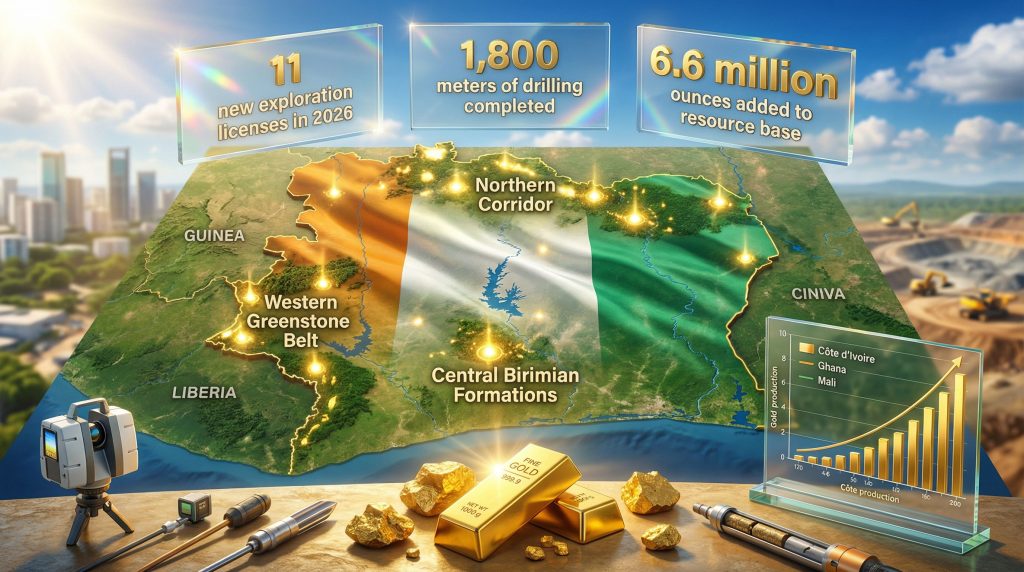
West Africa's Gold Rush: Understanding Economic Drivers Behind Mining Investment Surge
Mining investment patterns across West Africa reflect broader gold-stock market dynamics where commodity price movements, infrastructure development, and regulatory frameworks converge to create investment opportunities. These cyclical patterns have historically determined which regions emerge as significant producers, with geological potential serving as the foundation while economic conditions determine timing and scale of development.
The current investment cycle demonstrates how sustained commodity price strength can unlock previously marginal prospects, transforming exploration economics and accelerating project timelines. Furthermore, this phenomenon extends beyond individual projects to reshape entire regional mining landscapes, with countries positioning themselves to capture increased investment flows through strategic policy initiatives.
When big ASX news breaks, our subscribers know first
Geological Foundations Driving West African Gold Discovery
West Africa's gold endowment stems from Paleoproterozoic geological formations dating back over 2 billion years, creating ideal conditions for orogenic gold deposits throughout the region. The Birimian greenstone belts stretch across multiple countries, forming interconnected geological systems that host both existing operations and emerging prospects.
These ancient rock structures underwent complex metamorphic processes that concentrated gold mineralization along specific structural corridors. Consequently, the geological continuity between proven mining districts and unexplored regions provides exploration companies with predictive frameworks for targeting new discoveries.
Key Geological Advantages:
• Extensive strike length of mineralized structures across multiple countries
• Similar metamorphic conditions to world-class gold districts
• Well-understood structural controls and alteration patterns
• Deep weathering profiles that preserve primary mineralization signals
Modern exploration techniques have revolutionised discovery potential in these geological terranes through advanced geochemical surveys and remote sensing technologies. Multi-element soil sampling identifies pathfinder minerals like arsenic and bismuth that indicate proximity to gold mineralization, while LiDAR mapping penetrates vegetation cover to reveal structural features invisible to traditional mapping methods.
How Commodity Economics Shape Mining Investment Decisions
Gold prices above $2,400 per ounce fundamentally alter project economics by reducing the minimum grade requirements for economic viability. Projects previously requiring 2.5-3.0 grams per tonne can now advance to development with grades as low as 1.5-2.0 grams per tonne, expanding the universe of potentially economic deposits.
This economic threshold shift creates multiple implications for exploration strategy and resource allocation. In addition, companies can pursue larger tonnage, lower-grade targets that were previously uneconomic, while also justifying exploration expenditure in more remote or infrastructure-limited areas.
The current gold price forecast suggests continued strength, which influences long-term planning decisions across the industry.
Economic Impact Analysis:
| Gold Price Range | Minimum Economic Grade | Capital Investment Threshold |
|---|---|---|
| $1,500-1,800/oz | 2.5-3.0 g/t | $200-300M |
| $1,800-2,200/oz | 2.0-2.5 g/t | $150-250M |
| $2,200+/oz | 1.5-2.0 g/t | $100-200M |
The psychological impact of sustained high prices extends beyond pure economics to influence risk tolerance and timeline compression. Companies face pressure to accelerate project advancement while prices remain favourable, leading to parallel work streams for resource definition, metallurgical testing, and environmental studies.
Advanced Exploration Technologies Transforming Discovery Rates
Contemporary exploration campaigns integrate multiple technological approaches to maximise discovery probability while minimising costs and environmental impact. Geochemical surveys now employ portable X-ray fluorescence analysers for real-time multi-element analysis, enabling immediate targeting decisions in the field.
Airborne electromagnetic surveys detect conductive zones associated with sulphide mineralisation, while magnetic surveys map structural features and rock type boundaries. For instance, these datasets combine to create comprehensive geological models that guide drilling programmes with unprecedented precision.
When analysing drilling results interpretation, modern techniques allow for more accurate resource estimations and improved project development timelines.
Technological Integration Benefits:
• Reduced drilling costs through improved target selection accuracy
• Accelerated discovery timelines via real-time data processing
• Enhanced safety protocols through remote sensing capabilities
• Improved environmental monitoring using continuous sensor networks
Regolith mapping techniques prove particularly valuable in tropical environments where deep lateritic weathering profiles obscure primary geological features. Understanding weathering patterns helps exploration teams distinguish between transported cover sequences and in-situ mineralisation, crucial for resource estimation accuracy.
Infrastructure Development as Mining Investment Catalyst
Transportation networks significantly influence mining project economics through their impact on operational costs and construction timelines. Projects located within 50 kilometres of all-weather roads enjoy substantial advantages in equipment mobilisation, concentrate transportation, and workforce logistics.
Power grid connectivity represents another critical infrastructure component, potentially reducing capital requirements by $20-40 million compared to diesel generation systems. However, grid-connected operations also benefit from lower operating costs and improved environmental performance profiles.
Infrastructure Comparison Framework:
• Port proximity affects concentrate shipment costs and metal pricing
• Road quality determines heavy equipment transportation feasibility
• Power availability influences processing plant design and operating costs
• Telecommunications enable remote monitoring and automated systems
Local labour availability significantly impacts project development timelines and costs. Regions with existing mining operations benefit from trained workforce pools, reducing training expenses and improving initial productivity rates.
Regional Competition Dynamics in West African Gold
Ghana maintains West Africa's dominant position with annual production exceeding 130 tonnes, supported by world-class infrastructure and established mining services sector. Nevertheless, emerging producers leverage competitive advantages in permitting efficiency, land availability, and government incentive programmes.
Mali and Burkina Faso face security challenges that complicate operations and increase insurance costs, creating opportunities for more stable jurisdictions to capture investment flows. Political stability increasingly factors into long-term investment decisions as mining companies evaluate sovereign risk profiles.
Competitive Positioning Analysis:
| Jurisdiction | Production Capacity | Infrastructure Quality | Regulatory Efficiency |
|---|---|---|---|
| Established Producers | High | Excellent-Good | Moderate |
| Emerging Producers | Medium | Good-Fair | High |
| Frontier Regions | Low | Fair-Poor | Variable |
Market share competition extends beyond production volumes to include exploration attractiveness, measured through factors like permitting timelines, fiscal terms, and geological prospectivity. Countries implementing streamlined approval processes gain competitive advantages in attracting exploration investment.
How Do New Regions Compare to Established Mining Areas?
Côte d'Ivoire new gold mine exploration presents unique opportunities compared to established mining regions. The country offers relatively unexplored geological terrain with similar formation characteristics to proven gold districts, combined with improving infrastructure and supportive regulatory frameworks.
Additionally, emerging regions often provide access to larger land packages and more flexible development terms compared to mature mining areas where prime prospects have been secured by established operators.
The next major ASX story will hit our subscribers first
Geological Formations with Highest Discovery Potential
Structural corridors extending across multiple countries offer the greatest exploration potential due to their demonstrated ability to host multiple deposits along strike. The Senegal-Mali Shear Zone exemplifies this concept, hosting several world-class deposits across a 1,500-kilometre trend.
Less explored northern regions within established gold provinces show particularly high discovery potential due to similar geological characteristics with potentially superior preservation of mineralisation. These areas often benefit from different metamorphic conditions that enhanced gold concentration processes.
High-Potential Formation Characteristics:
• Extensive structural preparation creating fluid pathways
• Appropriate metamorphic grade for gold mobilisation and deposition
• Favourable host rock chemistry and alteration assemblages
• Limited previous exploration creating discovery opportunities
Greenstone belt margins frequently host significant discoveries due to contact metamorphism effects and structural focusing of mineralising fluids. These geological settings combine multiple favourable factors while remaining underexplored in many regions.
Risk Assessment Framework for Mining Investment
Exploration risk assessment requires evaluation of geological, technical, economic, and jurisdictional factors that could impact project success. Geological risk encompasses both discovery risk and resource continuity risk, as initial discoveries may not extend to economic volumes.
Technical risk includes metallurgical complexity, environmental challenges, and infrastructure requirements that could increase capital costs or reduce processing efficiency. Economic risk involves commodity price volatility, currency fluctuation, and inflation impacts on project economics.
Risk Mitigation Strategies:
• Geological diversification through multiple project exposure
• Technical validation via comprehensive feasibility studies
• Economic hedging using commodity price protection mechanisms
• Jurisdictional analysis including political stability assessment
Environmental compliance requirements continue increasing across all jurisdictions, requiring comprehensive baseline studies and long-term monitoring commitments. Companies must allocate significant resources to environmental management throughout project lifecycles.
Timeline Expectations for New Mine Development
Contemporary mine development timelines reflect compressed schedules driven by economic opportunities and technological advancement. Exploration programmes now progress from initial discovery to resource definition within 18-24 months using accelerated drilling campaigns and modern analytical techniques.
Feasibility study completion typically requires 12-18 months, incorporating detailed engineering, environmental assessment, and economic modelling. Companies increasingly conduct parallel work streams to reduce overall project timelines while maintaining technical rigour.
Development Milestone Schedule:
- Discovery to Resource Estimate: 18-24 months
- Prefeasibility Study Completion: 6-12 months
- Feasibility Study and Permitting: 12-18 months
- Construction to First Production: 24-36 months
Construction timelines benefit from established supply chains and experienced contractors familiar with regional conditions. Local content requirements increasingly influence contractor selection and equipment sourcing decisions.
Market Psychology Driving Investment Cycles
Investor sentiment toward mining projects reflects broader commodity cycle psychology, where periods of optimism drive increased risk tolerance and capital allocation. Current gold price strength creates positive feedback loops as successful projects attract additional investment to similar opportunities.
The gold market outlook indicates continued investor confidence, which influences both exploration spending and project advancement decisions across the region.
Market psychology also influences government policy development, as countries observe successful mining investment in neighbouring jurisdictions and implement competitive policy frameworks. This creates regional competition for investment capital and project development.
Psychological Cycle Indicators:
• Rising exploration budgets across multiple companies
• Increased merger and acquisition activity in target regions
• Government policy initiatives supporting mining investment
• Infrastructure development projects in mining regions
Institutional investor participation provides validation for mining investment themes while bringing larger capital pools to project financing. Pension funds and sovereign wealth funds increasingly view mining assets as inflation hedges and portfolio diversifiers.
Future Outlook for West African Gold Development
Production growth targets across West Africa require successful exploration translating into multiple new mining operations over the next decade. Government ambitions to increase mining GDP contribution from current 4-6% levels to 8-12% depend on exploration success and project advancement.
Technological advancement will continue improving discovery rates and reducing development costs, making previously marginal projects economic. Integration of artificial intelligence in geological modelling and automated mining systems will enhance operational efficiency.
Environmental and social governance requirements will increasingly influence project design and operational practices. Companies demonstrating superior ESG performance will gain preferential access to capital and government support.
The historic gold price surge has fundamentally altered industry economics, creating unprecedented opportunities for Côte d'Ivoire new gold mine exploration and similar projects across the region.
What Does the Future Hold for Côte d'Ivoire new gold mine exploration?
The convergence of favourable geological endowment, supportive policy frameworks, improved infrastructure, and strong commodity prices creates unprecedented opportunities for mining investment across West Africa's gold provinces. Recent developments suggest that Côte d'Ivoire new gold mine exploration is well-positioned to benefit from these trends.
Investment flows exceeding $800 million in exploration expenditure during 2023 demonstrate industry confidence in regional potential. Success in translating this exploration investment into producing mines will determine which countries emerge as dominant gold producers in the next investment cycle.
This analysis is based on publicly available information and industry research. Mining investments carry significant risks, and potential investors should conduct thorough due diligence and consult qualified professionals before making investment decisions. Commodity prices, geological results, and regulatory frameworks can change significantly, impacting project economics and investment outcomes.
Ready to Identify the Next Major Gold Discovery?
Discovery Alert's proprietary Discovery IQ model delivers instant notifications on significant ASX mineral discoveries, transforming complex geological data into actionable investment insights for both short-term traders and long-term investors. Begin your 14-day free trial today to gain immediate access to real-time alerts and position yourself ahead of market movements before major discoveries become widely recognised.