June 12, 2026
The Structural Paradox at the Heart of Australian Industry
For decades, a quiet irony has defined Australia's relationship with the global steel industry. The country sits atop the world's most significant iron ore reserves, with Western Australia's Pilbara region supplying the single largest volume of seaborne iron ore on the planet. Yet when Australian construction firms order reinforcing bar for a new bridge or apartment tower, there is a reasonable chance that steel travelled thousands of kilometres from an Asian mill, made from ore that began its journey in the Pilbara.
That paradox is now being directly challenged by a project that represents far more than a new industrial facility. The planned Western Australia EAF steel mill at Collie, being developed by Generation Steel (formerly Green Steel of WA), is shaping up as a genuine inflection point for how Australia thinks about value creation, industrial decarbonisation, and regional economic renewal.
When big ASX news breaks, our subscribers know first
What the Collie EAF Project Actually Involves
Core Technical and Commercial Parameters
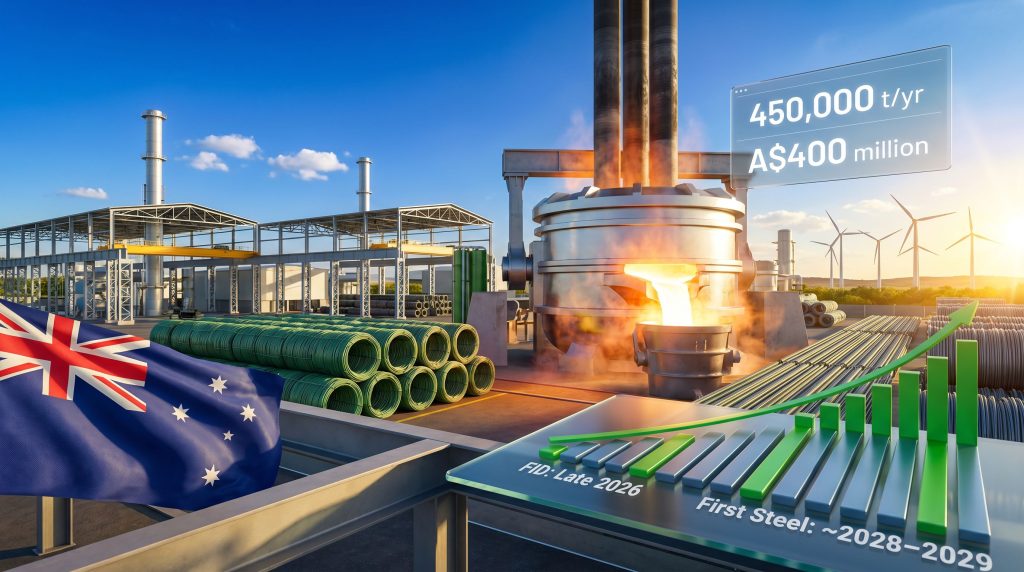
The project's fundamentals are substantial. Generation Steel is developing an electric arc furnace (EAF) steel mill with a targeted annual output of 450,000 tonnes of steel rebar and wire rod, using recycled scrap steel as its primary feedstock. The EAF technology platform has been sourced from Danieli, the Italian steelmaking equipment manufacturer with a long track record in EAF installations across Europe, Asia, and the Americas.
Total project capital is estimated at approximately A$400 million, positioning this as one of the more significant greenfield industrial investments in regional Western Australia in recent memory. The mill's primary outputs, rebar and wire rod, are the structural steel products most directly tied to Australia's domestic construction and infrastructure pipeline.
The Western Australian government has committed staged co-investment funding totalling approximately A$14.3 million across two tranches: an initial A$4.5 million for early development, followed by a further A$9.8 million (approximately USD $6.9 million) to support completion of pre-development activities. This second tranche was announced by WA Premier Roger Cook on 12 June 2026, with state funds matched dollar-for-dollar by Generation Steel.
The staged co-investment structure, where public funding is released only after an independent bankable feasibility study has confirmed commercial viability, reflects a risk-managed approach to industrial policy rather than unconditional subsidy. It protects public capital while still providing the catalytic signal needed to mobilise private sector finance.
Why EAF Technology Was Selected
Understanding why an EAF was chosen over alternative steelmaking routes requires looking at the full landscape of decarbonisation options available to steel producers today.
| Technology | Primary Input | Carbon Intensity | Energy Source | WA Application |
|---|---|---|---|---|
| Blast Furnace (BF-BOF) | Iron ore + coking coal | Very High (~1.8-2.0t CO₂/t steel) | Coal/coke | Not applicable |
| Electric Arc Furnace (EAF) | Recycled scrap steel | Low (0.4-0.6t CO₂/t steel with renewables) | Renewable electricity | Collie Mill |
| DRI + Electric Smelting Furnace (ESF) | Iron ore + hydrogen/gas | Low (with green H₂) | Gas or hydrogen | NeoSmelt (Kwinana) |
The EAF pathway is particularly well-suited to Western Australia's current grid circumstances. Scrap-fed EAF steelmaking does not require coking coal, avoids the capital intensity of blast furnace infrastructure, and can progressively reduce its carbon footprint in direct proportion to the decarbonisation of the electricity grid powering it. Furthermore, when paired with renewable energy, an EAF can achieve carbon emissions as low as 0.4 to 0.6 tonnes of CO₂ per tonne of steel produced, representing a reduction of up to 70 to 80 percent compared to conventional blast furnace routes.
Critically, EAF steelmaking sits within a circular economy framework. End-of-life steel, whether from demolished buildings, retired vehicles, or decommissioned infrastructure, enters the mill as feedstock and exits as new high-value structural product. This circularity is increasingly valued by steel buyers seeking to reduce their Scope 3 emissions under corporate sustainability commitments.
The Feedstock Question: Scrap, Graphite, and Energy
Securing Australia's Domestic Scrap Supply Chain
One dimension of the Collie project that receives less attention than the headline technology choice is the feedstock sourcing challenge. EAF steelmaking is entirely dependent on the availability of high-quality ferrous scrap, and the economics of the process are sensitive to scrap pricing dynamics.
Global ferrous scrap prices are typically benchmarked against CFR Turkey trades for Heavy Melting Scrap (HMS) 1 and 2 grades. Recent market data from Argus shows deep-sea HMS 1/2 (80:20 blend) trades settling in the USD $397 to $414 per tonne range for June 2026 shipments, with volumes of 30,000 to 40,000 tonnes per transaction. These international benchmarks provide a useful reference point for the operating cost structure that Generation Steel will need to manage competitively.
Australia's domestic scrap availability is an underappreciated factor in the Collie project's long-term viability. Australia generates meaningful volumes of ferrous scrap from urban demolition, manufacturing, and automotive sectors, but much of this material has historically been exported to Asian processors rather than consumed domestically. The Collie mill's establishment could effectively redirect this scrap flow, creating a domestic processing premium that benefits both the mill and local scrap collectors.
The Graphite Electrode Supply Agreement: An Underappreciated Dependency
One of the least understood inputs in EAF steelmaking is the graphite electrode. Each EAF unit consumes graphite electrodes as a core operational requirement: these rod-shaped conductors carry the electrical current that generates the arc melting the scrap. Electrode consumption is continuous and significant, making graphite supply security a genuine operational risk for any EAF operator.
This is where a notable domestic supply chain development becomes significant. Hazer Group, an Australian methane pyrolysis technology developer, signed a Letter of Intent with Generation Steel in March 2026 to supply up to 85,000 tonnes of graphite over a 10-year term for use in the mill's EAF operations.
The Hazer-Generation Steel graphite agreement represents a structurally unusual example of two Australian clean-industry companies forming an integrated domestic supply chain, connecting the solid carbon byproduct of green hydrogen production directly to green steel manufacturing inputs.
Hazer's methane pyrolysis process is technically distinctive. Rather than combusting natural gas (which produces CO₂), the process thermally decomposes methane into hydrogen gas and solid carbon simultaneously. The solid carbon output is graphite-grade material, making Hazer's process a potential low-emission source of electrode-quality graphite. For Generation Steel, securing this supply domestically reduces exposure to the imported electrode market, which has historically been subject to price spikes driven by Chinese production policy and global EAF capacity expansions.
Renewable Energy and Collie's Grid Transition
EAF steelmaking is electricity-intensive. A 450,000 tonne per year operation requires substantial and reliable power supply, and the competitive economics of the mill will depend in part on securing electricity at commercially viable rates over the long term.
Collie's particular geography creates an intriguing alignment here. The town is undergoing a managed transition away from coal-fired power generation, which means existing grid infrastructure, transmission corridors, and a technically skilled workforce are available as assets rather than liabilities. Western Australia's Renewable Energy Zone development programme is progressively increasing the volume of renewable generation capacity connected to the South West Interconnected System, the grid that serves the Collie region.
The long-run electricity cost trajectory matters enormously for EAF economics. Unlike blast furnace steelmaking, where the primary energy cost is embedded in the price of coking coal, EAF operating costs are directly exposed to electricity tariff movements. If WA's renewable energy buildout delivers the cost reductions projected in state energy planning frameworks, this exposure becomes a competitive advantage rather than a risk.
Collie's Transformation: From Coal Extraction to Green Manufacturing
A Just Transition With Industrial Substance
Collie's historical identity is inseparable from coal. As WA's primary coal-producing region, the town's economy and workforce developed around thermal coal extraction over more than a century. The managed wind-down of coal-fired generation in WA has, however, created genuine structural employment pressure on the community.
What makes the Generation Steel project strategically interesting from a regional development perspective is the degree of skills overlap between coal mining operations and steel manufacturing. Underground and open-cut mining operations require trades and technical competencies, including electrical maintenance, heavy plant operation, process control, and industrial safety, that translate with meaningful transferability into EAF steelmaking. This is not simply rhetorical positioning about job creation; it reflects a practical alignment between the competency profiles of displaced coal workers and the workforce requirements of a modern EAF facility.
The broader economic multiplier from an operation of this scale also warrants attention. A A$400 million construction programme generates substantial local contracting activity, and a permanent 450,000 tonne per year operation creates both direct employment and supply chain demand across logistics, maintenance, and services sectors.
Australia's Green Steel Landscape: Context and Comparison
Where Collie Fits in the National Picture
The Collie EAF mill does not exist in isolation. Australia currently has several green iron projects at various stages of maturity, each pursuing a distinct technological pathway.
| Project | Location | Technology | Capacity | Development Status |
|---|---|---|---|---|
| Collie EAF Mill (Generation Steel) | Collie, WA | Scrap-fed EAF | 450,000 t/yr | Pre-FID (target: late 2026) |
| NeoSmelt | Kwinana, WA | DRI + ESF (pilot) | Pilot scale | Development phase |
| BlueScope (Port Kembla) | NSW | BF-BOF (transitioning) | ~3 million t/yr | Decarbonisation planning |
The Collie and NeoSmelt projects are frequently discussed as if they are competing, but they are more accurately understood as addressing different parts of the same decarbonisation challenge. NeoSmelt targets the ore-to-iron pathway using hydrogen iron reduction and electric smelting furnace technology, relevant to WA's position as the world's dominant iron ore exporter. Collie addresses the scrap recycling pathway, relevant to Australia's end-of-life steel flows. Both are needed to fully decarbonise the Australian steel value chain.
The Global Steel Decarbonisation Context
Steel production accounts for approximately 7 to 9 percent of total global CO₂ emissions, making it one of the most consequential industrial sectors for climate outcomes. The global industry produced around 1.89 billion tonnes of crude steel in 2023, with the overwhelming majority still produced via the blast furnace route. The International Energy Agency has consistently identified steel as one of the hardest-to-abate sectors, given the capital intensity of existing blast furnace infrastructure and the long asset lifespans involved.
Australia's position in this transition is genuinely dual-natured. As the world's largest iron ore exporter and a major coking coal supplier, Australia has significant economic exposure to the continued operation of blast furnace steelmaking globally. Simultaneously, the country is attempting to build domestic green iron production capability. Managing this tension constructively requires demonstrating that low-emission alternatives can achieve commercial scale, which is precisely what the Collie project is attempting to prove.
Carbon Border Adjustments and Export Opportunity
An underappreciated dimension of the Collie project's long-term strategic value relates to emerging carbon border adjustment mechanisms (CBAMs). The European Union's CBAM, which entered its transitional phase in 2023 and will apply full carbon pricing from 2026 onwards, imposes an effective carbon cost on steel imports that do not meet EU emissions standards. The UK is developing a comparable mechanism.
For Australian steel producers with a credible low-emission production profile, this regulatory shift creates a potential export premium opportunity. Steel buyers in Europe seeking to reduce their Scope 3 supply chain emissions and avoid CBAM costs will increasingly value certified low-emission steel. Furthermore, Australia's green metals leadership in this space could support offtake agreements with international buyers, supplementing the domestic infrastructure demand that forms the project's commercial foundation. Austrade has also noted that Australia's green steel ambitions are attracting growing interest from international trading partners seeking low-emission supply chains.
The Path to First Steel: Milestones and Execution Risks
Development Sequence from Feasibility to Production
The project's progression from its current pre-FID position to first steel output involves a structured sequence of activities:
- Bankable Feasibility Study completed confirming technical and financial viability (achieved prior to June 2026)
- WA Government co-investment announcement of A$9.8 million matched funding (12 June 2026)
- Pre-development activities covering detailed engineering, environmental approvals, offtake negotiation, and project financing arrangements (throughout 2026)
- Final Investment Decision targeted for late 2026
- Construction commencement shortly following FID
- First steel production approximately 24 months post-construction start, targeting a 2028 to 2029 window
The FID in late 2026 remains the single most consequential decision gate for the project. Securing project finance at competitive rates, in a macroeconomic environment characterised by elevated inflation and interest rates, represents the most significant execution risk between now and that milestone.
Three Strategic Questions That Will Determine Long-Term Impact
The Collie Western Australia EAF steel mill's ultimate significance will be shaped by how three interconnected questions resolve:
- Can project finance be secured at commercially viable terms before FID? The A$400 million capital requirement demands lender-grade confidence in offtake arrangements, feedstock security, and electricity pricing. The completed bankable feasibility study is a necessary but not sufficient condition for this.
- Will WA's renewable energy grid scale fast enough to provide competitive electricity costs at commercial operation? The mill's carbon credentials and operating economics both depend on this transition proceeding at the pace projected in state energy planning.
- Can domestic scrap supply chains and the Hazer graphite agreement deliver consistent feedstock security at scale? Supply chain integration between the mill, local scrap collectors, and Hazer's graphite production remains to be demonstrated at commercial volumes.
Consequently, the broader context of the steel and iron ore market will also influence investor appetite and offtake pricing as the project moves towards its final investment decision.
The next major ASX story will hit our subscribers first
Frequently Asked Questions: Western Australia EAF Steel Mill
What is an electric arc furnace and how does it produce steel?
An EAF uses high-powered electrical arcs, generated between graphite electrodes, to melt recycled scrap steel into liquid form. The molten steel is then refined to the required composition and cast into structural products such as rebar and wire rod. Because the process uses electricity rather than coal as its primary energy input, it can achieve dramatically lower carbon emissions when powered by renewable sources.
Where is the Collie steel mill located?
The mill is planned for Collie, a regional centre in Western Australia's South West region, approximately 220 kilometres south-east of Perth. The town has historically served as WA's primary coal-producing community and is now undergoing a managed energy and economic transition. The Green Steel of WA website provides further detail on the project's location and community engagement activities.
Is this Australia's first green steel mill?
The Western Australia EAF steel mill is described as both Western Australia's first steel mill and Australia's first purpose-built green steel mill, and notably the first new steel mill of any kind to be constructed in Australia in more than 30 years.
What products will the mill produce and who will buy them?
The mill's primary outputs will be rebar and wire rod, structural steel products used extensively in concrete construction and civil infrastructure. Australia currently imports significant volumes of rebar from Asian producers, creating a domestic import substitution opportunity. The WA government's November 2025 expression of interest for offtake-ready low-emission steel products signals potential public sector procurement as an anchor demand source.
What is the significance of the Hazer graphite supply agreement?
Graphite electrodes are a continuous operational consumable in EAF steelmaking. Securing a domestic, long-term supply of up to 85,000 tonnes over 10 years from Hazer Group reduces the mill's exposure to imported electrode markets and creates an integrated Australian clean-industry supply chain connecting green hydrogen byproducts to green steel manufacturing.
Disclaimer: This article contains forward-looking statements, project timelines, and financial estimates that are subject to change. The information is based on publicly available sources and is provided for informational purposes only. It does not constitute financial or investment advice. Readers should conduct independent research and seek professional advice before making investment decisions. Project timelines, costs, and outcomes are not guaranteed and may differ materially from current estimates.
Want to Stay Ahead of the Next Major ASX Resources Discovery?
Discovery Alert's proprietary Discovery IQ model scans ASX announcements in real time, delivering instant alerts on significant mineral discoveries across more than 30 commodities — turning complex data into actionable investment insights for both short-term traders and long-term investors. Explore how historic discoveries have generated substantial returns and begin your 14-day free trial today to position yourself ahead of the broader market.