White Cliff Minerals Ltd
- ASX Code: WCN
- Market Cap: $39,723,005
White Cliff Minerals Secures CAD$250,000 Government Grant to Accelerate Copper Drilling in Nunavut
White Cliff Minerals (ASX: WCN; OTCQB: WCMLF) has secured a CAD$250,000 exploration grant from the Government of Nunavut, providing direct funding for its ongoing drilling program at the Danvers deposit within the Rae Copper Project in northern Canada. This White Cliff Minerals Nunavut government grant for Danvers copper drilling marks a significant milestone, with the first CAD$125,000 tranche due to be received imminently and the remainder payable upon submission of a final geological report.
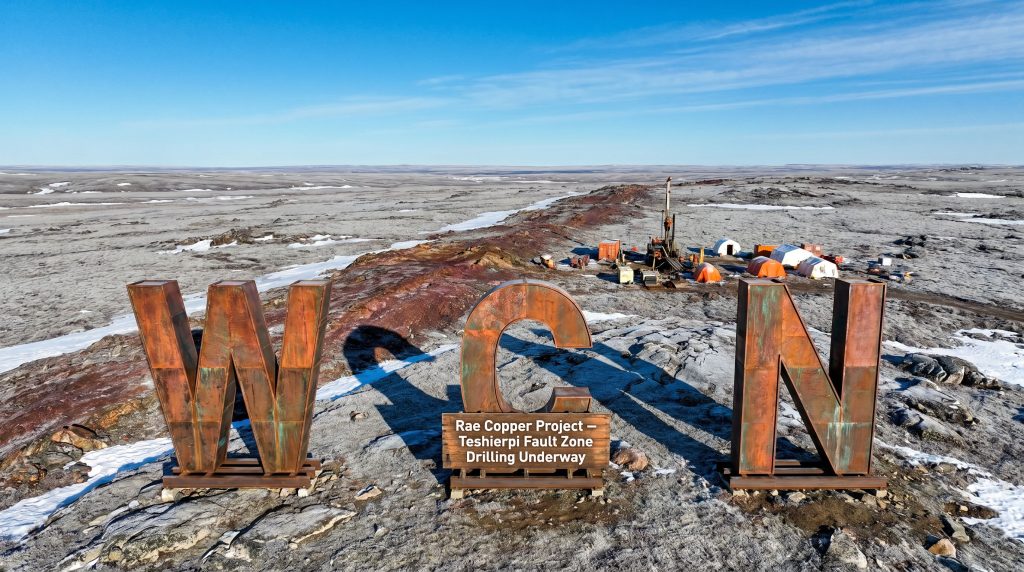
The grant, awarded under the Nunavut Government's Discover, Invest, Grow (DIG) Program, will contribute to an active 6,000-metre reverse circulation (RC) drilling program targeting the Teshierpi Fault Zone. This structure hosts known high-grade copper mineralisation, and the company is now systematically testing across a 12,000-metre strike length.
This announcement follows several recent corporate developments, including completion of the WCNO securities underwriting and the successful sale of the Great Bear Project. These moves, combined with the grant, are strengthening the company's balance sheet ahead of what Managing Director Troy Whittaker describes as an expanded exploration push.
"We are pleased to have secured CAD$250,000 in funding through the Discover Invest Growth Program, supporting the advancement of our ongoing 6,000m reverse circulation drilling program at Danvers. This award reflects the continued confidence and support of the Government of Nunavut in the potential of our projects and regional exploration strategy. Combined with the recent WCNO underwriting and the successful sale of the Great Bear Project, the funding further strengthens our balance sheet and enhances our financial flexibility as we accelerate exploration activities. The Company is now well-positioned to expand drilling across both the Danvers Project and the highly prospective sedimentary structures at Rae."
— Troy Whittaker, Managing Director, White Cliff Minerals
When big ASX news breaks, our subscribers know first
Understanding the DIG Program and Grant Significance
The Discover, Invest, Grow (DIG) Program is a Nunavut Government initiative designed to stimulate and support mineral exploration activity across the Territory. Understanding how it operates helps frame why this award is meaningful for White Cliff's exploration program.
How Does the DIG Program Operate?
Companies can apply for reimbursement of up to 25% of total exploration expenditures, capped at CAD$250,000 per year. The maximum a single company can receive over a project's lifespan is CAD$500,000. Grants are assessed based on the use of local supplies and businesses, as well as the advancement of technical geological knowledge in Nunavut.
Funding is furthermore distributed in two equal tranches — 50% upon acceptance and 50% following submission of a final geological report.
| DIG Program Feature | Detail |
|---|---|
| Annual grant cap | CAD$250,000 |
| Lifetime project cap | CAD$500,000 |
| Grant as % of exploration spending | Up to 25% |
| Tranche 1 (upon acceptance) | CAD$125,000 |
| Tranche 2 (upon geological report) | CAD$125,000 |
| WCN grant awarded | CAD$250,000 (maximum annual allocation) |
White Cliff has received the maximum available annual allocation, meaning this represents the programme's full annual ceiling rather than a partial award. The company retains the ability to apply for further DIG funding in future years, with up to CAD$250,000 in additional lifetime entitlement remaining available under the programme.
Drilling Into the Teshierpi Fault Zone: Current Exploration Program
The grant directly supports an active drilling programme targeting the Teshierpi Fault Zone and adjacent structures across a 12,000-metre strike length. This substantial exploration corridor is guided by detailed 2025 geophysical surveys.
Key Programme Parameters
- Total planned metres: 6,000m reverse circulation
- Strike length being tested: 12,000m along the Teshierpi and Adjacent Fault Zone
- Geophysical guidance: 2025 magnetic and electromagnetic (EM) datasets trained on the known geophysical signature of high-grade copper at Danvers
- Current phase focus: Drill testing high-conductance features identified between drillholes DAN25014 and DAN25019 — a 3.75km corridor hosting multiple conductive anomalies within the major fault zone
- Hole spacing in 2026 program: 300–600m apart along strike, exploratory in nature
The electromagnetic survey data is proving pivotal in directing where holes are being placed. Danvers I presents as a distinctive conductive signature on EM imagery, and larger, higher-conductance features have been identified along strike. These are, consequently, the priority targets for the current drill programme.
Why This Approach Is Technically Sound
The copper mineralisation at Danvers is hosted within a chalcocite-dominant breccia and vein system striking NE/SW, with secondary replacement-style mineralisation in vesicular basalt flow tops adjacent to major structures. The 2025 HeliTEM survey was specifically oriented perpendicular to the fault zone to maximise resolution of these targets.
The drill programme is placing holes to test the same geological architecture that produced the high-grade results from the maiden 2025 campaign. This White Cliff Minerals Nunavut government grant for Danvers copper drilling ensures the programme can continue at pace without interruption.
Previous Drilling Results and Historic Resource Context
White Cliff's maiden 2025 drilling campaign at Danvers delivered a suite of high-grade copper-silver intercepts that established the project's credentials. The results below are from the 2025 RC and diamond drilling programme and represent drilled widths, not true thicknesses.
| Highlight Intercept | Cu Grade | Ag Grade |
|---|---|---|
| 175m | 2.5% Cu | 8.66 g/t Ag |
| 90m | 4.0% Cu | 7.5 g/t Ag |
| 58m | 3.08% Cu | 13.3 g/t Ag |
| 105m | 2.25% Cu | — |
| 63m | 2.23% Cu | — |
| 75m | 2.0% Cu | — |
These intercepts sit within a project that also holds a historic resource estimate of 4.16 million tonnes at 2.96% copper at the Danvers deposit. This is a non-JORC compliant historic figure that White Cliff is working to verify and update through ongoing drilling and twinning of historic holes.
The company states that this estimate does not meet current JORC Code standards, and significant additional work is required before it can be reclassified.
Beyond drilling results, metallurgical testwork completed in early 2026 demonstrated the ore's processing amenability, with conventional flotation producing up to 95.4% copper recovery and 93.3% silver recovery, generating concentrates of approximately 40% Cu and 150 g/t Ag. No deleterious elements were identified in the concentrates.
Understanding Sediment-Hosted Copper Deposits: Educational Context
What Are Sediment-Hosted Copper Deposits?
The Rae Copper Project sits within a geological setting that hosts two distinct styles of copper mineralisation — the high-grade fault breccia system at Danvers and a potentially larger sediment-hosted copper system in the underlying Rae Group sediments.
Sediment-hosted copper deposits are among the world's most significant copper deposit types by contained metal. The Central African Copperbelt — which includes world-class mines in Zambia and the Democratic Republic of Congo — is the most prominent example of this deposit style globally.
The presence of similar geological controls, including the unconformity between the Coppermine River Group basalts and the overlying Rae Group sediments and evidence of chalcocite-bornite-chalcopyrite zonation in historic drilling, positions the Rae Project as highly prospective for this deposit type in addition to the Danvers-style breccia mineralisation.
Glossary of Key Terms
- Reverse Circulation (RC) Drilling: A drilling method where rock chips are returned to surface through the drill rods, providing fast and cost-effective sample collection across large areas
- Chalcocite: A copper sulphide mineral (Cu₂S) associated with high-grade copper deposits; the dominant ore mineral at Danvers
- Teshierpi Fault Zone: The major structural feature controlling copper mineralisation at Danvers, striking NE/SW across the project
- Strike Length: The horizontal distance along a geological feature or mineralised zone — in this case, 12,000m is being systematically drill-tested
- Electromagnetic (EM) Survey: A geophysical technique used to detect conductive bodies underground; copper sulphide mineralisation typically produces a characteristic conductive response
- Historic Resource Estimate: An estimate of mineralisation that pre-dates current reporting codes (JORC/NI 43-101); it provides context but cannot be relied upon as a current mineral resource
Financial Position and Near-Term Catalysts
The DIG grant is one of several recent steps that have collectively improved White Cliff's financial position heading into the most active drilling phase of the Rae Copper Project.
Recent Financial Developments
- CAD$250,000 DIG Program grant — with CAD$125,000 receivable imminently
- WCNO underwriting completed — strengthening the balance sheet
- Sale of the Great Bear Project — monetising a non-core asset to redirect capital toward Rae
These moves have, in addition, enhanced the company's financial flexibility to maintain and potentially expand its drilling footprint across both the Danvers fault breccia system and the sedimentary copper targets within the Rae Group.
Upcoming Catalysts and Planned Activities
- Receipt of first CAD$125,000 grant tranche in the coming days
- Ongoing assay results from the 6,000m 2026 RC drilling programme at Danvers
- Drill testing of multiple high-conductance EM targets along the 12,000m Teshierpi Fault Zone corridor
- Exploration expansion into the highly prospective sedimentary copper structures at Rae
- Submission of final geological report to trigger the second CAD$125,000 grant tranche
- Continued target generation for sediment-hosted and volcanic-hosted copper deposits across the 1,228 km² project area
The next major ASX story will hit our subscribers first
Investment Considerations: Multiple Exploration Targets in a Proven Copper Belt
White Cliff Minerals is building a copper exploration story with several distinct value drivers operating simultaneously. The White Cliff Minerals Nunavut government grant for Danvers copper drilling consolidates these threads and signals growing external validation of the project's potential.
Why Does the Rae Copper Project Warrant Investor Attention?
-
High-grade drilling results already in hand. The 2025 maiden campaign delivered intercepts of up to 175m at 2.5% Cu — substantive widths at grades well above typical open-pittable copper thresholds.
-
Exceptional metallurgy de-risks processing. The 2026 metallurgical testwork confirming greater than 95% Cu recovery via conventional flotation is a technically significant result that reduces downstream uncertainty for any future development scenario.
-
Systematic fault zone testing underway. The current 6,000m programme is methodically working through 12,000m of strike length guided by modern geophysical datasets — a disciplined, geophysically-guided approach to testing additional copper along the Teshierpi Fault Zone.
-
Dual target types on a large tenement. With 1,228 km² of mineral claims in Nunavut, WCN holds exposure to both the high-grade breccia system at Danvers and the potentially larger sediment-hosted copper opportunity in the Rae Group sediments — the latter analogous in controls to some of the world's most significant copper districts.
-
Grant funding validates jurisdiction and project quality. The DIG Programme award at the maximum annual allocation demonstrates that the project meets the programme's criteria for technical merit and regional economic contribution.
-
Strengthened balance sheet. The combination of the DIG grant, the Great Bear sale proceeds, and the WCNO underwriting provides a materially improved financial platform for sustained drilling activity.
Key Takeaway:
White Cliff Minerals has positioned itself as an active copper explorer in one of Canada's most historically productive copper belts, backed by a high-grade drilling track record, exceptional metallurgical results, and now direct grant funding from the Government of Nunavut. With an active 6,000-metre drill programme testing 12,000 metres of strike length along the Teshierpi Fault Zone — and multiple assay results expected as the programme advances — investors with an appetite for copper exploration upside should be watching White Cliff closely in the months ahead.
Note: The historic resource estimate at Danvers of 4.16 million tonnes at 2.96% Cu is a non-JORC compliant historic estimate. It was not prepared in accordance with the JORC Code 2012 or NI 43-101, and should not be relied upon as a current mineral resource. All drilling intercepts from 2025 programmes represent drilled widths, not true thicknesses.
Ready to Learn More About White Cliff Minerals' Rae Copper Project?
White Cliff Minerals (ASX: WCN) is advancing one of Canada's most compelling copper exploration stories — backed by high-grade drilling results, exceptional metallurgy, and now direct grant funding from the Government of Nunavut. With an active 6,000-metre drill programme underway and multiple assay results anticipated in the months ahead, investors seeking exposure to a well-funded, geophysically-guided copper explorer should take a closer look. Visit wcminerals.com.au to explore the full details of the Rae Copper Project and stay up to date with the latest developments from WCN.