Nico Resources Ltd
Nico Resources Advances Wingellina Toward Feasibility With Drilling Imminent and Battery Materials MOU Signed
Nico Resources Limited (ASX: NC1) has used its June 2026 quarterly report to show steady progress at the Wingellina nickel-cobalt project in Western Australia, with a funded infill drilling program set to begin in the September quarter, continuing metallurgical work for the Definitive Feasibility Study (DFS), and a new non-binding partnership with Pure Battery Technologies Ltd (PBT) focused on downstream battery materials.
According to the quarterly update, Nico ended 30 June 2026 with $4.861 million in cash, equal to an estimated 8.66 quarters of funding based on current operating and exploration outgoings. For investors, the update matters because it shifts Wingellina closer to higher-confidence resource classification and provides a clearer link between the project's long-life nickel-cobalt inventory and possible downstream refining pathways.
When big ASX news breaks, our subscribers know first
Key June Quarter Metrics
Wingellina remains the centrepiece of Nico's investment case, supported by a large resource, long reserve life and modest current enterprise value.
| Metric | Detail |
|---|---|
| Cash at bank | $4.861 million |
| Market capitalisation | $15.73 million |
| Enterprise value | $10.87 million |
| Estimated funding runway | 8.66 quarters |
| Wingellina Mineral Resource | 187.3Mt at 0.91% Ni and 0.06% Co |
| Contained nickel in resource | 1.698Mt |
| Probable Ore Reserve | 164.8Mt at 0.93% Ni |
| Contained nickel in reserve | 1.56Mt |
| Planned RC drilling | 94 holes for 6,062m |
| Exploration and evaluation spend in quarter | $335,299 |
The quarterly report reiterated that Wingellina is expected, based on the 2022 Pre-Feasibility Study (PFS), to produce about 40,000 tonnes of nickel and 3,000 tonnes of cobalt annually in Mixed Hydroxide Precipitate (MHP) for at least 42 years.
Infill Drilling Is the Main Near-Term Catalyst
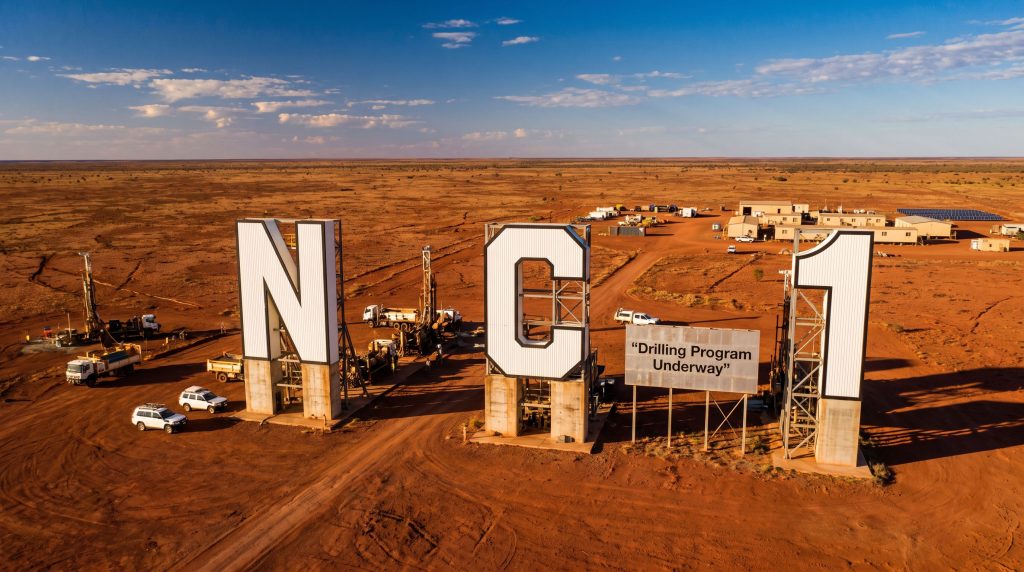
The most immediate project milestone in the report is the upcoming RC infill drilling program in the South Domain of the Wingellina orebody. This is not early-stage exploration. Instead, the drilling is designed to improve confidence in an already defined resource and support future mine planning.
According to Nico, all main preparatory steps were completed during the June quarter:
- The Native Vegetation Clearing Permit had already been received at the end of March
- A community meeting with Traditional Owners was held in May at Irrunytju
- A follow-up on-site heritage monitoring visit was completed with six Traditional Owners
- Ngaanyatjarra Civil completed access tracks and drill pad clearing
- Stark Drilling was appointed, with mobilisation expected around early August 2026
The planned program consists of 94 RC holes for 6,062 metres on a staggered 50m by 25m grid across the main mineralised areas in the South Domain.
Furthermore, Nico stated in the report that the drilling aims to better define the contact between the mineralised ultramafic unit and largely unmineralised gabbro. In simple terms, this means tightening the boundaries of the ore zone so the company can improve resource confidence, ore scheduling and future processing assumptions.
"All the Traditional Owners in attendance were supportive of the planned drilling works presented to them, with no concerns or issues raised," Nico stated in its June 2026 quarterly report.
That level of field readiness is relevant because it suggests the next stage is operational rather than procedural. With site clearing complete and the rig contractor appointed, investor attention is likely to turn to drilling execution and the quality of the resulting geological and density data.
Why Does the Drilling Matter for the DFS?
The report outlined four main reasons for the infill campaign:
- Collect samples for bench-scale metallurgical testwork from material types that have been under-represented in past testing
- Improve confidence in high-grade parts of the deposit relevant to early mine life
- Increase density data coverage to support conversion of parts of the resource from Indicated to Measured
- Support the geo-metallurgical model, which combines geology and processing behaviour for mine planning
ERM's 2024 review identified density data as the main gap preventing parts of the resource from moving into the Measured category, rather than a lack of drill coverage alone. Nico said 10% to 15% of the RC holes are expected to include downhole density measurements.
The company also noted that about 200,000 metres of additional RC drilling across the full deposit could ultimately be required to move the entire resource to a nominal 25m by 25m spacing. Nico is, however, phasing that work, starting with higher-grade zones likely to fall within the first decade of operations.
Understanding Wingellina's Resource Classification
For non-specialist investors, the resource upgrade angle is an important part of the quarterly report. A Mineral Resource Estimate (MRE) describes how much mineralised material is believed to be present and how confident the company is in that estimate.
At Wingellina, the current 2024 MRE stands at 187.3Mt at 0.91% nickel and 0.06% cobalt, including:
| Classification | Tonnes | Nickel Grade | Contained Nickel |
|---|---|---|---|
| Indicated | 164.1Mt | 0.93% Ni | 1,531kt |
| Inferred | 23.3Mt | 0.72% Ni | 166kt |
| Total | 187.3Mt | 0.91% Ni | 1,698kt |
What Do Indicated, Inferred and Measured Mean?
These terms come from the JORC Code, the Australian reporting standard for mineral resources and reserves.
- Inferred Resource: lower confidence, based on wider-spaced data; it suggests mineralisation is present, but more work is needed
- Indicated Resource: better confidence, with enough information for preliminary mine studies
- Measured Resource: highest confidence, supported by denser drilling and stronger supporting data such as density measurements
Why does this matter? A DFS typically relies on the highest-confidence information possible. The more material that can be classified as Measured, the more reliable mine schedules, reserve calculations and financing discussions may become.
In Wingellina's case, the bulk of the resource is already in the Indicated category. The current drilling campaign is therefore aimed at lifting part of that inventory into Measured, especially in higher-grade areas likely to influence early project economics.
PBT MOU Adds a Downstream Battery Materials Angle
The second major feature of the quarterly report was Nico's Memorandum of Understanding (MOU) with Pure Battery Technologies Ltd. According to the announcement, the parties will jointly evaluate a regional refining platform in Australia, the United States and Europe.
The concept is based on producing MHP from Wingellina and then processing that material using PBT's hydrometallurgical technology into nickel-manganese-cobalt (NMC) precursor cathode active material (pCAM), which is used in lithium-ion batteries. The proposed chain can be summarised as follows:
Wingellina ore → MHP → PBT refining → battery-grade pCAM
PBT is described in the report as a Brisbane-based cleantech company with an operating refinery in Hagen, Germany, which is being expanded toward 15,000 tonnes per annum of pCAM.
This matters because laterite nickel projects are often assessed not only on mine and processing performance, but also on how their intermediate products may fit into higher-value battery supply chains. The MOU does not commit either party to building facilities or making an investment decision, but it provides a formal framework for technical and commercial study work.
The quarterly report said the MOU is intended to support "an integrated, Australian-originated battery supply chain" built around Wingellina's potential MHP production and PBT's refining technology.
However, investors should note the limits of the agreement. The MOU is non-binding, and the report states that it does not create binding commitments to proceed to a final investment decision.
What Are MHP and pCAM?
These terms are common in nickel battery discussions but can be confusing. In brief:
- MHP, or Mixed Hydroxide Precipitate, is an intermediate product that contains nickel and cobalt after chemical processing of ore
- pCAM, or precursor cathode active material, is a refined battery ingredient used to make cathodes — the part of a lithium-ion battery that stores and releases energy
Moving from MHP to pCAM generally means stepping further downstream in the value chain. Projects with long mine lives and large resource bases can be of interest to refiners because they may offer a stable source of feedstock over many years.
Metallurgical Work Continues to Refine the Process Route
Alongside drilling and commercial discussions, the report showed ongoing work on the Wingellina metallurgical flowsheet. This is a central part of DFS preparation because it tests how the ore behaves during processing and what operating inputs may be needed.
According to Nico, the processing route includes ore scrubbing and beneficiation, High-Pressure Acid Leaching (HPAL), neutralisation, CCD washing (counter-current decantation), secondary neutralisation to remove impurities such as iron and aluminium, MHP precipitation, and tailings neutralisation and storage.
The company said bench-scale work at ALS has generated data on metal recoveries, stream chemistry, bulk solids handling, equipment sizing, materials of construction, reagent use, waste composition and product purity.
A particular focus during the quarter was ore preparation. Nico reported that previous work indicated a potential 10% increase in nickel head grade by rejecting coarse material before the HPAL stage. In addition, this coarse rejection can remove acid-consuming elements, which may help reduce operating costs.
What Is HPAL?
HPAL, or High-Pressure Acid Leaching, is a common processing method for nickel laterite deposits. In simple terms, HPAL uses finely prepared ore, sulphuric acid, high temperature and high pressure to dissolve nickel and cobalt from the ore so they can be recovered in solution and precipitated into products such as MHP.
HPAL is technically proven, but project economics depend heavily on ore preparation, acid consumption, recoveries and plant design. That is precisely why metallurgical testwork remains such an important part of the DFS path.
Nickel Market Conditions Remain Volatile
The quarterly report also gave investors a useful market backdrop. Nickel prices moved sharply during the June quarter, climbing above US$19,000 per tonne in May on concerns that Indonesian ore supply might tighten after reduced RKAB mining quotas.
By June, however, sentiment changed after reports that Indonesia may raise the 2026 quota toward 360 million tonnes, which pushed prices back to just above US$16,000 per tonne.
| Nickel Market Indicator | June Quarter Detail |
|---|---|
| Price peak in May 2026 | Above US$19,000/t |
| Price near quarter end | Just above US$16,000/t |
| Cobalt price | Around US$56,000/t |
| LME + Shanghai inventories | Around 450,000t |
| H1 2026 balance | Relative balance with modest surplus |
| Stainless steel demand growth | Around 5% annually |
According to Nico, the large oversupply once expected for 2026 did not fully emerge in the first half, with the market instead landing closer to balance. The report also pointed to continuing battery demand growth and expectations that Indonesian supply growth could be minimal in 2027.
For Wingellina, the short-term price swings represent just one variable. The company continues to frame the project around long life and scale rather than near-term spot market movements.
The next major ASX story will hit our subscribers first
Financial Position and What to Watch Next
Nico's quarterly cash flow report showed $226,000 net cash used in operating activities, $335,000 used in exploration and evaluation, and $561,000 in total relevant outgoings, leaving the company with $4.861 million cash at quarter end and a stated 8.66-quarter funding runway with no financing facilities drawn.
Related party payments totalled $115,000 in the Appendix 5B, covering director fees and statutory superannuation.
Looking ahead, the next milestones identified in the quarterly report include:
- Commencement of RC infill drilling
- Receipt and interpretation of drilling and density data
- Continued bench-scale metallurgical analysis
- Further work on the geo-metallurgical model
- Assessment work under the PBT MOU
- Planning for the Lewis calcrete deposit
- Further work on potential water supply from the Cobb Embayment
- Continued DFS scope and definition work
For investors following ASX nickel stocks, the June quarterly report positions Nico as a development-stage company focused on steadily reducing technical uncertainty at Wingellina. The key question over coming quarters is whether the drilling and testwork now being executed can convert that progress into higher-confidence resources and a clearer path toward DFS-level project definition.
Ready to Catch the Next Major ASX Mineral Discovery Before the Market Does?
Discovery Alert's proprietary Discovery IQ model scans ASX announcements in real time, instantly identifying significant mineral discoveries across nickel, cobalt and more than 30 other commodities — so subscribers can act on actionable opportunities ahead of the broader market. Explore historic discoveries and their remarkable returns, then begin your 14-day free trial to position yourself at the forefront of the next major find.