May 9, 2026
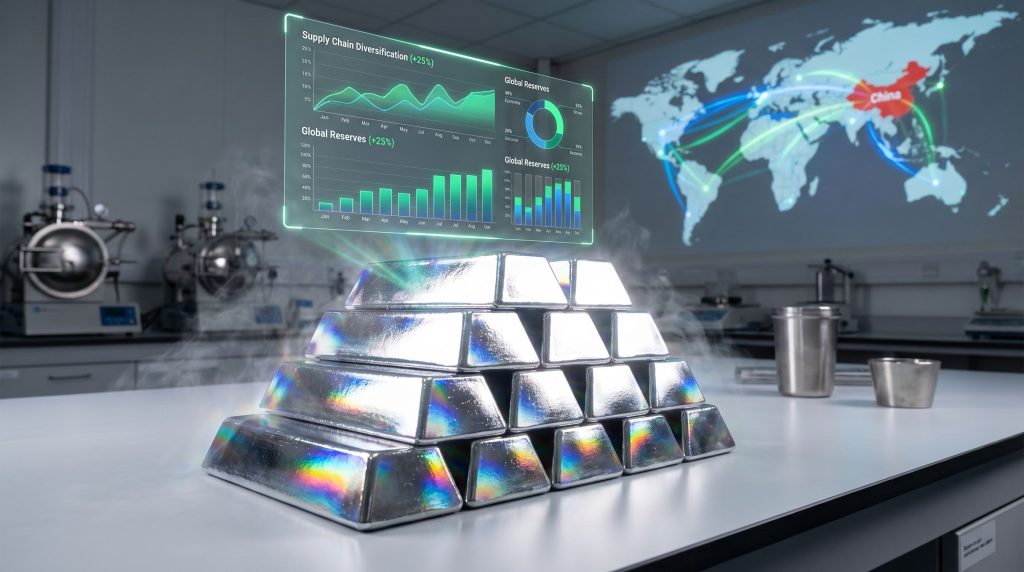
Advanced manufacturing sectors worldwide face mounting pressure to secure reliable access to critical materials as geopolitical tensions reshape global supply chains. The emergence of alternative production capabilities for strategic elements represents a fundamental shift in industrial sovereignty, particularly for materials essential to aerospace, defense, and high-technology applications. This transformation extends beyond simple market diversification to encompass national security considerations, technological independence, and long-term competitive positioning in an increasingly fragmented global economy, as highlighted by the recent critical minerals order.
Understanding Yttrium's Critical Role in Advanced Manufacturing
The successful achievement of 99% pure yttrium metal production by Less Common Metals marks a pivotal moment in critical materials supply chain diversification. This milestone, accomplished in April 2026, positions the UK-based subsidiary of USA Rare Earths among a select group of non-Chinese entities capable of commercial-grade yttrium production.
Yttrium's strategic importance spans multiple high-performance applications where material purity directly correlates with system performance and reliability. The metallurgical achievement of first pour of pure yttrium addresses critical supply vulnerabilities in sectors that previously depended exclusively on Chinese production capabilities.
Furthermore, the announcement of USA Rare Earth's first commercial yttrium metal production demonstrates the viability of Western manufacturing capabilities in this strategic sector.
Core Applications Driving Demand
The industrial applications for high-purity yttrium demonstrate the material's irreplaceable role in advanced manufacturing:
- Thermal barrier coatings on turbine blades for aerospace propulsion systems
- Advanced electronics requiring precise electrical characteristics
- Laser technology components for defense and industrial applications
- Superconductor systems in emerging quantum computing platforms
- Aerospace components demanding extreme temperature resistance
These applications underscore why yttrium has become classified as a critical material requiring energy security measures. The material properties that make yttrium essential for these applications cannot be easily substituted, creating strategic dependencies that geopolitical tensions have brought into sharp focus.
Purity Requirements and Performance Standards
The achievement of 99% pure yttrium production represents a significant technical milestone with immediate commercial implications. This purity threshold enables consistent performance in applications where even minor contamination can compromise system integrity or operational efficiency.
Manufacturing industries utilising yttrium-based components require predictable material characteristics across production runs. In addition, the establishment of Western production capabilities meeting these specifications provides alternative sourcing options for companies seeking to reduce supply chain concentration risks.
When big ASX news breaks, our subscribers know first
What Makes Yttrium Production So Technically Challenging?
The complexity of yttrium metallurgy explains why so few entities globally possess commercial production capabilities. The first pour of pure yttrium achieved by Less Common Metals represents the culmination of extensive process development and specialised infrastructure deployment.
Metallurgical Process Requirements
Commercial yttrium production demands sophisticated process control across multiple stages:
Temperature Management: The production process requires sustained high-temperature operations exceeding conventional metallurgical practices. Precise temperature control ensures complete reduction while preventing unwanted chemical reactions that compromise purity.
Atmospheric Controls: Yttrium's reactive nature necessitates inert atmosphere management throughout production cycles. Any oxygen contamination during processing creates oxide formation that reduces final product purity below commercial specifications.
Specialised Equipment: The production infrastructure includes vacuum retort systems, specialised crucibles, and handling equipment designed for pyrophoric materials. These capital-intensive requirements create significant barriers to entry for potential competitors.
Infrastructure Investment Requirements
The establishment of commercial yttrium production capabilities requires substantial capital deployment across multiple technical domains:
- Advanced heating systems capable of sustained high-temperature operations
- Vacuum management infrastructure for contamination prevention
- Specialised materials handling equipment for reactive metal powders
- Quality control laboratories for purity verification and consistency monitoring
- Environmental management systems for hazardous material processing
This infrastructure complexity explains the limited number of global producers and reinforces the strategic value of achieving production capabilities outside traditional Chinese supply chains. Moreover, the development of a comprehensive critical minerals strategy becomes essential for sustaining these investments.
Why Did China Impose Export Licensing on Yttrium in 2026?
The implementation of export licensing restrictions on seven rare earth elements in April 2026, including yttrium, represents a strategic policy shift with significant implications for global supply chains. This regulatory change occurred simultaneously with growing international efforts to establish alternative production capabilities.
Strategic Resource Control Mechanisms
China's export licensing framework provides regulatory tools for managing critical material flows to international markets. The timing of these restrictions, coinciding with emerging Western production capabilities, suggests coordinated policy responses to changing competitive dynamics in rare earth markets.
The licensing system enables selective export management based on geopolitical considerations, customer relationships, and strategic objectives. This approach provides greater flexibility than previous quota-based export controls while maintaining leverage over critical material supply chains.
Market Response Patterns
The implementation of export licensing has accelerated diversification initiatives across multiple industries and geographic regions. Companies previously comfortable with Chinese supply chain dependence are now actively pursuing alternative sourcing strategies to mitigate regulatory risk exposure.
Investment Flow Redirection: Capital allocation toward non-Chinese production capabilities has intensified following the April 2026 restrictions. This includes both direct investment in production facilities and strategic partnerships with emerging suppliers.
Strategic Stockpiling: End-user industries have implemented inventory management policies designed to buffer against potential supply disruptions. These stockpiling activities create additional demand that benefits alternative suppliers developing market presence.
The US-China trade impacts continue to shape these strategic responses across multiple sectors.
How Do Western Yttrium Production Capabilities Change Global Dynamics?
The operational achievements of USA Rare Earths across multiple facilities demonstrate the viability of integrated rare earth production outside Chinese control. The sequential development of capabilities from magnet production in Oklahoma (March 2026) to pure yttrium production in the UK (April 2026) establishes a foundation for sustained supply diversification.
Production Capacity Development Timeline
| Facility Location | Capability | Timeline | Strategic Significance |
|---|---|---|---|
| Oklahoma, USA | Commercial magnet production | March 2026 | First integrated magnet manufacturing |
| United Kingdom | Pure yttrium metal production | April 2026 | First non-Chinese yttrium pour |
| Texas, USA (Round Top) | Yttrium extraction | Late 2028 (planned) | Mine-to-metal integration |
This geographic distribution creates supply chain resilience through facility diversification while establishing operational redundancy across multiple jurisdictions.
Geopolitical Implications
The establishment of Western yttrium production capabilities fundamentally alters negotiating positions in critical materials diplomacy. Countries and companies with alternative sourcing options gain strategic flexibility in responding to export restrictions or supply chain pressures.
Defence Industry Implications: Military and aerospace contractors can now qualify alternative suppliers for critical applications, reducing dependence on potentially restricted supply chains. This diversification supports national security objectives while maintaining technological capabilities.
Allied Coordination Opportunities: Multiple allied nations developing rare earth capabilities can coordinate stockpiling, technology sharing, and supply agreements to ensure collective supply security.
What Are the Investment Implications of Non-Chinese Yttrium Production?
The successful demonstration of commercial yttrium production capabilities creates new investment opportunities across the rare earth value chain. USA Rare Earths, as a Nasdaq-listed entity, provides public market exposure to the supply diversification thesis while demonstrating operational execution capabilities.
Market Structure Transformation
The emergence of alternative suppliers fundamentally changes rare earth market dynamics in several key areas:
Price Discovery Mechanisms: Multiple suppliers create competitive pricing pressures that benefit end users while providing market-based price discovery for rare earth products.
Supply Security Premiums: Companies requiring assured supply access are willing to pay premiums for diversified sourcing options, creating revenue opportunities for alternative suppliers.
Long-term Contract Structures: End users are increasingly interested in multi-year supply agreements that provide pricing predictability and guaranteed access to critical materials.
Investment Strategy Implications
The rare earth supply diversification trend creates multiple investment approaches:
- Vertical Integration Strategies: Companies controlling the full value chain from mining through finished products capture maximum margin opportunities
- Technology Development: Process innovation and efficiency improvements provide competitive advantages in capital-intensive industries
- Strategic Partnerships: Joint ventures between miners, processors, and end users create risk-sharing structures while ensuring supply security
Furthermore, the development of a raw materials supply facility enhances these strategic considerations.
How Does Vertical Integration Create Competitive Advantages?
USA Rare Earths' integrated approach spanning mining, processing, separation, metal-making, alloy production, and magnet manufacturing demonstrates the strategic value of controlling the complete value chain. This integration model provides multiple competitive advantages in markets characterised by supply security concerns.
Supply Chain Control Benefits
Vertical integration eliminates dependencies on third-party processors and intermediaries that can create bottlenecks or supply disruptions. The ability to control timing, quality, and allocation across all production stages provides operational flexibility unavailable to companies dependent on merchant markets.
Quality Assurance Integration: Controlling the entire process from ore to finished products enables consistent quality maintenance and contamination prevention throughout production cycles.
Cost Structure Optimisation: Eliminating third-party margins across multiple processing stages improves overall profitability while maintaining price competitiveness.
Customer Customisation: Integrated operations can accommodate specialised customer requirements and product specifications that standardised merchant suppliers cannot economically address.
Risk Mitigation Through Integration
The integrated model provides natural hedging against market volatility and supply disruptions:
- Reduced Market Exposure: Internal transfer pricing eliminates exposure to spot market volatility for intermediate products
- Supply Timing Control: Production scheduling flexibility ensures just-in-time delivery capabilities for time-sensitive applications
- Technology Development Synergies: Process improvements at any stage benefit the entire value chain
Strategic Insight: Vertical integration in rare earth production creates defensive competitive advantages that become more valuable during periods of supply chain instability and geopolitical tension.
The next major ASX story will hit our subscribers first
What Timeline Challenges Face New Yttrium Producers?
The development timeline from initial capability demonstration to full commercial production presents significant challenges for companies seeking to establish yttrium production capabilities. The progression from USA Rare Earths' magnet production in March 2026 to the first pour of pure yttrium in April 2026, with planned Round Top extraction by late 2028, illustrates the extended timelines required for integrated rare earth operations.
Production Scaling Complexities
The transition from pilot-scale demonstration to commercial production volumes requires systematic capacity expansion while maintaining quality standards:
Process Optimisation: Laboratory-scale processes must be adapted for industrial production volumes while preserving the precise control required for high-purity metal production.
Equipment Scaling: Specialised metallurgical equipment requires custom engineering and extended lead times, creating potential bottlenecks in capacity expansion plans.
Workforce Development: The specialised skills required for rare earth metallurgy necessitate extensive training programmes and experience development over multiple production cycles.
Regulatory and Certification Timelines
New suppliers must complete extensive qualification processes before gaining access to high-value applications:
- Customer Qualification Procedures: Aerospace and defence contractors require comprehensive supplier audits and material performance verification
- Environmental Permitting: Rare earth processing facilities must obtain complex environmental approvals that can extend development timelines
- International Standards Compliance: ISO and industry-specific certifications require documented quality systems and production consistency
How Will End-User Industries Adapt to Supply Diversification?
Industries dependent on yttrium-based materials are implementing comprehensive strategies to capitalise on emerging supply diversification opportunities. The availability of non-Chinese production capabilities enables risk management approaches previously unavailable to supply-constrained sectors.
Aerospace and Defence Sector Adaptation
The aerospace and defence industries, identified as primary customers for alternative yttrium suppliers, are implementing multi-supplier strategies to enhance supply security:
Supplier Qualification Programmes: Major contractors are accelerating qualification processes for new suppliers to establish approved vendor relationships before supply emergencies develop.
Strategic Inventory Management: Companies are adjusting inventory policies to accommodate longer supply chains while maintaining production flexibility.
Long-term Contract Strategies: Multi-year supply agreements with diversified suppliers provide predictable access while supporting supplier investment in expanded capacity.
Technology Industry Supply Strategies
Electronics, laser, and superconductor industries are adapting procurement approaches to leverage supply diversification:
- Dual Sourcing Implementation: Critical applications are being redesigned to accommodate materials from multiple suppliers
- Quality Standard Harmonisation: Industry groups are developing common standards that enable supplier interchangeability
- Research Collaboration: Joint development projects with new suppliers ensure material specifications meet evolving technology requirements
Industry analysis of rare earth market dynamics provides additional insights into these adaptation strategies.
What Regulatory Frameworks Support Alternative Yttrium Production?
Government policies across multiple jurisdictions are creating supportive frameworks for rare earth supply diversification initiatives. These regulatory approaches address both supply security objectives and competitive positioning considerations.
Critical Materials Designation Policies
National security frameworks increasingly recognise rare earth elements as strategic materials requiring supply security measures:
Strategic Reserve Programmes: Government stockpiling initiatives provide demand support for alternative suppliers while ensuring emergency supply availability.
Research and Development Incentives: Tax credits and grants for metallurgical process development reduce the financial barriers to establishing new production capabilities.
Fast-Track Permitting: Expedited regulatory processes for critical materials projects accelerate timeline to commercial production.
International Cooperation Mechanisms
Allied nations are coordinating policies to support collective supply security objectives:
- Technology Sharing Agreements: Joint research initiatives reduce development costs while accelerating capability deployment
- Coordinated Procurement Policies: Synchronised purchasing strategies provide market support for alternative suppliers
- Emergency Supply Protocols: Mutual assistance agreements ensure continued access during supply disruptions
Future Outlook: Yttrium Market Evolution Through 2030
The successful demonstration of commercial yttrium production outside China establishes the foundation for fundamental market restructuring over the next five years. The convergence of technological capability development, policy support, and end-user demand creates conditions for sustained supply diversification.
Demand Growth Projections by Application
| Application Sector | Growth Drivers | Projected Impact Through 2030 |
|---|---|---|
| Aerospace Turbines | Next-generation engine technology | 40-60% demand increase |
| Electronics | High-performance laser expansion | 25-35% market growth |
| Superconductors | Quantum computing development | 100%+ potential growth |
| Defence Applications | Strategic system upgrades | 30-50% demand increase |
Supply Security Assessment
The timeline for achieving meaningful supply diversification depends on successful scaling of current production capabilities and development of additional alternative sources:
Near-term Milestones (2026-2028): Current Western production capabilities are expected to serve niche markets and strategic applications while building operational scale and customer relationships.
Medium-term Development (2028-2030): The planned Round Top production startup, combined with potential new entrants, could establish 15-25% non-Chinese market share by 2030.
Long-term Equilibrium: Successful supply diversification could create stable multi-supplier markets with competitive pricing and enhanced supply security for end users.
However, achieving these milestones requires sustained coordination across the industry to overcome the technical challenges that have made the first pour of pure yttrium such a significant achievement for alternative suppliers.
Investment Thesis: The achievement of commercial-grade yttrium production outside China represents a fundamental shift in critical materials supply chains, creating both immediate tactical advantages for diversified suppliers and long-term strategic value for end-user industries seeking supply security in an increasingly complex geopolitical environment.
Disclaimer: This analysis involves forward-looking projections and market forecasts that are subject to significant uncertainties including technological challenges, regulatory changes, competitive responses, and geopolitical developments. Investment decisions should be based on comprehensive due diligence and professional financial advice.
Ready to Capitalise on Critical Minerals Supply Chain Transformations?
Discovery Alert's proprietary Discovery IQ model delivers instant notifications on significant ASX mineral discoveries, empowering subscribers to identify actionable opportunities in critical materials sectors ahead of the broader market. Understand why historic discoveries can generate substantial returns by exploring Discovery Alert's dedicated discoveries page, showcasing exceptional outcomes from strategic resource developments.