June 16, 2026
The Hidden Cost of Grinding Circuit Failure and Why Digital Intelligence Is Changing the Equation
Every tonne of copper, lithium, or nickel that leaves a mine site passes through a grinding circuit at some point in the production chain. For mining operations running large-scale mills, that circuit is not merely a processing step — it is the operational heartbeat of the entire plant. When it stops unexpectedly, everything stops with it. ABB Grinding Connect for gearless mill drive systems was developed in direct response to this operational reality, offering a purpose-built digital intelligence platform for one of mining's most critical and complex asset classes.
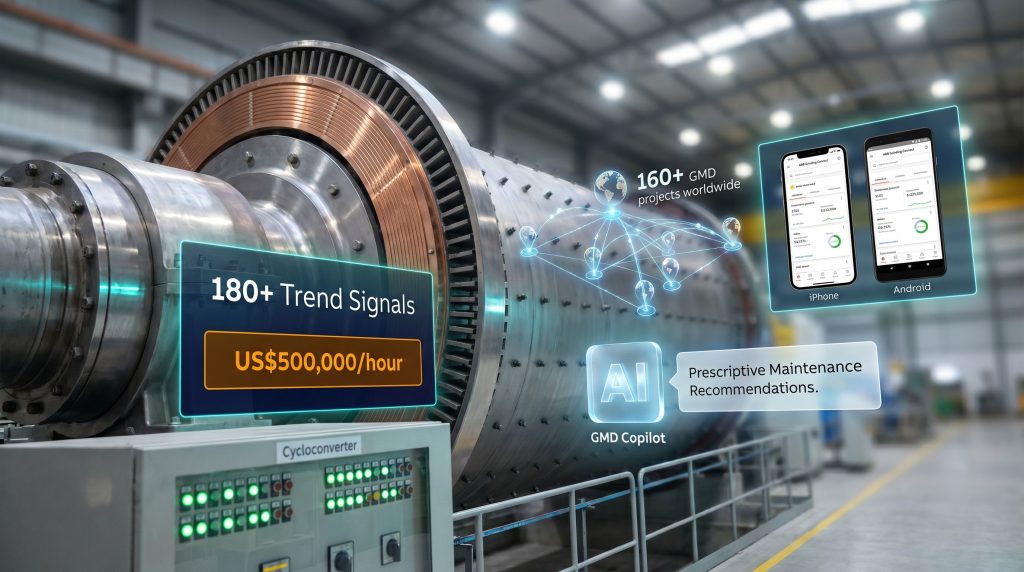
According to ABB's own research, unplanned downtime in large grinding systems can cost operations as much as US$500,000 per hour. At that rate, a fault that takes 48 hours to diagnose and resolve does not simply represent an operational inconvenience — it represents a potential US$24 million exposure event. This financial reality has driven the rapid adoption of cloud-based condition monitoring and remote diagnostics platforms across the mining sector, particularly for the most complex drive configurations in use today.
When big ASX news breaks, our subscribers know first
Understanding Gearless Mill Drives Before Understanding the Software
Why GMD Architecture Creates a Monitoring Challenge Unlike Any Other
To understand why ABB Grinding Connect for gearless mill drive systems was developed as a specialist platform rather than a general-purpose industrial monitoring tool, it is worth examining what makes gearless mill drive technology fundamentally different from conventional mill drive architecture.
In a traditional gear-driven mill, mechanical transmission components — including a ring gear, pinion, gearbox, and associated bearings — transfer torque from the motor to the mill shell. This creates multiple mechanical wear interfaces that can be inspected physically, measured for wear, and replaced on a predictable maintenance schedule. The failure modes are well understood and largely mechanical in nature.
A gearless mill drive removes all of those components entirely. The mill shell itself functions as the rotor of a large-diameter, low-speed synchronous motor. The drive's stator surrounds the mill, and the entire system is powered through a cycloconverter that converts grid frequency power into a variable-frequency output suited to the motor's operating requirements. There is no gearbox to inspect, no pinion to measure, and no ring gear to lubricate.
| Drive Architecture | Key Mechanical Components | Primary Failure Risk Domain | Appropriate Monitoring Method |
|---|---|---|---|
| Conventional Gear Drive | Ring gear, pinion, gearbox, couplings | Mechanical wear and fatigue | Vibration analysis, lubrication checks |
| Gearless Mill Drive (GMD) | Stator, rotor (mill shell), cycloconverter | Electrical, thermal, signal integrity | Continuous digital condition monitoring |
This architectural shift trades mechanical complexity for electrical and electromagnetic complexity. The failure risk profile moves away from physical wear and toward thermal anomalies, electrical signal deviations, and issues within the cycloconverter's control architecture. These are not conditions that a maintenance technician can identify by looking at a component or feeling for vibration. They require continuous, high-resolution digital monitoring with sophisticated pattern recognition capabilities.
GMD installations are also typically found on the largest mills in operation globally, with many systems rated at 20 MW or higher, making them among the most capital-intensive individual assets on any mine site. The combination of high asset value, complex failure modes, and enormous downtime cost exposure is precisely the set of conditions that makes purpose-built digital intelligence platforms not just useful but operationally essential. This reflects broader mining innovation trends reshaping how the sector approaches asset management.
What ABB Grinding Connect Actually Does: A Functional Breakdown
Platform Architecture, Access, and Core Capabilities
ABB Grinding Connect is a cloud-based digital service suite designed exclusively for mining operations running ABB gearless mill drive systems. Launched globally in mid-2026, the platform draws on ABB's accumulated experience across more than 160 GMD projects worldwide, using that operational dataset as the empirical foundation for its diagnostic models, anomaly thresholds, and maintenance recommendations.
The platform is accessible through iOS and Android mobile applications, as well as desktop interfaces, allowing operations teams, maintenance planners, and remote ABB service engineers to work from the same data environment regardless of location. This matters considerably for mines in remote geographies where specialist engineers cannot be on site at short notice.
Grinding Connect consolidates several previously separate digital solutions into a single integrated environment:
- Asset Health and Condition Monitoring Analytics — continuous assessment of GMD system status using real-time sensor data benchmarked against historical performance profiles
- Trendex Diagnostics and Troubleshooting — structured diagnostic tooling for identifying performance deviations and isolating root causes systematically before they develop into failures
- GMD Copilot — the AI-powered GMD Copilot is a virtual support assistant that provides guided troubleshooting, contextual fault interpretation, and decision support for on-site operators who may not have deep GMD specialist knowledge
- Prescriptive Maintenance Recommendations — actionable guidance generated from analysis of more than 180 monitored trend signals, including process alarms, events, transient recordings, and signal correlation data
- Anomaly and Frozen-Signal Detection — automated identification of irregular operating patterns, as well as frozen signals where a sensor continues transmitting a static value rather than updating in real time
- Smart Notifications and Expert-Recommended Actions — real-time alert delivery paired with contextual guidance from ABB's global service engineering network
The Significance of Frozen-Signal Detection
The inclusion of frozen-signal detection in the platform's feature set is worth highlighting separately because it addresses a failure mode that is widely underappreciated outside specialist GMD maintenance communities. A frozen signal occurs when a sensor's output ceases to update but continues transmitting its last recorded value rather than generating a fault alarm. Standard threshold-based monitoring systems will not flag this condition because the signal value remains within acceptable bounds.
In a large drive system with hundreds of monitored parameters, a single frozen signal can lead to misdiagnosis or missed fault detection during a developing fault event. Automated identification of this condition, integrated directly into the monitoring workflow, represents a meaningful advancement in diagnostic reliability.
A monitoring platform that only responds to threshold breaches is reactive by definition. The ability to identify when the data itself has become unreliable — before any threshold is triggered — is what separates genuine predictive intelligence from sophisticated alarm management.
How the Operational Workflow Functions from Signal to Action
Translating 180+ Data Streams into Maintenance Decisions
Understanding how Grinding Connect moves from raw data ingestion to actionable maintenance planning clarifies why the platform represents a structural shift in how GMD assets are managed rather than simply an incremental improvement to existing monitoring tools.
- Continuous Data Ingestion — the platform ingests real-time operating data across electrical parameters, thermal profiles, mechanical process signals, and control system outputs
- Multi-Signal Analysis — automated analytics process incoming streams across more than 180 trend signals, identifying deviations from established performance baselines and correlations between signal groups that may indicate developing fault conditions
- Alert Generation and Prioritisation — smart notifications are issued to operators with severity ranking and contextual diagnostic information attached, rather than raw threshold alarms without interpretive context
- AI-Assisted Interpretation via GMD Copilot — the AI assistant guides operators through diagnostic reasoning, reducing the requirement for deep on-site specialist expertise during initial fault investigation
- Remote Expert Review — ABB service engineers access the same live and historical data environment remotely, enabling them to validate findings, conduct periodic health checks, and collaborate with operations teams without requiring physical site attendance
- Prescriptive Action Delivery — the platform generates specific maintenance recommendations that allow teams to plan targeted interventions during scheduled maintenance windows
- Service Record Management — all interactions, diagnostic findings, and maintenance actions are captured within the platform, creating a continuous asset history that improves future diagnostic accuracy through accumulated context
| Feature Dimension | Standalone Condition Monitoring | ABB Grinding Connect |
|---|---|---|
| Signal coverage | Typically limited sensor sets | 180+ trend signals with correlation |
| Diagnostic support | Automated threshold alerts only | AI Copilot plus remote human expert review |
| Service history integration | Manual or siloed records | Unified in-platform service record access |
| Remote expert collaboration | Phone or email-based processes | In-platform service request and interaction |
| Maintenance planning model | Reactive or calendar-driven | Prescriptive, condition-driven |
| Mobile accessibility | Variable across systems | Native iOS and Android applications |
| Frozen-signal detection | Rarely included | Integrated automated detection |
The Knowledge Foundation: Why 160+ Projects Changes the Diagnostic Equation
How Accumulated Fleet Data Creates Diagnostic Superiority
One of the less immediately obvious but strategically significant aspects of Grinding Connect is the empirical foundation underlying its analytics. The platform's diagnostic models are not calibrated against generic industrial equipment data or theoretical failure scenarios. They are informed by ABB's operational experience across more than 160 GMD projects spanning diverse ore types, mill sizes, operating environments, and documented failure histories.
This distinction matters considerably in practice. A diagnostic threshold or anomaly flag that is set based on a large, real-world GMD dataset is substantially more reliable than one derived from equipment specifications alone. It accounts for the natural variation in operating conditions across different ore hardness profiles, mill loading cycles, and climate environments. Furthermore, it incorporates historical fault signatures, meaning the system can recognise patterns associated with known failure modes rather than simply responding to values that exceed static limits.
Mikel Torre, Global Business Unit Manager Grinding at ABB's Process Industries division, has described this integration of service and system knowledge into a single digital environment as central to the platform's value proposition. The goal, as articulated by ABB, is to give operators a complete view of asset condition, service history, and expert support simultaneously — with the stated aim of advancing the broader industry transition toward increasingly autonomous data-driven mining operations. This perspective was reported in the Global Mining Review article by Will Owen published on 16 June 2026.
Cybersecurity in Industrial Connectivity: How Grinding Connect Addresses OT Risk
Security Architecture and IEC 62443 Alignment
Any cloud-based platform that connects directly to operational technology networks in a mining environment carries inherent cybersecurity exposure. The interface between OT systems that control production-critical assets and IT infrastructure connected to external networks is one of the most actively exploited vulnerability surfaces in industrial cybersecurity. For a GMD system running a 25 MW SAG mill, a successful intrusion is not a data privacy incident — it is a potential production shutdown.
Grinding Connect has been developed in alignment with ABB's internal cybersecurity standards and in accordance with IEC 62443-related product development practices. IEC 62443 is the internationally recognised framework for security in industrial automation and control systems, covering everything from network segmentation and access control to software development lifecycle requirements for industrial applications. The platform has also undergone penetration testing as part of its formal verification process prior to commercial deployment.
| Cybersecurity Consideration | Relevance to GMD Operations |
|---|---|
| OT/IT network boundary protection | GMD systems are production-critical; network intrusion carries direct operational risk |
| Data integrity assurance | Diagnostic decisions depend on trustworthy signals; compromised data undermines the entire monitoring value proposition |
| Remote access security | Expert collaboration requires secure, authenticated connections to live industrial systems |
| Audit trail and access logging | Accountability for who accesses system data and when is essential in regulated mining environments |
| Penetration testing verification | Pre-deployment security validation provides documented evidence of resilience |
Why IEC 62443 Alignment Is Increasingly a Procurement Requirement
Beyond the immediate operational security rationale, IEC 62443 compliance has been gaining relevance in mining procurement frameworks and insurance underwriting processes. As mining companies formalise their OT cybersecurity posture, technology vendors that cannot demonstrate alignment with recognised industrial security standards face increasing friction during vendor qualification processes. The fact that Grinding Connect was built to these standards from the outset, rather than retrofitted after commercialisation, reflects the growing maturity of cybersecurity considerations in mining technology development.
The next major ASX story will hit our subscribers first
The Bigger Picture: Digital Platforms as Infrastructure for Autonomous Mining
Positioning Grinding Connect Within the Industry 4.0 Transition
The design philosophy behind ABB Grinding Connect for gearless mill drive systems reflects something broader than a product launch. It illustrates how the mining industry is restructuring its relationship with large asset maintenance — moving from periodic physical inspection and reactive fault response toward continuous data-driven operational intelligence. In addition, it demonstrates how mining automation trends are converging with digital service platforms to reshape operational strategy.
The International Energy Agency has projected that global demand for critical minerals will triple by 2030, according to reporting in Global Mining Review. That demand trajectory creates throughput pressure across the entire mining value chain. Grinding circuits, as one of the most capital-intensive and throughput-sensitive stages in mineral processing, become increasingly important to operational strategy as that pressure intensifies. Maintaining high mill availability in that environment is not a maintenance function — it is a strategic imperative.
Platforms like Grinding Connect serve a dual role in this context. In the near term, they reduce unplanned downtime and compress fault response timelines. Over a longer horizon, they function as foundational infrastructure for more advanced automation. The data visibility, diagnostic frameworks, and remote collaboration architecture that Grinding Connect establishes are precisely the components that AI transforming mining operations will depend upon as the industry continues its digitalisation trajectory.
Condition monitoring platforms that begin as maintenance tools often evolve into the data backbone for broader operational automation. The diagnostic history and signal libraries accumulated over years of connected operation become as valuable as the monitoring capability itself.
Frequently Asked Questions: ABB Grinding Connect and GMD Technology
What mining operations is Grinding Connect designed for?
The platform is designed for operations running ABB gearless mill drive systems, typically applied to large SAG mills, AG mills, and ball mills in high-throughput mineral processing circuits. It is available globally across all mine types using ABB GMD equipment.
How does GMD Copilot differ from standard automated alert systems?
Standard monitoring platforms generate notifications when sensor values cross predefined thresholds. GMD Copilot is an AI-powered assistant that provides contextual interpretation of those alerts, guiding operators through diagnostic reasoning, suggesting probable fault origins, and recommending specific investigative or corrective actions. It consequently reduces dependence on deep on-site specialist knowledge during initial fault investigation.
What is the scale of financial exposure from GMD downtime?
ABB research cited in the Global Mining Review article by Will Owen (16 June 2026) puts unplanned downtime costs at up to US$500,000 per hour for large grinding systems. For a fault requiring 48 to 72 hours to diagnose and resolve without remote diagnostics support, the financial exposure could reach US$24 million to US$36 million in lost production alone.
How many signals does Grinding Connect monitor simultaneously?
The platform supports analysis across more than 180 trend signals, including process alarms, events, transient recordings, and correlated signal groups — providing comprehensive coverage of GMD operating conditions.
What cybersecurity standards govern the platform?
Grinding Connect was developed in alignment with ABB's cybersecurity standards and IEC 62443-related product development practices, with formal penetration testing conducted during the product verification process prior to commercial release.
Key Platform Specifications at a Glance
| Dimension | Detail |
|---|---|
| Platform type | Cloud-based digital service suite |
| Target asset class | ABB gearless mill drive (GMD) systems |
| Mobile access | Native iOS and Android applications |
| Monitored signals | More than 180 trend signals |
| AI diagnostic tool | GMD Copilot virtual assistant |
| Knowledge base | 160+ GMD projects worldwide |
| Cybersecurity standard | IEC 62443-aligned, penetration tested |
| Downtime cost context | Up to US$500,000 per hour (ABB research) |
| Commercial availability | Global, from mid-2026 |
Disclaimer: This article contains forward-looking information regarding technology capabilities, industry demand projections, and operational cost scenarios. Downtime cost estimates and mineral demand forecasts are sourced from ABB research and the International Energy Agency respectively, as cited in Global Mining Review (Will Owen, 16 June 2026). Actual outcomes will vary depending on specific operational conditions, mine configuration, and market factors. Nothing in this article constitutes financial or investment advice.
Want to Stay Ahead of the Next Major ASX Mineral Discovery?
While digital intelligence is reshaping how mining operations manage their most critical assets, Discovery Alert's proprietary Discovery IQ model delivers real-time alerts the moment significant mineral discoveries are announced on the ASX — turning complex data into actionable investment opportunities for both short-term traders and long-term investors. Explore Discovery Alert's discoveries page to understand how historic finds have generated substantial returns, and begin your 14-day free trial today to position yourself ahead of the broader market.