August 2, 2026
Global liquefied natural gas markets operate within complex cycles of supply expansion, demand volatility, and geopolitical risk management that extend far beyond individual project announcements. Understanding these macro-level forces provides essential context for evaluating how new capacity additions reshape competitive dynamics, pricing mechanisms, and strategic positioning across international energy markets. Furthermore, the ADNOC Gas Ruwais LNG project exemplifies how strategic infrastructure investments can capture market opportunities through advanced planning and technological innovation.
Industrial-scale LNG developments require decade-long planning horizons, multi-billion dollar capital commitments, and sophisticated risk management frameworks that must account for technological evolution, regulatory changes, and shifting demand patterns. These projects represent critical infrastructure investments that influence regional energy security, international trade relationships, and long-term economic development strategies.
Strategic Construction Acceleration and Market Timing Advantages
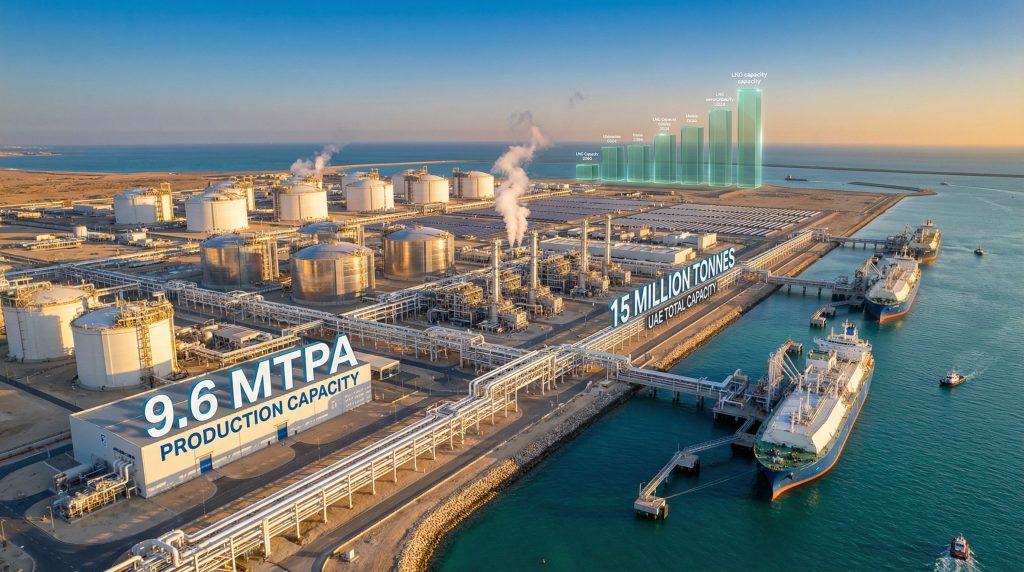
The ADNOC Gas Ruwais LNG project demonstrates how construction timeline optimization can create substantial competitive advantages in rapidly evolving global energy markets. With a planned production capacity of 9.6 million tonnes per annum (MTPA), the facility represents a significant expansion of UAE's LNG capabilities, potentially advancing commercial operations from the originally scheduled second half of 2028 to early 2028.
This timeline acceleration reflects broader industry trends where early market entry provides crucial advantages in securing premium pricing and establishing customer relationships. Construction progress ahead of approved schedules creates opportunities for companies to capture market share during periods of supply-demand imbalances, particularly as Asian LNG demand continues expanding driven by data center growth and industrial development.
Construction Timeline Optimization Analysis
Advanced project delivery strategies in LNG development involve sophisticated coordination between engineering, procurement, and construction phases. The Ruwais project's ahead-of-schedule progress indicates effective integration with existing industrial infrastructure at the Ruwais complex, leveraging established utilities, transportation networks, and skilled workforce availability.
Key factors supporting accelerated construction timelines include:
- Pre-existing industrial infrastructure: Integration with established Ruwais industrial facilities
- Workforce availability: Access to experienced personnel from regional energy projects
- Supply chain optimization: Coordinated equipment delivery and installation schedules
- Regulatory efficiency: Streamlined permitting and approval processes
The potential six-month advancement creates significant strategic value through earlier cash flow generation, reduced construction financing costs, and improved positioning relative to competing North American LNG projects scheduled for similar timeframes.
Market Entry Timing Scenarios
Early 2028 market entry positions the ADNOC Gas Ruwais LNG project advantageously within global supply-demand dynamics. Asian LNG markets, representing the primary customer base, continue experiencing robust demand growth driven by several key factors:
Artificial Intelligence Data Center Expansion: Growing power requirements for AI computational infrastructure create substantial incremental LNG demand, particularly in technology-focused Asian economies.
Industrial Sector Growth: Manufacturing expansion across Asian markets drives consistent baseload gas demand, supporting long-term contract viability.
Energy Security Priorities: Diversification away from pipeline gas dependence increases LNG import preferences among Asian nations.
The timing advantage becomes particularly valuable when considering natural gas trends 2025 and competing supply additions from North American projects, many of which face permitting delays and construction challenges that could defer their market entry beyond initial projections.
When big ASX news breaks, our subscribers know first
Financial Investment Framework and Risk Management
The $5 billion investment in the ADNOC Gas Ruwais LNG project reflects a comprehensive financial strategy designed to balance capital efficiency with long-term revenue stability. This investment approach demonstrates sophisticated risk management through diversified revenue streams and strategic contract structuring.
Investment Recovery Scenarios
LNG project economics depend heavily on long-term contract security combined with strategic spot market exposure. The Ruwais project's financial model allocates 80% of production (approximately 7.68 MTPA) to long-term contracts, providing stable revenue foundations while reserving 20% (approximately 1.92 MTPA) for spot market optimization.
| Revenue Component | Volume Allocation | Strategic Purpose |
|---|---|---|
| Long-term contracts | 80% (~7.68 MTPA) | Revenue stability and financing support |
| Spot market sales | 20% (~1.92 MTPA) | Price optimization and market flexibility |
| Contract duration range | 5-14 years | Balanced exposure across market cycles |
This dual-revenue approach mirrors successful strategies employed at the Das Island LNG facility, which has operated for nearly five decades with approximately 6 million tonnes per annum capacity. The Das Island experience provides operational benchmarking and validates the business model's effectiveness across various market conditions.
Break-even analysis across different LNG pricing environments indicates strong project economics given the combination of:
- Competitive production costs through all-electric plant design
- Operational synergies with existing Ruwais industrial infrastructure
- Transportation advantages via optimized loading facilities
- Contract portfolio diversification reducing single-market exposure
Capital Allocation Framework
The $5 billion investment encompasses comprehensive facility development including processing equipment, storage infrastructure, loading systems, and environmental control technologies. Integration with existing Ruwais industrial infrastructure reduces overall capital requirements compared to greenfield developments.
Key capital allocation priorities include:
- All-electric plant design: Reducing operational emissions by an estimated 20% while improving efficiency
- Digital automation systems: Enhancing production reliability and reducing operational costs
- Predictive maintenance capabilities: Optimizing equipment lifecycle management
- Loading jetty expansion: Accommodating larger LNG carriers for improved transportation economics
The technology investment strategy positions the facility for long-term competitiveness while supporting UAE's environmental commitments and operational excellence standards. In addition, effective market volatility hedging strategies will be crucial for managing commodity price fluctuations throughout the project's operational lifecycle.
Long-Term Supply Contract Strategy and Revenue Stability
The ADNOC Gas Ruwais LNG project's contract portfolio strategy demonstrates sophisticated market positioning through diversified customer relationships and flexible pricing mechanisms. With long-term agreements covering more than 8 million tonnes per annum, the project establishes strong revenue foundations while maintaining strategic market flexibility.
Contract Portfolio Analysis
Recent contract developments indicate strong market reception for UAE LNG supply, with agreements signed over the past three years covering volumes between 0.4 and 1.2 million tonnes annually under contracts lasting up to 14 years. This contract duration range provides balanced exposure across market cycles while ensuring revenue stability during operational ramp-up phases.
The strategic focus on Asian markets reflects several key advantages:
Market Growth Trajectory: Asian economies continue experiencing robust energy demand growth, supporting long-term contract viability and potential expansion opportunities.
Pricing Mechanisms: Asian LNG markets typically offer attractive pricing formulas linked to oil prices or regional gas indices, providing inflation protection and margin stability.
Geographic Positioning: UAE's location enables competitive transportation costs to major Asian consumption centers compared to North American or Australian suppliers.
Political Stability: Long-term relationships with established Asian energy companies support broader UAE energy diplomacy objectives and strategic partnerships.
Asian Market Penetration Strategy
The emphasis on Asian market penetration reflects careful analysis of regional demand patterns, competitive dynamics, and growth projections. Key Asian markets demonstrate several characteristics that support long-term contract strategies:
- Consistent demand growth: Industrial expansion and urbanization drive steady LNG consumption increases
- Supply diversification priorities: Energy security concerns encourage multiple supplier relationships
- Infrastructure development: Expanding regasification capacity supports increased import volumes
- Premium pricing acceptance: Quality and reliability considerations justify competitive pricing structures
Multi-year agreements with established Asian energy companies create mutual benefits through supply security, volume commitments, and operational predictability. These relationships often extend beyond simple commercial transactions to include technical cooperation, joint development opportunities, and strategic resource sharing.
Production Capacity Optimization and Operational Excellence
The 9.6 MTPA production capacity target for the ADNOC Gas Ruwais LNG project reflects careful optimization of facility design, technology selection, and operational planning. Achieving this capacity level requires sophisticated integration of processing systems, quality control mechanisms, and efficiency optimization strategies.
Production Ramp-Up Modeling
LNG facility commissioning and production ramp-up typically follows established phases designed to ensure operational reliability and product quality consistency:
Phase 1: Initial Production Testing (6 months)
- System commissioning and performance verification
- Product quality optimization and certification
- Operational parameter fine-tuning
- Safety system validation and testing
Phase 2: Capacity Achievement and Efficiency Improvements
- Gradual production increase to design capacity
- Process optimization and bottleneck resolution
- Maintenance schedule establishment
- Performance metric baseline development
Phase 3: Network Integration and Optimization
- Integration with broader ADNOC gas processing systems
- Supply chain optimization and logistics coordination
- Long-term efficiency enhancement initiatives
- Capacity expansion planning and evaluation
The phased approach enables systematic capacity building while maintaining operational safety and product quality standards essential for long-term customer relationships.
Technology Integration Scenarios
The all-electric plant design represents a significant technological advancement in LNG facility operations, offering multiple operational and environmental benefits:
Emissions Reduction: The estimated 20% reduction in operational emissions supports environmental compliance and sustainability objectives while potentially qualifying for premium pricing in environmentally-conscious markets.
Operational Reliability: Electric drive systems typically offer superior reliability compared to gas turbine alternatives, reducing maintenance requirements and improving availability factors.
Efficiency Optimization: Electric systems provide precise control capabilities enabling optimal energy utilisation and reduced operational costs.
Future Adaptability: Electric infrastructure facilitates integration with renewable energy sources and advanced automation technologies.
Digital automation systems enhance production reliability through:
- Real-time monitoring: Continuous system performance tracking and optimization
- Predictive maintenance: Advanced analytics identifying potential equipment issues before failures occur
- Process optimization: Automated adjustments maintaining optimal operational parameters
- Safety enhancement: Rapid response capabilities for abnormal operating conditions
Regional Energy Security and Market Expansion Impact
The completion of the ADNOC Gas Ruwais LNG project will increase UAE's total LNG production capacity to approximately 15 million tonnes annually, representing a 150% increase from current Das Island facility output of around 6 million tonnes per annum. This capacity expansion significantly enhances UAE's position within regional and global LNG markets.
National Energy Strategy Alignment
The expanded LNG capacity supports multiple UAE strategic objectives:
Energy Security Enhancement: Increased production provides strategic reserves supporting domestic energy security requirements while maintaining export capacity flexibility.
Economic Diversification: LNG exports generate substantial foreign currency revenues supporting broader economic development initiatives beyond oil-dependent sectors.
Industrial Development: Expanded gas processing capabilities support domestic industrial growth through reliable energy supply and petrochemical feedstock availability.
International Positioning: Enhanced LNG export capacity strengthens UAE's role as a reliable energy supplier within global markets.
The balance between domestic consumption and export capacity enables flexible resource allocation based on market conditions, domestic demand growth, and strategic priorities.
Regional Competition Analysis
UAE's LNG capacity expansion occurs within a competitive Middle Eastern environment where several nations pursue similar strategies:
Qatar's North Field Expansion: Qatar continues expanding its dominant global LNG position through massive capacity additions, potentially reaching over 100 MTPA by 2030.
Saudi Arabia's LNG Development: Saudi Aramco pursues LNG export capabilities as part of broader gas monetisation strategies and economic diversification initiatives.
Oman's LNG Modernisation: Oman invests in existing facility upgrades and potential capacity expansions to maintain market competitiveness.
The competitive dynamics create both challenges and opportunities for UAE LNG development:
- Market share competition: Multiple regional suppliers compete for Asian market access
- Technology differentiation: Advanced facility design and operational capabilities provide competitive advantages
- Customer relationship development: Long-term partnerships become increasingly important for market positioning
- Cost competitiveness: Operational efficiency and strategic positioning determine market success
However, geopolitical factors also play a crucial role, as trade war strategies between major economies continue to influence energy market dynamics and supply chain preferences.
Spot Market Pricing Strategy and Market Volatility Management
The allocation of 20% of production to spot market sales reflects a sophisticated approach to LNG pricing optimization and market risk management. This strategy enables the ADNOC Gas Ruwais LNG project to capture upside pricing opportunities while maintaining revenue stability through long-term contracts.
Global LNG Supply-Demand Modelling
Several key market variables influence spot LNG pricing and create opportunities for strategic market timing:
Critical Market Drivers:
- Asian demand growth driven by artificial intelligence data center expansion
- European energy security requirements following recent geopolitical developments
- North American LNG export capacity additions competing for market share
- Australian production stability factors affecting supply reliability
Asian Demand Growth: The expansion of AI data centres creates substantial incremental power demand, particularly in technology-focused economies like Japan, South Korea, and Taiwan. This demand typically requires high-reliability power supply, making LNG an attractive fuel source for dedicated power generation facilities.
European Security Dynamics: European markets continue prioritising supply diversification and energy security, creating demand for reliable, long-term LNG supply relationships that can command premium pricing during supply disruptions.
North American Competition: U.S. LNG export facility expansions add significant global supply capacity, but transportation costs to Asian markets create geographic advantages for Middle Eastern suppliers.
Australian Supply Risks: Maintenance schedules, weather disruptions, and operational challenges at Australian LNG facilities create periodic supply gaps that benefit alternative suppliers.
Price Volatility Management
The dual-revenue strategy provides multiple risk management benefits:
Revenue Floor Protection: Long-term contracts establish minimum revenue levels protecting against severe market downturns while maintaining operational cash flow stability.
Upside Capture Mechanisms: Spot market sales enable participation in price spikes during supply disruptions or demand surges, maximising revenue potential during favourable conditions.
Seasonal Optimisation: Strategic timing of spot sales captures seasonal demand premiums, particularly during Asian winter heating seasons or summer cooling periods.
Portfolio Flexibility: The ability to adjust spot versus contract allocations based on market conditions provides operational flexibility and revenue optimisation opportunities.
Historical LNG price volatility demonstrates the value of this balanced approach, with spot prices ranging from under $5/MMBtu during oversupply periods to over $30/MMBtu during supply crises. Consequently, understanding the US natural gas forecast becomes essential for predicting global LNG market trends and pricing patterns.
The next major ASX story will hit our subscribers first
Rich Gas Development Integration and Upstream Optimisation
The ADNOC Gas Rich Gas Development project provides crucial upstream support for LNG operations through expanded processing capacity and operational integration. The multi-phase development approach ensures reliable feedstock supply while optimising overall system efficiency.
Development Phase Implementation
Phase 1 (Approved June 2025): The addition of 1.5 billion cubic feet per day of processing capacity by 2027 involves comprehensive debottlenecking operations at four key facilities:
- Asab facility: Enhanced processing efficiency and throughput optimisation
- Buhasa operations: Capacity expansion and system integration improvements
- Habshan complex: Processing enhancement and reliability improvements
- Das Island facility: Integration with existing LNG operations and capacity optimisation
This phase addresses current operational constraints while establishing foundations for expanded LNG production capacity.
Phase 2 (Under Development): The construction of Train 5 at Ruwais involves new fractionation capabilities producing:
- Liquefied petroleum gas (LPG): Supporting domestic and export market demand
- Condensate: Providing valuable liquid hydrocarbon products
- Naphtha: Supplying petrochemical industry feedstock requirements
This diversified product slate creates multiple revenue streams while optimising resource utilisation across the integrated gas processing network.
Phase 3 (Planned): The new gas processing train at Habshan facility will provide additional processing flexibility and capacity, supporting long-term production growth and system reliability.
Operational Synergy Modelling
Integration between upstream gas processing and LNG operations creates multiple operational advantages:
Supply Chain Efficiency: Coordinated processing schedules minimise transportation costs and optimise product flow between facilities.
Quality Control Integration: Upstream processing optimisation ensures consistent feedstock quality for LNG operations, improving product specifications and customer satisfaction.
Maintenance Coordination: Integrated maintenance scheduling across facilities minimises operational disruptions and maximises system availability.
Technology Sharing: Operational improvements and technological advances benefit multiple facilities through knowledge transfer and best practice implementation.
The integrated approach enables ADNOC Gas to optimise resource allocation, reduce operational costs, and improve overall system performance across its portfolio of facilities.
Future Expansion Planning and Strategic Growth Opportunities
The ADNOC Gas Ruwais LNG project establishes foundations for potential future capacity expansions and strategic development opportunities. The modular facility design and strategic positioning create multiple pathways for growth based on market demand evolution and strategic priorities.
Capacity Addition Framework
Future expansion possibilities include several strategic options:
Modular Expansion: The facility design accommodates additional processing trains within existing infrastructure, enabling capacity increases with reduced capital requirements and construction timelines.
Technology Upgrades: Continuous improvement in LNG processing technology creates opportunities for efficiency enhancements and capacity optimisation without major facility modifications.
Integration Expansion: Enhanced coordination with upstream gas processing and downstream distribution systems can unlock additional capacity and efficiency gains.
Market demand scenarios supporting expansion include:
- Asian market growth: Continued industrial development and urbanisation driving LNG consumption increases
- New market development: Potential expansion into emerging LNG markets in Africa, South America, and South Asia
- Energy transition support: LNG serving as transitional fuel supporting renewable energy integration and grid stability
- Industrial sector expansion: Growing demand from petrochemical, steel, and power generation industries
Strategic Partnership Opportunities
International collaboration creates multiple avenues for strategic development:
Joint Venture Development: Partnerships with international energy companies can provide additional capital, technology access, and market development capabilities.
Technology Partnerships: Collaboration with leading LNG technology providers ensures access to latest innovations and operational improvements.
Customer Partnerships: Strategic relationships with major LNG consumers can justify expansion investments through long-term volume commitments and integrated development planning.
Financial Partnerships: Alternative financing structures including project finance, infrastructure funds, and strategic investors can optimise capital structure for expansion projects.
Additionally, the success of this project could provide insights applicable to other energy developments, particularly as oil price rally insights continue to influence broader energy market dynamics and investment decisions.
Environmental Sustainability and Regulatory Compliance
The ADNOC Gas Ruwais LNG project incorporates advanced environmental technologies and sustainability practices supporting UAE's Net Zero 2050 commitments while ensuring long-term operational viability and market competitiveness.
Emissions Reduction Scenarios
The all-electric plant design represents a fundamental shift toward lower-emission LNG production:
Direct Emissions Reduction: The estimated 20% reduction in operational emissions compared to conventional gas turbine-driven facilities supports environmental compliance and sustainability objectives.
Energy Efficiency Optimisation: Electric drive systems typically achieve superior efficiency compared to mechanical drive alternatives, reducing overall energy consumption and associated emissions.
Future Integration Potential: Electric infrastructure facilitates integration with renewable energy sources as UAE's solar and wind capacity expands, further reducing operational carbon intensity.
Technology Evolution: Advanced electric systems enable integration of carbon capture technologies and other emissions reduction innovations as they become commercially viable.
Regulatory Compliance Modelling
International environmental standards and regulations influence operational strategies and market positioning:
International Maritime Organization (IMO) Regulations: Shipping emissions standards create preferences for lower-emission LNG production, potentially commanding premium pricing in environmentally-conscious markets.
European Union Taxonomy: EU sustainability classifications influence European market access and pricing, rewarding lower-emission production methods.
Asian Environmental Standards: Increasingly stringent environmental requirements across Asian markets create competitive advantages for cleaner LNG production.
Carbon Pricing Mechanisms: Potential carbon pricing in key markets makes lower-emission production increasingly valuable from both cost and revenue perspectives.
The environmental advantages of the all-electric design position the facility favourably within evolving regulatory frameworks while supporting long-term market competitiveness as environmental standards continue strengthening globally. Furthermore, strategic partnerships with environmental technology providers can enhance operational efficiency while meeting sustainability targets.
Recent developments include significant contract awards worth $2.1 billion for the project's construction and development phases, demonstrating strong industry confidence in the project's viability and strategic importance within the global LNG market landscape.
Disclaimer: This analysis involves forward-looking projections and market scenarios based on current information and trends. Actual outcomes may differ significantly due to market volatility, regulatory changes, technological developments, and unforeseen circumstances. Investment and strategic decisions should consider comprehensive risk assessment and professional consultation.
Looking to Capitalise on Energy Infrastructure Investments?
Discovery Alert's proprietary Discovery IQ model identifies significant ASX mineral discoveries instantly, including critical metals essential for energy infrastructure development and renewable technology expansion. With many mining companies pivoting toward energy transition materials, subscribers gain immediate access to discovery announcements that could benefit from the growing demand for industrial commodities. Begin your 30-day free trial today to position yourself ahead of emerging opportunities in the evolving energy sector.