May 19, 2026
Understanding Advanced Automation Systems in Modern Mining Operations
The mining industry faces unprecedented challenges in balancing operational efficiency with environmental responsibility. Supporting responsible lithium production through reliable flow control and automation has become crucial as global demand for battery materials continues to surge. Furthermore, these industry evolution trends demonstrate how technology integration transforms traditional mining practices.
Industrial mining operations today require sophisticated technological solutions to maintain efficiency, safety, and environmental compliance. The integration of advanced flow control systems and automation technologies has become essential for facilities processing critical minerals, where precise control over chemical processes directly impacts operational success.
These automated systems must navigate demanding operational conditions including corrosive chemical environments, abrasive slurries, and extreme temperature variations. Moreover, data-driven operations enable continuous process optimisation through real-time monitoring and predictive analytics.
When big ASX news breaks, our subscribers know first
Essential Components for Reliable Mineral Processing Operations
Modern mineral processing facilities require robust flow control systems capable of managing multiple operational challenges simultaneously. The Keliber lithium project in Finland demonstrates how comprehensive automation solutions address these requirements across both concentrator and refinery operations.
Critical Operational Requirements
Multi-Stage Processing Integration
• Complex material flow management: From raw ore processing through concentrated slurries to refined chemical products
• Variable operating conditions: Extreme temperature and pressure ranges requiring specialised component materials
• Chemical compatibility requirements: Equipment must resist corrosive lithium compounds throughout the processing chain
• Continuous operation demands: Minimal downtime tolerance due to production volume requirements
Process Reliability Factors
• Predictive maintenance integration: Real-time performance monitoring prevents costly unplanned shutdowns
• Remote diagnostic capabilities: Advanced monitoring systems reduce required on-site interventions
• Local service infrastructure: Proximity to spare parts and technical support minimises response times
• Performance optimisation systems: Continuous process adjustment maximises yield and efficiency
The Keliber project incorporates maintenance and spare parts services specifically designed to ensure process reliability. This reflects the critical importance of sustained operational performance in modern lithium processing facilities.
Advanced Valve Technologies in Demanding Processing Environments
The selection of appropriate valve technologies directly impacts processing efficiency, maintenance requirements, and operational costs. Different valve types serve specific functions within the complex processing chain, particularly where AI in mining operations enhances control precision.
Specialized Valve Applications
Ball Valve Systems
• Slurry handling applications: Robust construction designed for abrasive material transport
• Chemical dosing control: Precise regulation for reagent addition systems
• Pipeline isolation capabilities: Quick shut-off functionality for maintenance procedures
• Flow regulation systems: Variable control mechanisms for process optimisation
Advanced Material Solutions
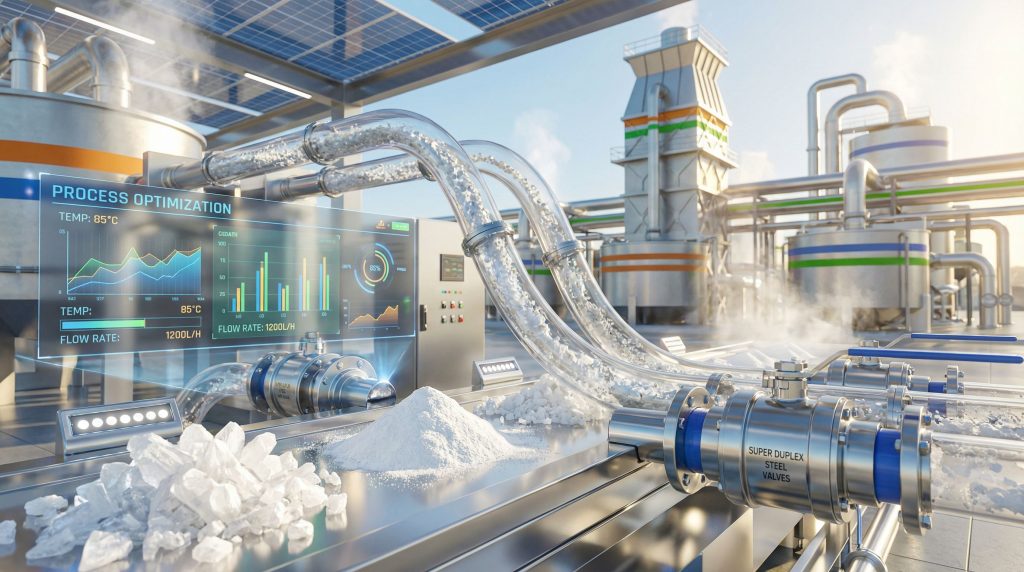
The Keliber project utilises Super Duplex steel construction and ceramic ball valve technology. These materials provide enhanced durability in corrosive environments while maintaining precision control capabilities.
| Valve Type | Primary Application | Material Advantages |
|---|---|---|
| Ball Valves | General flow control | Super Duplex corrosion resistance |
| Segment Valves | Throttling applications | Precise flow regulation |
| Butterfly Valves | Large volume isolation | Cost-effective operation |
| Globe Valves | Fine control applications | Superior shut-off capability |
| Flowrox™ Valves | Slurry processing | Specialised abrasion resistance |
The Neles series encompasses ball, segment, butterfly, and globe valves for on-off and control applications. Meanwhile, Flowrox valves specifically address slurry processing requirements, ensuring optimal performance across all processing stages.
Comprehensive Automation Architecture for Process Optimisation
Modern mineral processing facilities require integrated automation systems that provide complete operational visibility. The Valmet DNA automation system demonstrates how centralised control architecture enhances operational efficiency whilst supporting responsible lithium production through reliable flow control and automation.
Centralised Control Capabilities
System Architecture Benefits
• Complete plant visibility: Comprehensive monitoring across multiple processing stages
• High availability design: Redundant controls for critical operational functions
• Real-time data integration: Continuous performance metrics and trend analysis
• Intelligent alarm management: Prioritised alert systems for operational efficiency
Performance Monitoring Integration
The Valmet DNA automation platform serves as the main automation system at both concentrator and refinery locations. Consequently, it provides full visibility into plant operations whilst ensuring high availability for critical functions.
Machine Monitoring and Diagnostic Systems
Condition Assessment Technologies
• Vibration analysis systems: Early detection of equipment degradation through real-time monitoring
• Performance trending capabilities: Long-term equipment health assessment and prediction
• Maintenance scheduling optimisation: Predictive algorithms for optimal maintenance timing
• Energy efficiency monitoring: Continuous assessment and optimisation opportunities
The Valmet Machine Monitoring solution provides real-time vibration data on critical components. This enables predictive maintenance whilst improving process reliability and minimising unplanned downtime.
Environmental Stewardship Through Process Control Technology
Advanced automation systems contribute significantly to environmental responsibility in mineral processing operations. They achieve this by optimising resource utilisation, minimising waste generation, and ensuring regulatory compliance. Additionally, these systems support decarbonisation benefits across mining operations.
Resource Conservation Technologies
Water Management Systems
• Closed-loop processing: Minimised freshwater consumption through recycling systems
• Brine management: Controlled handling and reinjection of waste streams
• Process optimisation: Reduced water requirements through efficiency improvements
• Leak detection systems: Immediate response capabilities for environmental protection
Waste Reduction Strategies
• Precision chemical dosing: Minimised reagent waste through accurate control systems
• Recovery optimisation: Maximum mineral extraction from ore resources
• Energy efficiency improvements: Reduced power consumption through automated optimisation
• Environmental monitoring: Real-time tracking of operational parameters
The Keliber project's emphasis on producing lithium responsibly demonstrates how advanced automation systems support environmental stewardship goals whilst maintaining operational efficiency.
Predictive Maintenance Technologies for Risk Mitigation
Modern mineral processing operations rely heavily on predictive maintenance technologies. These systems minimise operational risks, reduce costs, and maintain consistent production output through intelligent monitoring capabilities.
Real-Time Condition Monitoring
Sensor Integration Systems
• Vibration monitoring: Continuous equipment health assessment through advanced sensors
• Temperature analysis: Early warning systems for thermal-related issues
• Pressure monitoring: Detection of system anomalies and performance degradation
• Flow measurement systems: Process efficiency optimisation through precise monitoring
Maintenance Strategy Benefits
• Planned downtime scheduling: Maintenance during optimal operational windows
• Inventory optimisation: Predictive spare parts management reduces storage costs
• Cost reduction: Lower maintenance expenses through prevention rather than reaction
• Safety improvements: Reduced emergency maintenance interventions
Control valves equipped with Neles ND9000 valve controllers enable performance monitoring capabilities. These provide operators with critical data for maintenance decision-making whilst supporting reliable instrumentation systems.
The next major ASX story will hit our subscribers first
Strategic Service Network Infrastructure
The success of complex mineral processing operations depends significantly on comprehensive service network infrastructure. This provides timely technical support, spare parts availability, and ongoing optimisation services.
Regional Support Advantages
Proximity Benefits
• Reduced response times: Faster technical support for critical operational issues
• Local expertise: Specialised knowledge of regional operating conditions
• Spare parts availability: Minimised lead times for component replacements
• Training programmes: Local technician development and skill enhancement
A new Valmet service center opened in Kokkola in November 2024, strengthening support for the region's industries. This strategic positioning provides additional assurance for lithium processing operations through fast access to expert support and spare parts.
Long-Term Partnership Value
Continuous Improvement Opportunities
• Ongoing optimisation: Regular assessment and enhancement of operational performance
• Technology upgrades: Access to latest innovations and system improvements
• Performance guarantees: Assured operational reliability through comprehensive support
• Risk mitigation: Comprehensive support throughout project lifecycle
Emerging Technologies in Processing Automation
The future of mineral processing automation encompasses digital transformation trends and sustainability innovations. These promise to further enhance operational efficiency and environmental performance.
Digital Innovation Trends
Advanced Technology Integration
• Internet of Things (IoT): Connected devices enabling comprehensive operational monitoring
• Artificial intelligence: Predictive analytics for process optimisation and maintenance
• Cloud computing: Remote access capabilities and scalable data storage solutions
• Digital twin technology: Virtual modelling for process improvement and testing
Sustainability Focus Areas
• Energy recovery systems: Heat and power optimisation throughout processing operations
• Circular economy principles: Waste stream utilisation and resource recovery
• Carbon footprint reduction: Process efficiency improvements reducing environmental impact
• Renewable energy integration: Solar and wind power compatibility for sustainable operations
Processing Method Compatibility and Automation Integration
Different lithium extraction methods require specialised automation approaches. These optimise performance whilst maintaining environmental compliance and operational efficiency, particularly for direct lithium extraction applications.
Direct Lithium Extraction Applications
Brine Processing Automation
• Pretreatment systems: Automated filtration and conditioning processes
• Resin column control: Precise extraction optimisation through automated management
• Purification processes: Chemical treatment automation for product quality
• Quality assurance: Continuous monitoring and adjustment systems
Hard Rock Processing Integration
Comprehensive Process Control
• Crushing and grinding: Automated particle size control systems
• Flotation optimisation: Real-time reagent adjustment for maximum recovery
• Concentrate handling: Automated transport and storage systems
• Environmental compliance: Automated monitoring for regulatory adherence
Furthermore, sustainable automation practices demonstrate how modern technology supports responsible mining operations whilst maintaining productivity.
Investment Analysis for Technology Selection
The selection of appropriate automation technologies requires comprehensive analysis of total cost of ownership. This includes operational benefits and long-term return on investment considerations.
Total Cost of Ownership Factors
Capital and Operational Considerations
| Cost Category | Key Components | Impact Factors |
|---|---|---|
| Initial Capital | Equipment, Installation, Integration | Technology complexity, site requirements |
| Operational Expenses | Energy, Maintenance, Labour | Automation level, efficiency gains |
| Productivity Gains | Throughput, Yield, Quality | Process optimisation capabilities |
| Risk Mitigation | Downtime, Safety, Compliance | System reliability, monitoring capabilities |
Return on Investment Analysis
• Production efficiency: Automated optimisation benefits through consistent performance
• Quality improvements: Consistent product specifications reducing processing variations
• Regulatory compliance: Environmental and safety adherence through automated monitoring
• Market positioning: Competitive advantages through advanced technology implementation
The comprehensive approach demonstrated by projects like Keliber shows how integrated automation solutions provide value. They deliver benefits across multiple operational dimensions whilst supporting responsible production goals.
Building Resilient Operations Through Intelligent Automation
The integration of advanced flow control and automation technologies represents a fundamental transformation in mineral processing operations. Modern facilities achieve unprecedented levels of reliability, efficiency, and environmental responsibility through strategic technology combinations.
The Keliber project exemplifies how comprehensive automation solutions address complex requirements. It demonstrates supporting responsible lithium production through reliable flow control and automation whilst incorporating Valmet DNA automation systems and specialised valve technologies.
Consequently, these technological foundations prove essential for sustainable industry growth. The combination of process optimisation, environmental stewardship, and operational reliability establishes frameworks for responsible mineral production in demanding operational environments.
Future developments in digital integration, predictive analytics, and sustainable processing technologies will continue expanding capabilities. These advances will further enhance mineral processing operations' ability to meet evolving market demands whilst maintaining environmental compliance and operational excellence.
Could Advanced Mining Technologies Transform Your Investment Strategy?
Discovery Alert's proprietary Discovery IQ model delivers real-time alerts on significant mineral discoveries across the ASX, enabling subscribers to identify breakthrough technologies and automation advancements in mining operations before they reach mainstream investor attention. Explore historic examples of technology-driven discoveries that have generated substantial returns, then begin your 14-day free trial today to position yourself ahead of the market as mining operations continue their digital transformation.