June 28, 2026
Understanding Advanced Comminution Technologies in Modern Mineral Processing
The mineral processing industry continues to evolve through technological advancement, with comminution systems representing one of the most energy-intensive components of mining operations. Traditional grinding methods, while proven effective, consume substantial amounts of energy and present operational challenges that modern mining companies can no longer ignore. The integration of advanced grinding technologies has become essential for operations seeking to optimise both economic performance and environmental sustainability.
Modern comminution systems utilise sophisticated engineering principles to achieve particle size reduction through controlled mechanical forces. These systems apply precise pressure distributions across ore particles, creating strategic fracture patterns that enhance mineral liberation whilst minimising energy waste. The technological evolution from conventional tumbling mills to advanced pressure-based grinding represents a fundamental shift in how mining operations approach ore processing.
When big ASX news breaks, our subscribers know first
Revolutionary Pressure-Based Grinding Systems Transform Mining Operations
High Pressure Grinding Rolls have emerged as a transformative technology in mineral processing, delivering remarkable efficiency improvements that address multiple operational challenges simultaneously. These systems utilise counter-rotating cylindrical rolls operating under extreme pressure to create controlled micro-fractures in ore particles, fundamentally changing how minerals are liberated from their host rock.
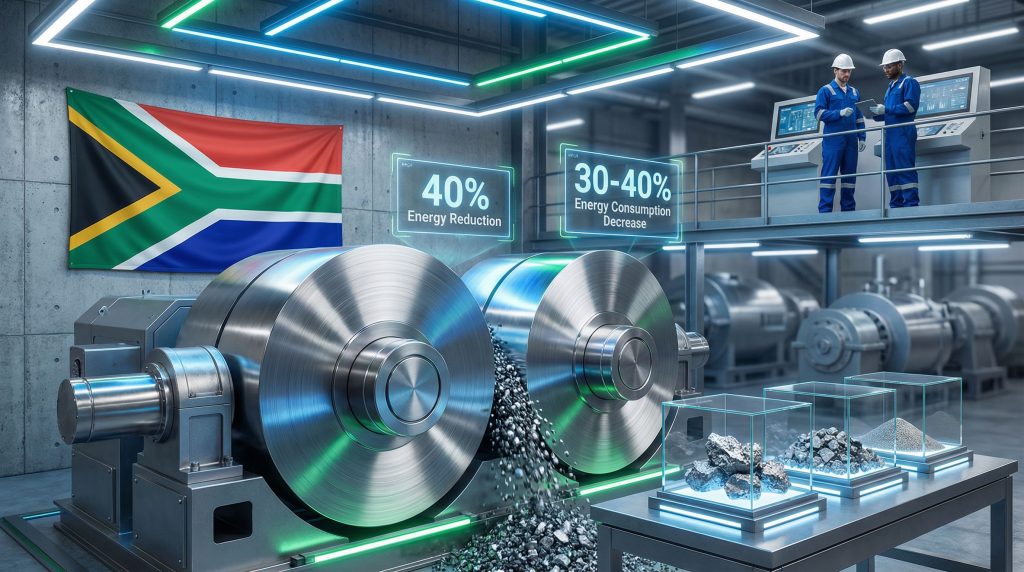
The technology achieves energy consumption reductions of up to 40% compared to conventional ball mills, according to operational data from global mining operations. This efficiency improvement stems from the precise application of compressive forces that generate preferential fracture patterns along mineral boundaries, enhancing downstream processing performance whilst reducing overall energy requirements.
Technical Advantages Driving Industry Adoption
The operational benefits of HPGR systems extend beyond simple energy savings, encompassing multiple aspects of mineral processing performance. Furthermore, these advantages directly support modern industry evolution trends towards greater operational efficiency:
• Enhanced Liberation Characteristics: Micro-fracture technology creates controlled liberation zones that improve downstream flotation efficiency by 15-25% in polymetallic operations
• Reduced Maintenance Requirements: Advanced roller bearing systems demonstrate extended operational lifespans compared to conventional grinding mill components
• Improved Product Quality: Controlled particle size distribution enhances concentrate grades and recovery rates
• Operational Flexibility: Scalable throughput capacity from 500 to 8,000 tonnes per hour accommodates varying operational requirements
The pressure application mechanism operates within a range of 4-12 N/mm² depending on ore characteristics, creating optimal conditions for mineral liberation across diverse geological formations. This precise pressure control enables operators to customise processing parameters for specific ore types, maximising recovery whilst minimising energy consumption.
Industrial Implementation Success Stories
The Kamoa-Kakula Copper Complex in the Democratic Republic of Congo demonstrates the practical effectiveness of HPGR technology in challenging operational environments. Operating three HPGR units simultaneously, the facility has achieved substantial operational improvements across multiple performance metrics through data-driven operations.
Performance Enhancement Metrics:
| Performance Area | Improvement Achieved |
|---|---|
| Energy Efficiency | 35-42% reduction in specific energy consumption |
| Processing Throughput | 15-20% increase in processing capacity |
| Maintenance Optimisation | 30% reduction in scheduled downtime |
| Product Quality | Enhanced concentrate grades |
These operational results validate the technology's capability to deliver consistent performance improvements in complex polymetallic ore processing applications, providing valuable benchmarks for similar operations worldwide.
Strategic Technology Adoption in South African PGM Operations
The Bushveld Complex represents the world's largest concentration of platinum group metal reserves, presenting unique processing challenges that make advanced grinding technologies particularly valuable. The geological characteristics of this region create specific operational requirements that conventional grinding systems struggle to address efficiently.
South African PGM operations face distinct challenges related to ore complexity, energy costs, and environmental regulations. The polymetallic nature of Bushveld ores requires simultaneous liberation of platinum, palladium, rhodium, nickel, copper, and gold, necessitating precision comminution strategies that conventional systems cannot provide.
Geological Complexity and Processing Requirements
The Bushveld Complex's mineralogical characteristics present several technical challenges:
• Complex Mineral Assemblages: PGM minerals occur as fine particles associated with base metal sulfides, requiring precise liberation strategies
• Abrasive Ore Properties: Silicate gangue minerals create elevated mill wear, increasing maintenance costs and energy consumption
• Particle Intergrowth: Complex interstitial relationships between PGMs and base metals demand controlled grinding to prevent uneconomic fines generation
• Scale Requirements: Economic viability demands high-throughput processing capabilities
The Platreef Mine, located 280 km northeast of Johannesburg, exemplifies these challenges. As one of the world's largest precious metals deposits under development, it requires processing technologies capable of handling complex ore characteristics whilst maintaining economic viability.
Economic Drivers for Technology Adoption
South African mining operations face increasing pressure to optimise energy consumption due to local electricity pricing structures and emerging carbon taxation policies. Advanced grinding technologies provide economic advantages that extend beyond operational efficiency, particularly when considering comprehensive decarbonisation benefits:
Cost Reduction Opportunities:
• Energy costs: 30-40% decrease in electricity consumption
• Maintenance expenses: 25% reduction through extended component lifecycles
• Labour requirements: Optimised through advanced automation systems
• Consumables: Extended wear life components reduce replacement frequency
Revenue Enhancement Potential:
• Improved recovery rates: 2-5% increase in metal recovery
• Higher concentrate grades: Premium pricing opportunities
• Increased throughput capacity: Enhanced production volumes
ENDURON® Technology Competitive Positioning Analysis
The ENDURON® HPGR system incorporates several proprietary design elements that differentiate it from alternative grinding technologies in the global market. These technical innovations address specific operational challenges encountered in complex ore processing applications.
Advanced engineering solutions include specialised bearing systems designed for extended operational lifecycles, proprietary wear protection technologies utilising stud welding and hard-facing applications, and sophisticated control systems enabling optimised performance across varying operational conditions.
Technical Specifications and Performance Parameters
ENDURON® System Capabilities:
| Specification | Range/Capability |
|---|---|
| Pressure Application | 4-12 N/mm² (ore-dependent) |
| Throughput Capacity | 500-8,000 tonnes/hour |
| Feed Size Requirements | 25-50mm optimal range |
| Energy Efficiency | 40% improvement vs. tumbling mills |
The technology's competitive advantage stems from integrated design elements that optimise performance across multiple operational parameters simultaneously. Advanced roller bearing systems provide extended warranty coverage whilst proprietary wear protection solutions minimise maintenance requirements and operational disruptions.
Market Position and Customer Confidence
Industry adoption patterns indicate growing confidence in HPGR technology, with mining operators increasingly viewing these systems as standard components of modern processing facilities. The technology has evolved from specialised application to mainstream adoption across diverse mining operations worldwide.
Operational validation from existing installations provides compelling evidence of technology reliability and performance consistency. The successful deployment of multiple HPGR units at the Kamoa-Kakula operation demonstrates system capability in challenging operational environments, supporting customer confidence in technology selection decisions.
The mining industry has demonstrated a clear preference for energy-efficient processing solutions, with HPGR adoption reflecting broader sustainability objectives across major global operations.
Weir to Supply ENDURON HPGR for Platreef Mine Expansion
The announcement that Weir to supply ENDURON HPGR for Platreef Mine expansion represents a significant milestone in advanced grinding technology deployment within South African platinum group metal operations. This strategic partnership leverages proven HPGR technology to enhance operational efficiency whilst supporting expanded production capabilities.
The selection process for this major equipment supply reflects comprehensive evaluation of grinding technology alternatives, with Ivanhoe Mines choosing ENDURON® systems based on demonstrated performance benefits and operational reliability. Furthermore, this decision aligns with modern approaches to AI-driven optimization in mining operations.
Strategic Partnership Benefits
Weir's Technology Deployment Strategy:
• Proven ENDURON® HPGR systems with established performance records
• Comprehensive service and maintenance support infrastructure
• Local technical expertise and spare parts availability
• Long-term partnership commitment for operational optimisation
The proximity of Weir's $28 million service centre in the Pilbara ensures rapid response capability for maintenance and operational support requirements. This service infrastructure investment demonstrates Weir's commitment to supporting mining operations across global markets with localised technical expertise.
Implementation Timeline and Specifications
The Weir to supply ENDURON HPGR for Platreef Mine expansion project encompasses Phase 2 concentrator development scheduled for completion by end of 2027. This timeline allows comprehensive integration planning and commissioning activities to ensure optimal operational readiness.
Technical specifications align with Platreef's processing requirements, incorporating lessons learned from successful HPGR implementations at similar operations worldwide. The system design addresses specific PGM ore characteristics whilst providing operational flexibility for future expansion phases.
Tertiary Circuit Integration and Operational Optimisation
The strategic positioning of HPGR systems within tertiary crushing circuits represents an optimal approach for maximising processing efficiency in modern concentrator designs. This integration strategy leverages the technology's capabilities whilst maintaining compatibility with existing infrastructure investments.
Tertiary circuit applications provide ideal conditions for HPGR performance, with feed sizes typically ranging from 25-50mm and product requirements aligned with downstream flotation circuit specifications. The controlled pressure application creates enhanced fine particle generation whilst maintaining optimal particle size distributions for subsequent processing stages.
Circuit Design Integration Principles
Successful HPGR integration requires careful consideration of multiple technical factors:
Feed Preparation Requirements:
• Primary/secondary crushing circuits must deliver consistent 25-50mm product
• Material handling systems require modification for HPGR feed characteristics
• Bypass provisions enable operational flexibility during maintenance periods
Product Specifications Optimisation:
• Tertiary output typically targeted at 5-15mm range for flotation feed preparation
• Particle size distribution controlled through pressure adjustment and roller gap settings
• Quality control systems monitor product characteristics in real-time
Advanced Control System Implementation:
• Automated pressure adjustment based on ore hardness variations
• Throughput optimisation through feed rate control systems
• Predictive maintenance monitoring using vibration and temperature sensors
• Integration with plant-wide control systems for operational coordination
Platreef Phase 2 Implementation Strategy
The planned HPGR circuit integration into the Platreef Phase 2 concentrator represents a strategic application of proven technology in a complex PGM processing environment. This implementation draws upon operational experience from the Kamoa-Kakula installation whilst addressing specific requirements of South African PGM ore characteristics.
The technology selection process considered multiple factors including energy efficiency requirements, maintenance accessibility, and long-term operational reliability. Moreover, investors seeking comprehensive investment strategy insights will recognise the strategic value of this technology deployment.
Phase 2 completion scheduled for end of 2027 positions the Platreef operation to leverage advanced grinding technology for competitive advantage in global PGM markets. The integration supports Ivanhoe Mines' strategic objective to establish one of the world's largest and lowest-cost platinum group metal production operations.
The next major ASX story will hit our subscribers first
Environmental Sustainability and Carbon Footprint Reduction
Mining operations worldwide face increasing pressure to reduce environmental impact whilst maintaining operational efficiency and economic viability. Advanced grinding technologies provide significant opportunities for carbon footprint reduction through improved energy efficiency and optimised processing performance.
The 40% energy consumption reduction achieved through HPGR implementation translates directly to substantial CO₂ emissions reductions, particularly relevant in regions where electricity generation relies heavily on carbon-intensive sources. South African operations benefit significantly from these efficiency improvements given the local electricity grid's carbon intensity characteristics.
Comprehensive Environmental Impact Analysis
Carbon Emissions Reduction:
• Direct electricity consumption: 30-40% reduction in kWh requirements
• Grid carbon intensity factors multiply energy savings into emissions reductions
• Lifecycle assessment benefits include reduced equipment replacement frequency
Water Conservation Benefits:
• Improved processing efficiency reduces water consumption per tonne processed
• Enhanced particle size distribution improves water recycling effectiveness
• Reduced fine particle generation minimises tailings dewatering requirements
Waste Minimisation Opportunities:
• Higher recovery rates reduce valuable metal losses to tailings
• Improved liberation characteristics minimise processing reagent consumption
• Extended equipment lifecycles reduce manufacturing-related environmental impact
Regulatory Compliance and Sustainability Reporting
Modern mining operations must demonstrate environmental performance improvements to satisfy increasingly stringent regulatory requirements and investor expectations. HPGR technology adoption provides quantifiable metrics for sustainability reporting frameworks whilst supporting compliance with emerging carbon taxation policies.
The technology's noise reduction characteristics compared to conventional grinding mills address community relations concerns whilst improved dust control capabilities enhance workplace safety conditions. These operational benefits contribute to comprehensive environmental, social, and governance (ESG) performance metrics increasingly important to mining companies and their stakeholders.
Economic Analysis and Investment Justification
The financial implications of HPGR technology adoption extend beyond initial capital investment considerations, encompassing long-term operational cost optimisation and revenue enhancement opportunities. Comprehensive economic analysis demonstrates compelling return on investment profiles for mining operations considering advanced grinding technology implementation.
Total cost of ownership modelling reveals substantial economic benefits through the combination of reduced operating costs and enhanced processing performance. Energy cost savings alone typically justify investment within 2-4 years, whilst additional benefits from improved recovery rates and reduced maintenance requirements provide ongoing value throughout equipment lifecycles.
Capital Investment and Payback Analysis
Initial Investment Considerations:
• HPGR equipment costs compared to conventional grinding mill alternatives
• Installation and commissioning expenses including infrastructure modifications
• Training and operational readiness preparation costs
• Spare parts inventory and maintenance equipment requirements
Operating Cost Optimisation:
| Cost Category | Reduction Achieved |
|---|---|
| Energy Consumption | 30-40% decrease |
| Maintenance Costs | 25% reduction |
| Labour Requirements | Optimised through automation |
| Consumable Parts | Extended lifecycles |
Revenue Enhancement Metrics:
• Metal recovery improvements: 2-5% increase typically achieved
• Concentrate grade optimisation: Premium pricing opportunities
• Throughput capacity enhancement: 15-20% processing capacity increase
• Operational availability: Reduced unplanned downtime
The announcement that Weir to supply ENDURON HPGR for Platreef Mine expansion validates the economic justification for advanced grinding technology investments in complex ore processing applications. This strategic decision reflects comprehensive evaluation of long-term operational benefits versus initial capital requirements.
Risk Assessment and Mitigation Strategies
Investment decision-making requires careful consideration of operational risks and mitigation strategies. Technology maturity in HPGR systems reduces implementation risks whilst established maintenance practices and spare parts availability support operational reliability.
The extensive operational experience at facilities like Kamoa-Kakula provides valuable performance data and operational insights that inform risk assessment models. Service infrastructure proximity and manufacturer support capabilities further reduce operational risks associated with technology adoption.
Future Technology Development and Innovation Trends
The evolution of grinding technology continues through ongoing research and development initiatives focused on further efficiency improvements and operational optimisation. Emerging trends include digital integration capabilities, advanced materials science applications, and artificial intelligence-driven process optimisation systems.
Internet of Things (IoT) sensor integration enables real-time performance monitoring and predictive maintenance capabilities that maximise equipment availability whilst minimising operational disruptions. Advanced data analytics platforms process operational parameters to optimise grinding performance across varying ore characteristics and operational conditions.
Digital Integration and Smart Processing
Technology Integration Areas:
• IoT sensors for real-time performance monitoring
• Predictive maintenance systems utilising machine learning algorithms
• AI-driven parameter optimisation for varying ore characteristics
• Digital twin modelling for operational scenario testing
Material Science Advancements:
• Advanced wear-resistant materials extending component lifecycles
• Coating technologies reducing maintenance requirements
• Bearing system innovations improving reliability and performance
• Modular design concepts enabling scalable capacity adjustments
Industry Transformation and Market Evolution
The mining industry's continued adoption of advanced processing technologies reflects broader transformation toward digitalisation and sustainability optimisation. HPGR technology represents one component of comprehensive operational optimisation strategies that encompass energy efficiency, environmental performance, and economic competitiveness.
Market dynamics favour operations capable of demonstrating superior environmental performance whilst maintaining economic competitiveness. Advanced grinding technologies provide mechanisms for achieving both objectives simultaneously, supporting long-term operational viability in increasingly competitive global markets.
The strategic decision for Weir to supply ENDURON HPGR for Platreef Mine expansion exemplifies industry commitment to technology advancement whilst supporting broader sustainability objectives. This partnership demonstrates confidence in proven grinding technology capabilities for complex ore processing applications.
Implementation Guidelines and Best Practices
Successful HPGR technology implementation requires systematic planning and execution across multiple operational phases. Critical success factors include comprehensive ore characterisation, detailed circuit design optimisation, specialised personnel training, and robust performance monitoring systems.
Pre-Implementation Requirements:
• Detailed ore characterisation including hardness testing and mineral composition analysis
• Circuit design optimisation incorporating existing infrastructure constraints
• Operational personnel training covering maintenance procedures and troubleshooting
• Performance monitoring system installation for ongoing optimisation
Operational Optimisation Strategies:
• Regular performance benchmarking against design parameters
• Preventive maintenance scheduling based on operational hours and performance indicators
• Continuous improvement initiatives incorporating operational feedback
• Technology upgrade planning for long-term capability enhancement
The integration of HPGR technology into modern mining operations represents strategic investment in operational efficiency, environmental sustainability, and long-term competitiveness. As demonstrated by successful implementations across diverse geographical locations and ore types, these advanced grinding systems deliver quantifiable benefits that justify capital investment whilst supporting broader sustainability objectives.
Mining operations considering technology upgrades should evaluate HPGR systems within comprehensive operational optimisation strategies that encompass energy efficiency, environmental performance, and economic competitiveness. The combination of proven performance benefits and ongoing technology development ensures continued relevance for future mining industry requirements.
Looking to Capitalise on the Next Breakthrough in Mining Technology?
Discovery Alert's proprietary Discovery IQ model delivers real-time alerts on significant mining and technology announcements across ASX-listed companies, instantly empowering subscribers to identify actionable opportunities ahead of the broader market. Begin your 14-day free trial today and secure your market-leading advantage in the evolving mining technology landscape.