June 24, 2026
Advanced Energy Infrastructure Solutions Transform Mining Operations
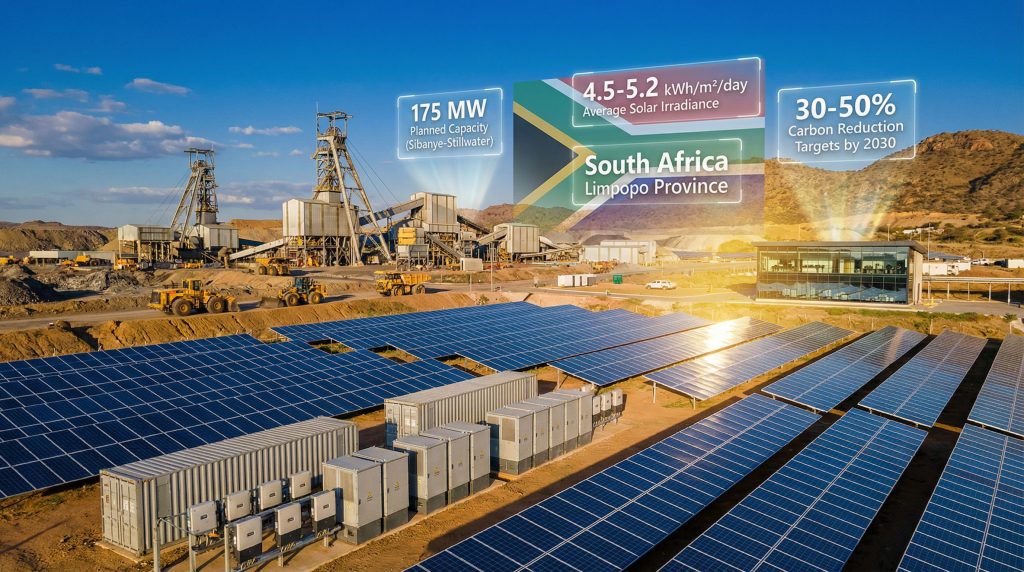
The mining industry's relationship with energy has fundamentally shifted as operational demands intensify and grid reliability deteriorates across major mining regions. This transformation extends beyond simple cost reduction strategies, encompassing sophisticated energy management systems that integrate multiple power sources while maintaining the continuous operations essential for profitable mineral extraction. Modern mining evolution trends are implementing hybrid energy models that combine renewable generation with existing infrastructure to address both immediate operational needs and long-term sustainability objectives.
When big ASX news breaks, our subscribers know first
Grid Dependency Challenges Drive Renewable Energy Adoption
Mining operations face unprecedented energy security challenges that demand immediate solutions. Solar power for Marula and Rustenburg platinum mines represents a critical response to South African platinum mining companies experiencing regular operational disruptions due to grid instability, with load-shedding events forcing temporary production halts that directly impact profitability. These interruptions create cascading effects throughout the mining value chain, from underground extraction to processing facilities.
Energy cost escalation represents another critical driver pushing mining companies toward renewable alternatives. Traditional grid electricity costs have increased substantially over recent years, compressing profit margins for energy-intensive mining operations. Mining companies now allocate significant portions of their operating budgets to electricity expenses, making cost-effective renewable alternatives increasingly attractive.
Key operational challenges include:
• Frequent grid outages disrupting continuous mining processes
• Rising electricity tariffs affecting operational profitability
• Carbon emission regulations requiring measurable reductions
• Investor pressure for environmental sustainability improvements
• Competition from mines with more stable energy supplies
The technical requirements for mining operations create unique energy challenges. Unlike other industrial sectors, mining requires consistent baseload power for underground ventilation, hoisting systems, and processing equipment. Furthermore, energy transition strategies must account for any interruption in power supply that can create safety hazards and require costly restart procedures.
Wheeling Agreement Models Replace Direct Ownership
Mining companies have fundamentally restructured their approach to renewable energy procurement, moving away from direct facility ownership toward sophisticated wheeling arrangements with independent power producers. This strategic shift eliminates the capital expenditure requirements associated with building and maintaining solar installations whilst providing access to professional energy management services.
Wheeling agreement advantages include:
• Reduced upfront capital requirements for mining companies
• Professional operation and maintenance by specialised providers
• Risk transfer to experienced renewable energy operators
• Scalable capacity expansion based on production needs
• Fixed pricing protection against utility tariff increases
Implats exemplifies this strategic transformation through its energy fuels partnership agreement with Discovery Green, which supplies 90% of the Impala Refineries' electricity demand through a combination of solar and wind generation. This five-year power purchase agreement, signed in January 2026, demonstrates how mining companies can secure renewable energy without direct facility investment.
The Discovery Green model operates through exclusive procurement contracts with multiple independent power producers across various South African provinces. This diversified approach reduces weather-related generation risks whilst providing mining companies with stable electricity pricing decoupled from utility tariff escalation.
Strategic Power Purchase Agreement Structures
Modern power purchase agreements in the mining sector incorporate sophisticated risk allocation mechanisms designed to protect operational continuity whilst providing cost certainty. The Implats-Discovery Green agreement delivers 130,000 MWh of electricity annually at fixed pricing structures that shield mining operations from utility cost increases.
| Agreement Component | Implats-Discovery Green Structure |
|---|---|
| Duration | 5 years (signed January 2026) |
| Annual Delivery | 130,000 MWh |
| Supply Percentage | 90% of refinery baseload demand |
| Commissioning | Second half of 2026 |
| Tariff Structure | Decoupled from utility pricing |
This agreement structure provides mining companies with energy price predictability essential for long-term operational planning. Fixed tariff mechanisms protect against the volatile electricity pricing that has historically impacted mining profitability. In addition, data-driven operations enable more sophisticated energy management systems.
The multi-source generation approach employed by Discovery Green includes wind and solar facilities distributed across different regions, reducing the risk associated with weather variability at any single location. This portfolio diversification ensures more reliable electricity delivery compared to single-facility arrangements.
Capacity Planning Reflects Operation-Specific Requirements
Mining companies determine solar system capacity based on detailed analysis of their energy consumption patterns and operational requirements. Solar power for Marula and Rustenburg platinum mines demonstrates distinct capacity needs, with Rustenburg requiring 50 MW and Marula needing 30 MW of solar generation capacity.
Implats capacity allocation:
• Rustenberg Mine: 50 MW solar capacity (under negotiation with Royal Bafokeng)
• Marula Mine: 30 MW solar capacity (wheeling agreement structure)
• Impala Refineries: 90% demand coverage through Discovery Green agreement
The significant difference between Rustenberg's 50 MW requirement and Marula's 30 MW allocation reflects the varying energy intensity of different mining operations. Rustenberg's larger capacity requirement likely reflects more energy-intensive processes or higher production volumes compared to the Marula operation.
Zimplats in Zimbabwe provides additional insight into mining solar capacity planning. The operation has implemented a phased approach with 35 MW in Phase 1 and 45 MW under construction for Phase 2, requiring $54 million in capital investment. This translates to approximately $1.2 million per MW of installed capacity.
Independent Power Producer Partnerships
The mining sector's renewable energy transition relies heavily on partnerships with specialised independent power producers capable of managing complex energy supply arrangements. Discovery Green has emerged as a significant player in this space, utilising a trader-led wheeling model that coordinates multiple generation sources.
Discovery Green's operating model includes:
• Exclusive procurement contracts with multiple wind and solar generators
• Distribution across various South African provinces for risk reduction
• Professional operation and maintenance of generation facilities
• Supply to multiple customers pursuing decarbonisation objectives
• Price-path certainty through long-term agreements
Royal Bafokeng represents another emerging player in mining-focused renewable energy development. The company has expressed interest in developing solar projects specifically for mining operations, with Implats providing guaranteed offtake agreements to support project financing according to Mining Weekly's coverage of platinum mine solar power initiatives.
This arrangement benefits both parties: Royal Bafokeng gains access to a reliable long-term customer, whilst Implats secures renewable energy without direct investment in generation infrastructure. The guaranteed offtake structure provides the revenue certainty necessary for project development and financing.
The next major ASX story will hit our subscribers first
Technical Implementation and Performance Metrics
Zimplats' solar development programme provides concrete performance data for mining sector renewable energy projects. The operation's Phase 1 facility reached design capacity during the reporting period, whilst Phase 2 construction progresses toward technical completion in August 2026.
Zimplats Phase 2 specifications:
• Capacity: 45 MW solar generation
• Capital Investment: $54 million
• Expected Annual Output: 110 GWh
• Emissions Reduction: 69,396 t CO2e per year
• Capacity Factor: Approximately 28%
These metrics indicate that mining solar installations can achieve competitive capacity factors comparable to utility-scale projects. The calculated capacity factor of 28% suggests effective system design and favourable solar resource conditions.
Current renewable electricity usage at Zimplats remains at 31% of total consumption, approaching the target of 35%. However, prolonged droughts in Zimbabwe and Zambia have constrained hydropower supply from the Zambian national utility, limiting further renewable energy percentage improvements.
Regional Development and Scaling Opportunities
The concentration of platinum mining operations in specific regions creates opportunities for shared renewable energy infrastructure and coordinated development approaches. The Rustenberg platinum belt encompasses multiple mining companies pursuing similar renewable energy objectives, potentially enabling economies of scale in project development.
Regional development benefits include:
• Shared transmission infrastructure reducing individual project costs
• Coordinated grid stability services improving overall system reliability
• Regional renewable energy expertise development supporting multiple projects
• Supply chain optimisation for construction and maintenance services
• Enhanced negotiating power with independent power producers
Furthermore, mining companies are exploring innovative approaches to renewable energy integration. Potential developments include floating solar installations on mine water bodies and agrivoltaics integration on rehabilitated mining land, maximising land use efficiency whilst generating clean electricity.
Environmental Impact and Regulatory Compliance
Mining companies implement solar projects as part of comprehensive decarbonisation strategies aligned with international climate commitments. The Implats-Discovery Green agreement is expected to reduce Scope 2 greenhouse gas emissions by more than 852,000 tonnes over the agreement period.
Environmental benefits include:
• Significant reduction in carbon emissions from mining operations
• Decreased dependency on coal-fired grid electricity
• Improved environmental compliance supporting social licence to operate
• Enhanced investor confidence in sustainability commitments
• Demonstration of responsible mining practices to stakeholders
Large-scale solar installations must navigate complex environmental approval processes whilst demonstrating positive sustainability impacts. This includes land use authorisation, visual impact assessments for surrounding communities, and biodiversity impact studies with appropriate mitigation measures.
Economic Analysis and Investment Returns
Mining companies conduct detailed financial modelling to evaluate solar energy investments against traditional grid electricity over project lifecycles. The Zimplats Phase 2 project represents a $54 million investment for 45 MW of capacity, demonstrating the scale of capital commitment required for direct ownership models.
Key economic considerations include:
• Capital expenditure requirements and financing costs
• Operational expenditure for maintenance and insurance
• Energy price escalation assumptions over project life
• Tax incentives and depreciation benefits available
• Risk-adjusted discount rates appropriate for mining investments
Wheeling agreements like the Implats-Discovery Green structure eliminate direct capital expenditure whilst providing fixed pricing certainty. This approach allows mining companies to redirect capital toward core mining operations whilst still achieving renewable energy and cost reduction objectives. However, battery metals investment opportunities continue to influence strategic decision-making.
### What Does the Future Hold for Mining Energy Systems?
Advanced energy management systems coordinate multiple power sources to minimise costs whilst ensuring operational reliability essential for mining operations. These systems integrate solar generation, grid electricity, and backup power sources through sophisticated control algorithms.
System integration capabilities include:
• Real-time load forecasting and dispatch optimisation
• Automated switching systems for emergency backup power
• Remote monitoring and diagnostic capabilities
• Grid-forming capabilities for islanding during outages
• Advanced inverter technology for seamless power conversion
Battery energy storage integration represents the next phase of mining renewable energy development. Storage systems enable mining operations to maximise solar energy utilisation during non-daylight hours whilst providing grid stability services and emergency backup power, as detailed in comprehensive analysis of mining solar energy applications.
Emerging technology trends include bifacial solar panels for increased energy yield, green hydrogen production using excess solar capacity, and integration with electric vehicle charging infrastructure for mining fleets. These developments suggest continued evolution in solar power for Marula and Rustenburg platinum mines and broader mining sector renewable energy applications.
Disclaimer: This analysis contains forward-looking statements regarding renewable energy development timelines, capacity requirements, and economic projections. Actual results may vary based on market conditions, regulatory changes, technology developments, and company-specific factors. Investment decisions should consider comprehensive due diligence and professional financial advice.
Looking to Capitalise on Energy Transition Opportunities in Mining?
Discovery Alert's proprietary Discovery IQ model delivers instant notifications on significant ASX mineral discoveries, including companies developing advanced energy infrastructure solutions for mining operations. Subscribers gain immediate access to actionable insights on emerging mining technologies and energy partnerships that could transform operational efficiency and create substantial investment returns. Begin your 14-day free trial today to position yourself ahead of the market as the mining sector embraces renewable energy transformation.