July 22, 2026
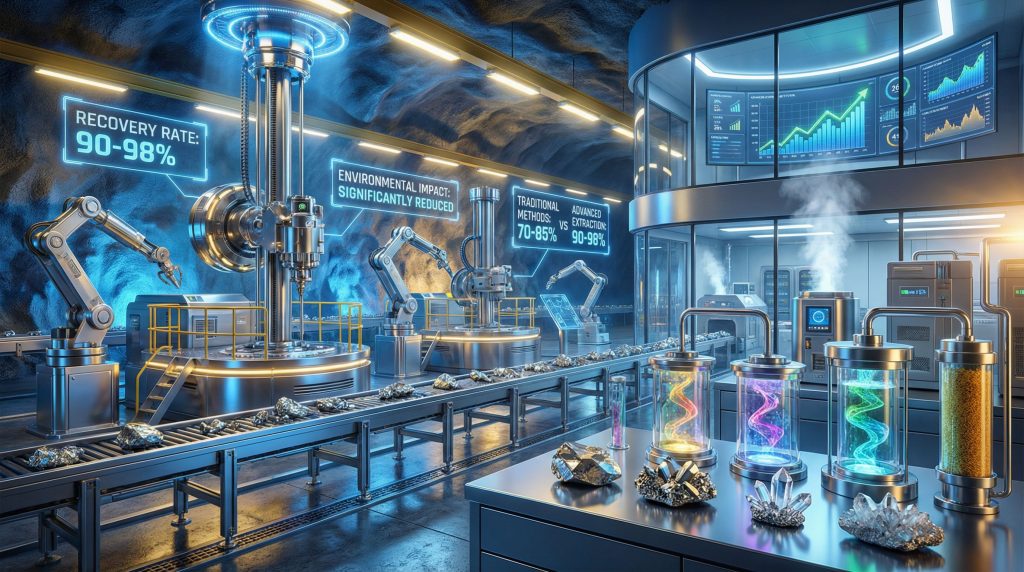
Advanced mining operations face unprecedented pressure to extract maximum value from increasingly complex ore deposits while meeting stringent environmental standards. The convergence of technological innovation, regulatory requirements, and market demands has created a transformative opportunity for advanced extraction services in mining to revolutionise how companies approach resource recovery. This technological evolution represents more than operational enhancement; it fundamentally restructures the economics of mineral extraction through precision-engineered solutions that optimise both recovery rates and sustainability metrics.
The mining industry's shift toward integrated extraction technologies emerges from the recognition that traditional methods leave substantial value buried in processed materials. Legacy approaches to resource extraction, developed during periods of abundant high-grade deposits, prove inadequate for today's mining challenges. Complex ore chemistries, declining ore grades, and environmental constraints demand sophisticated solutions that transcend conventional mechanical processing.
Understanding Advanced Extraction Services in Modern Mining Operations
The fundamental transformation occurring across global mining operations centres on the integration of precision-engineered extraction technologies that maximise resource recovery while minimising environmental impact. Furthermore, advanced extraction services in mining represent a comprehensive approach to mineral recovery that combines cutting-edge chemistry, automation, and data analytics to unlock value from previously uneconomical deposits.
Defining Next-Generation Extraction Technologies
Advanced extraction services encompass a broad spectrum of technologies designed to address the limitations of conventional mining methods. These services integrate multiple technological platforms, including biological processing systems, chemical innovation, and automated precision targeting, to create customised solutions for specific ore characteristics.
The distinction between traditional extraction and advanced methodologies lies in the precision and selectivity of the recovery process. Where conventional methods rely on broad-spectrum chemical processes, advanced services employ targeted approaches that selectively extract valuable minerals while minimising waste generation. This precision results from sophisticated understanding of ore mineralogy combined with tailored processing chemistry.
Biological processing systems utilise specialised microorganisms to dissolve metals selectively, particularly effective for liberating gold trapped within sulfide minerals. These bioleaching applications excel in processing complex ores that resist conventional treatment methods, offering enhanced recovery efficiency compared to traditional approaches.
The Economic Drivers Behind Advanced Extraction Adoption
The economic imperative driving adoption of advanced extraction services in mining stems from the fundamental challenge of declining ore grades worldwide. Deposits that appeared uneconomical using conventional methods become viable through specialised refining solutions, effectively unlocking resources previously considered unrecoverable.
Mining companies increasingly recognise that maximising value extraction from existing operations provides more predictable returns than exploring for new deposits. Legacy tailings reprocessing exemplifies this approach, transforming historical waste streams into revenue-generating assets while simultaneously reducing environmental liabilities.
The financial benefits extend beyond immediate recovery improvements. Advanced extraction services enable companies to secure higher social licence, reduce operational risks, and attract environmentally conscious investors by demonstrating commitment to sustainable mining practices. This alignment with environmental, social, and governance standards creates competitive advantages in accessing capital markets.
| Aspect | Traditional Methods | Advanced Extraction Services |
|---|---|---|
| Recovery Rate | 70-85% | 90-98% |
| Environmental Impact | High | Significantly Reduced |
| Operational Safety | Standard Protocols | AI-Enhanced Safety Systems |
| Processing Time | Extended | Optimised Through Automation |
When big ASX news breaks, our subscribers know first
What Technologies Define Advanced Extraction Services?
The technological foundation of advanced extraction services rests on the integration of multiple innovation platforms that work synergistically to optimise mineral recovery. These technologies address specific challenges within the extraction process, from initial ore characterisation through final product purification.
Chemical and Biological Innovation in Extraction
Chemical innovation represents one of the most significant advances in modern extraction technology. Cyanide-free leaching solutions replace traditional cyanidation with safer, non-toxic reagents such as thiosulfate or novel chloride-based systems. These alternatives reduce environmental impact while enhancing recovery from refractory ores resistant to conventional methods.
Thiosulfate chemistry offers particular advantages for processing complex ore compositions. The reagent demonstrates superior selectivity compared to traditional cyanide systems, enabling extraction of precious metals from ores containing interfering minerals that would compromise conventional processing efficiency.
Ion-exchange resin systems provide another breakthrough in extraction chemistry. These systems deliver higher selectivity and efficiency than activated carbon when capturing gold and other precious metals from leach solutions. The technology proves particularly suitable for ores with complex chemistries, resulting in cleaner outputs and enhanced recovery rates.
Biological processing through specialised microorganisms offers sustainable pathways for selective metal dissolution. Bioleaching applications utilise naturally occurring bacteria to break down sulfide minerals, releasing trapped precious metals for subsequent recovery. This approach excels in processing ores where conventional methods struggle to achieve adequate liberation.
In-Situ and Solution Mining Techniques
In-situ extraction methods minimise surface disturbance while accessing subsurface mineral resources through controlled chemical processes. These techniques involve injecting specialised solutions into ore bodies, dissolving target minerals, and recovering the pregnant solutions through production wells.
Solution mining techniques offer significant advantages for deposits where conventional mining would prove economically or environmentally prohibitive. The approach eliminates the need for extensive surface infrastructure while providing precise control over the extraction process through real-time monitoring systems.
Environmental containment protocols ensure that solution mining operations maintain strict control over chemical migration beyond the targeted ore zone. Advanced monitoring systems track solution movement and composition throughout the extraction process, providing early warning of any deviations from planned parameters.
Advanced extraction services combine multiple technologies to achieve recovery rates exceeding 95% while reducing environmental impact by up to 60% compared to conventional methods.
How Do Advanced Extraction Services Optimise Resource Recovery?
The optimisation of resource recovery through advanced extraction services emerges from the seamless integration of exploration, extraction, and processing operations. This collaborative approach, built on shared data and expertise, enables companies to design mining strategies tailored to the unique characteristics of each deposit.
Precision Targeting and Grade Optimisation
Advanced extraction services begin with comprehensive geochemical analysis integration that enables identification of high-grade zones within complex ore bodies. Refining technology providers analyse core samples and mineralogical data to determine the most effective processing methods well before mine establishment.
This early collaboration between exploration and refining operations allows companies to design extraction strategies that maximise recovery rates and operational efficiency. The integration eliminates the traditional disconnect between exploration companies and refining technology providers, creating a unified approach to resource development.
Real-time ore characterisation during extraction processes enables continuous optimisation of recovery parameters. Advanced analytical systems monitor ore characteristics and adjust processing conditions to maintain optimal recovery rates throughout the mining operation.
Multi-Stage Processing Integration
The integration of extraction and processing workflows creates opportunities for continuous optimisation based on real-time ore characteristics. This approach ensures that processing parameters remain aligned with changing ore compositions, maintaining peak recovery efficiency throughout the operation.
Coordinated workflow design enables seamless transition between extraction and processing stages, minimising material handling and reducing opportunities for precious metal losses. The integration extends beyond physical processes to include data sharing systems that inform decision-making across all operational stages.
Legacy Resource Recovery and Tailings Reprocessing
Advanced extraction services transform the treatment of mine waste by reprocessing legacy tailings that often contain valuable residual metals. This approach generates additional revenue while reducing environmental liabilities and lessening the need for new mining operations.
Tailings reprocessing represents a circular economy approach that converts waste into wealth, aligning with modern sustainability goals while driving long-term industry value. The process typically achieves significant precious metal recovery from materials previously considered waste products.
Historical tailings often contain substantial residual values due to limitations of earlier processing technologies. Modern extraction services can recover these previously inaccessible minerals using advanced separation and purification techniques not available during original processing.
Which Industries Benefit Most from Advanced Extraction Services?
The application of advanced extraction services spans multiple mining sectors, with particular benefits realised in precious metals operations dealing with complex ore chemistries and declining grades. The technology's versatility enables customised solutions for specific mineral types and geological conditions.
Precious Metals Mining Applications
Precious metals operations represent the primary beneficiaries of advanced extraction services, particularly for gold recovery from complex and refractory ores. Cyanide-free leaching solutions enable processing of deposits that resist conventional treatment methods while meeting increasingly stringent environmental standards.
The transformation of low-grade gold deposits from uneconomical to viable operations demonstrates the power of specialised refining solutions. These technologies unlock resources previously considered unrecoverable, extending mine life and improving project economics across the precious metals sector.
Bioleaching applications prove particularly effective for gold trapped within sulfide minerals, where conventional processing methods struggle to achieve adequate liberation. The biological approach enables selective dissolution of target minerals while leaving unwanted components largely unaffected.
Silver extraction operations benefit from similar technological advances, particularly in processing complex polymetallic ores where traditional methods face challenges from interfering elements. Advanced extraction services enable selective recovery of silver while minimising losses to other process streams.
Base Metals and Industrial Minerals
Base metals operations increasingly adopt advanced extraction services to process low-grade deposits and complex ore compositions that challenge conventional treatment methods. Copper extraction from oxide and sulfide ores benefits from specialised leaching systems that optimise recovery while minimising environmental impact.
Hydrometallurgical processes offer sustainable pathways for base metals extraction through selective dissolution and purification techniques. These methods prove particularly valuable for processing ores containing multiple valuable metals where traditional pyrometallurgical approaches would result in significant losses.
Rare earth element recovery represents a growing application area for advanced extraction services in mining. The complex chemistry of rare earth ores requires sophisticated separation techniques that can selectively extract individual elements while maintaining commercial purity standards.
| Resource Category | Primary Technologies | Recovery Improvement |
|---|---|---|
| Precious Metals | Cyanide-free leaching, bioleaching | 15-25% increase |
| Base Metals | Hydrometallurgy, selective flotation | 20-30% increase |
| Rare Earth Elements | Ion-exchange, solvent extraction | 25-40% increase |
| Industrial Minerals | Precision sorting, magnetic separation | 10-20% increase |
What Are the Environmental and Safety Advantages?
The environmental and safety benefits of advanced extraction services extend far beyond regulatory compliance, creating fundamental advantages in operational risk management and stakeholder relations. These technologies enable mining operations to achieve superior environmental performance while maintaining commercial viability.
Reduced Environmental Footprint Through Technology
Cyanide-free leaching solutions represent a paradigm shift in precious metals processing, replacing highly toxic traditional reagents with safer alternatives such as thiosulfate and chloride-based systems. These alternatives reduce environmental impact while often enhancing recovery from refractory ores resistant to conventional methods.
The elimination of cyanide from processing operations removes one of the most significant environmental risks associated with precious metals extraction. Alternative reagents demonstrate lower toxicity profiles while maintaining or improving processing efficiency, creating win-win scenarios for operators and environmental stakeholders.
Bioleaching and hydrometallurgy offer sustainable pathways through biological and aqueous processing systems that minimise energy consumption and reduce greenhouse gas emissions compared to traditional pyrometallurgical approaches. These methods typically operate at lower temperatures and utilise renewable biological processes.
Water consumption reduction emerges from closed-loop processing systems that recycle and reuse process solutions. Advanced extraction services incorporate water management technologies that minimise fresh water requirements while maintaining processing efficiency.
Enhanced Worker Safety Through Automation
Advanced extraction services incorporate AI in drilling & blasting that reduce human exposure to hazardous processing environments. Remote operation capabilities enable personnel to monitor and control extraction processes from safe locations, minimising occupational health risks.
The reduction of toxic chemical usage through alternative processing chemistries creates inherently safer working environments. Workers face reduced exposure to dangerous reagents while maintaining or improving processing effectiveness.
Real-time monitoring systems provide continuous surveillance of processing conditions, enabling rapid response to potential safety hazards. These systems integrate with automated emergency response protocols that can initiate protective measures without human intervention.
Regulatory Compliance and ESG Benefits
Advanced extraction services position mining operations for compliance with evolving environmental regulations while creating competitive advantages in capital markets. Companies adopting these technologies secure higher social licence to operate and attract environmentally conscious investors.
The strategic business benefits extend beyond environmental stewardship to include risk reduction and improved stakeholder relations. Mining operations demonstrating commitment to sustainable practices through advanced technologies gain advantages in permitting, community relations, and financial markets.
ESG investment criteria increasingly favour companies with demonstrated environmental performance improvements. Advanced extraction services provide measurable metrics for environmental impact reduction that align with investor sustainability requirements.
How Do Companies Implement Advanced Extraction Services?
The successful implementation of advanced extraction services requires comprehensive planning, stakeholder alignment, and phased deployment strategies that minimise operational disruption while maximising technological benefits. Companies must navigate technical, financial, and organisational challenges to achieve optimal outcomes.
Assessment and Planning Phase
Implementation begins with comprehensive resource characterisation and feasibility studies that evaluate the applicability of specific advanced extraction technologies to particular ore types and operational conditions. This assessment phase determines optimal technology combinations for specific geological and economic circumstances.
Early collaboration between exploration and refining operations enables refiners to analyse core samples and mineralogical data before mine establishment. This integration allows companies to design extraction strategies tailored to unique deposit characteristics, maximising recovery potential from project inception.
Technology selection requires careful evaluation of ore characteristics, processing requirements, environmental considerations, and economic parameters. The assessment must consider both immediate operational benefits and long-term strategic advantages of different technological approaches. Furthermore, companies must understand the mineral exploration importance in planning advanced extraction strategies.
Risk assessment and mitigation strategies address potential challenges in technology deployment, including technical performance risks, operational integration challenges, and financial return uncertainties. Comprehensive risk management enables informed decision-making and contingency planning.
Technology Deployment and Integration
Phased implementation approaches minimise operational disruption while enabling gradual optimisation of advanced extraction systems. This strategy allows companies to maintain production continuity while integrating new technologies and processes.
Staff training and capability development programmes ensure that personnel possess the skills necessary to operate and maintain sophisticated extraction systems. These programmes must address both technical competencies and safety protocols specific to advanced technologies.
System integration and testing protocols verify that new technologies perform as expected within existing operational frameworks. Comprehensive testing identifies potential compatibility issues and optimisation opportunities before full-scale deployment.
Performance monitoring and optimisation procedures enable continuous improvement of extraction efficiency and system reliability. Real-time data collection and analysis support informed decision-making and proactive maintenance scheduling.
Partnership Models and Service Delivery
Collaboration frameworks between mining companies and technology providers create opportunities for shared risk and optimised outcomes. These partnerships leverage specialised expertise while providing mining companies access to cutting-edge technologies without full capital investment.
Equipment leasing versus ownership considerations affect both capital requirements and operational flexibility. Leasing arrangements may provide access to advanced technologies with lower initial investment while ownership offers long-term cost advantages and operational control.
Integrated service contracts including maintenance and optimisation provide comprehensive solutions that ensure sustained performance of advanced extraction systems. These arrangements transfer technical risk to specialised service providers while guaranteeing performance standards.
Knowledge transfer and local capability building create sustainable competitive advantages while supporting local economic development. Training programmes and technology transfer initiatives build internal expertise that supports long-term operational success.
Successful advanced extraction service implementation requires comprehensive planning, stakeholder alignment, and phased deployment with continuous optimisation based on real-world performance data.
The next major ASX story will hit our subscribers first
What Economic Benefits Can Mining Operations Expect?
The economic advantages of advanced extraction services extend across multiple dimensions of mining operations, creating value through improved recovery rates, operational efficiency gains, and enhanced market positioning. These benefits justify the initial investment requirements while providing sustained competitive advantages.
Direct Financial Returns
Increased resource recovery translates directly to higher revenues through extraction of previously unrecoverable minerals. The transformation of low-grade deposits from uneconomical to viable operations demonstrates the revenue-generating potential of specialised extraction technologies.
Advanced services generate additional revenue through legacy tailings reprocessing while simultaneously reducing environmental liabilities. This circular economy approach creates dual benefits by converting waste into valuable products while eliminating long-term remediation costs.
Reduced operational costs emerge from process efficiency improvements and lower environmental compliance requirements. Advanced extraction services often operate with lower energy consumption and reduced reagent costs compared to conventional methods.
Extended mine life results from enhanced extraction capabilities that enable economic recovery from lower-grade zones and previously inaccessible deposits. This extension provides additional cash flow and improves overall project economics.
Operational Efficiency Gains
Processing time optimisation through automated systems and improved chemistry reduces throughput bottlenecks while maintaining or improving recovery standards. These efficiency gains enable higher production rates without proportional increases in operational costs.
Energy consumption reduction per unit of extracted material results from optimised processing conditions and elimination of energy-intensive traditional methods. Lower energy requirements contribute to both cost reduction and environmental performance improvement.
Maintenance requirements decrease through advanced system design and predictive maintenance capabilities. Sophisticated monitoring systems enable proactive maintenance scheduling that minimises unplanned downtime while optimising maintenance costs.
Planning accuracy improvements through better data integration enable more precise resource estimation and production scheduling. Enhanced data quality supports improved decision-making across all operational aspects.
Market Positioning and Investment Attraction
Enhanced competitiveness in commodity markets results from lower production costs and superior environmental performance compared to conventional operations. These advantages provide pricing flexibility and improved profit margins across commodity price cycles.
Attraction of ESG-focused investment capital creates access to lower-cost financing and improved company valuations. Investors increasingly favour companies with demonstrated sustainability performance and advanced technological capabilities.
Premium pricing opportunities for sustainably extracted materials emerge as end-users increasingly demand responsibly sourced commodities. Advanced extraction services provide the documentation and performance metrics required for premium market positioning.
Company valuation improvements through technological advancement create shareholder value while providing access to growth capital. Advanced extraction capabilities demonstrate operational excellence and strategic positioning that investors reward with higher valuations.
What Challenges and Considerations Should Companies Address?
The implementation of advanced extraction services presents multiple challenges that require careful management to ensure successful outcomes. Companies must address technical, financial, and organisational considerations while maintaining operational continuity and stakeholder confidence.
Technical and Operational Challenges
Integration complexity with existing mining infrastructure requires careful planning and phased implementation to avoid operational disruptions. Legacy systems may require modification or replacement to accommodate advanced extraction technologies.
Technology reliability in harsh mining environments demands robust system design and comprehensive testing protocols. Mining operations present challenging conditions that can stress sophisticated equipment and control systems.
Skills gap and workforce adaptation requirements necessitate comprehensive training programmes and potentially significant personnel changes. Advanced extraction services require different technical competencies than traditional mining operations.
Maintenance and support for sophisticated systems require specialised expertise and potentially modified supply chains. Companies must ensure reliable access to technical support and replacement components for advanced equipment.
Financial and Economic Considerations
High initial capital investment requirements create financing challenges that must be balanced against expected returns and risk mitigation. Advanced extraction technologies typically require substantial upfront investment before generating returns.
Technology obsolescence and upgrade planning require consideration of technological evolution and competitive dynamics. Companies must balance current technology investment with future upgrade requirements and technological advancement.
Return on investment timeline and risk factors must be carefully evaluated against alternative investment opportunities and company strategic objectives. Advanced extraction services may require longer payback periods than traditional investments.
Financing options for advanced extraction technology adoption include equipment leasing, technology partnerships, and specialised financing arrangements. Companies should evaluate multiple financing approaches to optimise capital structure and risk distribution.
Regulatory and Social Factors
Evolving regulatory landscape for new extraction technologies creates uncertainty about future compliance requirements and operational parameters. Companies must anticipate regulatory changes and design systems for adaptability.
Community acceptance and social licence considerations require stakeholder engagement and transparent communication about technological benefits and risk mitigation measures. Advanced technologies may face public scrutiny despite environmental advantages.
Environmental monitoring and reporting requirements may be more complex for advanced extraction technologies, requiring sophisticated data collection and analysis systems. Regulatory agencies may require enhanced documentation for new technologies.
International standards and certification compliance create additional complexity for companies operating across multiple jurisdictions. Different regulatory frameworks may require technology modifications or operational adjustments.
Future Trends in Advanced Extraction Services
The evolution of advanced extraction services continues to accelerate, driven by technological innovation, environmental regulations, and market demands for sustainable mining practices. Future developments will reshape the mining industry through enhanced automation, improved sustainability, and greater operational efficiency.
Emerging Technologies and Innovation
Artificial intelligence integration represents the next frontier in extraction optimisation, enabling predictive analysis of ore characteristics, process optimisation, and preventive maintenance scheduling. AI systems will provide real-time decision-making capabilities that optimise extraction parameters continuously.
Nanotechnology applications in selective mineral recovery offer unprecedented precision in separation and purification processes. Nano-scale materials and processes will enable extraction of valuable minerals from increasingly complex ore compositions.
Advanced materials development for improved extraction efficiency includes specialised membranes, catalysts, and separation media that enhance selectivity and processing rates. These materials will enable processing of previously uneconomical deposits while reducing environmental impact.
Integration with renewable energy systems will reduce carbon footprint and operational costs while improving sustainability performance. Solar, wind, and other renewable energy sources will power advanced extraction operations.
Industry Transformation and Market Evolution
Consolidation of technology providers and service integration will create comprehensive solution providers capable of managing entire extraction value chains. This consolidation will improve service delivery while reducing implementation complexity for mining companies.
Development of extraction-as-a-service business models will enable mining companies to access advanced technologies without significant capital investment. Service-based delivery models will transfer technical risk to specialised providers while ensuring performance guarantees.
International technology transfer and capability building will expand access to advanced extraction services in developing mining jurisdictions. Technology transfer programmes will support local economic development while expanding market opportunities.
Integration with circular economy and sustainability initiatives will position advanced extraction services as essential components of sustainable resource management. These technologies will support broader environmental and social objectives beyond mining operations.
Regulatory and Policy Developments
Enhanced environmental standards will drive mandatory adoption of advanced extraction technologies in sensitive environments and high-profile mining operations. Regulatory requirements will increasingly favour technologies that demonstrate superior environmental performance.
International cooperation on sustainable extraction practices will create standardised approaches to advanced technology deployment and performance measurement. Global standards will facilitate technology transfer and market development.
Carbon pricing impacts will affect technology selection by favouring low-carbon extraction methods over traditional high-energy approaches. Carbon costs will create additional economic incentives for advanced extraction service adoption.
Resource security considerations will influence government policies supporting domestic advanced extraction capabilities. National security concerns about mineral supply chains will drive public policy support for technological advancement.
| Technology Area | Current Status | 5-Year Outlook | 10-Year Projection |
|---|---|---|---|
| AI Integration | Early Adoption | Mainstream Implementation | Industry Standard |
| Nanotechnology | Research Phase | Pilot Projects | Commercial Deployment |
| Renewable Integration | Limited Application | Widespread Adoption | Full Integration |
| Autonomous Operations | Selective Use | Comprehensive Implementation | Complete Automation |
Maximising Value Through Strategic Implementation
The strategic implementation of advanced extraction services requires comprehensive understanding of technological capabilities, operational requirements, and market dynamics. Companies that successfully integrate these technologies position themselves for sustained competitive advantage while contributing to industry transformation toward more sustainable and efficient resource extraction.
Building Integrated Extraction Capabilities
The development of integrated extraction capabilities requires alignment of technological selection with specific ore characteristics, operational constraints, and strategic objectives. Companies must evaluate multiple technology platforms while considering long-term scalability and adaptability requirements.
Seamless collaboration between exploration and refining operations creates opportunities for optimisation across the entire value chain. This integration enables design of extraction strategies tailored to unique deposit characteristics while maximising recovery potential and operational efficiency.
Investment in advanced extraction services in mining represents more than operational improvement; it positions companies for leadership in an evolving industry landscape where technological capability determines competitive advantage. However, companies must also consider direct lithium extraction methods that complement traditional approaches.
Furthermore, the circular approach that converts waste into wealth aligns with mining sustainability transformation goals while driving long-term value creation.
The transformation of mining operations through advanced extraction services requires careful attention to implementation planning, risk management, and stakeholder engagement. Companies that successfully navigate these challenges while maintaining operational excellence will establish sustainable competitive advantages in an increasingly complex and regulated industry environment.
Disclaimer: This analysis is based on current market conditions and technological trends. Actual implementation results may vary based on specific operational conditions, ore characteristics, and market factors. Companies should conduct comprehensive feasibility studies and risk assessments before implementing advanced extraction technologies. Investment decisions should be based on detailed financial analysis and professional consultation.
Looking to Stay Ahead in the Next Mining Discovery?
Discovery Alert's proprietary Discovery IQ model delivers instant notifications on significant ASX mineral discoveries, transforming complex geological announcements into clear, actionable investment opportunities. Whether you're seeking short-term trading advantages or positioning for the next major breakthrough, explore Discovery Alert's track record of identifying historic discoveries and begin your 30-day free trial to secure your competitive edge in the market.