May 22, 2026
Advanced Geological Assessment Technologies Revolutionizing Brazilian Iron Ore Reserves
Modern mining operations increasingly rely on sophisticated geological modelling systems to unlock previously unrecognised mineral deposits within established mining complexes. The integration of AI transforming mining with traditional geological survey methods has transformed how mining companies evaluate their long-term asset portfolios, particularly in Brazil's iron ore-rich Minas Gerais region where advanced 3D geological modelling techniques are revealing substantial additional reserves.
Machine learning algorithms now analyse decades of historical drilling data alongside real-time geological surveys, creating comprehensive digital representations of ore body boundaries that extend far beyond original estimates. These technological advances enable mining engineers to identify economic ore deposits at previously unviable depths and grades, fundamentally altering the financial calculus of existing operations.
Processing Technology Evolution Enabling Lower Grade Ore Utilisation
Contemporary mineral processing innovations have dramatically lowered the economic threshold for iron ore extraction, allowing previously marginal deposits to become commercially viable. Advanced beneficiation techniques now efficiently process ore grades that would have been considered waste material in traditional mining operations, effectively expanding reserve calculations without requiring additional exploration activities.
The implementation of dry magnetic separation systems and flotation technologies has enabled Brazilian iron ore operations to maintain product quality standards while incorporating lower-grade materials into their production streams. This technological evolution directly impacts reserve assessments, as mining companies can now classify significantly larger volumes of material as economically extractable reserves.
When big ASX news breaks, our subscribers know first
Strategic Reserve Management in Brazil's Established Mining Districts
Infrastructure Optimisation Extending Economic Viability
The amortisation of existing infrastructure investments across extended operational timeframes creates compelling economic incentives for Brazilian iron ore producers to maximise their reserve utilisation. Established transportation networks, including dedicated rail lines and port facilities, represent substantial capital investments that generate higher returns when utilised across longer operational periods.
Mining operations in Minas Gerais benefit from mature logistical frameworks that support sustained production over multiple decades. The fixed costs associated with these infrastructure systems decrease significantly when spread across extended operational timelines, making previously marginal ore deposits economically attractive.
Key infrastructure elements supporting extended operations include:
• High-capacity rail connections to coastal ports
• Established power transmission networks
• Integrated water management systems
• Regional workforce housing and support facilities
• Environmental monitoring infrastructure
Geological Re-mapping Methodologies in Mature Mining Areas
Contemporary geological assessment techniques frequently reveal substantial additional mineralisation in areas previously considered fully explored. Advanced geophysical surveys utilising ground-penetrating radar and electromagnetic induction systems can identify ore body extensions that were undetectable using historical exploration methods.
Furthermore, the systematic re-evaluation of geological data using modern analytical frameworks often results in significant reserve increases. Mining companies employ sophisticated geostatistical modelling to interpolate ore grades across complex geological structures, identifying previously overlooked deposits within established mining concessions.
| Reserve Assessment Method | Typical Reserve Increase | Implementation Period | Primary Technology |
|---|---|---|---|
| 3D Geological Modelling | 25-40% | 12-18 months | AI-enhanced interpretation |
| Advanced Geophysics | 15-30% | 6-12 months | Ground-penetrating radar |
| Historical Data Reanalysis | 20-35% | 9-15 months | Machine learning algorithms |
| Integrated Modelling | 40-60% | 18-24 months | Combined technologies |
Financial Implications of Extended Mine Life in Brazilian Iron Ore Operations
Capital Allocation Strategies for Multi-Decade Operations
Extended mine life fundamentally transforms the net present value calculations for iron ore operations, enabling mining companies to justify substantial infrastructure investments that would not be economically viable for shorter-lived assets. The ability to amortise capital expenditures across extended operational periods creates opportunities for technological upgrades and capacity enhancements.
Mining industry analysts emphasise that reserve extensions fundamentally alter the risk-return profile of iron ore operations, often justifying significant infrastructure investments that enhance both productivity and environmental performance across extended operational timelines.
Financial modelling for extended operations must account for:
• Equipment replacement cycles aligned with extended timelines
• Technology refresh requirements over multi-decade periods
• Environmental compliance upgrades throughout operational life
• Workforce development investments for generational transitions
• Community development commitments for sustained operations
Production Strategy Optimisation for Sustained Output
Brazilian iron ore producers implementing extended mine life strategies typically maintain consistent annual production levels rather than accelerating extraction rates. This approach maximises the economic value of reserves whilst ensuring sustained employment and community benefits throughout the extended operational period.
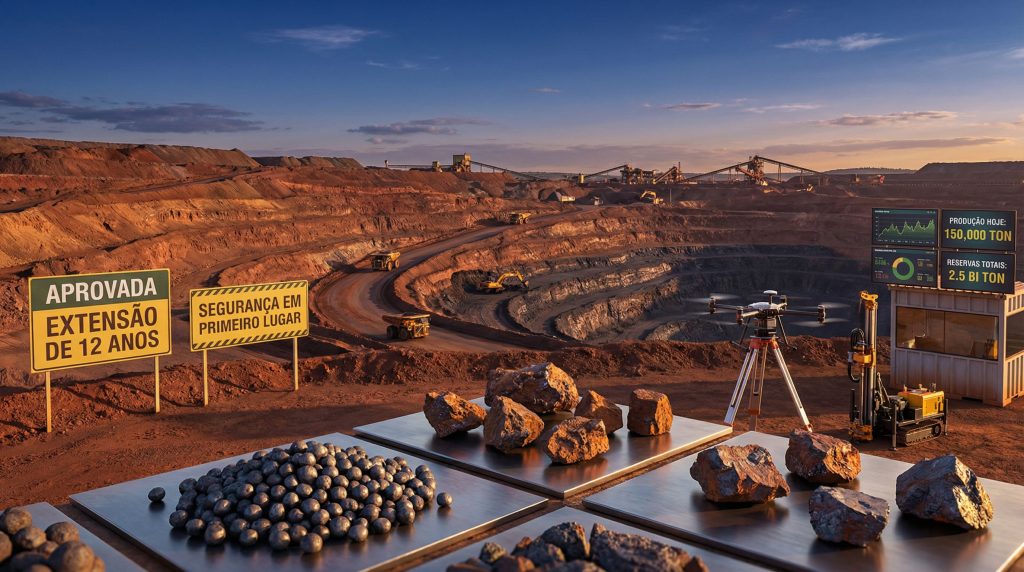
The Itabira complex mineral reserves increase of approximately 52% represents a significant expansion of economically extractable resources, extending operational life from 2041 to 2053. This twelve-year extension enables sustained production of approximately 25 million tonnes annually whilst maintaining current operational parameters.
According to Brazil's mining giant Vale, this reserve extension demonstrates how advanced geological reassessment can unlock substantial additional value within existing mining concessions.
Environmental Management Systems for Extended Iron Ore Operations
Progressive Rehabilitation Strategies
Extended mining operations require sophisticated environmental management approaches that address rehabilitation activities throughout the operational period rather than deferring all restoration activities until mine closure. Progressive land rehabilitation techniques enable mining companies to restore mined areas whilst continuing operations in adjacent zones.
Modern tailings management systems for extended operations increasingly utilise filtered dry stacking methodologies that eliminate the long-term environmental risks associated with conventional tailings dams. These advanced systems support sustained operations whilst minimising environmental footprint accumulation over extended timeframes.
| Environmental Challenge | Traditional Approach | Extended Operation Solution |
|---|---|---|
| Tailings Management | Conventional impoundments | Filtered dry stacking systems |
| Water Resource Management | Basic recycling | Advanced treatment and reuse |
| Land Rehabilitation | Post-closure restoration | Progressive rehabilitation |
| Biodiversity Protection | Perimeter management | Integrated ecosystem management |
Carbon Footprint Optimisation Across Extended Timelines
Extended iron ore operations provide unique opportunities to implement comprehensive decarbonisation strategies that justify substantial investments in renewable energy infrastructure and energy efficiency technologies. The ability to amortise clean energy investments across multi-decade timeframes makes previously uneconomical sustainability initiatives financially viable.
Brazilian iron ore operations increasingly integrate solar and wind energy systems to power processing facilities and support equipment. However, mining sustainability transformation enables mining companies to achieve substantial carbon footprint reductions whilst maintaining competitive operational costs through renewable energy deployment.
Global Market Implications of Brazilian Iron Ore Reserve Extensions
Supply Chain Stability Through Extended Mine Life
Brazilian iron ore operations with extended mine life provide enhanced supply security for global steel producers, particularly those serving Atlantic Basin markets. The predictability of sustained production over multi-decade periods enables steel manufacturers to develop long-term sourcing strategies with greater confidence in supply continuity.
Strategic advantages of extended Brazilian iron ore operations include:
• Reduced exploration pressure on new deposit development
• Enhanced leverage in long-term contract negotiations
• Improved infrastructure utilisation efficiency
• Strengthened regional economic stability
• Diversified supply portfolio benefits for steel producers
Quality Consistency Assurance Over Extended Periods
Extended iron ore operations enable mining companies to implement comprehensive quality management systems that ensure product consistency across multi-decade production periods. Brazilian iron ore producers leverage their extended operational timelines to invest in advanced beneficiation technologies that maintain product specifications throughout the extended mine life.
The geological characteristics of Brazilian iron ore deposits, particularly in the Minas Gerais region, provide inherent advantages for sustained quality production. Furthermore, these deposits typically exhibit consistent mineralogy across extensive areas, enabling predictable product quality throughout extended extraction periods.
Technology Integration Driving Reserve Expansion in Brazilian Iron Ore
Digital Twin Technologies for Real-Time Reserve Management
Advanced digital twin systems enable continuous reassessment of ore body characteristics, allowing mining companies to optimise extraction sequences and identify additional mineralisation in real-time. These systems integrate geological data, production information, and market conditions to maximise reserve utilisation efficiency.
Digital twin technology enables real-time reserve modelling, allowing mining companies to continuously reassess ore body characteristics and optimise extraction sequences. Consequently, this approach potentially extends mine life by 15-25% through improved resource utilisation whilst maintaining consistent product quality standards.
Autonomous Equipment Deployment for Extended Operations
Extended mine life justifies substantial investments in autonomous mining equipment that generates higher returns when utilised across multi-decade operational periods. Brazilian iron ore operations increasingly deploy autonomous haul trucks, drilling systems, and processing equipment that enhance productivity whilst reducing operational costs over extended timelines.
The integration of artificial intelligence systems with mining equipment enables continuous optimisation of extraction processes, identifying efficiency improvements that compound over extended operational periods. These technologies support sustained production levels whilst minimising environmental impact accumulation.
The next major ASX story will hit our subscribers first
Investment Opportunities in Brazilian Iron Ore Sector Extension
Infrastructure Development Supporting Extended Operations
Extended iron ore operations create substantial infrastructure investment opportunities across transportation, energy, and community development sectors. The guaranteed demand from multi-decade mining operations provides attractive risk-adjusted returns for infrastructure investors supporting Brazilian iron ore production.
Priority infrastructure investment areas include:
- Railway capacity expansion and modernisation projects
- Port facility enhancement and automation systems
- Renewable energy generation and transmission infrastructure
- Water treatment and recycling facility development
- Community development and housing infrastructure
Technology Sector Growth Opportunities
The expansion of Brazilian iron ore reserves creates significant demand for specialised mining technologies including geological modelling software, environmental monitoring systems, and autonomous equipment solutions. Technology companies serving the mining sector benefit from sustained demand across extended operational periods.
Emerging technology opportunities include:
• Advanced geological interpretation software development
• Environmental monitoring sensor networks
• Autonomous vehicle integration systems
• Renewable energy storage solutions
• Digital twin platform development
In addition, data-driven mining operations create substantial opportunities for technology providers specialising in integrated operational management systems.
Regulatory Framework Evolution for Extended Mining Operations
Environmental Licensing for Multi-Decade Operations
Brazilian environmental regulations increasingly accommodate extended mining operations through adaptive licensing frameworks that enable operational adjustments throughout multi-decade periods. These regulatory approaches recognise the evolving nature of mining technology and environmental management capabilities.
Extended operational licensing requires comprehensive community engagement protocols that ensure sustained social licence throughout multi-generational operational periods. Mining companies must demonstrate ongoing community benefit creation and environmental stewardship across extended timelines.
International Trade Considerations for Extended Supply
Extended Brazilian iron ore operations provide strategic advantages in international trade negotiations, offering supply security that supports favourable long-term contract terms. The predictability of extended supply enables Brazilian producers to develop enhanced market positioning relative to competitors with shorter operational timelines.
Regulatory considerations for extended operations include:
• Export licensing for multi-decade production commitments
• International quality standard compliance across extended periods
• Environmental certification maintenance throughout operational life
• Social responsibility reporting for sustained operations
Future Outlook for Brazilian Iron Ore Reserve Management
Emerging Geological Assessment Technologies
Continued advancement in geological assessment technologies will likely reveal additional reserve potential within established Brazilian iron ore districts. The integration of satellite-based remote sensing with subsurface geological modelling promises to identify previously unrecognised mineralisation across extensive areas.
Future technological developments include:
• Satellite-based hyperspectral imaging for geological mapping
• Advanced machine learning algorithms for geological interpretation
• Integrated environmental and geological monitoring systems
• Real-time ore grade analysis and optimisation systems
Sustainability Metrics Driving Future Reserve Development
Environmental, social, and governance considerations increasingly influence reserve development decisions in Brazilian iron ore operations. Extended operational timelines enable mining companies to implement comprehensive sustainability strategies that create long-term value for multiple stakeholder groups.
The evolution toward circular economy principles in mining operations will likely drive additional reserve value creation through waste minimisation, water recycling optimisation, and ecosystem restoration integration. These approaches enhance the overall value proposition of extended iron ore operations whilst supporting regulatory compliance and community acceptance.
Furthermore, understanding mineral deposit tiers guide becomes crucial for optimising resource allocation across extended operational timeframes.
According to industry analysis, Brazil's iron ore sector continues to demonstrate exceptional potential for reserve extension through technological advancement and strategic operational optimisation.
Extended Brazilian iron ore operations represent a fundamental shift toward sustainable resource utilisation that balances economic optimisation with environmental stewardship and community development across multi-generational timeframes. The Itabira complex mineral reserves increase exemplifies this strategic approach, demonstrating how technological advancement and operational optimisation can unlock substantial additional value within established mining districts whilst maintaining sustainable operational practices.
Ready to Capitalise on the Next Major Brazilian Mining Discovery?
Discovery Alert's proprietary Discovery IQ model delivers instant notifications on significant ASX mineral discoveries, including those with Brazilian operations, enabling subscribers to identify actionable investment opportunities ahead of the broader market. Explore how major mineral discoveries can generate substantial returns and begin your 14-day free trial today to secure your market-leading advantage.