May 9, 2026
Advanced Grinding Systems: The Engine of Australia's Copper Mining Evolution
The global shift toward renewable energy infrastructure has triggered an unprecedented transformation in mineral processing technology. As copper emerges as the backbone of electric vehicle batteries, solar installations, and wind turbine systems, mining operations worldwide face mounting pressure to extract maximum value from increasingly complex ore deposits. This technological revolution places ABB grinding technology in Australian copper mining at the center of operational strategy, fundamentally reshaping how mining companies approach mineral liberation and processing efficiency.
Australia's position in this global transition extends far beyond traditional resource extraction. The continent's diverse copper deposits, spanning from weathered oxide zones to deep primary sulfide formations, demand sophisticated processing solutions that can adapt to geological complexity while maintaining economic viability. Modern grinding technology has evolved from simple mechanical systems into intelligent, digitally integrated platforms capable of real-time optimisation based on ore characteristics, energy costs, and production targets.
The convergence of declining ore grades, rising energy costs, and sustainability mandates has created a perfect storm driving technological adoption. Mining companies can no longer rely on conventional approaches when dealing with ore bodies that require increasingly precise mineral liberation strategies. Variable-speed drive systems, predictive maintenance platforms, and integrated digital control systems represent the technological foundation enabling Australian copper producers to maintain competitiveness in a rapidly evolving global market.
When big ASX news breaks, our subscribers know first
What Makes ABB's Grinding Systems Critical for Australia's Copper Future?
Australia's copper mining sector operates within a unique geological and economic framework that demands specialised processing solutions. The continent's copper deposits exhibit remarkable diversity, from Queensland's porphyry systems characterised by low-grade, high-tonnage ore bodies to South Australia's iron oxide copper-gold (IOCG) formations presenting complex metallurgical challenges. This geological variety requires grinding systems capable of adapting to changing ore hardness, mineral associations, and processing requirements throughout mine life.
The Eva Copper Mine Project in Queensland exemplifies this technological evolution, representing a major new copper operation designed to produce approximately 60,000 tonnes of copper annually over a minimum 15-year mine life. This project demonstrates how modern grinding technology supports Australia's strategic position within global copper supply chains, particularly as worldwide copper demand surges 24% by 2035 driven by renewable energy infrastructure development. Furthermore, understanding the global copper production forecast provides crucial context for these technological investments.
Key Production Metrics:
| Aspect | Current Baseline | 2035 Projections |
|---|---|---|
| Global Copper Demand | Baseline Reference | +24% Growth |
| Australian Mine Developments | Eva Copper: 60,000t annually | Multiple Projects Planned |
| Technology Integration | Variable-Speed Systems | AI-Enhanced Optimisation |
Modern grinding systems address fundamental challenges facing Australian copper mining operations. Energy consumption represents 20-30% of total processing costs, making efficiency improvements directly translatable to bottom-line performance. Advanced drive systems optimise power utilisation based on real-time ore characteristics, reducing energy waste while maintaining consistent throughput rates essential for meeting production targets.
The technological sophistication of contemporary grinding circuits extends beyond simple mechanical upgrades. Digital integration platforms monitor equipment performance, predict maintenance requirements, and optimise operating parameters continuously. This capability proves particularly valuable for Australian operations, many of which operate in remote locations where unplanned downtime carries significant economic penalties due to limited service infrastructure and extended logistics chains.
Which ABB Grinding Technologies Are Revolutionising Australian Mining?
Gearless Mill Drive (GMD) Systems: Engineering Precision for Large-Scale Operations
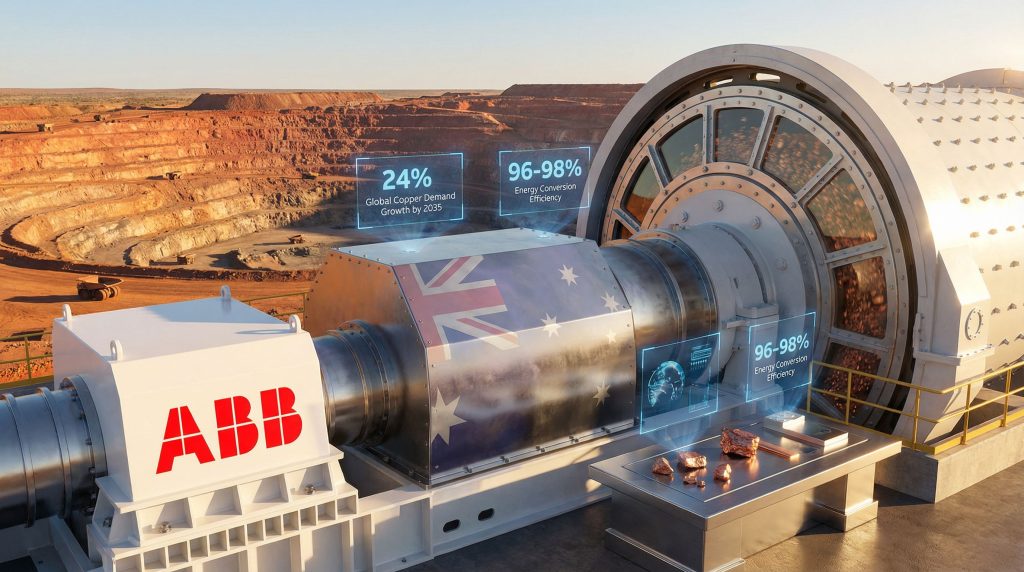
GMD technology eliminates traditional mechanical gearing components, delivering direct-drive power transmission that adapts instantaneously to changing ore characteristics. The Eva Copper project features a 24MW GMD system powering a 40-foot SAG mill, representing the scale of equipment required for modern copper processing operations. This configuration enables variable-speed control ranging from zero to maximum operating RPM, allowing operators to optimise grinding conditions based on ore hardness, feed size distribution, and downstream processing requirements.
The gearless design offers inherent advantages over conventional mill drives. Mechanical gear systems introduce efficiency losses, maintenance requirements, and potential failure points that can shut down entire processing circuits. However, GMD systems eliminate these concerns while providing superior torque characteristics at low speeds, essential for mill startup and variable-load conditions common in copper processing applications.
Technical Specifications for Modern GMD Applications:
- Power Range: 5MW to 28MW continuous operation capability
- Motor Integration: Direct-coupled permanent magnet synchronous motors
- Speed Control: Infinite variable speed adjustment via frequency converters
- Torque Delivery: Maximum torque available from zero RPM
- Efficiency Rating: 96-98% energy conversion efficiency
Ring-Geared Mill Drive (RMD) Systems: Precision Control for Secondary Grinding
RMD technology combines dual-pinion configurations with advanced variable-frequency drives, providing precise control over ball mill operations essential for copper liberation. The Eva Copper installation includes an 18MW variable-speed dual-pinion RMD system for a 27-foot ball mill, demonstrating the integration of multiple grinding stages within contemporary processing flowsheets.
The dual-pinion approach distributes mechanical loads across multiple drive points, reducing wear on individual components while maintaining operational flexibility. Variable-frequency drives enable real-time speed adjustment based on grinding circuit conditions, allowing operators to optimise residence time, power draw, and product size distribution. Consequently, this capability proves particularly valuable when processing ore with varying hardness characteristics or when adjusting circuit performance to meet changing metallurgical requirements.
RMD System Advantages:
- Load Distribution: Dual-pinion design reduces mechanical stress
- Speed Flexibility: Variable-frequency control enables optimisation
- Maintenance Access: Modular design simplifies service procedures
- Integration Capability: Compatible with existing mill infrastructure
How Do These Technologies Address Australia's Unique Mining Challenges?
Geological Complexity and Ore Variability
Australian copper deposits present distinct processing challenges that require adaptive grinding solutions. Queensland's porphyry copper systems typically exhibit significant hardness variations, with Bond Work Index measurements fluctuating between 12-18 kWh/t depending on rock type, alteration patterns, and depth of weathering. Traditional fixed-speed grinding systems struggle to maintain optimal efficiency across this range, leading to either over-grinding (wasting energy) or under-grinding (reducing copper recovery).
Variable-speed drive systems address this challenge through real-time adaptation to ore characteristics. Advanced control algorithms monitor power draw, mill sound signature, and downstream particle size distribution, automatically adjusting mill speed to maintain optimal grinding conditions. This capability becomes particularly valuable when processing ore from different pit phases or blending materials with contrasting metallurgical properties.
Ore Processing Optimisation Table:
| Challenge | Conventional Approach | Advanced Drive Solution |
|---|---|---|
| Hardness Variation | Fixed-speed operation | Real-time speed adjustment |
| Energy Efficiency | 35-40 kWh/tonne | 28-32 kWh/tonne |
| Maintenance Planning | Scheduled interventions | Predictive maintenance |
| Product Consistency | Variable liberation | Optimised particle size |
Remote Operations and Service Infrastructure
Many Australian copper mining operations function in remote locations where equipment reliability directly impacts production continuity. The Eva Copper project's integration of local manufacturing capabilities with global engineering expertise addresses these logistical challenges. The eHouse component, engineered and manufactured in Australia to meet local standards, demonstrates how technology providers adapt global solutions to Australian operational requirements.
Advanced monitoring systems enable remote diagnostics and performance optimisation, reducing the need for on-site technical expertise while maintaining equipment performance. Digital platforms provide 24/7 monitoring capabilities, with automated alert systems notifying operators of developing issues before they result in unplanned shutdowns. Accordingly, this predictive approach proves particularly valuable given the extended logistics chains and limited service infrastructure characterising many Australian mining regions.
Remote Monitoring Capabilities:
- Real-time Performance Analytics: Continuous equipment health monitoring
- Predictive Fault Detection: Early warning systems prevent failures
- Automated Reporting: Regular performance summaries and trend analysis
- Remote Support: Global engineering teams provide virtual assistance
What Are the Economic Benefits for Australian Copper Producers?
Production Capacity and Throughput Enhancement
Advanced grinding systems deliver measurable improvements in processing capacity through enhanced energy utilisation and reduced downtime. Variable-speed capabilities allow operators to increase throughput when processing softer ore types while maintaining product quality specifications. This flexibility translates to additional copper production without requiring physical plant expansion, effectively extending economic mine life through improved metal recovery.
The Eva Copper project's selection of ABB grinding technology reflects detailed economic analysis comparing conventional alternatives with advanced drive systems. Drive system efficiency emerged as a critical evaluation factor, recognising that SAG and ball mills represent the largest power consumers on site. Moreover, understanding effective copper investment strategies helps mining companies make informed decisions about technology adoption and project development.
Economic Impact Analysis:
| Improvement Category | Traditional Systems | Advanced Drive Benefits |
|---|---|---|
| Energy Consumption | Baseline Reference | 15-20% reduction |
| Maintenance Costs | Scheduled replacements | 25-30% lower unplanned repairs |
| Throughput Capacity | Fixed design limits | 15-25% increase capability |
| Operational Flexibility | Limited adaptation | Real-time optimisation |
Lifecycle Cost Considerations
Mining companies increasingly evaluate equipment purchases based on total cost of ownership rather than initial capital expenditure. Advanced grinding systems typically command premium pricing compared to conventional alternatives, but deliver superior lifecycle economics through reduced energy consumption, lower maintenance requirements, and extended operational life.
Energy efficiency improvements of 15-20% translate to substantial cost savings over mine life, particularly given electricity represents 20-30% of total processing costs. Predictive maintenance capabilities reduce unplanned downtime by identifying developing issues before they cause equipment failures, minimising both repair costs and production losses.
Annual Economic Benefits:
- Energy Cost Savings: $500,000-$800,000 annually (typical 50,000 tpd operation)
- Maintenance Optimisation: 40% reduction in maintenance labour hours
- Production Continuity: 95%+ equipment availability targets
- Mine Life Extension: 2-4 years additional operation through efficiency gains
How Does ABB's Digital Integration Support Australian Operations?
Local Manufacturing and Global Engineering Integration
ABB's approach to the Eva Copper project demonstrates sophisticated integration of local manufacturing capabilities with global engineering expertise. The eHouse component undergoes engineering and manufacturing in Australia, meeting local standards and operator safety requirements while enabling streamlined engineering coordination and shorter logistics pathways. This localisation strategy addresses unique aspects of Australian mining operations, including regulatory compliance requirements and site-specific safety protocols.
Engineering delivery involves a global ABB team spanning Australia, Finland, and Switzerland, combining regional expertise with specialised technical knowledge from multiple centres of excellence. This distributed approach ensures projects benefit from both local market understanding and cutting-edge technological development from ABB's international research and development facilities.
ABB Ability™ Digital Platform Capabilities
Modern grinding systems incorporate comprehensive digital monitoring and optimisation platforms that transform equipment operation from reactive maintenance to predictive performance management. These platforms utilise machine learning algorithms to analyse operational data, identifying optimal operating parameters based on ore characteristics, energy costs, and production targets. In addition, the broader context of mining innovation trends demonstrates how digital transformation is reshaping the entire mining sector.
Digital Integration Features:
- Performance Optimisation: Continuous analysis identifies efficiency improvements
- Predictive Analytics: Machine learning algorithms prevent equipment failures
- Remote Diagnostics: Global support teams access real-time equipment data
- Lifecycle Management: Data-driven maintenance scheduling optimises costs
The digital platform architecture enables Australian mining operations to benefit from global operational knowledge while maintaining local control over production decisions. Performance data from multiple sites contributes to algorithm improvement, creating network effects that enhance system performance across ABB's installed base.
Local Support Infrastructure Benefits
ABB's Australian operations provide strategic advantages for mining companies through established service networks, parts inventory, and technical support capabilities. Local manufacturing enables customisation for specific site requirements while maintaining compatibility with global standards and best practices.
Service network coverage across Australian mining regions ensures rapid response to equipment issues, minimising production impacts when problems occur. Parts inventory management combines local availability with global supply chain coordination, balancing immediate access requirements with inventory carrying costs.
The next major ASX story will hit our subscribers first
What Role Do These Systems Play in Future Copper Projects?
Emerging Project Applications and Technology Adoption
The Eva Copper project represents current implementation of mature grinding technology rather than experimental deployment. This positioning reflects the conservative risk management approach characteristic of major mining investments, where proven technology selection minimises operational uncertainty during project development and commissioning phases.
Several factors drive continued adoption of advanced grinding systems across Australian copper projects. Declining ore grades necessitate more efficient processing to maintain economic viability, while rising energy costs increase the relative value of efficiency improvements. Environmental regulations and corporate sustainability commitments further incentivise technology adoption that reduces energy consumption and environmental impact. Furthermore, the Codelco Adani copper partnership exemplifies how international collaborations are driving technological advancement in the copper mining sector.
Technology Evolution and Future Developments
While current grinding systems represent mature technology, ongoing development focuses on enhanced digital integration and autonomous operation capabilities. Machine learning algorithms continue improving through expanded operational datasets, enabling more precise optimisation of grinding parameters based on real-time ore characteristics.
Next-Generation Technology Trends:
- Enhanced Automation: Reduced operator intervention through intelligent control systems
- Advanced Materials: Improved wear resistance extends maintenance intervals
- Modular Architecture: Scalable capacity additions accommodate changing production requirements
- Integrated Optimisation: Whole-plant control systems coordinate multiple processing stages
Project Development Considerations
Mining companies evaluating advanced grinding systems must balance initial capital investment against lifecycle economic benefits. Technology selection typically occurs during detailed engineering phases, requiring coordination between metallurgical requirements, electrical infrastructure capacity, and operational preferences.
The Eva Copper project's technology evaluation process emphasises efficiency as a critical selection factor, recognising that grinding represents the largest energy consumption component in copper processing operations. This focus reflects broader industry trends toward lifecycle cost optimisation rather than minimising initial capital expenditure.
How Do Environmental Considerations Drive Technology Adoption?
Energy Efficiency and Carbon Footprint Reduction
Advanced grinding technology directly supports environmental objectives through improved energy utilisation efficiency. Energy consumption reductions of 15-20% translate proportionally to lower carbon emissions, particularly significant given grinding circuits typically represent 30-40% of total mine energy consumption. These improvements align with corporate sustainability commitments and regulatory requirements for emissions reduction.
The Eva Copper project's emphasis on energy efficiency reflects broader industry recognition that environmental performance and economic competitiveness increasingly align. Reduced energy consumption delivers both cost savings and environmental benefits, creating business cases that satisfy financial and sustainability objectives simultaneously.
Sustainability Integration Benefits:
| Environmental Aspect | Traditional Systems | Advanced Technology Impact |
|---|---|---|
| Energy Consumption | Baseline Reference | 12-18% reduction per tonne processed |
| Carbon Intensity | Fixed emissions profile | Proportional emissions reduction |
| Water Utilisation | Standard requirements | Optimised through process efficiency |
| Waste Heat Recovery | Limited capabilities | Enhanced thermal integration potential |
Renewable Energy Integration Potential
Variable-speed drive systems offer superior compatibility with renewable energy sources compared to conventional fixed-speed alternatives. Wind and solar power generation creates inherent variability that challenges traditional mining operations designed around constant power availability. Advanced grinding systems can adjust operating parameters to match available renewable energy, maximising utilisation of clean power sources when available while maintaining production flexibility during periods of reduced renewable generation.
Regulatory Compliance and Future Requirements
Environmental regulations continue evolving toward stricter emissions requirements and enhanced environmental reporting obligations. Mining companies increasingly recognise that technology investments made today must accommodate future regulatory developments rather than merely meeting current requirements.
Advanced grinding systems provide operational flexibility that supports compliance with evolving environmental standards. Digital monitoring capabilities enable detailed environmental performance tracking and reporting, while efficiency improvements create buffer capacity for meeting future regulatory requirements without additional capital investment.
What Should Mining Companies Consider When Evaluating ABB Technology?
Technical Evaluation Framework
Mining companies must assess grinding technology selection within comprehensive evaluation frameworks that balance technical capabilities, economic benefits, and operational requirements. The Eva Copper project's detailed technology evaluation process emphasises drive system efficiency as a critical factor, recognising the direct relationship between grinding efficiency and overall project economics.
Technology Assessment Criteria:
| Evaluation Factor | Weighting | ABB Technology Advantages |
|---|---|---|
| Equipment Reliability | 30% | Gearless design eliminates mechanical failure points |
| Energy Efficiency | 25% | 4-6% improvement over conventional alternatives |
| Operational Flexibility | 20% | Variable-speed adaptation to ore characteristics |
| Maintenance Requirements | 15% | Predictive systems minimise unplanned downtime |
| Support Infrastructure | 10% | Local manufacturing and global engineering |
Implementation Timeline and Project Integration
Advanced grinding system implementation requires coordination across multiple project phases, from initial feasibility studies through commissioning and operational optimisation. Typical project timelines span 18-24 months from equipment order to full operational status, requiring early integration into overall project scheduling.
The Eva Copper project demonstrates coordinated approach combining local manufacturing advantages with global engineering expertise. eHouse manufacturing in Australia reduces logistics complexity while maintaining technical standards developed through global experience. This integration approach minimises project risks while optimising implementation efficiency.
Performance Guarantee and Risk Management
Technology suppliers typically provide performance guarantees covering equipment availability, energy efficiency, and operational capability. These contractual commitments transfer technical performance risk from mining companies to equipment suppliers, though successful implementation requires close collaboration throughout commissioning and optimisation phases.
Key Performance Indicators:
- Equipment Availability: 95%+ operational time targets
- Energy Efficiency: Guaranteed kWh/tonne performance levels
- Throughput Capacity: Minimum processing rate commitments
- Maintenance Intervals: Predicted maintenance scheduling accuracy
Training and Operational Transition
Advanced grinding systems require specialised knowledge for optimal operation and maintenance. Technology suppliers typically provide comprehensive training programmes covering operational procedures, maintenance protocols, and troubleshooting techniques. The transition from conventional to advanced systems requires structured change management approaches ensuring smooth operational handover.
Training programmes address both technical competencies and safety requirements, recognising that advanced systems introduce new operational procedures and maintenance protocols. Successful implementation requires commitment to ongoing skills development as technology capabilities continue evolving through digital platform improvements and operational experience.
The Strategic Imperative for Australian Copper Mining Excellence
The integration of ABB grinding technology in Australian copper mining represents far more than equipment upgrades; it embodies a fundamental shift toward intelligent, adaptive processing systems that address the complex challenges facing modern mining operations. As the Eva Copper project demonstrates, contemporary technology selection requires balancing proven reliability with cutting-edge capabilities that support long-term competitiveness in rapidly evolving global markets.
Australian mining companies face mounting pressure from multiple directions: declining ore grades requiring more efficient processing, rising energy costs demanding operational optimisation, environmental regulations necessitating reduced emissions, and global competition requiring technological advantages. For instance, understanding the key copper price growth drivers helps companies make strategic decisions about technology investments that align with market conditions.
The convergence of digital monitoring, predictive maintenance, and variable-speed control creates operational capabilities that were inconceivable just decades ago. Mining operations can now adapt grinding parameters in real-time based on ore characteristics, optimise energy consumption continuously, and prevent equipment failures before they impact production. These capabilities transform grinding from a mechanical process into an intelligent system that learns and improves through operational experience.
Investment Perspective: Mining companies evaluating technology investments must recognise that advanced grinding systems represent strategic assets extending far beyond immediate operational benefits. These systems provide the technological foundation for maintaining competitiveness as industry conditions continue evolving toward greater complexity and higher performance expectations.
The Australian mining industry's embrace of ABB grinding technology in Australian copper mining positions the continent's copper producers to capitalise on the global energy transition while maintaining operational excellence standards that have defined Australian mining leadership for generations. According to industry analysis from ABB's official mining technology page, these advanced systems deliver measurable improvements in energy efficiency and operational reliability. Additionally, insights from Mining Weekly's coverage of ABB's grinding technology contracts demonstrate the growing industry confidence in these technological solutions.
This technological evolution ensures that Australia's copper mining sector remains competitive in an increasingly demanding and rapidly changing global marketplace, supporting the nation's strategic position as a reliable copper supplier for the global energy transition.
Looking to Capitalise on Australia's Copper Mining Revolution?
Discovery Alert's proprietary Discovery IQ model delivers real-time notifications on significant ASX mineral discoveries, instantly transforming complex mining developments into actionable investment insights. Explore how major copper and mineral discoveries have generated exceptional returns by visiting Discovery Alert's dedicated discoveries page, then begin your 14-day free trial to position yourself ahead of the market for the next breakthrough announcement.