June 7, 2026
The Economics of Keeping Ageing Copper Mines Alive
Across the global mining industry, a quiet but consequential shift is underway. Rather than racing to develop new greenfield copper deposits, which carry escalating capital costs, permitting timelines measured in decades, and mounting community opposition, major producers are increasingly turning to their existing asset base with fresh eyes and sophisticated technology. The question driving investment committees is no longer simply whether a mine has enough ore left to justify operating. It is whether the right combination of process innovation can fundamentally rewrite what a mature, lower-grade deposit is worth.
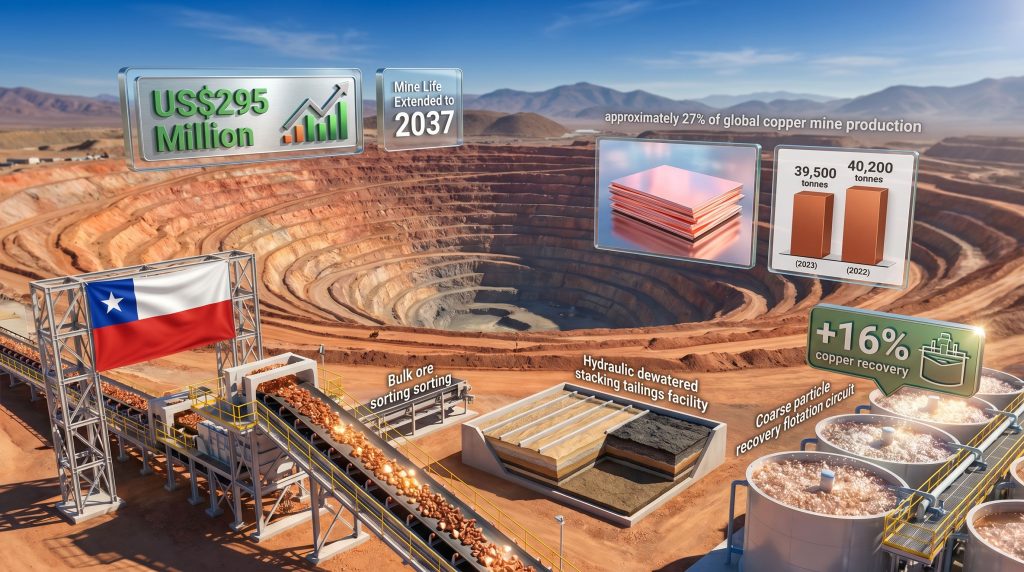
That question sits at the centre of Anglo American's US$295 million commitment to its El Soldado copper mine in Chile's Valparaíso Region, one of the most consequential copper investment decisions in South America in recent years. The Anglo American investment in El Soldado copper mine is not a conventional expansion play. It is a technology-led repositioning of a declining asset, designed to prove that operational innovation can extend mine life, restore production trajectories, and reduce environmental footprints simultaneously.
When big ASX news breaks, our subscribers know first
El Soldado's Operational Baseline: Understanding the Starting Point
Before assessing what the US$295 million will achieve, it is worth grounding the analysis in what El Soldado actually represents operationally. Located in Chile's Valparaíso Region, the mine operates as an open-pit copper operation with additional underground expansion considerations. Annual copper production has hovered around 39,500 to 40,200 tonnes in recent years, placing it firmly in the mid-tier category by Chilean standards, but well below the flagship scale of operations like Escondida or Collahuasi.
The mine's workforce encompasses roughly 631 permanent employees alongside approximately 1,068 contractors, creating a meaningful employment footprint in the local community. Anglo American holds a 50.1% controlling interest in the operation, a stake it has maintained since 2002. The remaining ownership is divided between a Codelco-Mitsui joint venture holding 29.5% and Mitsubishi Corporation retaining the balance.
El Soldado also holds The Copper Mark certification, the responsible production standard administered by the International Copper Association, which validates compliance across environmental, social, and governance dimensions. This certification carries increasing commercial relevance as downstream buyers in the electric vehicle and renewable energy sectors tighten their supply chain scrutiny.
The Production Decline Problem and Why It Demanded Action
Declining ore grades are not unique to El Soldado. They represent one of the most structurally persistent challenges across the global copper industry. As the most accessible, highest-grade ore zones within any deposit are progressively mined out, operations must process larger volumes of lower-grade material to maintain output, which drives up energy consumption, water use, and unit costs. Left unaddressed, this dynamic creates a slow compression of economic viability that eventually tips a mine toward closure.
At El Soldado, this trajectory was accelerating toward an anticipated 2027 operational end-date without intervention. A brief production suspension in early 2024, linked to delayed regulatory approval for a mine redesign, illustrated just how exposed the asset was to both operational and permitting risk. The suspension served as a practical demonstration that without a structured reinvestment program, the mine's path to closure was not merely theoretical.
Anglo American's copper segment generated approximately US$6.4 billion in EBITDA in 2025 at a 49% margin, reflecting the financial scale that underpins the group's appetite to protect and extend copper output wherever technically and economically feasible. Against that backdrop, a US$295 million commitment to extend a declining asset's life by a decade is a disciplined, returns-focused decision rather than an act of sentiment.
How the US$295 Million Investment Is Structured
The Anglo American investment in El Soldado copper mine is not a single project but a layered technology deployment program built around three distinct innovations, each targeting a different dimension of the mine's operational performance.
The Operational Continuity Plan: Buying a Decade of Mine Life
The foundational component is the US$40 million Operational Continuity Plan, which has received environmental agency approval and is awaiting final sector-level permits before construction commences. Once permitted, the construction timeline runs to approximately 18 months, with the primary objective of extending El Soldado's operational life from the previously anticipated 2027 closure through to 2037.
That single outcome, adding roughly 10 years of productive mine life, is arguably the most significant deliverable in the entire program. The incremental production enabled by this extension, measured against a base of approximately 39,500 tonnes per year, represents a substantial volume contribution to Anglo American's Chilean copper portfolio over the extension period.
The production benefits are already becoming visible. During technology testing phases, Q2 copper output increased by 83% year-on-year to reach 13,700 tonnes, a result that validates the operational logic of the investment even before the full capital program is deployed.
Bulk Ore Sorting: Reclassifying What Counts as Economic Material
One of the most technically sophisticated elements of the program is the deployment of bulk ore sorting technology, which pre-concentrates ore streams by copper grade before they reach the processing plant. Rather than feeding all excavated material through energy-intensive comminution and flotation circuits, bulk ore sorting identifies and separates lower-grade waste material earlier in the process chain.
The operational benefits span four dimensions:
- Reduced water consumption by decreasing the volume of material requiring wet processing
- Lower energy intensity as less material passes through grinding and flotation circuits
- Reduced greenhouse gas emissions as a downstream consequence of lower energy consumption
- Minimised processing waste through earlier separation of sub-economic material
A bulk ore sorting pilot plant is being constructed as part of the Operational Continuity Plan, with advanced planning having commenced as early as 2023. This phased approach, piloting before full-scale deployment, reflects a technically conservative but commercially sensible implementation strategy.
Hydraulic Dewatered Stacking: Solving the Water Problem
Perhaps the most strategically important technology in El Soldado's new operational toolkit is Hydraulic Dewatered Stacking (HDS), commissioned in November 2022 and confirmed at large-scale demonstration in late 2024. The facility was purpose-built to El Soldado's specific conditions, with a capacity of 150,000 m³.
The core performance metric is a water recovery rate exceeding 80% from tailings, achieved through engineered sand channels embedded within the tailings stack that accelerate the dewatering process. The result is unsaturated tailings material, which carries two distinct advantages over conventional wet tailings storage:
- Reduced geotechnical risk, particularly relevant in Chile's seismically active geography
- Substantially lower environmental liability from potential tailings facility failures
Water Scarcity Context: Chile's central mining regions, including the Valparaíso corridor where El Soldado operates, face some of the most acute drought conditions on the continent. In this context, an 80%+ water recovery rate from tailings is not simply an efficiency metric. It is a direct response to one of the most pressing operational and regulatory constraints in Chilean copper mining, and a prerequisite for maintaining social licence in water-stressed communities.
Coarse Particle Recovery Flotation: The Embedded Productivity Gain
The third pillar, Coarse Particle Recovery (CPR) flotation, is already fully integrated into El Soldado's processing operations, making it the most mature technology in the stack. CPR modifies conventional flotation circuits to recover copper from coarser particle fractions that standard flotation processes would otherwise reject as waste.
The measurable production impact is significant: a +16% copper recovery improvement without incremental energy consumption, translating to approximately 600 additional tonnes of copper recovered per month. That monthly uplift, achieved through process optimisation rather than new ore discovery or capital-intensive expansion, represents the kind of efficiency gain that fundamentally changes the economic calculus of a mature operation. Furthermore, copper processing innovations of this kind are increasingly central to how major producers manage ageing asset portfolios.
Technology Stack Summary
| Technology or Project | Capital Scale | Operational Status (2026) | Primary Benefit |
|---|---|---|---|
| Full Investment Program | US$295 million total | In deployment | Mine life extension and production recovery |
| Operational Continuity Plan | US$40 million | Approved; permits pending | Extends mine life to 2037 |
| Hydraulic Dewatered Stacking | 150,000 m³ facility | Operational since 2022; demo confirmed 2024 | Greater than 80% water recovery |
| CPR Flotation | Not separately disclosed | Fully embedded | +16% copper recovery; approx. 600t/month uplift |
| Bulk Ore Sorting Pilot Plant | Included in continuity plan | Construction phase | Reduces water, energy, emissions, and waste |
El Soldado in the Context of Chile's Copper Landscape
Chile accounts for approximately 27% of global copper mine production, cementing its position as the single largest contributing nation to global copper supply. The Chile copper outlook remains closely watched by investors globally, given the country's outsized influence on supply dynamics. Within that landscape, Anglo American operates across three Chilean assets that span different positions on the production and strategic spectrum.
| Operation | Operator | Annual Production (approx.) | Strategic Role |
|---|---|---|---|
| Escondida | BHP and Rio Tinto | Over 1,000,000 tonnes | Volume anchor of global supply |
| Collahuasi | Anglo American and Glencore | Over 600,000 tonnes | Major production asset |
| Los Bronces | Anglo American | Approximately 300,000 tonnes | Core Anglo Chilean asset |
| El Soldado | Anglo American | Approximately 39,500 tonnes | Technology pilot and innovation hub |
El Soldado's production volume is modest relative to these tier-one operations, but its function as an innovation testbed gives it an outsized strategic role within Anglo American's Chilean portfolio. Technologies successfully validated at El Soldado are transferable to the group's larger copper assets, meaning the effective return on the US$295 million extends well beyond El Soldado's own production contribution.
It is also worth noting that the permitting and regulatory environment in Chile adds a layer of complexity to any capital commitment in this sector. The brief 2024 production suspension, resulting from delayed approval for a mine redesign, is a reminder that Chile's environmental evaluation framework operates independently of operator preferences and timelines. The remaining sector-level permits required before Operational Continuity Plan construction commences represent a genuine variable in the investment's execution timeline. In addition, the broader Chile copper supply gap remains a structural concern shaping how producers prioritise capital across their Chilean portfolios.
The next major ASX story will hit our subscribers first
Environmental Implications: Beyond Compliance
The environmental dimension of the Anglo American investment in El Soldado copper mine deserves analysis beyond the standard corporate sustainability framing. The HDS technology's greater than 80% water recovery rate directly addresses Chile's chronic water scarcity challenges, which are a structural constraint on mining operations across the country's central regions, not merely a regulatory hurdle to clear.
Bulk ore sorting adds a further environmental dimension by reducing the mass of material requiring processing, lowering energy consumption and its associated emissions profile. These are not superficial improvements. At the scale of a copper processing operation, even modest percentage reductions in energy intensity and water consumption translate to material environmental and cost outcomes over a multi-decade mine life.
The Copper Mark certification meanwhile signals that El Soldado's responsible production credentials have been independently verified, which increasingly influences purchasing decisions among copper buyers in the electric vehicle and clean energy sectors.
What El Soldado Signals for the Broader Copper Industry
The investment thesis behind this program carries implications that extend well beyond a single Chilean open-pit operation. Indeed, the copper supply crunch facing the global industry makes technology-led mine life extensions increasingly important as a supply strategy.
The copper demand outlook is underpinned by structural forces that are not cyclical. Electric vehicles require approximately 83 kilograms of copper per unit, compared to roughly 23 kilograms in a conventional internal combustion vehicle. Grid infrastructure modernisation, offshore wind installation, and solar generation systems all carry similarly elevated copper intensity relative to the fossil fuel infrastructure they are replacing. These demand drivers are projected to persist through 2040 and beyond, creating a sustained requirement for copper supply that the global mining industry is struggling to match through new project development alone.
Industry Insight: The development pipeline for new copper greenfield projects has been thinning for years. Permit timelines of 15 to 20 years, rising capital costs, and community opposition to new mining development mean that extending the life of existing operations is not merely a second-best alternative. In many supply scenarios, it is the primary lever available to producers seeking to maintain output.
El Soldado's technology program, if it delivers on its projected performance metrics, becomes a reference case for the industry. The combination of bulk ore sorting, hydraulic dewatered stacking, and CPR flotation at a mature, declining-grade copper operation demonstrates that process innovation can delay the economic obsolescence of assets that conventional analysis might have classified as approaching end-of-life. Consequently, the future of copper mining may depend heavily on exactly this kind of disciplined, technology-first reinvestment approach.
For capital allocators and industry observers, the El Soldado model raises a broader question worth tracking: how many other mature copper operations globally carry similar potential for technology-enabled life extension, and what is the aggregate supply impact if even a fraction of them follow a comparable reinvestment pathway?
Frequently Asked Questions
What is Anglo American's total investment commitment at El Soldado?
Anglo American has committed US$295 million to El Soldado, targeting production recovery and a formal extension of the mine's operational life through a combination of process technologies and infrastructure upgrades.
How long will El Soldado continue operating after this investment?
The approved Operational Continuity Plan is designed to extend El Soldado's operational life from an anticipated 2027 end-date to 2037, adding approximately 10 years of productive output.
Which technologies are being deployed as part of the investment program?
Three primary technologies anchor the program:
- Bulk Ore Sorting, which pre-classifies ore by copper grade to reduce downstream water, energy, and waste
- Hydraulic Dewatered Stacking, recovering more than 80% of water from processed tailings material
- Coarse Particle Recovery flotation, already embedded in operations and delivering a 16% copper recovery improvement
Why did El Soldado face the prospect of early closure before this investment?
Declining ore grades were progressively compressing the mine's economic viability. A brief production suspension in early 2024, triggered by delayed environmental redesign approvals, demonstrated the compound risk facing the asset without a structured reinvestment program.
What is Anglo American's ownership stake in El Soldado?
Anglo American holds a 50.1% controlling interest in El Soldado, a position maintained since 2002. The Codelco-Mitsui joint venture holds 29.5% and Mitsubishi Corporation retains the remaining stake.
Disclaimer: This article contains forward-looking statements, production projections, and financial data drawn from publicly available sources and company disclosures. Actual outcomes may differ materially from those described. This article does not constitute investment advice. Readers should conduct independent due diligence before making any investment decisions. All production figures and financial metrics cited are sourced from available Anglo American operational and investor disclosures and are subject to revision.
Want to Capitalise on the Next Major Copper Discovery Before the Broader Market Catches On?
Discovery Alert's proprietary Discovery IQ model scans ASX announcements in real time, instantly identifying significant mineral discoveries — including copper — and delivering actionable alerts so subscribers can make informed decisions ahead of the crowd. Explore how historic discoveries have generated extraordinary returns on Discovery Alert's dedicated discoveries page, then begin a 14-day free trial to secure a market-leading edge.