May 19, 2026
Understanding Advanced Power Integration Technologies
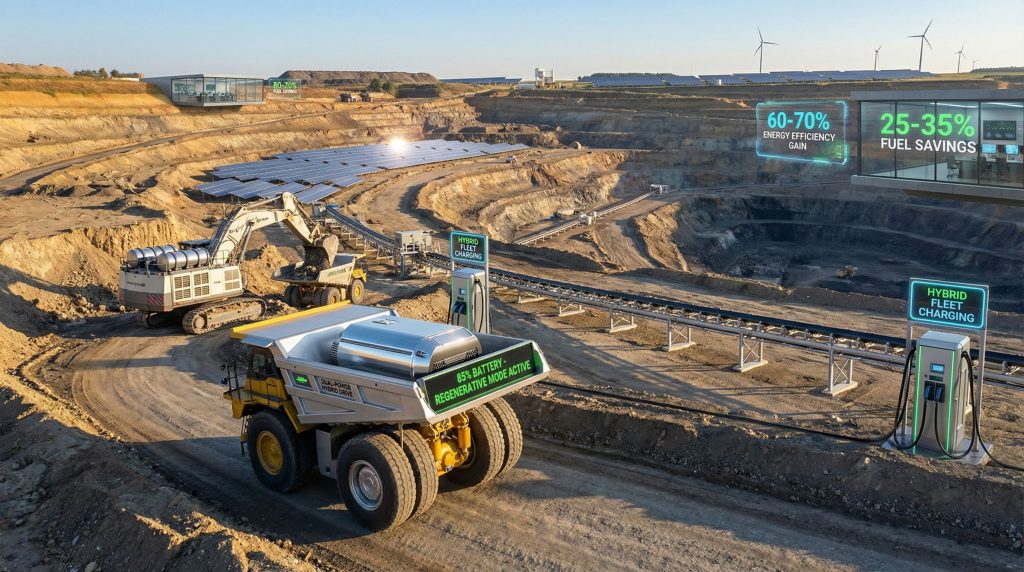
Mining operations worldwide are experiencing a transformational period characterised by the convergence of multiple power generation and energy storage technologies within single operational frameworks. This evolution represents more than incremental improvement; it constitutes a fundamental reconfiguration of how extractive industries approach energy management, operational efficiency, and environmental compliance through hybrid mining systems.
The shift toward integrated power systems reflects broader industrial trends where traditional single-source energy approaches prove inadequate for modern operational demands. These advanced configurations combine conventional diesel engines with electric motors, sophisticated battery arrays, and intelligent control systems to create adaptable platforms capable of optimising performance across varying operational conditions.
Modern mining operations require power systems that can deliver consistent performance while adapting to fluctuating demand cycles, extreme environmental conditions, and increasingly stringent regulatory requirements. Hybrid mining systems emerge as a technological solution that addresses these challenges through intelligent integration of complementary power technologies.
When big ASX news breaks, our subscribers know first
Core Infrastructure Components and Their Integration Mechanisms
The foundation of hybrid mining systems rests on sophisticated integration of diverse power generation and energy storage technologies. These components must function cohesively within complex operational environments while maintaining individual performance characteristics that contribute to overall system efficiency.
Primary Power Generation Elements:
• Diesel engines providing reliable base-load power and operational flexibility
• Electric motors delivering instantaneous torque and precise control capabilities
• Battery systems enabling energy storage and peak power delivery
• Regenerative systems capturing and converting kinetic energy during deceleration
Advanced Energy Storage Technologies:
• Lithium-ion battery arrays offering high energy density and rapid charging capabilities
• Supercapacitor systems providing instantaneous power delivery for peak demand scenarios
• Hydraulic accumulators storing mechanical energy for immediate release applications
• Thermal management systems maintaining optimal operating temperatures across all components
Intelligent Control and Management Systems:
• Smart energy distribution networks optimising power flow between multiple sources
• Predictive load management systems anticipating operational demands
• Regenerative braking controllers maximising energy recovery during equipment operation
• Modular integration platforms enabling retrofitting of existing equipment fleets
Nicholas Russell, Principal Mechanical Engineer at Worley, emphasises that these integrated platforms represent a departure from traditional single-source operations toward comprehensive multi-technology approaches that optimise efficiency, sustainability, and cost-effectiveness across mining operations. Furthermore, these systems leverage AI in mining operations to enhance their performance capabilities.
Continuous Material Transport System Integration
In-Pit Crushing and Conveying systems represent a mature technology that has demonstrated operational effectiveness across multiple mining environments for several years. These systems utilise continuous conveyor networks to transport materials from extraction points directly to processing facilities, fundamentally altering traditional truck-dependent material handling approaches.
The operational advantage of IPCC systems lies in their ability to maintain continuous material flow, eliminating the stop-start inefficiencies inherent in truck-based transport systems. By replacing traditional haul truck fleets with conveyor networks, these systems achieve significant reductions in fuel consumption and operational emissions while maintaining consistent material throughput.
Technical Configuration Considerations:
| System Component | Operational Characteristic | Performance Impact |
|---|---|---|
| Conveyor Networks | Continuous material flow | Eliminates transport delays |
| Crushing Stations | In-pit material processing | Reduces material handling stages |
| Power Distribution | Electric motor operation | Lower energy consumption than diesel alternatives |
However, IPCC systems face inherent operational limitations that necessitate hybrid approaches combining conveyor efficiency with fleet flexibility. Russell notes that route optimisation varies significantly between different pit configurations, with some scenarios favouring direct truck transport while others benefit from conveyor routing efficiency.
For instance, in strip mining operations, truck transport can traverse upper burden areas directly across pit floors, while IPCC systems typically require routing around these same areas. Conversely, in deep pit operations, IPCC configurations can utilise steeper, more direct routing that proves impractical for traditional truck transport.
These operational distinctions illustrate why hybrid approaches combining IPCC efficiency with smaller truck fleets often provide optimal balance between sustainability objectives and operational flexibility requirements. Such combinations enable mining operations to leverage continuous material flow advantages while maintaining adaptability for varying geological and operational conditions.
What Are the Key Benefits of Battery-Electric and Power System Hybridisation?
Battery-electric haul truck technology represents an emerging advancement in mining equipment that addresses industry demands for cleaner, quieter operational alternatives to traditional diesel-powered units. While currently in early development stages, these systems promise direct replacement capabilities for conventional truck fleets with enhanced environmental performance characteristics.
Renee Frenette, Senior Associate Technical Consultant at Worley, indicates that "electric-powered trucks offer cleaner and quieter operational alternatives as the technology advances toward broader sectoral adoption". However, current battery-electric models operate at significantly smaller scales than units required for large-scale mining operations.
Original equipment manufacturers estimate that larger-capacity battery-electric trucks suitable for major mining operations will become commercially available between 2027 and 2030. This timeline reflects ongoing technological development in battery energy density, charging infrastructure, and integration systems necessary for heavy-duty mining applications.
Current Technology Limitations:
• Battery capacity constraints limiting operational range in extreme conditions
• Charging infrastructure requirements for remote mining locations
• Equipment scaling challenges for heavy-duty mining applications
• Integration complexity between electrical and mechanical systems
Emerging Hybrid Configurations:
• Series-parallel power systems combining electric motors with diesel backup
• Regenerative braking systems capturing kinetic energy during descent operations
• Supercapacitor integration providing instantaneous power for peak demand scenarios
• Modular battery configurations enabling field replacement and capacity scaling
The practical implementation of battery-electric technology within hybrid operational frameworks involves strategic deployment based on specific operational requirements. Russell suggests that hybrid models might utilise IPCC systems for primary material transport while employing smaller fleets of electric mining trucks in areas requiring operational flexibility or where conveyor systems prove impractical.
Consequently, this approach leverages the complementary operational characteristics of different technologies, with each system deployed according to specific pit geometry, material characteristics, and operational requirements. For more information on power solutions, visit Aggreko's hybrid mining solutions.
Operational Efficiency Enhancement Through Technology Integration
Hybrid mining systems deliver measurable improvements in operational performance through multiple integrated mechanisms that optimise energy utilisation, reduce operational costs, and enhance equipment lifecycle management. These improvements result from sophisticated coordination between different power sources and intelligent system management.
Energy Recovery and Optimisation Mechanisms:
• Regenerative braking systems capturing kinetic energy during equipment deceleration phases
• Intelligent power distribution reducing fuel consumption during idle periods
• Continuous material flow elimination of stop-start operational inefficiencies
• Load balancing optimisation distributing power demand across multiple sources
Maintenance Cost Reduction Strategies:
• Electric motor components requiring reduced maintenance compared to internal combustion equivalents
• Predictive maintenance capabilities identifying component degradation before failure
• Extended equipment lifecycles through reduced mechanical stress and thermal cycling
• Simplified service requirements for integrated electrical systems
The integration of multiple power sources enables operational optimisation that single-source systems cannot achieve. During peak demand periods, battery and supercapacitor systems provide instantaneous power supplementation, while base-load requirements are maintained through conventional or hybrid power generation.
Performance Monitoring and Control Systems:
• Real-time energy consumption tracking across all system components
• Automated load balancing between different power sources
• Predictive demand modelling optimising energy storage and generation scheduling
• Integration with mine planning systems coordinating equipment deployment and power management
These operational improvements translate into measurable cost reductions through reduced fuel consumption, extended equipment lifecycles, and improved operational reliability. In addition, the cumulative effect of these enhancements often justifies the additional capital investment required for hybrid system implementation, particularly in markets focused on battery metals investment.
Environmental Compliance and Regulatory Framework Navigation
Mining operations face increasingly stringent environmental regulations across multiple jurisdictions, creating operational pressure for emission reduction technologies and sustainable practices. Hybrid mining systems provide pathways to regulatory compliance while maintaining operational productivity and economic viability.
Emission Reduction Achievements:
• Significant greenhouse gas emission reductions compared to conventional diesel-only operations
• Elimination of diesel particulate emissions in underground mining environments
• Reduced noise pollution through electric motor operation in sensitive areas
• Improved air quality for personnel and surrounding communities
Regulatory Compliance Benefits:
• Meeting increasingly stringent emission standards without operational compromise
• Qualification for environmental performance incentives and carbon credit programmes
• Demonstration of corporate sustainability commitments to stakeholders
• Preparation for anticipated future regulatory requirements
The environmental advantages of hybrid systems extend beyond simple emission reductions to encompass broader sustainability considerations including energy efficiency, resource utilisation optimisation, and operational impact minimisation. This aligns with broader trends in sustainable production project development across the industry.
Russell emphasises that environmental regulations continue tightening globally, making regions exploring hybrid technologies key areas for adoption of both IPCC and battery-electric systems as part of broader sustainability initiatives and mining sector expansion efforts.
The next major ASX story will hit our subscribers first
How Are Surface Mining Operations Implementing Hybrid Strategies?
Large-scale surface mining operations provide optimal environments for hybrid system deployment due to their operational scale, infrastructure accessibility, and material handling requirements. These operations benefit from hybrid technology implementation across multiple operational dimensions.
Material Transport Optimisation Applications:
• Long-distance material transport scenarios where conveyor efficiency exceeds truck operational flexibility
• High-volume, consistent material flow operations suitable for automated continuous systems
• Operations requiring continuous production capabilities across extended operational periods
• Sites with established power infrastructure supporting electric equipment operation
Fleet Modernisation and Integration Programmes:
• Aging equipment fleets approaching natural replacement cycles
• Operations seeking systematic reduction in fuel costs and maintenance complexity
• Sites with access to renewable energy infrastructure enabling sustainable power generation
• Mining operations implementing comprehensive sustainability initiatives
The strategic implementation of hybrid systems in surface operations often involves phased deployment approaches that gradually integrate new technologies while maintaining operational continuity. This approach enables operational learning and system optimisation while minimising disruption to production schedules.
Case Study Applications:
Currently, a hybrid solution study is underway in Morocco where IPCC technology is being evaluated for one specific material type while battery-electric systems are considered for remaining operational requirements. This approach allows the operation to achieve overall fleet size reductions while mitigating supply chain constraints anticipated before 2030.
In China, small battery-electric truck fleets already operate alongside IPCC installations, demonstrating practical integration of these complementary technologies. Meanwhile, in Australia, numerous mining operations are conducting feasibility studies to assess IPCC implementation potential, as detailed in BayWa re's mining case study.
Underground Mining Environmental Optimisation
Underground mining environments present unique operational challenges and opportunities for hybrid technology implementation. These environments particularly benefit from emission reduction technologies due to enclosed operational spaces and enhanced safety requirements.
Ventilation Cost and Safety Improvements:
• Significant reduction in heat generation from electric components compared to diesel equivalents
• Decreased air circulation requirements for emission control and air quality management
• Enhanced working conditions through elimination of diesel exhaust and reduced noise levels
• Improved personnel safety through reduced equipment vibration and enhanced operational control
Space and Infrastructure Optimisation:
• Compact electric motor configurations better suited for confined underground spaces
• Instantaneous torque delivery improving equipment response and operational precision
• Simplified infrastructure requirements for electric power distribution
• Enhanced equipment manoeuvrability in restricted underground environments
The enclosed nature of underground operations amplifies the benefits of emission reduction technologies, making hybrid mining systems particularly attractive for these applications. The elimination of diesel particulates and reduction in heat generation create measurable improvements in working conditions and safety performance.
Operational Efficiency Considerations:
• Reduced ventilation power requirements lowering overall energy consumption
• Improved equipment reliability through reduced thermal stress on components
• Enhanced operational precision through electric motor control characteristics
• Simplified maintenance access in confined spaces through compact equipment design
What Are the Capital Investment Framework and Economic Considerations?
The implementation of hybrid mining systems requires significant capital investment consideration and comprehensive economic analysis to ensure viable returns on technological advancement investments. Understanding these financial implications is crucial for successful project implementation.
Initial Capital Investment Components:
• Premium costs for hybrid equipment compared to conventional alternatives
• Infrastructure modification requirements for charging and power distribution systems
• Personnel training programmes for operation and maintenance of integrated systems
• System integration costs for retrofitting existing operational frameworks
Russell acknowledges that IPCC systems typically involve substantial upfront capital requirements, which must be balanced against long-term operational savings and regulatory compliance benefits.
Return on Investment Timeline Factors:
• Fuel cost variations significantly impacting payback period calculations
• Government incentives and carbon pricing mechanisms improving financial viability
• Operational savings acceleration in high-fuel-cost operational environments
• Equipment lifecycle extension through reduced mechanical stress and improved maintenance characteristics
Financial Risk Mitigation Strategies:
• Phased implementation approaches reducing initial capital requirements
• Retrofit solutions enabling gradual fleet transition without complete replacement
• Performance guarantees from equipment manufacturers reducing technological risks
• Government funding programmes supporting clean technology adoption
The financial viability of hybrid systems often depends on site-specific factors including fuel costs, regulatory environment, operational scale, and existing infrastructure characteristics. Furthermore, comprehensive feasibility studies are essential for accurate cost-benefit analysis and investment decision-making.
What Technical Implementation Challenges Must Be Managed?
Hybrid mining systems face several technical and operational challenges that must be addressed for successful implementation. Understanding these limitations enables appropriate mitigation strategies and realistic performance expectations.
Battery Technology Constraints:
• Current energy density limitations affecting operational range in extreme environmental conditions
• Temperature sensitivity impacting performance in harsh climatic conditions
• Charging infrastructure requirements creating operational complexity in remote locations
• Battery replacement costs and lifecycle management considerations
System Integration Complexity:
• Technical challenges coordinating different power generation and storage technologies
• Specialised maintenance expertise requirements for hybrid system components
• Supply chain considerations for hybrid technology components and replacement parts
• Software integration requirements for optimisation and control systems
Frenette notes that current battery-electric models remain significantly smaller than units required for large-scale mining operations, indicating ongoing technological development requirements before widespread adoption becomes practical.
Operational Limitation Management:
• Backup power system requirements ensuring operational continuity
• Environmental condition impacts on equipment performance and reliability
• Training requirements for operational and maintenance personnel
• Integration with existing mine planning and operational management systems
These technical challenges require careful consideration during system design and implementation phases to ensure optimal performance and operational reliability.
Global Technology Adoption Patterns and Regional Implementation
The adoption of hybrid mining systems varies significantly across different global regions, influenced by regulatory frameworks, economic conditions, technological infrastructure, and local market dynamics.
Asia-Pacific Regional Developments:
• China demonstrating leadership in integrated IPCC and battery-electric system deployment
• Australia conducting comprehensive feasibility assessments across multiple major operations
• Technology partnerships emerging between equipment manufacturers and mining companies
• Regional supply chain development supporting hybrid technology implementation
Middle East and Africa Implementation Initiatives:
• Saudi Arabia exploring hybrid systems as components of broader mining sector expansion strategies
• Morocco conducting detailed studies of IPCC technology for specific material applications with battery-electric integration
• Regional focus on sustainable mining practices aligned with national development objectives
• Government support for clean technology adoption in extractive industries
Russell indicates that regions including Saudi Arabia and other Middle Eastern areas are actively exploring both IPCC and battery-electric technologies as components of broader mining sector development and sustainability practice adoption efforts.
Technology Adoption Drivers:
• Regulatory pressure for emission reduction creating market demand for clean technologies
• Rising operational fuel costs increasing economic pressure for efficiency improvements
• Technology maturation reducing implementation risks and improving performance reliability
• Corporate sustainability commitments driving investment in environmental performance improvements
The global pattern of hybrid technology adoption reflects the intersection of technological availability, economic viability, and regulatory requirements across different regional markets.
Future Technology Development Trajectory
The evolution of hybrid mining technology continues advancing through ongoing research, development, and commercial deployment across multiple technological domains. Understanding future development directions enables strategic planning for technology adoption and investment decisions.
Near-Term Technological Advances:
• Larger-capacity battery-electric trucks entering commercial production between 2027 and 2030
• Improved battery energy density and charging speed capabilities
• Enhanced integration software enabling multi-system optimisation across operational frameworks
• Advanced control systems providing real-time performance optimisation
Medium-Term Evolution Expectations:
• Fully autonomous hybrid fleet operations integrating artificial intelligence and advanced sensors
• Predictive maintenance systems utilising machine learning and Internet of Things technologies
• Renewable energy microgrids becoming standard infrastructure for remote mining operations
• Advanced energy storage technologies improving capacity and operational flexibility
Industry Transformation Indicators:
• Major original equipment manufacturers increasing research and development investment in hybrid technologies
• Strategic partnerships developing between mining companies and technology providers
• Government funding programmes supporting clean mining technology development and deployment
• Performance validation data supporting long-term viability assumptions and investment decisions
The trajectory of technological development indicates continuing advancement toward more sophisticated, efficient, and environmentally sustainable mining operations through hybrid system integration.
Commercial Deployment Trends:
• Pilot programme expansion to full-scale commercial operations
• Retrofit solution development enabling gradual fleet transition approaches
• Performance data collection validating operational and economic benefits
• Supply chain development supporting widespread technology adoption
These development trends suggest that hybrid mining systems will continue evolving toward more sophisticated, reliable, and cost-effective solutions that address the complex operational, environmental, and economic challenges facing modern mining operations.
Disclaimer: This analysis includes forward-looking projections based on current technology development trends and industry expert assessments. Actual technology development timelines and performance characteristics may vary based on ongoing research, market conditions, and regulatory developments. Investment and operational decisions should be based on comprehensive feasibility studies and current market conditions.
Seeking Opportunities in Next-Generation Mining Technology Companies?
Discovery Alert's proprietary Discovery IQ model delivers real-time alerts on significant mining technology and equipment discoveries across the ASX, empowering subscribers to identify actionable opportunities in companies developing revolutionary mining solutions ahead of the broader market. Begin your 30-day free trial today and secure your market-leading advantage in the rapidly evolving mining technology sector.