May 17, 2026
Advanced Processing Technologies Revolutionizing Critical Metal Extraction
The global transition toward electrification and renewable energy systems has intensified focus on developing more efficient mineral processing technologies. Traditional extraction methods for battery-grade metals often require energy-intensive operations that increase both production costs and environmental impacts. Against this backdrop, innovative processing approaches that eliminate conventional smelting stages while maintaining high-quality concentrate production are emerging as game-changing technologies for the critical minerals sector.
FPX Nickel awaruite exploration represents one such breakthrough methodology, where naturally occurring metallic alloys can be concentrated through magnetic separation rather than chemical flotation. This fundamental shift in processing approach offers significant implications for reducing carbon intensity while improving project economics across the nickel supply chain.
When big ASX news breaks, our subscribers know first
Understanding Awaruite: The Magnetic Advantage in Nickel Processing
Awaruite represents a unique naturally occurring nickel-iron alloy with the chemical formula Ni₃Fe that forms within serpentinized ultramafic rock systems. Unlike conventional nickel sulfide or laterite deposits, awaruite's metallic properties enable direct magnetic concentration without requiring complex flotation chemistry or high-temperature smelting operations.
Geological Formation and Characteristics
The formation of awaruite occurs through specific geological processes within ultramafic rock sequences. When these rocks undergo serpentinization, original nickel-bearing minerals transform into the naturally occurring nickel-iron alloy through hydrothermal alteration. This process concentrates nickel into a metallic phase that exhibits strong magnetic susceptibility, making it amenable to magnetic separation techniques.
The geological host rocks for awaruite mineralization consist of serpentinized ultramafic rocks hosting disseminated awaruite mineralization. These systems typically occur in specific tectonic environments where ultramafic rocks have been exposed to hydrothermal fluids over extended periods.
Magnetic Separation Advantages
The magnetic properties of awaruite enable concentration through established magnetic separation technologies commonly used in iron ore processing techniques. This approach offers several distinct advantages:
- Direct concentration: No chemical reagents required for initial beneficiation
- Energy efficiency: Elimination of flotation cells and associated infrastructure
- Environmental benefits: Reduced chemical consumption and tailings complexity
- Process simplicity: Fewer unit operations compared to conventional sulfide processing
Davis Tube Recoverable (DTR) testing serves as the standard methodology for evaluating awaruite concentration potential. This laboratory-scale magnetic separation test simulates commercial magnetic separation performance and provides crucial data for process design and resource evaluation.
Carbon Footprint Reduction Analysis
Traditional nickel processing typically requires energy-intensive smelting operations to convert sulfide concentrates into metallic intermediates. The awaruite processing pathway eliminates this smelting requirement, significantly reducing energy consumption per tonne of nickel produced.
The carbon intensity reduction stems from several factors:
- Elimination of smelting: Avoiding high-temperature pyrometallurgical operations
- Reduced energy consumption: Lower electrical requirements for magnetic separation versus flotation-smelting chains
- Cleaner concentrate: Direct feeding to hydrometallurgical refining operations
- Infrastructure efficiency: Simpler processing circuits with fewer unit operations
Revolutionary Processing Methodology: From Ore to Battery-Grade Materials
The transformation of awaruite ore into battery-grade nickel products follows a fundamentally different pathway compared to conventional nickel processing routes. This processing revolution centers on magnetic beneficiation as the primary concentration method, furthermore advancing the broader mining innovation trends across the sector.
Direct Magnetic Concentration Techniques
Awaruite concentration utilizes wet magnetic separation equipment similar to that employed in magnetite iron ore processing. The process typically involves:
- Primary crushing: Reducing ore size to liberation specifications
- Grinding: Achieving optimal particle size for magnetic separation
- Magnetic separation: Using high-intensity magnetic separators to recover awaruite
- Concentrate dewatering: Producing transportable concentrate products
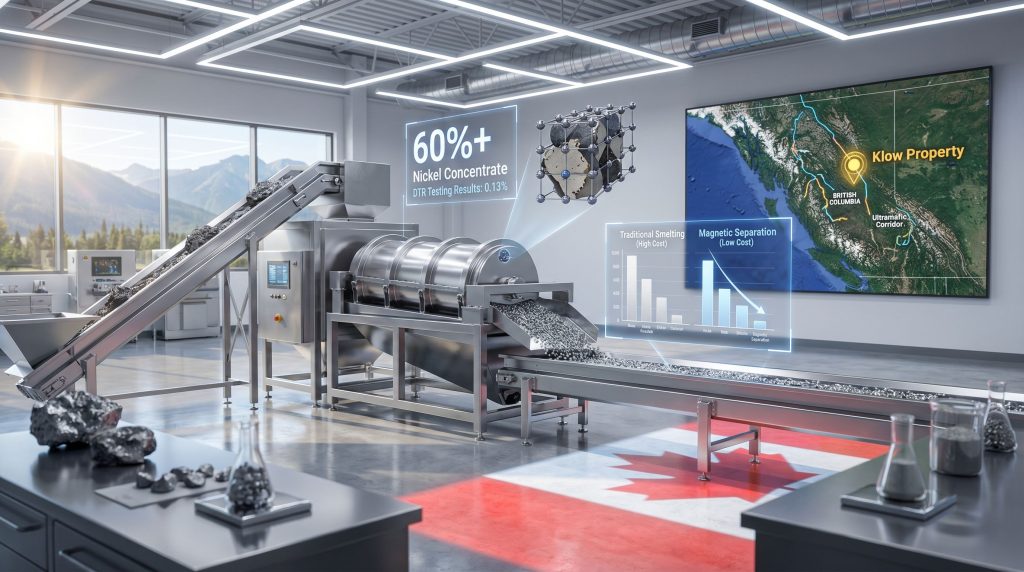
The magnetic separation circuit can achieve concentrate grades exceeding 60% nickel content, significantly higher than typical sulfide flotation concentrates that range from 6-20% nickel. This high-grade concentrate reduces downstream processing requirements and transportation costs.
Economic Impact Assessment Across Value Chains
The economic advantages of awaruite processing extend throughout the nickel value chain. Processing cost reductions occur at multiple stages:
Mining and Beneficiation:
- Lower reagent consumption compared to flotation operations
- Reduced grinding requirements due to simpler liberation characteristics
- Higher recovery rates in magnetic separation versus flotation circuits
Concentrate Transport and Handling:
- Higher-grade concentrates reduce shipping costs per unit of contained nickel
- Sulfur-free concentrates eliminate acid generation concerns during storage
- Simplified concentrate specifications for downstream processors
Refining Operations:
- Direct leaching capability without prior roasting or smelting
- Reduced energy consumption in hydrometallurgical circuits
- Elimination of sulfur dioxide emissions from smelting operations
Refinery Integration and Product Development
The proposed awaruite refinery concept envisions integrated operations producing battery-grade nickel sulfate directly from magnetic concentrates. This integration offers several competitive advantages:
- 40-year operational life: Long-term resource base supporting sustained production
- 32,000 tonnes per annum capacity: Significant scale for battery-grade nickel sulfate production
- By-product revenue streams: Cobalt carbonate and ammonium sulfate production from processing circuits
- Vertical integration: Controlling the entire value chain from mining to battery-grade products
Economic modeling suggests after-tax NPV₈ of $445M at $8.50/lb nickel pricing, demonstrating robust project economics even under conservative commodity price assumptions.
British Columbia's Ultramafic Corridor: A World-Class Nickel District
British Columbia's central interior hosts extensive ultramafic rock formations that represent prospective terrain for awaruite mineralization. This geological corridor extends across hundreds of kilometers, offering significant exploration potential for additional discoveries.
Regional Geological Framework
The regional geology consists of Cache Creek and Stikine terranes that contain extensive ultramafic complexes. These geological units underwent serpentinization processes that created favorable conditions for awaruite formation. The concentration of ultramafic rocks in this corridor suggests potential for multiple awaruite deposits within a relatively confined geographic area.
Proximity to existing infrastructure provides additional advantages for exploration and development. The region benefits from:
- Transportation access: Proximity to rail and highway networks
- Electrical infrastructure: Available grid connections for processing facilities
- Port facilities: Access to Prince Rupert deep-water port for concentrate shipping
- Skilled workforce: Regional mining expertise and available labor
Target Delineation and Exploration Methodology
FPX Nickel awaruite exploration employs systematic target generation techniques specifically designed for awaruite mineralization. The exploration methodology focuses on identifying serpentinized ultramafic rocks with favorable characteristics for awaruite concentration.
Rock Sampling Protocols:
- Systematic sampling of outcropping ultramafic rocks
- Laboratory analysis including DTR testing for magnetic concentration potential
- Petrographic analysis to confirm serpentinization and awaruite presence
Stream Sediment Analysis:
- Regional drainage sampling to identify catchments with awaruite mineralization
- Heavy mineral concentrates processed through magnetic separation
- Follow-up sampling to trace anomalies to source areas
Target Ranking Criteria:
- DTR nickel content and magnetic recovery percentages
- Geological continuity and structural controls
- Surface accessibility and infrastructure proximity
- Environmental and regulatory considerations
Klow Property Exploration Results
The Klow property, located approximately 25 miles north of the Baptiste project, demonstrates the regional potential for awaruite discoveries. Multiple target zones identified through systematic exploration exhibit geological characteristics similar to Baptiste, including serpentinized ultramafic rocks hosting disseminated awaruite mineralization.
| Target Zone | Sample Type | Peak DTR Nickel | Historical Results | Exploration Status |
|---|---|---|---|---|
| Zone 1 | Rock samples | 0.09% | Limited drilling | Reconnaissance complete |
| Zone 2 | Stream sediment | Anomalous | No drilling | Target identified |
| Zone 3 | Rock samples | 0.13% historical | 316m @ 0.10% Ni | Drill-ready potential |
| Zone 4 | Regional sampling | Under evaluation | New discovery | Early-stage |
The exploration results demonstrate consistent awaruite mineralization across multiple target areas, suggesting potential for a broader regional awaruite district. Early-stage targets exhibit geological characteristics similar to Baptiste, including appropriate host rock geology and favorable structural settings.
Strategic International Partnerships: JOGMEC Alliance and Technology Transfer
International partnerships play crucial roles in advancing awaruite exploration and development. The alliance with Japan Organization for Metals and Energy Security (JOGMEC) provides both financial support and strategic market positioning for FPX Nickel awaruite exploration.
Japan's Critical Minerals Security Framework
Japan's strategic approach to critical mineral security emphasizes diversifying supply sources and supporting upstream development projects. JOGMEC's involvement in awaruite exploration aligns with broader Japanese objectives for securing clean energy material supplies outside traditional producing regions, particularly in light of global energy transition security concerns.
The partnership structure provides mutual benefits:
- Exploration funding: C$1.2 million exploration budget supporting continued target development
- Technical expertise: Access to Japanese metallurgical and processing knowledge
- Market access: Potential off-take arrangements for concentrate or refined products
- Technology transfer: Sharing of magnetic separation and processing innovations
Earn-in Agreement Structure and Financial Commitment
The JOGMEC partnership operates through a structured earn-in agreement that provides exploration funding in exchange for project participation rights. Under the renewed exploration alliance, JOGMEC can earn up to 60% interest in discovered projects through systematic exploration investments.
This funding structure offers several advantages for exploration advancement:
- Risk mitigation: Shared financial exposure for early-stage exploration programs
- Technical validation: JOGMEC participation provides independent technical endorsement
- Scalability: Framework for expanding exploration across multiple target areas
- Sustainability: Long-term partnership supporting sustained exploration efforts
Global Supply Chain Positioning
The international partnership framework positions awaruite development within global supply chain security initiatives. Japan's participation reflects broader geopolitical trends toward supply chain diversification and reduced dependence on concentrated producing regions.
Asian Market Integration:
- Direct access to Japanese stainless steel producers
- Battery material supply chain participation
- Technology development collaboration opportunities
Western Hemisphere Production:
- Strategic positioning outside traditional nickel-producing regions
- Reduced geopolitical supply chain risks
- Alignment with allied nation mineral security objectives
Environmental Advantages and Regulatory Framework
The environmental benefits of awaruite processing extend beyond energy consumption reduction to encompass broader sustainability advantages. These environmental characteristics increasingly influence regulatory approval processes and community acceptance for new mining developments, particularly as the industry moves toward electrification and decarbonisation.
Carbon Footprint Reduction Through Process Innovation
Awaruite processing eliminates several high-carbon intensity operations typical of conventional nickel production:
- Smelting elimination: Avoiding high-temperature pyrometallurgical operations that consume significant fossil fuel energy
- Reduced grinding: Simpler liberation requirements compared to sulfide flotation circuits
- Clean concentrate production: Eliminating acid rock drainage potential from sulfide-bearing tailings
- Direct leaching: Enabling lower-temperature hydrometallurgical processing
The cumulative carbon intensity reduction positions awaruite-derived nickel favorably within emerging carbon accounting frameworks for battery supply chains. As automotive manufacturers implement scope 3 emission reduction targets, lower-carbon nickel sources gain competitive advantages.
Permitting and Environmental Assessment Progress
FPX Nickel's Baptiste project advancement through environmental assessment processes demonstrates regulatory acceptance of awaruite processing technology. The successful completion of federal and provincial review of the initial project description represents a significant milestone in the permitting timeline.
Key Environmental Assessment Elements:
- Eight First Nations identified for environmental assessment participation
- Public engagement and technical expert consultation completed
- Joint Summary of Issues and Engagement issued by regulatory agencies
- Clear guidance provided for addressing identified concerns
The environmental assessment framework emphasises community engagement and environmental protection while recognising the strategic importance of domestic nickel production capacity.
First Nations Collaboration and Benefit Sharing
Indigenous community engagement represents a critical component of project development in British Columbia. The environmental assessment process specifically identifies eight First Nations for participation, reflecting comprehensive territorial consultation requirements.
Effective First Nations engagement involves:
- Traditional territory recognition: Acknowledgment of historical land use and cultural connections
- Employment opportunities: Local job creation and skills development programs
- Revenue sharing: Benefit agreement structures providing ongoing project participation
- Environmental stewardship: Collaborative approaches to environmental monitoring and protection
The next major ASX story will hit our subscribers first
Global Nickel Supply Dynamics and Market Positioning
FPX Nickel awaruite exploration and development occurs within evolving global nickel supply dynamics driven by electric vehicle adoption and stainless steel demand growth. Understanding these market forces provides context for evaluating the strategic significance of new supply sources.
Supply Chain Security Considerations
Global nickel supply concentration in specific geographic regions creates supply chain vulnerabilities for consuming industries. The majority of Class 1 nickel production occurs in countries including Russia, Indonesia, and the Philippines, creating geopolitical supply risks for Western manufacturers.
Western Hemisphere Production Gaps:
- Limited existing nickel production capacity in North America
- Declining output from traditional Canadian operations
- Growing demand from North American battery manufacturing
Strategic Mineral Classification:
- Government recognition of nickel as critical for clean energy transitions
- Policy support for domestic processing capacity development
- Investment incentives for strategic mineral projects
Market Positioning Against Conventional Sources
Awaruite-derived nickel competes with several established production sources, each with distinct cost structures and environmental profiles:
Laterite Deposits:
- High-pressure acid leaching (HPAL) operations require significant energy inputs
- Environmental challenges from acid consumption and tailings management
- Competitive production costs in low-labor-cost jurisdictions
Sulfide Deposits:
- Complex flotation and smelting operations with associated emissions
- Established processing infrastructure but aging asset base
- Higher-grade resources but declining reserve quality
Class 1 Nickel Cost Curve:
- Awaruite processing economics position favorably on global cost curves
- Processing cost advantages provide resilience during commodity price downturns
- Premium pricing potential for low-carbon nickel products
Battery-Grade Nickel Market Development
The battery materials market increasingly emphasises supply chain transparency and carbon accounting. Automotive manufacturers implement supplier requirements that favour lower-carbon material sources, creating market premiums for clean nickel products.
Battery-Grade Specifications:
- 99.8%+ purity requirements for nickel sulfate production
- Strict impurity limits for battery performance optimization
- Trace element control crucial for downstream processing
Market Demand Projections:
- Electric vehicle adoption driving exponential nickel demand growth
- Battery gigafactory construction requiring secure nickel supply sources
- Premium pricing for verified low-carbon nickel products
Technical Challenges and Process Optimization
Despite significant advantages, awaruite processing presents specific technical challenges that require ongoing research and development. Process optimization opportunities focus on maximizing recovery rates while maintaining concentrate quality specifications, incorporating the latest mining technology innovations.
Metallurgical Testing and Circuit Design
Magnetic separation circuit optimization requires comprehensive metallurgical testing to establish optimal operating parameters. Key variables affecting performance include:
Grinding Optimization:
- Particle size distribution effects on magnetic separation efficiency
- Liberation characteristics of awaruite within host rock matrices
- Energy consumption optimization for grinding circuits
Magnetic Separation Parameters:
- Magnetic field strength requirements for optimal recovery
- Concentrate grade versus recovery optimization
- Multi-stage separation circuit design
Quality Control Systems:
- Continuous monitoring of concentrate grade and recovery
- Process control systems for maintaining consistent performance
- Metallurgical accounting for material balance optimization
Scale-Up Considerations for Commercial Operations
Transitioning from laboratory-scale testing to commercial production requires addressing several scale-up challenges:
- Equipment Selection: Choosing appropriate magnetic separation equipment for planned throughput rates
- Circuit Configuration: Designing optimal process flow for maximum efficiency
- Automation Integration: Implementing process control systems for consistent operation
- Maintenance Requirements: Establishing protocols for magnetic equipment maintenance
Pilot Plant Requirements:
- Demonstration of continuous operation at relevant scale
- Process parameter validation under varied operating conditions
- Equipment performance testing with representative ore samples
- Economic validation of operating and maintenance costs
Concentrate Transport and Handling Logistics
High-grade awaruite concentrates require specialised handling and transport protocols to maintain quality specifications. Key considerations include:
- Moisture control: Preventing oxidation during storage and transport
- Sampling protocols: Ensuring representative sampling for grade verification
- Storage infrastructure: Appropriate facilities for concentrate stockpiling
- Transport logistics: Optimised shipping routes to downstream processors
Future Outlook: Expansion Potential and Market Development
The successful development of awaruite processing technology could unlock significant exploration potential globally. Understanding the broader implications for nickel supply development provides perspective on the transformative potential of this processing innovation.
Regional Exploration Expansion Opportunities
British Columbia's ultramafic corridor represents only one potential location for awaruite mineralization. Similar geological terranes occur in other jurisdictions, suggesting opportunities for global exploration programs:
Target Regions:
- Alaska and Yukon ultramafic complexes
- Eastern Canada Archean greenstone belts
- European ophiolite complexes
- Global ultramafic intrusion localities
Exploration Technology Transfer:
- Application of awaruite exploration techniques to new regions
- Adaptation of magnetic separation technology for varying ore characteristics
- Regional geological mapping for target identification
Technology Advancement in Magnetic Separation
Continued advancement in magnetic separation technology could enhance awaruite processing efficiency and expand the range of economically viable ore grades:
Equipment Innovation:
- Higher-intensity magnetic separation systems
- Continuous process monitoring and control systems
- Automation integration for improved recovery optimization
Process Development:
- Multi-stage separation circuits for grade and recovery optimization
- Integration with downstream processing for direct nickel sulfate production
- Waste heat recovery systems for energy efficiency improvement
Market Entry Strategy and Commercial Timeline
The pathway from exploration to commercial production requires systematic advancement through defined development phases:
Phase 1: Resource Definition (Years 1-3)
- Systematic drilling and resource estimation
- Metallurgical testing and process development
- Environmental baseline studies and permitting initiation
Phase 2: Feasibility and Engineering (Years 3-5)
- Detailed engineering and economic studies
- Environmental assessment completion
- Financial arrangement and partnership development
Phase 3: Construction and Commissioning (Years 5-7)
- Processing facility construction and equipment installation
- Workforce recruitment and training programs
- Production ramp-up and optimization
Phase 4: Commercial Production (Years 7+)
- Sustained operation at design capacity
- Market development and customer relationship management
- Expansion planning based on exploration success
FAQ Section:
Q: What makes awaruite different from conventional nickel ores?
A: Awaruite is a naturally occurring nickel-iron alloy that can be concentrated using magnetic separation rather than chemical flotation, eliminating the need for energy-intensive smelting before refining.
Q: How does magnetic separation reduce processing costs?
A: Magnetic separation requires significantly less energy than conventional smelting operations and produces cleaner concentrates that can be directly processed into battery-grade nickel sulfate.
Q: What are the environmental benefits of awaruite processing?
A: The elimination of smelting operations substantially reduces carbon emissions and energy consumption per tonne of nickel produced, supporting cleaner supply chains for electric vehicle batteries.
Q: Why is Japanese partnership significant for awaruite development?
A: Japan's JOGMEC provides strategic funding and market access while supporting technology development for magnetic separation processes, creating a pathway to Asian stainless steel and battery markets.
Q: Where are the most promising locations for awaruite exploration?
A: British Columbia's ultramafic corridor currently represents the most advanced exploration area, with additional potential in similar geological terranes across Alaska, Eastern Canada, and other ultramafic complexes globally.
Disclaimer: This analysis is for informational purposes only and should not be considered investment advice. Mineral exploration and development involves significant risks and uncertainties. Readers should conduct their own research and consult qualified professionals before making investment decisions. All financial projections and technical specifications referenced are subject to change based on ongoing studies and market conditions.
Ready to Capitalise on Critical Metal Processing Breakthroughs?
Discovery Alert's proprietary Discovery IQ model delivers real-time alerts on significant mineral discoveries and technological innovations across the ASX, instantly empowering subscribers to identify actionable opportunities ahead of the broader market. Begin your 14-day free trial today and secure your market-leading advantage in the evolving critical metals sector.