August 4, 2026
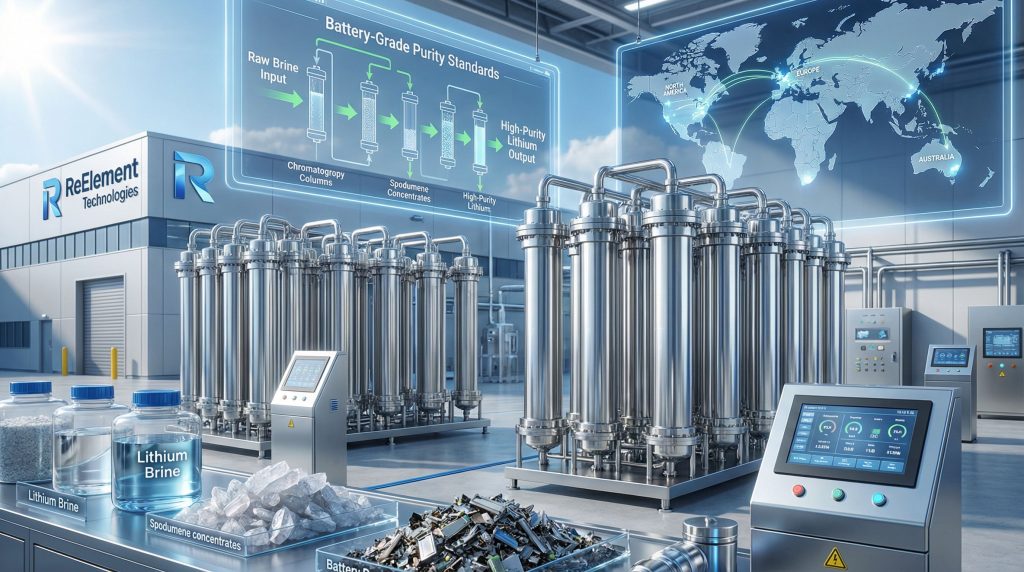
Advanced separation technologies are transforming critical mineral processing across global supply chains, with pharmaceutical-grade methodologies emerging as powerful alternatives to conventional extraction methods. These innovations address growing demands for ultra-pure battery materials while reducing environmental footprints and chemical dependencies that have historically constrained lithium refining operations. Furthermore, developments in australia lithium innovations demonstrate the global momentum behind advanced processing technologies.
Understanding the Technical Innovation Behind Chromatography-Based Lithium Refinement
The ReElement brine-to-battery patent represents a fundamental shift in how battery-grade lithium enters global manufacturing supply chains. By adapting pharmaceutical separation techniques to critical mineral processing, this innovation addresses bottlenecks that have limited domestic refining capacity for years.
The Science of Pharmaceutical-Grade Separation Technology
Chromatography functions through column-based separation where liquid carriers transport mixed solutions through stationary phases, typically specialised resin beads. Different compounds separate based on their varying affinities for these phases, enabling selective extraction of target elements with precision levels previously achievable only in drug manufacturing.
When applied to lithium processing, chromatography can:
• Remove sodium, potassium, and magnesium contaminants that evaporation cannot efficiently eliminate
• Achieve purity levels exceeding 99.5% without organic solvent usage
• Process variable feedstock compositions without requiring system recalibration
• Operate continuously rather than in seasonal batches
The pharmaceutical industry has utilised chromatography for over four decades to separate and purify active ingredients to specifications exceeding 99.99% purity. This mature methodology provides a validated framework for critical materials processing, with established protocols for quality control and consistency verification. Moreover, innovations in geothermal lithium extraction showcase how diverse extraction methods benefit from advanced downstream processing.
Multi-Stage Purification Process Architecture
The ReElement brine-to-battery patent integrates pharmaceutical-quality separation through a systematic approach:
-
Initial polishing stage: Removes large molecular weight contaminants through pre-filtration
-
Primary separation stage: Isolates lithium from competing alkali metals using ion-exchange chromatography
-
Final purification stage: Eliminates trace metals through secondary chromatography
-
Product crystallisation: Converts purified solutions into solid lithium compounds
This modular architecture allows processing units to scale proportionally, with individual modules capable of handling 1-5 metric tons of lithium carbonate equivalent daily, depending on feedstock concentration and purity specifications.
Integration Points with Direct Lithium Extraction Systems
The ReElement brine-to-battery patent specifically addresses downstream processing of concentrated lithium streams produced by Direct Lithium Extraction (DLE) technologies. Current DLE systems achieve 40-60% lithium extraction rates from brine sources, producing concentrated streams containing 3,000-5,000 mg/L lithium compared to 1,000-1,500 mg/L in raw brines.
Technical integration requires minimal infrastructure modification, with chromatography units connecting directly to DLE output streams through:
• Compatible outlet specifications for flow rate, pressure, and temperature parameters
• Simple pH adjustment protocols to optimise resin performance
• Standardised piping connections that eliminate custom engineering requirements
This seamless connectivity allows existing DLE operations to enhance their downstream processing capabilities without major capital modifications, addressing the documented industry gap between extraction and battery-grade refinement.
When big ASX news breaks, our subscribers know first
How Does ReElement's Chromatography Platform Transform Lithium Brine Processing?
Traditional lithium brine processing relies on solar evaporation requiring 18-24 months, followed by chemical precipitation and solvent extraction. The ReElement brine-to-battery patent accelerates purification to 4-8 weeks while eliminating organic solvent dependencies that create environmental liabilities.
Concentration Threshold Requirements and Processing Flexibility
The chromatography-based approach functions effectively with DLE-concentrated streams ranging from 3,000-8,000 mg/L lithium, providing operational flexibility across various upstream technologies. This broad compatibility eliminates the need for standardised input concentrations, allowing integration with different DLE systems without custom preprocessing requirements.
| Processing Parameter | Traditional Evaporation | Chromatography-Based |
|---|---|---|
| Processing time | 18-24 months | 4-8 weeks |
| Water consumption | 500,000 gallons/ton Li | <50,000 gallons/ton Li |
| Land footprint | 15-25 hectares | 2-4 hectares |
| Energy consumption | 200-400 kWh/ton | 150-250 kWh/ton |
| Organic solvent usage | 4-8 litres/kg Li | Zero |
Modular System Architecture for Scalable Deployment
The patent describes a modular platform designed for flexible deployment across different operational scales. Individual processing units can be deployed independently or configured in series to increase throughput proportionally. This architecture addresses varying market demands while maintaining consistent output quality specifications.
Processing capacity scales through parallel deployment, with facilities capable of expanding from pilot-scale operations to commercial production without fundamental system redesign. This scalability proves particularly valuable for operators seeking to match production capacity with market development timelines. Consequently, such flexibility aligns with broader critical minerals strategy initiatives worldwide.
What Technical Advantages Does This Patent Offer Over Traditional Solvent-Based Methods?
The ReElement brine-to-battery patent eliminates dependencies on petroleum-based chemical supply chains while achieving superior environmental and operational performance compared to conventional processing methods.
Environmental and Operational Benefits
Traditional solvent extraction techniques consume 4-8 litres of organic solvents per kilogram of refined lithium, generating 8-15 metric tons of chemical waste per metric ton of lithium product. These solvents, typically kerosene, tributyl phosphate, or similar petroleum-based compounds, create ongoing environmental remediation obligations.
The chromatography-based approach eliminates this entire waste stream by using solid-phase separation. Lithium binds to resin beads through ionic interactions rather than chemical complexation, requiring only aqueous solutions and resin regeneration using dilute acid or base solutions.
Footprint reduction represents another significant advantage, with chromatography-based facilities requiring approximately 80-85% less land than traditional processing operations. A conventional solvent extraction facility producing 10,000 metric tons annually requires 15-25 hectares, while equivalent chromatography-based capacity operates within 2-4 hectares.
Energy efficiency improvements range from 25-40% reduction compared to conventional methods, with chromatography systems consuming 150-250 kWh per metric ton of lithium product versus 200-400 kWh for chemical solvent extraction.
Purity Specifications and Quality Control
Battery-grade lithium compounds must achieve stringent purity requirements for cathode manufacturing applications. The ReElement brine-to-battery patent addresses these specifications through tailored resin chemistry achieving:
• Sodium and Potassium removal: >99% through cation-exchange resins with lithium-selective functional groups
• Magnesium and Calcium removal: >99% through chelation chromatography or dual-stage ion exchange
• Heavy metals removal: >99.9% extraction of iron, copper, nickel, and lead through specialised chelating columns
• Overall lithium purity: ≥99.5% suitable for battery cathode production
Quality assurance protocols incorporate real-time conductivity monitoring through chromatography columns, with finished products undergoing ICP-OES analysis for elemental composition verification. Each batch receives third-party analytical certification documenting compliance with battery-grade specifications. In addition, these quality standards support the growing battery recycling breakthrough initiatives requiring high-purity recovered materials.
How Does Multi-Feedstock Processing Expand Market Applications?
The ReElement brine-to-battery patent extends beyond traditional brine processing to accommodate diverse lithium sources, addressing supply chain diversification requirements across the battery materials sector.
Feedstock Versatility Analysis
Lithium brines represent approximately 98 million metric tons of identified global reserves, primarily concentrated in South America's Lithium Triangle. However, geographic concentration creates supply security concerns, with 65% of brine lithium reserves located in South America and 20% in China.
Hard rock processing addresses these geographic constraints through expanded feedstock compatibility. Global hard rock lithium resources exceed 47 million metric tons, distributed across Australia, North America, and Africa. The chromatography platform processes spodumene concentrates and other lithium-bearing ores after initial conversion to aqueous solutions.
Battery recycling applications represent rapidly growing market segments, with black mass from end-of-life batteries containing 5-15% lithium content. The multi-feedstock capability allows processing of these recycled materials alongside primary sources, supporting circular economy development.
Alternative sources include coal ash and industrial waste streams containing lithium as byproducts. These unconventional sources expand resource availability while addressing waste management challenges in other industries.
Economic Implications of Feedstock Flexibility
| Feedstock Type | Global Resources (Mt Li) | Processing Complexity | Market Availability | Strategic Value |
|---|---|---|---|---|
| Lithium Brines | 98 | Medium | High | Moderate |
| Hard Rock | 47 | High | Medium | High |
| Battery Recycling | Growing | Very High | Emerging | Very High |
| Industrial Waste | Variable | Variable | Limited | High |
Multi-feedstock processing capabilities reduce dependency on single supply sources while creating economic opportunities across different resource types. This flexibility proves particularly valuable during supply disruptions or price volatility affecting specific feedstock categories.
What Are the Supply Chain Security Implications of This Technology?
The ReElement brine-to-battery patent addresses documented supply chain vulnerabilities through domestic processing capability development and reduced dependency on concentrated refining operations.
Domestic Processing Capacity Development
Current lithium refining capacity remains heavily concentrated outside North America, with established facilities requiring 12-18 months construction timelines and significant capital investment. The modular chromatography approach reduces deployment timelines while offering lower-footprint alternatives suitable for co-location with upstream extraction operations.
Geopolitical risk mitigation becomes increasingly important as battery demand grows. The International Energy Agency projects lithium demand increasing 40 times by 2040 compared to 2020 levels, driven by electric vehicle production and energy storage applications.
Allied nation deployment opportunities exist through technology transfer and partnership arrangements, supporting friendly supply chain development without requiring extensive technology development programmes in partner countries. According to Proactive Investors, patent filings like this enhance IP portfolios essential for international collaboration.
Economic Competitiveness Analysis
Capital expenditure requirements for chromatography-based facilities compare favourably to conventional processing infrastructure. While traditional solvent extraction facilities require extensive chemical handling systems, environmental controls, and waste treatment infrastructure, chromatography-based operations eliminate these costly components.
Operating cost structures benefit from reduced chemical procurement, waste disposal, and environmental compliance requirements. Maintenance focuses on resin regeneration rather than solvent recovery and contaminated equipment replacement.
Scalability economics improve project viability across different production volumes, with modular deployment allowing capacity expansion matching market demand development rather than requiring full-scale initial investment.
How Does This Patent Fit Within ReElement's Broader IP Portfolio?
The ReElement brine-to-battery patent represents the eighth next-generation patent application in the company's expanding intellectual property portfolio, demonstrating systematic technology development across critical mineral processing applications.
Intellectual Property Strategy and Platform Integration
The patent portfolio addresses multiple critical materials beyond lithium, including rare earth elements, recycled battery materials, and manufacturing waste streams. This comprehensive approach creates synergies between different processing applications while establishing defensive patent positions across the technology platform.
Technology complementarity emerges through shared processing infrastructure, with chromatography systems adaptable to different target minerals through resin chemistry modifications rather than equipment replacement. This flexibility reduces capital requirements for multi-mineral processing facilities.
Market positioning benefits from integrated IP protection covering extraction, separation, purification, and product finishing across diverse feedstock types. This comprehensive coverage creates barriers to competitive entry while enabling licensing opportunities with upstream and downstream partners.
Platform Expansion Opportunities
Rare earth processing applications utilise similar chromatography principles for separating individual rare earth elements from mixed concentrates. The platform's proven performance in rare earth separation validates its applicability to lithium processing while creating operational synergies.
Circular economy integration extends beyond battery recycling to include magnet recycling, electronic waste processing, and manufacturing waste recovery. This broad applicability positions the technology platform across multiple critical material supply chains. Furthermore, these developments align with emerging mining innovation trends emphasising sustainable extraction and processing methods.
The next major ASX story will hit our subscribers first
What Market Dynamics Drive Demand for Advanced Lithium Processing?
Global lithium supply chains face increasing pressure from rising purity specifications, supply security requirements, and environmental compliance standards that favour advanced processing technologies over conventional approaches.
Battery Industry Requirements and Purity Evolution
Electric vehicle manufacturers continuously tighten purity specifications for lithium compounds, with current requirements demanding ≥99.5% lithium content and strict limits on contaminants:
• Sodium (Na): <50 ppm
• Potassium (K): <30 ppm
• Magnesium (Mg): <5 ppm
• Iron (Fe): <3 ppm
• Water content: <0.5% for hydroxide forms
These specifications reflect battery performance requirements where trace impurities affect energy density, cycle life, and safety characteristics. As battery technology advances, purity requirements continue tightening, creating advantages for processing technologies capable of achieving pharmaceutical-grade specifications.
Supply Chain Localisation and Regional Processing
Regional processing requirements emerge from supply security considerations and transportation cost optimisation. The ReElement brine-to-battery patent addresses these needs through modular deployment capability supporting distributed processing rather than centralised mega-facilities.
Cost pressure analysis reveals processing efficiency as a key competitive factor. Traditional solvent-based systems carry ongoing chemical procurement costs, environmental remediation obligations, and complex waste management requirements that increase total cost of ownership over facility lifecycles.
What Are the Technical Deployment Considerations?
Successful implementation of chromatography-based lithium processing requires systematic evaluation of site-specific factors, infrastructure requirements, and operational protocols that ensure optimal system performance.
Implementation Requirements and Site Selection
Site selection criteria prioritise proximity to lithium extraction operations, adequate freshwater access for resin regeneration, and reliable electrical power for continuous operation. Unlike evaporation-based processing requiring large flat areas with optimal solar exposure, chromatography systems operate effectively in compact industrial facilities.
Infrastructure dependencies include process water treatment capabilities, electrical service capacity, and transportation access for feedstock delivery and product shipment. The reduced footprint requirements allow deployment in existing industrial areas rather than requiring greenfield development.
Regulatory compliance encompasses environmental permitting focused on aqueous discharge rather than air emissions or solvent handling. This simplified regulatory profile reduces permitting timelines compared to conventional chemical processing facilities.
Operational Scalability and Maintenance Protocols
Modular expansion pathways enable step-wise capacity increases through parallel unit deployment. Initial installations can begin with single-module operations, expanding to multi-module configurations as market demand develops without fundamental system redesign.
Automation integration incorporates process control systems monitoring flow rates, pressure differentials, and conductivity measurements throughout the separation process. These monitoring systems enable unmanned operation during normal conditions while alerting operators to maintenance requirements or process deviations.
Maintenance protocols focus on resin regeneration cycles rather than equipment replacement. Typical resin lifespans extend 2-5 years depending on feedstock characteristics and operating conditions, with regeneration occurring through controlled acid-base washing cycles.
How Will This Technology Impact Global Lithium Supply Chains?
The ReElement brine-to-battery patent addresses fundamental constraints limiting lithium supply chain development while creating opportunities for supply source diversification and processing capacity expansion.
Market Transformation Potential and Processing Bottleneck Resolution
Current lithium refining capacity has emerged as a critical constraint limiting battery material availability. Existing facilities require extensive construction timelines and significant capital investment, creating bottlenecks between extraction and battery manufacturing.
The modular chromatography approach offers accelerated deployment timelines and flexible capacity scaling, addressing refining bottlenecks without requiring massive upfront capital commitments. This capability proves particularly valuable for supporting DLE technology deployment, where extraction advances have outpaced refining capacity development. Finance Yahoo reports indicate expanding patent portfolios strengthen competitive positioning for such breakthrough technologies.
Quality standardisation across different feedstock types enables consistent battery-grade output regardless of source material characteristics. This standardisation reduces technical risk for battery manufacturers while expanding acceptable lithium source diversity.
Supply Security Enhancement Through Processing Diversification
Processing capability distribution reduces dependency on centralised refining facilities while creating opportunities for strategic partner nations to develop domestic refining capacity. The technology transfer potential supports allied supply chain development without extensive indigenous technology development requirements.
Integration with emerging technologies includes compatibility with next-generation extraction methods under development. The platform's feedstock flexibility ensures continued relevance as upstream technologies evolve, protecting investment value across changing technical landscapes.
Future Development Trajectories and Technology Evolution
Technology evolution roadmap includes potential improvements in resin chemistry, automation systems, and process optimisation that could further enhance efficiency and reduce costs. Ongoing development efforts focus on expanding feedstock compatibility and improving recovery rates across different source materials.
Market adoption timeline suggests initial deployment within 2-3 years for pilot-scale operations, with commercial-scale facilities following within 5-7 years as DLE technology deployment accelerates. Early adoption by strategic partners could accelerate this timeline while providing operational experience supporting broader deployment.
The ReElement brine-to-battery patent represents a transformative approach to lithium processing that addresses multiple supply chain vulnerabilities while creating opportunities for domestic capacity development. By integrating pharmaceutical-grade separation techniques with flexible feedstock handling, this technology platform offers pathways to supply security and processing efficiency that conventional methods cannot match.
Disclaimer: This analysis contains forward-looking statements regarding technology development, market adoption, and industry trends that involve inherent uncertainties and assumptions. Actual results may differ materially from projections discussed in this assessment.
Ready to Discover the Next Lithium Processing Breakthrough?
Discovery Alert's proprietary Discovery IQ model instantly identifies significant ASX mineral discoveries in lithium and critical materials sectors, empowering subscribers to capitalise on advanced processing innovations before they impact broader markets. Understand why major mineral discoveries can lead to substantial market returns by exploring Discovery Alert's dedicated discoveries page, showcasing historic examples of exceptional outcomes, and begin your 14-day free trial today to position yourself ahead of breakthrough technologies transforming the industry.