June 11, 2026
Advanced Separation Technologies Driving US Rare Earth Independence
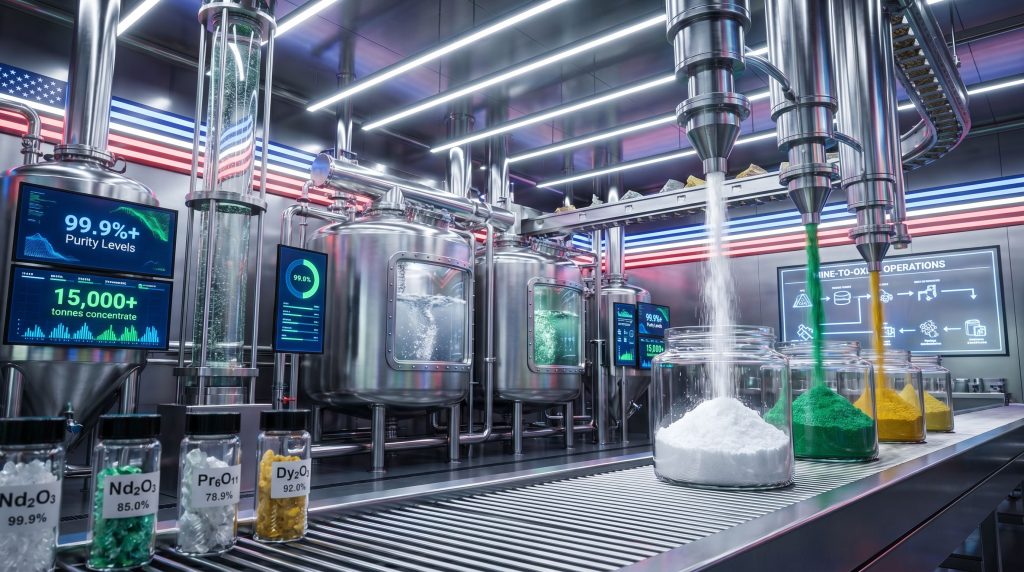
The transformation of rare earth minerals into high-purity oxides represents one of the most complex metallurgical challenges in modern industrial processing. While global supply chains have traditionally relied on concentrated overseas refining capabilities, emerging domestic facilities are reshaping how the United States approaches rare earth oxide processing in the US through innovative technologies and strategic infrastructure investments.
Understanding the technical mechanisms behind rare earth separation reveals why establishing domestic processing capacity requires substantial capital investment, specialized expertise, and regulatory compliance that extends far beyond conventional mining permitting essentials. The complexity stems from the chemical similarity between rare earth elements, which demands sophisticated separation techniques to achieve the purity levels required for defense applications, permanent magnet manufacturing, and advanced electronics production.
When big ASX news breaks, our subscribers know first
Technical Foundations of US Rare Earth Processing Operations
The cornerstone of rare earth oxide processing in the US involves transforming mineral concentrates through sequential hydrometallurgical operations that progressively separate individual elements from complex ore matrices. This process begins with flotation circuits that concentrate rare earth-bearing minerals like bastnaesite and monazite from raw ore, typically increasing rare earth content from 3-8% to 60-70% in the concentrate stage.
Following concentration, the material enters acid leaching circuits where sulfuric acid dissolution breaks down the mineral structure, releasing rare earth elements into solution. This stage requires precise temperature and acid concentration control to optimise extraction efficiency while minimising the dissolution of unwanted gangue minerals that can complicate downstream processing.
Critical Processing Parameters:
- Leaching temperatures typically maintained between 60-90°C for optimal kinetics
- Sulphuric acid concentrations ranging from 2-6 molar depending on mineral type
- Residence times extending 4-8 hours for complete dissolution
- pH control during neutralisation to precipitate impurities while retaining rare earths
The separation of individual rare earth elements occurs through solvent extraction, where organic extractants selectively remove specific elements from the pregnant leach solution. This process can require 20-50 extraction stages for heavy rare earth separation, making it the most capital-intensive component of the processing chain.
Unique Characteristics of American Processing Infrastructure
Regulatory Framework Advantages
Unlike international competitors, US rare earth processing facilities operate under comprehensive environmental and safety regulations that, while increasing compliance costs, create long-term operational stability and community acceptance. The Nuclear Regulatory Commission's oversight of monazite processing ensures nuclear waste safety protocols that exceed international standards, particularly for facilities handling thorium-bearing minerals.
Environmental permitting requirements mandate closed-loop water circuits, acid neutralisation systems, and tailings management protocols that minimise environmental impact. These systems, while expensive to implement, provide sustainable operating models that avoid the environmental liabilities associated with less regulated international operations.
Strategic Mineral Focus Areas
American facilities prioritise the production of elements classified under the 2022 Final List of Critical Minerals, with particular emphasis on:
- Dysprosium: Essential for high-temperature permanent magnets in wind turbines and electric vehicle motors
- Terbium: Critical for phosphor applications and specialised magnet alloys
- Neodymium-Praseodymium: Primary components in permanent magnet production
- Europium: Vital for phosphor and nuclear control rod applications
This strategic focus allows facilities to optimise processing circuits for high-value, supply-constrained elements rather than attempting to recover the full spectrum of rare earth elements economically.
Integrated Supply Chain Development
Emerging US operations are developing vertically integrated capabilities that control the entire value chain from mining through oxide production on domestic soil. This approach eliminates traditional dependencies on overseas refining that have characterised the industry since the 1990s, when most American rare earth processing capacity was displaced by lower-cost Chinese operations.
The White Mesa Mill in Utah exemplifies this integrated approach, operating as both the only commercial uranium mill in the United States and the only facility licensed to process monazite into separated rare earth oxides. This dual capability leverages existing nuclear licensing and radioactive material handling infrastructure to process thorium-bearing monazite that other facilities cannot legally handle.
Current Processing Technology Deployment
Conventional Hydrometallurgical Systems
The foundation of current US rare earth processing relies on proven sulphuric acid leaching technology followed by multi-stage solvent extraction using organophosphorus compounds. This conventional approach achieves rare earth recovery rates exceeding 90% while producing oxides meeting commercial purity specifications of 99%+ for most applications.
Key advantages of conventional processing include:
- Proven technology with decades of operational experience
- Reliable production of commercial-grade oxides
- Established supplier networks for chemicals and equipment
- Well-understood environmental management requirements
However, conventional systems generate substantial acid waste streams requiring neutralisation and disposal, increasing both operating costs and environmental management complexity.
Advanced Separation Methodologies
Next-generation facilities are incorporating ion exchange technologies that offer improved selectivity for heavy rare earth elements while reducing chemical consumption. These systems use specialised resins that preferentially absorb specific rare earth elements, allowing for more efficient separation with reduced reagent requirements.
Membrane separation technologies represent another advancement, utilising selective permeability to separate rare earth elements based on ionic size and charge characteristics. While still in demonstration phases for rare earth applications, these technologies promise reduced waste generation and improved product purity.
Emerging Processing Innovations
Research institutions and private companies are developing alternative processing routes that could transform rare earth oxide processing in the US economics:
- Chloride-based leaching: Eliminates sulphate waste streams while improving heavy rare earth recovery
- Bioleaching processes: Utilise specialised microorganisms to extract rare earths with reduced chemical inputs
- Electrochemical separation: Employs electrical potential differences to separate elements without chemical reagents
- Direct metal production: Bypasses oxide intermediate steps to produce metals and alloys directly
These technologies remain largely in development phases, but successful commercialisation could significantly reduce processing costs and environmental impacts. Furthermore, data-driven mining operations are revolutionising how facilities optimise their processing parameters.
Comparative Analysis of US Processing Facilities
| Facility | Location | Primary Technology | Annual Capacity | Key Products | Operational Status |
|---|---|---|---|---|---|
| White Mesa Mill | Utah | Monazite acid leaching | 1,000 tonnes REO | Dy, Tb, mixed oxides | Producing |
| Mountain Pass | California | Bastnaesite flotation | 15,000+ tonnes | NdPr, La, Ce oxides | Producing |
| Bear Lodge | Wyoming | Proprietary leaching | Demonstration scale | Mixed REO | Development |
| Planned Texas Facility | Texas | Advanced separation | TBD | High-purity oxides | Announced |
White Mesa Mill Operational Details
The White Mesa Mill represents the only US facility currently licensed to process monazite, a radioactive mineral containing uranium and thorium alongside rare earth elements. This unique licensing position creates a competitive moat that cannot be easily replicated, as obtaining nuclear materials licences typically requires 7-10 years of regulatory review and approval.
The facility can process up to 10,000 tonnes of monazite annually, producing up to 1,000 tonnes of rare earth oxides with particular strength in heavy rare earth elements like dysprosium and terbium. These elements command premium pricing due to Chinese export restrictions implemented since 2023.
Mountain Pass Historical Context
The Mountain Pass facility in California historically served as the primary Western rare earth producer before Chinese market dominance displaced American production in the 2000s. Recent revitalisation efforts focus on bastnaesite processing, which contains lower levels of radioactive materials compared to monazite, simplifying regulatory requirements.
Current capacity estimates suggest the facility can produce over 15,000 tonnes of rare earth concentrates annually, though conversion to separated oxides requires additional processing infrastructure that remains under development. Additionally, innovations in direct extraction innovation technologies are being explored for improved efficiency.
Critical Processing Challenges and Solutions
Radioactive Material Handling Requirements
Processing monazite requires specialised nuclear licensing due to uranium and thorium content ranging from 0.2-12% by weight. Only facilities with appropriate radiation safety infrastructure and Nuclear Regulatory Commission licences can legally handle these materials, creating a significant barrier to entry for new competitors.
Current licensed capacity in the United States remains limited to the White Mesa Mill, though other projects are pursuing similar licensing. The regulatory timeline for new nuclear licences typically extends 7-10 years, during which applicants must demonstrate comprehensive radiation safety programmes, waste management protocols, and financial assurance for decommissioning.
Heavy Rare Earth Recovery Complexity
Separating heavy rare earth elements like dysprosium and terbium requires sophisticated multi-stage solvent extraction circuits due to the chemical similarity between these elements. The separation process can require 20-50 extraction stages, each requiring precise control of pH, temperature, and reagent concentrations.
Technical challenges include:
- Maintaining phase separation between organic and aqueous solutions
- Preventing emulsion formation that reduces separation efficiency
- Controlling reagent degradation over extended processing cycles
- Achieving target purity specifications while maximising recovery
These technical demands translate to higher capital costs and operating complexity compared to light rare earth processing, but the premium pricing for heavy rare earth oxides justifies the additional investment.
Waste Stream Management Protocols
Rare earth processing generates significant volumes of acidic wastewater requiring neutralisation before discharge, typically consuming 2-4 tonnes of limestone per tonne of rare earth oxide produced. Neutralisation creates gypsum precipitates that require disposal in permitted facilities, adding to operating costs.
Radioactive tailings from monazite processing must be managed in accordance with nuclear regulations, requiring long-term storage facilities with groundwater monitoring and institutional controls. These requirements add millions of dollars to facility development costs but ensure environmental protection over extended timeframes.
Economic Scale Requirements
Rare earth oxide processing in the US becomes economically viable only at substantial throughput levels due to the high fixed costs of separation equipment and environmental infrastructure. Economic analysis suggests minimum viable scales of 1,000-2,000 tonnes of separated oxides annually for heavy rare earth focused operations, or 5,000-10,000 tonnes for mixed rare earth production.
Capital intensity calculations indicate requirements of $50,000-100,000 per annual tonne of separated oxide capacity, depending on product mix and environmental requirements. Operating costs typically range from $8,000-15,000 per tonne of separated oxides, with energy, chemicals, and labour comprising the largest expense categories.
The next major ASX story will hit our subscribers first
Processing Chain Value Creation Mechanisms
Mineral Beneficiation Economics
Initial flotation and magnetic separation increase rare earth content from 3-8% in raw ore to 60-70% in concentrates, reducing transportation costs and enabling more efficient downstream processing. This concentration stage typically adds $200-500 per tonne of concentrate value, depending on rare earth prices and ore grades.
Separation Value Addition
Converting mixed rare earth concentrates into individual oxides multiplies product value by 3-5 times compared to concentrate pricing. For example, mixed rare earth concentrates trading at $2,000-3,000 per tonne can yield separated oxides worth $10,000-15,000 per tonne, depending on element distribution and market conditions.
Purity Premium Capture
Achieving 99.9%+ purity levels required for magnet and electronics applications can double product pricing compared to 95-99% purity oxides used in less demanding applications. This purity premium justifies investment in advanced purification equipment and quality control systems that ensure consistent product specifications.
Strategic Value Considerations
Beyond pure economics, domestic rare earth processing capabilities provide supply chain security value that justifies government support and premium pricing from defence contractors and critical infrastructure customers. This strategic premium can add 10-20% to product pricing compared to imported alternatives, improving project economics for domestic operations.
Innovation Trends Shaping Future Processing
Continuous Processing Implementation
Advanced facilities are transitioning from batch processing to continuous operations that maintain steady-state conditions optimising separation performance. Continuous systems offer improved product consistency, reduced labour requirements, and better utilisation of capital equipment compared to traditional batch operations.
Digital Process Control Integration
Real-time elemental analysis systems enable precise control of separation parameters, reducing product losses and improving consistency. Advanced process control systems can optimise reagent consumption, minimise waste generation, and maintain target product specifications automatically.
Modular Plant Design Concepts
Standardised processing modules allow facilities to scale capacity incrementally rather than requiring massive upfront capital investment. Modular designs enable smaller deposits to become economically viable by reducing initial capital requirements and allowing capacity expansion as markets develop.
Integrated Downstream Processing
Future facilities plan to extend processing beyond oxides into metals and alloys, capturing additional value-added manufacturing currently dominated by overseas operations. This integration requires additional investment in specialised metallurgical equipment but can increase product values by 2-3 times compared to oxide pricing.
Regulatory Environment Impact Analysis
Nuclear Regulatory Commission Oversight
Facilities processing thorium-bearing minerals must obtain and maintain nuclear materials licences requiring extensive safety documentation, regular inspections, and ongoing compliance monitoring. Licence conditions typically specify:
- Maximum annual throughput of radioactive materials
- Radiation safety protocols for workers and the public
- Environmental monitoring and reporting requirements
- Financial assurance for facility decommissioning
These regulatory requirements add operational complexity but provide public confidence in facility safety and long-term environmental protection.
Environmental Permitting Complexity
Air quality permits regulate emissions of particulates and acid mists during processing, requiring baghouse filtration systems and scrubber technologies. Water discharge permits mandate treatment to remove heavy metals and adjust pH before release, typically requiring multi-stage precipitation and filtration systems.
Waste management permits govern the disposal of processing residues, including neutralised acids, filter cakes, and radioactive tailings. Compliance requires detailed characterisation of waste streams and demonstration of appropriate disposal pathways.
What Role Does Critical Materials Policy Support Play?
Government recognition of rare earths as critical materials provides access to development incentives including:
- Loan guarantees through the Department of Energy Title XVII programme
- Tax credits for domestic critical mineral production
- Defence Production Act authorities for priority contract allocation
- Research and development funding through DOE and DOD programmes
These policy tools help offset the higher costs of domestic production compared to imported alternatives, improving project economics for strategic materials. Additionally, critical minerals policy support continues to evolve to address supply chain vulnerabilities.
Investment Analysis Framework
Capital Investment Requirements
Rare earth processing facilities require $100-500 million in initial capital investment depending on scale and product mix. Cost components include:
- Process equipment and instrumentation: 40-50% of total capital
- Environmental and safety systems: 20-25% of total capital
- Infrastructure and utilities: 15-20% of total capital
- Engineering and contingency: 15-20% of total capital
Operating Cost Structure Analysis
Annual operating costs typically represent 50-70% of gross revenue, with the following breakdown:
- Chemicals and reagents: 25-35% of operating costs
- Energy and utilities: 20-25% of operating costs
- Labour and maintenance: 20-25% of operating costs
- Waste management and environmental: 15-20% of operating costs
Market Risk Assessment
Rare earth oxide pricing exhibits significant volatility, with annual price swings of 50-200% common based on Chinese export policies and global demand fluctuations. This price volatility creates substantial revenue uncertainty requiring:
- Diversified product portfolios across multiple rare earth elements
- Long-term supply contracts with pricing escalation clauses
- Financial hedging strategies to manage commodity price exposure
- Operational flexibility to adjust production mix based on market conditions
According to American Rare Earths' latest developments, companies are accelerating their processing capabilities to meet growing demand.
Strategic Value Proposition
Despite economic challenges, domestic processing capabilities provide supply chain security justifying government support and premium pricing from strategic customers. This strategic value includes:
- Reduced dependency on potentially unstable foreign suppliers
- Assured supply for defence and critical infrastructure applications
- Economic security through domestic job creation and tax revenue
- Technological advancement through research and development activities
How Is Processing Technology Advancing in the US?
The advancement of processing technology represents a critical component in establishing competitive domestic capabilities. Current research focuses on developing more efficient separation methods that reduce both costs and environmental impact whilst maintaining the high purity standards required for strategic applications.
For instance, recent achievements by US domestic heavy rare earth oxide producers demonstrate the viability of innovative processing approaches that could reshape the industry's economics.
Moreover, the integration of artificial intelligence and machine learning into processing control systems enables real-time optimisation of separation parameters. These technological advances promise to reduce reagent consumption by 15-25% whilst improving product consistency and reducing waste generation.
Technological Outlook and Market Positioning
The future of rare earth oxide processing in the United States depends on continued technological innovation to reduce costs whilst maintaining the strategic advantages of domestic production. Advanced separation technologies, integrated supply chains, and supportive government policies create opportunities for sustainable domestic rare earth capabilities.
Current processing facilities demonstrate technical feasibility whilst highlighting the substantial capital requirements and regulatory complexity inherent in rare earth operations. Success requires balancing economic viability with strategic imperatives for supply chain independence from foreign processing capabilities.
Emerging technologies promise improved economics through reduced chemical consumption, waste minimisation, and higher recovery rates. However, commercial deployment requires continued investment in research and development, supported by stable policy frameworks that recognise the strategic value of domestic critical mineral capabilities.
The trajectory toward expanded US rare earth processing capacity reflects broader trends in supply chain reshoring, technological sovereignty, and national security considerations that extend beyond pure market economics. This strategic context provides the foundation for sustained investment in domestic processing capabilities despite higher costs compared to established international competitors.
Disclaimer: This analysis contains forward-looking assessments of rare earth processing technologies, market conditions, and regulatory environments. Actual results may vary significantly from projections due to commodity price volatility, regulatory changes, technological developments, and geopolitical factors. Investors should conduct independent due diligence and consult qualified professionals before making investment decisions related to rare earth processing operations or companies.
Ready to Capitalise on Strategic Mineral Opportunities?
Discovery Alert's proprietary Discovery IQ model delivers real-time alerts on significant ASX mineral discoveries, including critical materials and rare earth exploration breakthroughs that could benefit from emerging processing technologies. Understand why major mineral discoveries can generate substantial returns by exploring historic examples of exceptional market outcomes, then begin your 14-day free trial today to position yourself ahead of the market.