June 27, 2026
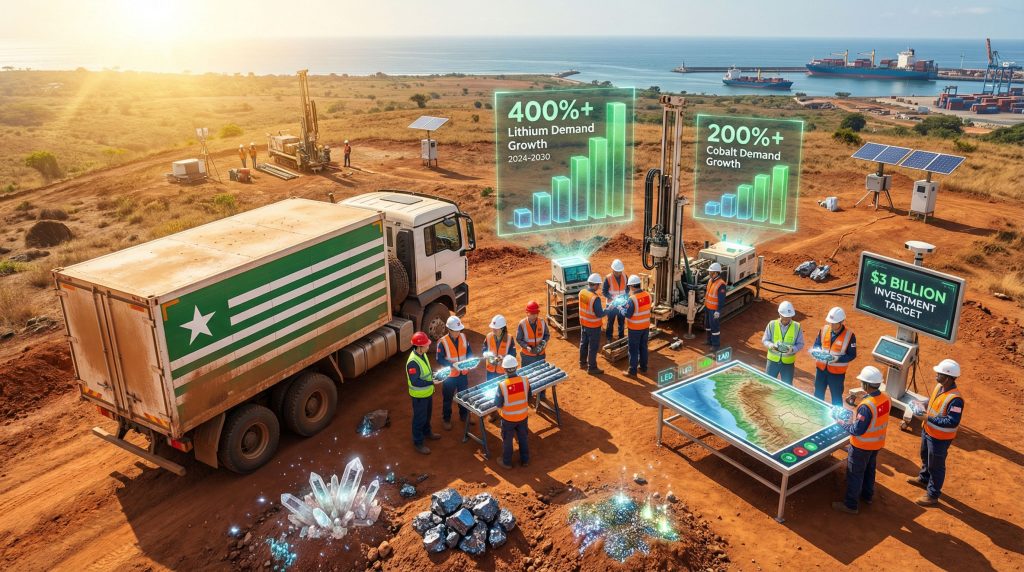
West Africa's mineral landscape has undergone dramatic transformations throughout decades of international partnerships, technological advancement, and strategic resource mapping initiatives. The region's geological potential has attracted diverse exploration methodologies, from traditional ground surveys to sophisticated satellite-based analysis systems. Understanding how these technological shifts reshape national resource portfolios requires examining the intersection of international cooperation, advanced survey techniques, and long-term economic development strategies. The recent China-funded mineral deposits Liberia discovery exemplifies this evolution.
How Advanced Survey Technologies Revolutionised West African Resource Assessment
The Five-Decade Knowledge Gap in Comprehensive Geological Mapping
Liberia's mineral assessment history reveals a critical timeline gap that spans over half a century. The last comprehensive geological survey occurred in 1973, funded through U.S. technical assistance programs during the Cold War era. This 52-year interval between major surveys represents one of the longest documentation gaps in contemporary African mineral exploration.
The 1973 survey utilised analog geological mapping techniques typical of early 1970s technology. Field geologists relied on physical sampling, basic geochemical analysis, and paper-based documentation systems. Survey coverage remained limited to accessible regions, with dense forest areas and remote territories receiving minimal investigation.
Liberia's prolonged civil conflicts from 1989 to 2003 effectively halted systematic mineral exploration activities. The 14-year period of internal warfare disrupted institutional capacity, destroyed geological records, and prevented international mining companies from conducting exploration programs. Post-conflict reconstruction efforts focused primarily on basic infrastructure rather than advanced resource assessment capabilities.
Modern Remote Sensing and Digital Integration Techniques
The China-funded mineral deposits Liberia survey employed sophisticated remote sensing technologies unavailable during the 1970s assessment period. Advanced satellite imagery, hyperspectral analysis, and digital geographic information systems enabled comprehensive territorial coverage previously impossible through ground-based methods alone. These innovations align with broader mining evolution trends transforming the global exploration industry.
Key technological advancement comparisons include:
- Satellite imagery resolution: Sub-meter precision vs. aerial photography limitations
- Geochemical sampling density: Systematic grid sampling vs. opportunistic collection
- Data integration capabilities: Real-time digital databases vs. paper archive systems
- Mineral identification accuracy: Spectral analysis confirmation vs. visual assessment methods
The survey identified 22 distinct mineral categories across Liberian territory, including lithium, cobalt, neodymium, nickel, zinc, uranium, tantalum, niobium, chromium, lead, tin, manganese, copper, zirconium, and monazite. This comprehensive mineral portfolio represents the most detailed geological inventory produced for any West African nation in recent decades. Furthermore, 3D geological modelling techniques provided unprecedented accuracy in resource estimation.
International Partnership Models in African Geological Surveys
China-funded mineral deposits Liberia represents part of broader Belt and Road Initiative geological assessment programs across sub-Saharan Africa. Similar comprehensive surveys have been conducted in partnership with Ghana, Sierra Leone, Guinea, and other regional governments. These partnerships typically involve technology transfer, capacity building, and data sharing arrangements.
The Chinese approach emphasises long-term bilateral cooperation rather than short-term commercial exploration. Survey results become available to Liberian government institutions whilst Chinese geological organisations maintain technical expertise access. This model contrasts with traditional Western mining company exploration, which focuses on specific concession areas rather than national-scale assessment.
Belt and Road geological partnerships have documented significant mineral discoveries across multiple African countries since 2015. However, the scale and systematic nature of the Liberian survey represents among the most comprehensive efforts undertaken through these international cooperation frameworks. Moreover, this aligns with the critical minerals strategy emphasised by major global powers.
When big ASX news breaks, our subscribers know first
Critical Mineral Portfolio Positioning in Global Supply Chain Networks
Battery Metal Market Dynamics and Demand Projections
Global lithium demand trajectories indicate substantial growth driven by electric vehicle adoption and grid-scale energy storage deployment. International Energy Agency projections suggest lithium demand will increase from approximately 0.5 million tonnes in 2023 to over 2.0 million tonnes by 2030, representing a 300% expansion across the seven-year period.
Electric vehicle-related consumption accounts for approximately 70% of projected lithium demand growth, whilst utility-scale battery storage systems contribute an additional 20%. Consumer electronics and traditional industrial applications maintain relatively stable consumption patterns compared to energy transition sectors.
Global Battery Metal Market Position Analysis:
| Mineral | 2023 Global Demand | 2030 Projected Demand | Growth Rate | Current Market Leaders |
|---|---|---|---|---|
| Lithium | 0.5M tonnes | 2.0M+ tonnes | 300%+ | Australia (50%), Chile (25%) |
| Cobalt | 140K tonnes | 380K+ tonnes | 170%+ | DRC (70%), Russia (8%) |
| Nickel | 3.0M tonnes | 4.5M+ tonnes | 150%+ | Indonesia (35%), Philippines (15%) |
| Neodymium | 35K tonnes | 55K+ tonnes | 160%+ | China (85%), Myanmar (8%) |
Liberian mineral discoveries position the country as a potential alternative supply source during accelerated global energy transition timelines. However, successful market entry requires substantial processing infrastructure development beyond basic ore extraction capabilities.
Rare Earth Elements and Strategic Material Implications
Neodymium discoveries within the China-funded mineral deposits Liberia survey carry particular geopolitical significance due to Chinese dominance in rare earth element processing. China controls approximately 85% of global rare earth mining and over 95% of rare earth separation and refining capacity.
Wind turbine permanent magnets require 200-600 kilograms of neodymium-iron-boron compounds per megawatt of installed capacity. Global wind energy expansion targets suggest neodymium demand could reach 55,000+ tonnes annually by 2030, compared to current consumption of approximately 35,000 tonnes.
Western governments have identified rare earth supply chain concentration as a strategic vulnerability. The U.S. Strategy for the Domestic Extraction, Processing, and Recycling of Critical Minerals (2023) and European Commission Critical Raw Materials Resilience strategy (2024) both emphasise supply diversification objectives.
Liberian tantalum and niobium deposits contribute to the broader coltan mineral category essential for electronics manufacturing. These materials face similar supply concentration challenges, with Democratic Republic of Congo controlling significant global production capacity. Additionally, lithium industry innovations continue to drive technological advancement in processing capabilities.
Processing Infrastructure Requirements and Investment Realities
Discovering mineral deposits differs fundamentally from establishing commercial production capability. Lithium processing requires specialised chemical facilities capable of converting ore to battery-grade lithium carbonate or lithium hydroxide. These facilities typically require $500 million to $2 billion+ in capital investment depending on processing capacity and technology selection.
Current Liberian industrial infrastructure lacks established mineral processing capabilities beyond basic ore beneficiation. The country's electrical generation capacity of approximately 126 megawatts ranks among Africa's lowest per capita, whilst mineral processing facilities require 200-400 megawatts of additional dedicated power supply.
Critical Infrastructure Development Prerequisites:
- Processing facilities: Chemical plants for lithium/cobalt conversion
- Power generation: Dedicated industrial electricity supply (200-400 MW)
- Transportation networks: Bulk mineral handling and export capabilities
- Water resources: Large-scale industrial water supply for processing operations
- Technical expertise: Specialised workforce in hydrometallurgical processes
International mining companies evaluating Liberian opportunities must factor infrastructure development costs into project economics. Total project investment for integrated mining and processing operations could exceed the $3 billion figure mentioned in government projections, depending on production scale and processing complexity.
Investment Framework Development and Legal Infrastructure Evolution
Mining Law Modernisation and Regulatory Capacity Building
Liberia's Mining and Minerals Law (2000) serves as the current legal foundation for mineral sector governance. The 26-year-old legislation requires substantial amendments to address modern mining technologies, environmental standards, and international investment requirements identified through the China-funded mineral deposits Liberia survey.
President Joseph Nyumah Boakai announced that Liberia's Ministry of Mines and Energy is preparing updated legal frameworks to facilitate company prospecting activities. This revision process must address critical gaps between current regulations and contemporary mining industry standards.
Key regulatory modernisation requirements include:
- Environmental impact assessment protocols for large-scale mineral extraction
- Community benefit-sharing mechanisms aligned with international best practices
- Foreign investment screening procedures for strategic mineral sectors
- Technology transfer requirements within international partnership agreements
- Revenue transparency obligations meeting Extractive Industries Transparency Initiative standards
West African Regional Mining Policy Comparison Framework
Regional mining governance varies significantly across West African Economic Community (ECOWAS) member states. Ghana's Minerals and Mining Act emphasises local content requirements and joint venture structures, whilst Sierra Leone's regulatory framework focuses on concession-based agreements with equity participation options.
West African Mining Governance Comparison:
| Country | Primary Legislation | Royalty Structure | Local Content Requirements | Environmental Standards |
|---|---|---|---|---|
| Ghana | Minerals & Mining Act (2006) | 3-12% sliding scale | 90% local procurement targets | EPA licensing mandatory |
| Sierra Leone | Mines & Minerals Act (2009) | 4-6% base royalty | Skills development levy | Environmental bond required |
| Guinea | Mining Code (2011) | 0.5-5% by commodity | Local employment quotas | Impact assessment required |
| Liberia | Mining Law (2000) | Under revision | Framework development | Capacity building needed |
Guinea's long-term mining agreements with international bauxite producers provide potential models for Liberian rare earth and battery metal projects. These agreements typically include infrastructure development commitments, local processing requirements, and community development obligations.
Foreign Direct Investment Attraction and Partnership Structures
The projected $3 billion investment target represents aggregate potential across exploration, infrastructure development, processing facilities, and logistics networks. However, this figure requires breakdown across multiple investment phases and partner categories.
Investment Category Analysis:
- Exploration and feasibility studies: $200-500 million (2025-2028)
- Mining infrastructure development: $1.0-1.5 billion (2028-2032)
- Processing facility construction: $800 million-1.2 billion (2030-2034)
- Transportation and logistics: $300-600 million (2029-2033)
- Supporting infrastructure: $200-400 million (ongoing)
International mining corporations evaluating Liberian opportunities include established African operators, Chinese state-owned enterprises, and junior exploration companies specialising in battery metals. Each investor category brings different risk tolerance, financing capacity, and operational expertise.
Successful African mining investment models demonstrate the importance of integrated infrastructure development. Botswana's diamond industry success resulted from coordinated investment in processing facilities, transportation networks, and institutional capacity building over multiple decades. Similarly, the Zijin Mining strategy demonstrates how comprehensive planning facilitates successful resource development.
Infrastructure Development Prerequisites and Economic Transformation Pathways
Transportation Networks and Export Capacity Constraints
Liberia's Port of Monrovia currently handles approximately 5 million tonnes of annual cargo, primarily focused on traditional exports including iron ore, rubber, and agricultural products. Bulk mineral exports from newly discovered deposits will require substantial port infrastructure expansion and specialised handling equipment.
Railway infrastructure for inland mineral transportation presents significant development challenges. Liberia's existing rail network connects iron ore mines to coastal ports but lacks connectivity to regions identified in the China-funded mineral deposits Liberia survey. New railway construction could require $2-4 billion in investment depending on route selection and technical specifications.
Road network connectivity between mineral-rich interior regions and export facilities requires systematic upgrade programs. Current road infrastructure struggles to support heavy truck transport during rainy seasons, limiting year-round mining operations without substantial improvement investments.
Energy Infrastructure Expansion for Industrial Operations
Liberia's current electrical generation capacity of 126 megawatts ranks among the lowest in sub-Saharan Africa on a per capita basis. Industrial mineral processing operations typically require dedicated power supplies ranging from 200-400 megawatts depending on processing technology and production scale.
Power Generation Requirements by Processing Type:
- Lithium hydroxide processing: 50-100 MW per 50,000 tonnes annual capacity
- Cobalt refining operations: 80-150 MW per processing facility
- Rare earth separation: 100-200 MW for integrated processing complex
- General mining operations: 30-60 MW per major extraction site
Renewable energy integration opportunities exist through solar and hydroelectric development projects. However, industrial mineral processing requires consistent baseload power generation rather than intermittent renewable sources alone.
Independent power producer agreements with mining companies could accelerate electricity infrastructure development. These arrangements typically involve long-term power purchase agreements supporting dedicated generation facilities for industrial consumers.
Economic Diversification Strategy and Export Revenue Transformation
Moving Beyond Traditional Commodity Dependencies
Liberia's current export structure demonstrates heavy reliance on traditional commodities vulnerable to global price volatility. Iron ore comprises approximately 45% of export revenues, whilst rubber contributes an additional 15%. Gold and diamond exports account for roughly 8% of total export value.
Economic Transformation Potential Assessment:
Current export portfolio composition:
- Iron ore: 45% of total export revenues
- Rubber and agricultural products: 15% of export revenues
- Gold and diamonds: 8% of export revenues
- Other commodities and services: 32% of export revenues
Projected mineral portfolio contribution: 25-30% of future export revenues within 8-12 years
The newly discovered mineral portfolio could generate 25-30% of national export revenues within 8-12 years, assuming successful development timelines and favourable global market conditions. However, this transformation requires coordinated investment across multiple sectors rather than isolated mining project development.
Economic diversification success depends on backward and forward linkages connecting mining operations to broader economic activities. Processing facilities, equipment manufacturing, technical services, and logistics networks create employment and value-added opportunities beyond direct mining activities.
Employment Generation and Technical Skill Development Requirements
Large-scale mineral extraction and processing operations could generate 15,000-25,000 direct employment opportunities across exploration, extraction, processing, and support activities. Indirect employment through supply chains, services, and induced economic activity could create an additional 30,000-50,000 job opportunities.
Technical training requirements span multiple skill categories including geological surveying, mining engineering, hydrometallurgical processing, environmental monitoring, and equipment maintenance. University of Liberia's engineering programs require substantial expansion to meet specialised workforce development needs.
Critical Skills Development Areas:
- Mining engineering: Underground and surface extraction techniques
- Metallurgical processing: Chemical separation and purification methods
- Environmental management: Water treatment and waste disposal systems
- Equipment operation: Heavy machinery and processing plant maintenance
- Quality control: Assay laboratories and mineral grade verification
International technical cooperation programs with established mining countries could accelerate workforce development timelines. Australian, Canadian, and South African mining institutions maintain technical training partnerships across developing countries.
The next major ASX story will hit our subscribers first
Risk Assessment and Resource Management Governance Frameworks
Environmental Impact Management and Sustainability Protocols
Large-scale mineral extraction in Liberia's tropical forest environment requires comprehensive environmental management systems addressing water resources, biodiversity conservation, and community land use patterns. The Democratic Republic of Congo's cobalt mining experiences provide cautionary examples of environmental degradation and social disruption.
Water resource management presents particular challenges for processing operations in tropical climates with pronounced wet and dry seasons. Lithium and cobalt processing require substantial water consumption whilst generating liquid waste streams requiring treatment and disposal.
Environmental Risk Categories:
- Water quality protection: Heavy metal contamination prevention in watershed areas
- Forest biodiversity conservation: Habitat preservation in mineral-rich regions
- Air quality management: Dust control and processing emission limitations
- Waste disposal protocols: Tailings management and long-term storage requirements
- Land rehabilitation: Post-mining ecosystem restoration obligations
International Finance Corporation Performance Standards provide established frameworks for environmental and social risk management in developing country mining projects. These standards require comprehensive impact assessments, community consultation processes, and monitoring systems.
Resource Curse Mitigation and Transparent Revenue Management
African resource-rich countries demonstrate mixed records in converting mineral wealth into sustained economic development. Nigeria's oil sector and Angola's diamond industry illustrate challenges in transparent revenue management and equitable development distribution.
Norway's Government Pension Fund Global provides a successful model for natural resource revenue management through dedicated sovereign wealth fund structures. These mechanisms separate resource revenues from annual government budgets whilst building long-term development capital.
Transparent Governance Framework Requirements:
- Revenue disclosure obligations: Public reporting of mining sector payments and receipts
- Sovereign wealth fund establishment: Long-term resource revenue investment mechanisms
- Community benefit-sharing: Local development fund allocation from mining revenues
- Anti-corruption enforcement: Independent oversight of mining sector contracts and operations
- Parliamentary oversight: Legislative review of major mining agreements and concessions
The Extractive Industries Transparency Initiative (EITI) provides established frameworks for revenue transparency and stakeholder engagement in resource-dependent economies. Liberia maintains EITI compliance status but requires strengthened implementation for expanded mining sector activities.
Geopolitical Considerations and International Partnership Balance
China-funded mineral deposits Liberia survey creates complex geopolitical dynamics affecting Liberia's relationships with traditional Western partners and emerging international investors. The United States maintains historical ties with Liberia dating to the country's founding, whilst Chinese investment represents growing economic cooperation.
European Union critical raw materials partnership initiatives seek to diversify supply chains away from Chinese-controlled sources. Liberian rare earth and battery metal deposits could attract significant European investment under strategic autonomy objectives. In fact, Liberia eyes $3 billion investment following new mineral discovery according to recent industry reports.
International Partnership Balancing Considerations:
- Technology transfer terms: Chinese vs. Western technology sharing arrangements
- Market access conditions: Export destination requirements and trade agreements
- Development finance sources: Multilateral vs. bilateral investment frameworks
- Environmental standards: International vs. domestic environmental compliance requirements
- Strategic material designations: Critical mineral classification and export restrictions
World Bank and International Monetary Fund structural adjustment programs historically emphasised diversified economic development rather than resource sector concentration. Balancing mineral sector growth with broader economic development objectives requires careful policy coordination.
This analysis is intended for informational purposes and should not be considered as investment advice. Mineral exploration and mining investments carry substantial risks, and prospective investors should conduct thorough due diligence and consult qualified advisors before making investment decisions. Projected timelines, production estimates, and economic forecasts are subject to significant uncertainty and may not materialise as anticipated.
Ready to Capitalise on Major Mineral Discoveries Before the Market?
Discovery Alert's proprietary Discovery IQ model delivers real-time alerts on significant ASX mineral discoveries, instantly empowering subscribers to identify actionable opportunities ahead of the broader market. Understand why historic discoveries can generate substantial returns and begin your 14-day free trial today to position yourself ahead of the market.