July 19, 2026
The Hidden Geography of Critical Minerals: Why Africa's Rare Earths Moment Has Finally Arrived
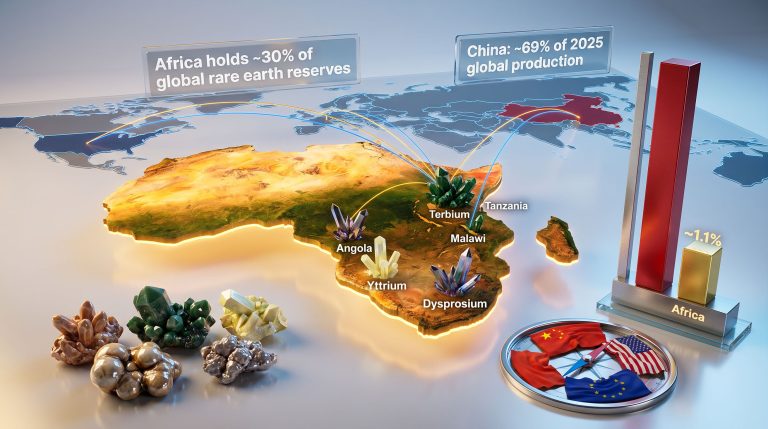
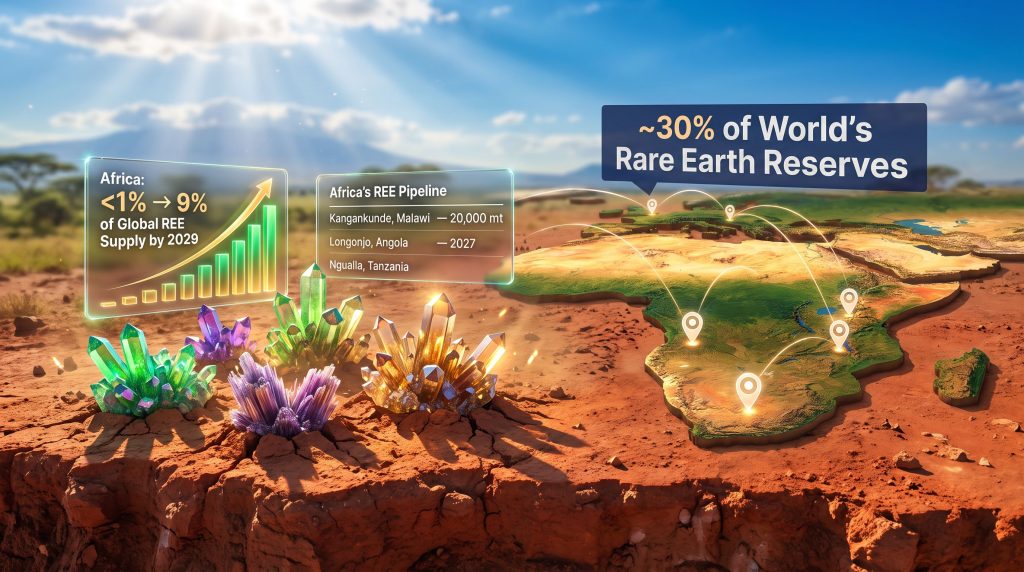
There is a paradox buried deep in the geology of the African continent. Beneath its soils lies an estimated 30% of the world's total rare earth reserves, yet for the better part of five years, Africa contributed virtually nothing to global industrial supply. While Western economies scrambled to reduce dependence on Chinese rare earth flows, the continent with arguably the richest untapped endowment sat largely dormant. That structural contradiction is now beginning to unravel, and the Africa rare earths supply comeback is drawing serious attention from governments, project financiers, and supply chain strategists worldwide.
Understanding why this moment matters requires stepping back from individual project announcements and examining the mechanics of how rare earth supply chains actually function, who controls them, and what it genuinely takes to build an alternative.
When big ASX news breaks, our subscribers know first
What Makes Rare Earths Irreplaceable in the Modern Industrial Economy?
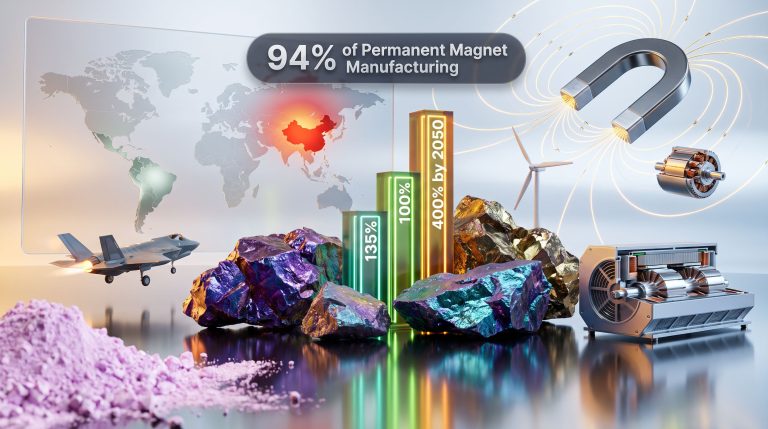
Rare earth elements — a group of 17 chemically similar metals including neodymium, praseodymium, dysprosium, terbium, yttrium, and scandium — sit at the intersection of nearly every major technology transition underway in the global economy. Their magnetic properties, particularly in neodymium-iron-boron permanent magnets, are unmatched by any known substitute at commercial scale.
The applications are not peripheral. Rare earths are embedded in:
- Electric vehicle traction motors, where neodymium-iron-boron magnets deliver high torque density in compact form factors
- Direct-drive wind turbine generators, where dysprosium-enhanced magnets maintain performance at elevated temperatures
- Advanced defence systems including precision-guided munitions, radar arrays, and jet engine components
- Consumer electronics, industrial robotics, and medical imaging equipment
Global demand for rare earth elements is projected to roughly quadruple by 2030, driven by accelerating electrification and clean energy deployment. That trajectory creates a structural supply problem that no single producing country, outside of China, is currently sized to resolve alone.
China's Grip on the Full Value Chain: More Than Just Mining
The conventional narrative around China's rare earth dominance focuses on production volume. The reality is considerably more entrenched. According to U.S. Geological Survey data, Chinese mines produced approximately 270,000 metric tons of rare-earth-oxide equivalent in 2025, representing around 69% of estimated global output of 390,000 metric tons. That concentration alone would constitute a critical supply chain vulnerability for any technology-dependent economy.
However, the more strategically significant dimension is vertical. China does not merely mine rare earths; it refines, separates, and converts them into finished magnetic alloys and components. Furthermore, Western nations that successfully source ore from non-Chinese mines still largely route that material through Chinese processing facilities before it re-enters global supply chains as usable product. China's rare earth strategy therefore provides only partial insulation from supply disruption when geographic diversification of mining is not matched by corresponding diversification of processing.
The production landscape beyond China looks as follows:
| Country | 2025 Estimated Output (metric tons REO) | Global Share |
|---|---|---|
| China | 270,000 | ~69% |
| United States | 51,000 | ~13% |
| Australia | 29,000 | ~7.4% |
| Myanmar | 22,000 | ~5.6% |
| Thailand | 4,800 | ~1.2% |
| India | 2,900 | ~0.7% |
A factor less widely appreciated is that China's own domestic consumption of rare earths is rising sharply. Its expanding robotics manufacturing base, domestic EV production, and defence modernisation programmes are absorbing an increasing share of domestic output. This tightening of internal Chinese supply contributed to a modest but notable approximately 2% global price lift in early 2025.
Africa's Production Gap: A Continent Rich in Reserves, Empty of Output
Africa's last operational industrial-scale rare earth mine, the Gakara project in Burundi, ceased production in June 2021. Since that closure, the continent has recorded no industrial-scale rare earth output — a remarkable situation for a landmass holding roughly 30% of global reserves.
Current USGS statistics do record marginal figures: 2,700 metric tons attributed to Madagascar and 1,500 metric tons to Nigeria, though neither figure is linked to a formally identified industrial operation. These numbers most likely reflect artisanal recovery or legacy activity rather than systematic mine production. Tanzania and South Africa, both widely regarded as holding significant rare earth resource potential, register no production figures at all in current global datasets.
This gap between geological endowment and operational output reflects several converging factors:
- A historical exploration deficit across much of the continent, leaving resource definitions incomplete and not yet bankable
- Infrastructure deficiencies that make remote project development economically marginal without external capital support
- Rare earth processing challenges that limit the economic case for pure concentrate production without downstream value addition
- Sovereign risk perceptions that have historically elevated the cost of project finance relative to comparable assets in more established jurisdictions
Structural Reality: Africa holds approximately 30% of the world's rare earth reserves yet delivers less than 1% of global industrial supply. The gap between geological endowment and production output is arguably larger here than for any other critical mineral globally.
The Projects Building Africa's New Rare Earth Supply Base
The Africa rare earths supply comeback is being constructed project by project, with a pipeline concentrated across Malawi, Tanzania, Angola, and South Africa.
Kangankunde, Malawi: The Most Advanced Project on the Continent
Lindian Resources completed the first blast at Kangankunde in July 2026, formally initiating mining operations at what is currently the most operationally advanced rare earth project on the African continent. The company secured $100 million to fund the project and is targeting industrial-scale production by end of 2026, with planned annual output of up to 20,000 metric tons of rare earths concentrate.
Kangankunde is geologically notable as a carbonatite-hosted deposit, a deposit type that tends to be rich in light rare earth elements including neodymium and praseodymium. Carbonatite deposits generally carry higher total rare earth grades than many competing deposit types, though their heavy rare earth content is typically lower.
Songwe Hill, Malawi
Operated by Mkango Resources, Songwe Hill is targeting production from 2025, positioning Malawi as one of the few countries on the continent capable of hosting two concurrent rare earth production operations. This dual-project concentration elevates Malawi's strategic significance within any African supply diversification narrative.
Longonjo, Angola: Pensana Plc's Atlantic-Facing Asset
The Longonjo rare earth project in Angola, operated by Pensana Plc, is targeting production from 2027. The project has attracted interest from parties seeking to establish non-Chinese supply sources, partly due to Angola's Atlantic coastline, which offers more direct export logistics compared to landlocked central African sites.
Ngualla, Tanzania and Phalaborwa, South Africa
Ngualla, operated by Peak Rare Earths, is one of the largest undeveloped rare earth deposits globally by resource size, though its production timeline remains to be confirmed. Phalaborwa in South Africa represents a different deposit profile entirely, with rare earths recoverable as a byproduct of existing or legacy industrial mining activity.
The full pipeline summary is presented below:
| Project | Country | Operator | Target Production Start |
|---|---|---|---|
| Kangankunde | Malawi | Lindian Resources | Late 2026 |
| Songwe Hill | Malawi | Mkango Resources | 2025 |
| Longonjo | Angola | Pensana Plc | 2027 |
| Ngualla | Tanzania | Peak Rare Earths | TBC |
| Phalaborwa | South Africa | TBC | TBC |
Quantifying Africa's Market Share Potential: Three Scenarios
Forecasting Africa's trajectory in global rare earth supply requires accounting for the wide range of execution variables affecting multiple concurrent projects across different jurisdictions. Two prominent forecasts bracket the range of credible outcomes:
- Benchmark Mineral Intelligence (2024): Eight new African mines across Tanzania, Angola, Malawi, and South Africa could collectively deliver 9% of global rare earth supply by 2029
- Fitch Solutions: A more conservative projection of 7% of global supply by 2034, reflecting greater weight given to infrastructure constraints and execution risk
Modelling these against a range of assumptions produces the following scenario framework:
| Scenario | Projected Africa Share | Timeline | Key Assumptions |
|---|---|---|---|
| Optimistic | 9-10% | 2029 | All 8 mines reach production on schedule; Western capital deploys freely |
| Base Case | 7% | 2030-2032 | 5-6 mines operational; moderate infrastructure and permitting delays |
| Conservative | 3-5% | 2034+ | Processing bottlenecks, financing gaps, and regulatory friction slow ramp-up |
Investor Perspective: Even the conservative scenario implies a 3x to 5x increase from Africa's current near-zero industrial base. In a market where supply concentration is itself priced as a risk premium, the directional shift matters as much as the precise volume figure.
The next major ASX story will hit our subscribers first
The Geopolitical Dimension: G7 Targets and Chinese Offtake Complications
In early June 2026, G7 nations formally committed to reducing collective dependence on Chinese rare earth supply to below 60% by 2030, down from approximately 69% in 2025. This sets a structural demand signal for non-Chinese producers and creates an incentive architecture for Western capital to flow toward African projects. Consequently, critical minerals geopolitics is increasingly shaping which projects attract finance and on what terms.
However, the picture on the ground is considerably more textured. An estimated 37% of projected future African rare earth supply is already committed to Chinese offtake agreements. Chinese entities retain financial interests in a subset of African projects, meaning the continent's emerging production base is not cleanly bifurcated into Western-aligned and Chinese-aligned assets.
This dual-track dynamic creates genuine complexity for host nation governments, who must balance access to Chinese capital and technical expertise against the political and commercial advantages of cultivating Western strategic partnerships. It is not a binary choice, and the most sophisticated African mining policy frameworks are beginning to reflect that nuance.
The Processing Imperative: Why Mining Alone Is Not Enough
A critical insight often absent from high-level rare earth supply discussions is the enormous economic difference between exporting raw concentrate and delivering separated rare earth oxides or finished magnetic alloys. The value differential between raw concentrate and finished neodymium-iron-boron magnet alloy can be in the range of 5x to 10x per tonne, depending on specific product and market conditions.
Africa currently lacks the downstream separation and refining infrastructure that China has systematically constructed over several decades. Without local processing capability:
- African projects export concentrate at the lowest point on the value chain
- That material is routed through Chinese or other foreign processing facilities
- The majority of economic value creation occurs outside the producing country
- Host nation fiscal receipts reflect raw material economics rather than finished product economics
African governments are increasingly recognising this gap and embedding local value-addition requirements into new mining framework agreements. The processing capability gap is arguably the single most important structural constraint determining whether the Africa rare earths supply comeback translates into genuine economic development, or simply replicates the raw material export model that has characterised much of the continent's mining history.
Critical Risks That Could Delay the Timeline
Several structural obstacles sit between Africa's project pipeline and the production forecasts cited above:
- Infrastructure deficits: Kangankunde and Ngualla are located in landlocked countries with limited rail connectivity, meaning road transport to port carries material cost implications at scale
- Power reliability: Energy-intensive flotation and hydrometallurgical processing requires consistent grid supply or significant on-site generation investment
- Exploration maturity: Large portions of Africa's rare earth reserve base remain at early resource definition stages, limiting the bankable project pipeline beyond the current eight identified developments
- Sovereign risk premiums: Project finance costs for African assets typically carry risk premiums not applied to comparable Australian or North American projects, increasing the hurdle rate for investment returns
- Heavy rare earth deficit: African projects are predominantly carbonatite-hosted, meaning they are strong in light rare earths but limited in strategically critical heavy rare earths — specifically terbium and dysprosium — which remain heavily concentrated in Chinese ionic clay deposits
Key Metrics to Monitor Through 2030
| Indicator | Current Status | 2029-2030 Target |
|---|---|---|
| Africa's industrial REE supply share | Less than 1% | 7-9% |
| Operational African REE mines (industrial scale) | 0 | Up to 8 |
| Kangankunde annual output target | Pre-production | 20,000 mt concentrate |
| G7 China REE dependency | ~69% | Below 60% |
| Global REE demand trajectory | ~390,000 mt (2025) | ~4x by 2030 (projected) |
Frequently Asked Questions: Africa's Rare Earths Supply Comeback
Which elements do African rare earth projects primarily produce?
Current and near-term African production is weighted toward light rare earth elements (LREEs): cerium, lanthanum, neodymium, and praseodymium. These are commercially important, particularly neodymium and praseodymium for permanent magnets. However, heavy rare earth elements such as terbium and dysprosium, which command the highest prices and carry the greatest strategic sensitivity, remain more difficult to source from African geology at comparable grades.
Which African country holds the largest rare earth reserves?
No single African country dominates the continent's reserve base. Tanzania, Malawi, South Africa, Angola, Madagascar, and Nigeria all host material rare earth endowments, distributed across diverse geological settings ranging from carbonatite intrusions to placer concentrations.
When will African rare earth production reach meaningful scale?
Kangankunde in Malawi is targeting industrial-scale output by late 2026, making it the first African project likely to register in global industrial production statistics since the Gakara closure in 2021. The broader pipeline of up to eight projects is expected to ramp progressively between 2026 and 2030, with the aggregate supply impact becoming statistically significant within that window.
How does Africa's emerging output compare to China's production?
China produced approximately 270,000 metric tons of REO equivalent in 2025. Africa's projected contribution under the optimistic scenario reaches roughly 9% of a growing global market by 2029, which translates to perhaps 40,000–50,000 metric tons on a demand-adjusted basis. Substantial, but still well below China's current output and representing a complementary rather than replacement supply source.
Disclaimer: This article contains forward-looking projections from third-party research organisations including Benchmark Mineral Intelligence and Fitch Solutions. These forecasts involve assumptions about project execution timelines, capital availability, regulatory environments, and market conditions that may not materialise as anticipated. Nothing in this article constitutes investment advice. Readers should conduct independent due diligence before making any investment decisions related to the companies, projects, or sectors discussed.
Ready to Capitalise on the Next Major Mineral Discovery?
Discovery Alert's proprietary Discovery IQ model delivers real-time alerts on significant ASX mineral discoveries — transforming complex geological and commodity data into actionable investment insights the moment they hit the exchange. Explore Discovery Alert's discoveries page to see how historic finds have generated extraordinary returns, and begin your 14-day free trial today to position yourself ahead of the broader market.