
July 13, 2026
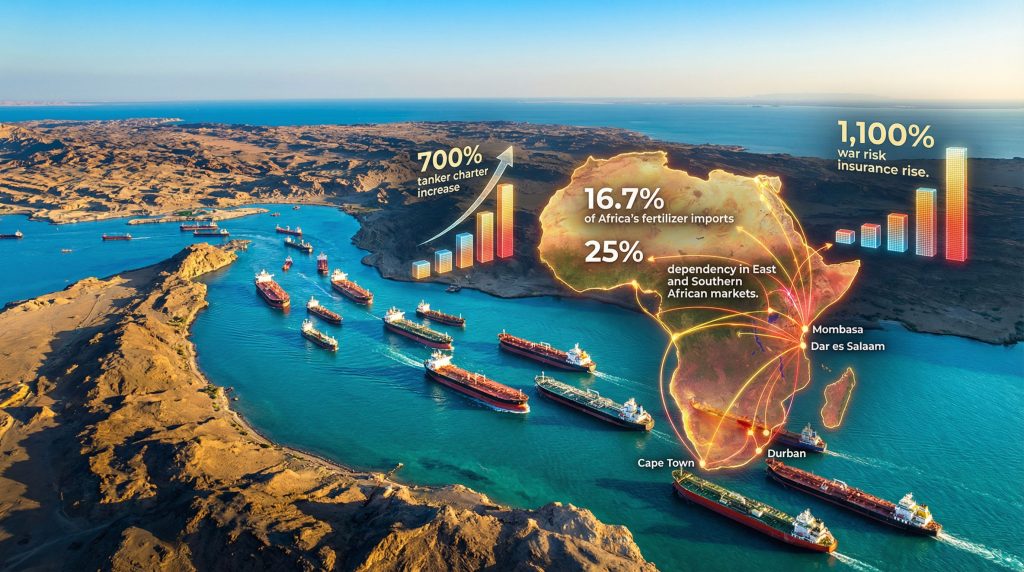
Global maritime tensions are reshaping economic realities across diverse African markets as strategic waterways face unprecedented disruption. The interconnected nature of modern supply chains means regional conflicts thousands of miles away create immediate pressures on African import costs, currency stability, and industrial operations. Understanding these transmission mechanisms reveals how geographic chokepoints amplify economic vulnerabilities across an entire continent, particularly when considering US economy tariffs and their compounding effects.
African Economic Exposure to Maritime Chokepoint Disruptions
The Strait of Hormuz impact on Africa's economy operates through multiple interconnected channels that extend far beyond simple trade route disruptions. African economies face a complex web of dependencies where Middle Eastern instability creates cascading effects through commodity pricing, shipping costs, and currency markets.
Maritime intelligence data reveals the scale of disruption: dry bulk goods shipments through the Strait declined 83% from February to March 2026, dropping from 7.5 million tonnes to just 1.3 million tonnes. This dramatic reduction affects everything from fertilizer supplies to industrial inputs that African economies depend upon.
The strategic importance of this waterway cannot be overstated. The Strait of Hormuz handles approximately 21% of globally traded crude oil and 21% of liquefied natural gas worldwide. When tensions escalate, the effects ripple through global markets with particular intensity for import-dependent African economies, as highlighted by UNCTAD's analysis of Hormuz disruption.
Currency Vulnerability Mechanisms
African currencies face automatic depreciation pressure during global crises as investors seek safe-haven assets. This "flight to safety" dynamic strengthens the US dollar while weakening African currencies, creating dual pressure on import costs. Local businesses must pay higher absolute prices for goods while simultaneously dealing with unfavorable exchange rates.
External debt burdens compound these pressures. African countries collectively carry approximately $696 billion in external debt, with substantial portions denominated in US dollars. Currency weakness immediately increases debt servicing costs, creating fiscal pressures that limit government capacity to respond to economic shocks.
Supply Chain Architecture Dependencies
Historical trade patterns have created specific vulnerabilities where Gulf Cooperation Council states serve as key suppliers of refined petroleum, fertilizers, and industrial chemicals. These dependencies are reinforced by established logistics infrastructure that makes alternative routes expensive to develop quickly.
Port infrastructure constraints amplify these vulnerabilities. East African ports like Mombasa and Dar es Salaam handle the majority of regional imports, creating bottlenecks when global shipping patterns shift. Southern African ports experience increased congestion as vessels reroute around the Cape of Good Hope, adding capacity constraints to already stressed systems.
When big ASX news breaks, our subscribers know first
Structural Import Dependencies Creating Economic Fragility
African economies exhibit particular susceptibility to shipping disruptions through their import dependency profiles and currency exposure mechanisms. Unlike developed economies with diversified supply chains and hedging instruments, many African countries lack the policy tools to insulate themselves from external shocks.
Critical Fertilizer Supply Vulnerabilities
Fertilizer shipments through the Strait dropped 92% in March 2026, falling from over 1 million tonnes in February to just 82,000 tonnes. This disruption threatens food security across the continent as agricultural inputs become scarce during critical planting seasons.
Industry data demonstrates the concentration of risk: Gulf states supply 16.7% of Africa's total fertilizer imports, with this dependency rising to 25% for nitrogen-based fertilizers in East and Southern Africa. These regions face immediate shortages that threaten crop yields during March-May planting windows.
The timing creates compounding problems. Urea and other nitrogen fertilizers follow seasonal demand patterns where supply disruptions during planting periods cannot be easily compensated later in the growing cycle. Price spikes of 200-400% above baseline levels have been documented as inventory shortages emerge.
Currency Transmission Amplification
Dollar-denomination of international contracts creates automatic cost escalation when regional risk premiums increase. African central banks with limited foreign exchange reserves cannot effectively intervene to prevent rapid currency depreciation during crisis periods.
This creates a dual-shock scenario where imports become more expensive in absolute terms through higher freight costs AND more expensive in local currency terms through unfavorable exchange rates. Furthermore, how tariffs impact markets demonstrates similar inflationary pressures that manufacturing sectors face as they cannot immediately pass increased costs to consumers without losing market share.
Infrastructure Capacity Constraints
Storage capacity limitations mean extended shipping delays directly reduce available inventory for critical inputs. Tanzania, Kenya, and Uganda import fertilizers primarily from Gulf suppliers with normal transit times of 15-20 days. Alternative suppliers from India and China require 30-45 day lead times, creating significant gaps in supply availability.
African ports lack the buffer capacity to handle surge volumes when shipping patterns normalize. This infrastructure deficit means recovery periods extend longer than necessary, prolonging economic disruption even after maritime tensions ease.
Sectoral Impact Analysis Across African Industries
The Strait of Hormuz impact on Africa's economy varies significantly across sectors, with agricultural and industrial operations facing different types of disruption. Understanding these differential impacts reveals which areas require immediate attention and which face longer-term structural challenges.
Agricultural Sector Vulnerabilities
Rice and Grain Security Risks
Grain shipments westbound through the Strait plunged 92% from 2.3 million tonnes in February to 196,000 tonnes in March. This affects Africa's food import dependency through secondary supply chain disruptions in major rice-exporting countries.
Major exporters to Africa including India, Pakistan, and Thailand source 20-30% of their fertilizers from Gulf suppliers. This creates delayed impact scenarios where African food imports face price increases months after initial shipping disruptions as reduced fertilizer application affects crop yields in exporting countries.
Critical Timing Considerations
March-April represents peak planting periods for major African crops including maize, soybeans, and sorghum. The 92% reduction in fertilizer shipments creates immediate shortage scenarios that cannot be compensated through later application. Reduced fertilizer use during this window directly translates to lower harvest yields later in the year.
Mining and Industrial Operations Disruption
Processing Input Shortages
Industrial bulk commodities shipments fell 93% in March 2026, dropping from nearly 5 million tonnes to 326,000 tonnes. This category includes limestone for cement production, sulfur for fertilizers and mineral processing, and gypsum for construction applications.
Copper producers in Zambia and the Democratic Republic of Congo face particular challenges as they rely on imported sulfur for ore processing. Sulfuric acid serves as the primary leaching agent in copper extraction, and these countries have limited domestic production capacity estimated at only 15-20% of mining sector requirements.
Export Route Complications
Iron ore exports through the Strait fell 65% in March, dropping from over 530,000 tonnes to 186,000 tonnes. Steel shipments declined 93% from nearly 162,000 tonnes to just 11,000 tonnes. These disruptions affect African mineral exporters to Asian markets who face extended shipping times and elevated insurance costs.
Cape of Good Hope rerouting adds $8-15 per tonne in additional shipping costs while extending transit times by 10-14 days. For high-volume, low-margin commodities, these additional costs significantly impact profitability and competitiveness in global markets.
Manufacturing Sector Cost Pressures
Energy cost escalations create immediate pressures on manufacturing operations. The Democratic Republic of Congo's manufacturing sector relies heavily on diesel-powered backup generators due to unreliable grid supply. 25% fuel price increases documented in the DRC directly reduce manufacturing competitiveness.
Export-oriented manufacturers face a double squeeze: higher input costs that cannot be fully passed to international buyers without losing market share, combined with extended shipping times that disrupt delivery schedules and customer relationships.
Freight Cost Escalation and Economic Transmission Mechanisms
Shipping cost increases create inflationary pressures that ripple through African economies via multiple channels. The magnitude of these increases reveals why maritime disruptions have such significant economic impacts across the continent, particularly when combined with OPEC oil production impact on global energy markets.
Documented Cost Escalations
| Component | Normal Rate | Crisis Rate | Increase |
|---|---|---|---|
| Tanker Charter Rates | $50,000/day | $400,000/day | 700% |
| War Risk Insurance | 0.25% vessel value | 3% vessel value | 1,100% |
| Dry Bulk Shipping | Standard rates | 3-4x premium | 200-300% |
These escalations translate directly into higher costs for African importers. For a standard $100 million container vessel, war risk insurance costs surge from $200,000-500,000 per voyage to $3,000,000 per voyage, representing a fundamental shift in shipping economics.
Energy Cost Transmission Effects
Fuel price increases of 25% documented in South Africa and the Democratic Republic of Congo create cascading effects throughout these economies. Transportation networks face immediate cost pressures that affect everything from food distribution to industrial logistics.
Bunker fuel comprises 40-50% of operational shipping costs for standard transits. Extended Cape route transits requiring additional 10-14 days increase absolute bunker costs by 30-40%. Combined with bunker price increases from approximately $450-500/tonne to $650-750/tonne, shipping companies face unprecedented operational cost pressures.
Regional Infrastructure Capacity Constraints
Cape ports including Table Bay and Durban experience increased congestion, adding 2-5 days waiting time for vessels. Port premiums increase 15-25% due to capacity constraints, further escalating total shipping costs.
These infrastructure bottlenecks mean that even when maritime tensions ease, recovery periods extend longer as ports work through accumulated vessel backlogs. African importers face extended periods of elevated costs even after shipping routes normalize.
Inflationary Transmission Channels
Direct Effects:
- Fuel price increases immediately affect diesel-dependent economies
- Transportation cost increases raise logistics expenses across all sectors
- Input cost increases elevate manufacturing and agricultural production costs
Indirect Effects:
- Central banks may respond to inflationary pressures with monetary tightening
- Higher borrowing costs affect corporate investment and consumer spending
- Wage pressures emerge as workers demand cost-of-living compensation
The convergence of these factors creates compounding economic pressures where individual cost increases multiply through interconnected economic relationships. Consequently, strategies for market volatility hedging become increasingly relevant for African businesses exposed to these risks.
Regional Differential Impacts Across African Economies
The Strait of Hormuz impact on Africa's economy affects different regions and countries in varying ways based on their economic structures, import dependencies, and currency resilience. Understanding these variations reveals both vulnerability patterns and potential mitigation strategies.
Oil-Exporting Nations: Mixed Economic Outcomes
Revenue Enhancement Opportunities
Nigeria and Angola experience offsetting benefits from elevated global oil prices during crisis periods. Oil price increases of 15-25% documented during March 2026 provide enhanced export revenues for these producers.
Nigeria's oil export revenues represent approximately 90% of government revenue, meaning price increases create significant fiscal breathing room. Enhanced foreign currency earnings strengthen balance of payments positions and provide resources for economic stabilization measures.
Structural Limitations
However, these benefits face constraints from import dependencies. Nigeria maintains 70-80% reliance on imported refined petroleum products, limiting net benefits from crude oil price increases. The country exports crude while importing refined products, creating exposure to both crude price volatility and refined product cost escalation.
Angola faces similar constraints where limited refining capacity prevents full capture of oil price benefits. Infrastructure limitations mean these countries cannot immediately translate higher crude revenues into reduced import costs for essential products.
Import-Dependent Economies: Immediate Pressure Points
Energy Cost Escalation
Non-oil producing African countries face immediate pressures from energy cost increases. 25% fuel price increases in South Africa and the Democratic Republic of Congo disrupt transportation networks and industrial operations.
Diesel price surges particularly impact logistics and transportation sectors that form the backbone of economic activity. Industrial operations face elevated energy input costs that reduce competitiveness in both domestic and export markets. Meanwhile, trade war oil prices add further complexity to global energy market dynamics.
Food Security Implications
Countries with limited agricultural self-sufficiency experience compounded pressures from both fertilizer shortages and direct food import cost increases. The 92% reduction in grain shipments through the Strait affects rice imports while fertilizer shortages threaten domestic production capacity.
East African countries including Kenya, Tanzania, and Uganda face particular vulnerability as they depend on both imported fertilizers and imported food staples. This dual dependency creates food security risks that extend beyond immediate shipping disruptions.
Currency Market Amplification Effects
Dollar Strengthening Dynamics
Global uncertainty triggers capital flight toward safe-haven assets, strengthening the US dollar against African currencies. This creates multiple pressure points that compound shipping cost increases.
Debt Servicing Burden Increases
African countries with substantial dollar-denominated external debt face immediate increases in debt servicing costs measured in local currency terms. Government fiscal positions deteriorate rapidly as debt payments absorb larger portions of government revenues.
Corporate borrowers similarly face elevated refinancing costs. Companies with dollar-denominated debt experience balance sheet pressures that limit their capacity to absorb increased input costs.
Import Cost Multiplication
Currency weakness compounds shipping cost increases, creating scenarios where African importers face both higher freight rates AND unfavorable exchange rates simultaneously. This multiplication effect means total import cost increases often exceed the sum of individual cost components.
Manufacturing Competitiveness Impacts
Export-oriented manufacturers across Africa face margin compression as higher input costs cannot be fully passed to international buyers. South African manufacturers competing in global markets experience cost disadvantages that threaten export order retention.
Logistics companies including regional operators experience immediate margin pressure as fuel surcharges cannot fully offset increased operational costs. This creates ripple effects through supply chains that depend on efficient logistics networks.
Long-Term Structural Economic Transformation Potential
Beyond immediate disruptions, the Strait of Hormuz impact on Africa's economy may catalyze longer-term structural changes in trade patterns, investment flows, and regional integration strategies. These transformations could reshape Africa's economic landscape in ways that extend well beyond the current crisis.
Investment Flow Redirection Scenarios
Gulf Capital Allocation Shifts
Wealthy Gulf nations may reassess African investment commitments as domestic security concerns absorb greater capital and attention. Regional tensions create competing priorities where Gulf investors focus resources on regional stability rather than African expansion.
Planned infrastructure projects in transportation, energy, and industrial development could face postponement or cancellation. This affects long-term development trajectories across multiple African countries that have relied on Gulf investment for major projects.
Private Capital Risk Assessment Changes
International investors may recalibrate risk assessments for African investments that depend on stable shipping routes or Gulf supply chains. This could affect everything from mining project financing to agricultural development initiatives.
The crisis highlights supply chain vulnerabilities that institutional investors will factor into future investment decisions. Projects with diversified supply chains may receive preferential treatment compared to those dependent on single-source suppliers or shipping routes.
Remittance Flow Vulnerabilities
Labour Market Disruptions
Job insecurity among African migrant workers in Gulf economies threatens remittance flows to countries like Kenya and Uganda where these transfers constitute significant portions of foreign exchange earnings.
Economic slowdowns in Gulf states reduce demand for expatriate labour, particularly in construction, domestic services, and hospitality sectors where many African workers are employed. This creates secondary economic effects that compound direct trade disruptions.
Reduced remittance flows affect household consumption patterns across multiple African countries, creating demand-side economic pressures that amplify supply-side disruptions from shipping costs.
Regional Supply Chain Evolution
Intra-African Trade Enhancement
The crisis may accelerate African Continental Free Trade Area implementation as countries seek to reduce dependence on external supply chains. Regional trade agreements become more attractive when global supply chains demonstrate fragility.
Cross-border infrastructure investment may receive enhanced priority as countries recognise the economic value of regional integration. Projects connecting African economies through road, rail, and port infrastructure offer alternatives to vulnerable maritime routes.
Strategic Reserve Development
Countries may establish strategic reserves of critical inputs like fertilizers and industrial chemicals to reduce vulnerability to supply chain disruptions. This requires significant capital investment but provides insurance against future shocks.
Currency hedging mechanisms could become more sophisticated as African financial markets develop instruments to manage exchange rate volatility during crisis periods. This institutional development would reduce economic shock transmission in future disruptions.
Industrial Development Strategy Shifts
Local Production Capacity Building
The crisis highlights opportunities for import substitution in critical sectors. African countries may prioritise domestic fertilizer production capacity to reduce dependence on Gulf suppliers.
Regional manufacturing initiatives could receive enhanced support as countries recognise the economic security benefits of diversified production bases. Southern African countries might coordinate industrial development to create regional supply chains.
Technology Transfer Acceleration
Partnerships with non-Gulf suppliers may accelerate technology transfer and industrial development. Chinese, Indian, and Brazilian companies could expand African operations to fill supply gaps left by Gulf disruptions.
This geographic diversification of technology partnerships could reshape Africa's industrial development trajectory, creating opportunities for enhanced technological capability and reduced dependency concentration.
The next major ASX story will hit our subscribers first
Strategic Economic Resilience Building Framework
The current crisis serves as a comprehensive stress test for African economic resilience, revealing both vulnerabilities and opportunities for structural transformation. Understanding these lessons enables the development of more robust economic frameworks that can withstand future global supply chain disruptions.
Economic Diversification Imperatives
Supply Chain Resilience Building
African economies require diversified supply chains that reduce dependence on single transit routes or supplier regions. This involves developing relationships with multiple supplier countries and investing in alternative logistics infrastructure.
Regional economic communities may accelerate integration efforts to create more self-sufficient regional markets. The Economic Community of West African States, Southern African Development Community, and East African Community could enhance coordination to build resilient regional supply networks.
Strategic Buffer Creation
Countries could establish strategic reserves not just for energy but for critical agricultural and industrial inputs. This requires upfront investment but provides insurance against supply disruptions that could otherwise cripple economic activity.
Financial institutions might develop more sophisticated hedging instruments specifically designed for African market conditions. Currency hedging mechanisms, commodity price stabilisation funds, and trade finance innovations could reduce vulnerability to external shocks.
Regional Integration Acceleration
Infrastructure Development Priorities
The crisis underscores the importance of intra-African transportation networks that can function independently of global maritime chokepoints. Road, rail, and pipeline infrastructure connecting African economies becomes strategically vital rather than merely economically beneficial.
Port capacity expansion in multiple regions reduces bottleneck vulnerabilities. Rather than concentrating on single major ports, distributed port development creates redundancy that maintains trade flow capacity during disruptions.
Financial Integration Enhancement
Regional payment systems and currency arrangements could reduce dependence on dollar-denominated transactions. African countries trading with each other in local currencies or regional units reduce exposure to dollar volatility during global crises.
Regional development banks and financial institutions could provide alternative sources of trade finance during periods when global markets become risk-averse. This institutional development requires long-term commitment but provides crucial economic security.
Industry-Specific Resilience Strategies
Agricultural Sector Transformation
Enhanced domestic and regional fertilizer production reduces dependence on Gulf suppliers. Morocco's phosphate resources, combined with manufacturing capacity development across Africa, could create continent-wide fertilizer security.
Improved seed varieties that require less fertilizer input reduce vulnerability to supply disruptions. Agricultural research investments that enhance productivity while reducing input dependency provide both economic and food security benefits.
Mining and Industrial Development
Regional mineral processing capacity reduces dependence on imported chemicals and equipment. Developing sulfuric acid production capacity near copper mining regions eliminates supply chain vulnerabilities while adding value to local economies.
Industrial cluster development around key resources creates economies of scale that support local input production. These clusters become more economically viable when global supply chains demonstrate unreliability.
The Strait of Hormuz impact on Africa's economy demonstrates how regional conflicts can reshape economic realities across an entire continent. While immediate impacts create significant challenges, the disruption provides valuable lessons for building more resilient African economies capable of withstanding global supply chain disruptions while pursuing sustainable development objectives. According to IMF analysis on Middle East war impacts, these effects extend beyond immediate trade disruptions to fundamental changes in energy trade and financial flows affecting the continent's economic trajectory.
This analysis is based on publicly available data and market observations. Readers should consult with financial advisors and conduct independent research before making investment decisions related to African markets or companies affected by global shipping disruptions.
Ready to Invest in Africa's Resource Opportunities Despite Global Uncertainties?
Discovery Alert's proprietary Discovery IQ model identifies significant ASX mineral discoveries in real-time, helping investors capitalise on African mining opportunities and commodity plays as global supply chains reshape. Begin your 14-day free trial today and position yourself ahead of market disruptions with instant alerts on actionable investment opportunities.