May 20, 2026
Understanding the Global Energy Transformation Through African LNG Solutions
Global energy markets are experiencing unprecedented volatility as traditional supply chains face systematic disruption through geopolitical tensions, infrastructure attacks, and shifting international relationships. The fundamental architecture of energy security, built around pipeline networks and established trading partnerships, is undergoing rapid transformation as nations seek resilient alternatives to mitigate supply risks. Furthermore, this restructuring extends beyond immediate crisis response, representing a strategic pivot toward diversified energy portfolios that prioritize maritime flexibility and geographic distribution of supply sources. The Ukraine energy crisis Africa LNG dynamic illustrates how regional conflicts are driving fundamental changes in global energy supply patterns.
The emergence of Africa as a critical player in this energy reconfiguration reflects broader trends in resource nationalism, technological advancement in liquefied natural gas production, and the growing recognition of maritime transport advantages over fixed pipeline infrastructure. As traditional energy corridors become increasingly vulnerable to disruption, the strategic value of African LNG resources extends beyond their inherent quality to encompass their geographic positioning, development potential, and ability to provide supply security through diversified routing options.
When big ASX news breaks, our subscribers know first
What Makes African LNG a Strategic Game-Changer for Energy-Starved Nations?
The Geopolitical Shift from Pipeline Dependency to Maritime Flexibility
Maritime LNG transport offers fundamental advantages over fixed pipeline infrastructure in terms of supply security and strategic flexibility. Unlike pipelines, which create permanent dependencies between specific suppliers and consumers, LNG shipping enables dynamic routing decisions based on real-time market conditions, security assessments, and geopolitical developments.
The Ukraine energy crisis demonstrates these vulnerabilities acutely, with the country's domestic gas production cut by 50% due to targeted infrastructure strikes. Ukraine's Central Bank Governor Andriy Pyshnyi confirmed this dramatic reduction in local LNG production capacity, forcing the nation to seek alternative supply mechanisms despite having avoided Russian gas imports since 2015. Moreover, this situation highlights how the Ukraine energy crisis Africa LNG relationship is becoming increasingly important as European nations seek supply diversification.
Security Metrics Comparison: Pipeline vs. Maritime LNG Delivery
| Security Factor | Pipeline Infrastructure | Maritime LNG |
|---|---|---|
| Route Flexibility | Fixed, single-path | Dynamic, multiple routes |
| Infrastructure Vulnerability | High (permanent installations) | Lower (mobile vessels) |
| Supply Diversification | Limited to pipeline endpoints | Global supplier access |
| Emergency Response Time | Months to years (rebuild) | Days to weeks (reroute) |
| Political Leverage Risk | High (transit dependencies) | Moderate (port access) |
The strategic value of maritime flexibility becomes particularly evident when examining shipping route alternatives. African LNG can reach European markets through multiple pathways, including traditional Mediterranean routes, Atlantic shipping lanes, and alternative approaches that bypass potentially contested waterways. This routing diversity provides importing nations with negotiating leverage and supply security unavailable through fixed pipeline arrangements. Additionally, such flexibility aligns with broader energy security strategy considerations that prioritise supply source diversification.
Risk Premium Analysis: Why African Gas Commands Strategic Value
African LNG suppliers offer unique risk-adjusted value propositions compared to traditional Middle Eastern and Russian sources. The geographic distribution of African reserves across multiple countries reduces single-source dependency risks whilst providing access to politically stable jurisdictions with established legal frameworks for international energy partnerships.
"The combination of maritime transport flexibility and supplier diversity creates a risk mitigation framework that traditional pipeline-dependent systems cannot match, particularly in periods of heightened geopolitical tension."
Africa LNG projects benefit from several structural advantages in risk-adjusted pricing mechanisms. First, the continent's relative distance from major conflict zones reduces the probability of supply disruption through military action. Second, the maritime transport model enables rapid supplier substitution if individual projects face temporary challenges. Third, the emerging competition between African suppliers creates favourable pricing dynamics for importers seeking long-term supply agreements.
Risk assessment methodologies increasingly recognise these factors in project financing and contract negotiations. Insurance markets price African LNG projects favourably compared to alternatives in regions with higher conflict probability or single-route transportation dependencies. This risk premium differential translates into sustainable cost advantages for African suppliers in competitive international markets, particularly when considering tariff market impacts on global energy pricing.
Which African Nations Are Positioned to Dominate the Next LNG Expansion Wave?
Mozambique's Mega-Project Economics: 13 Million Tons and Growing
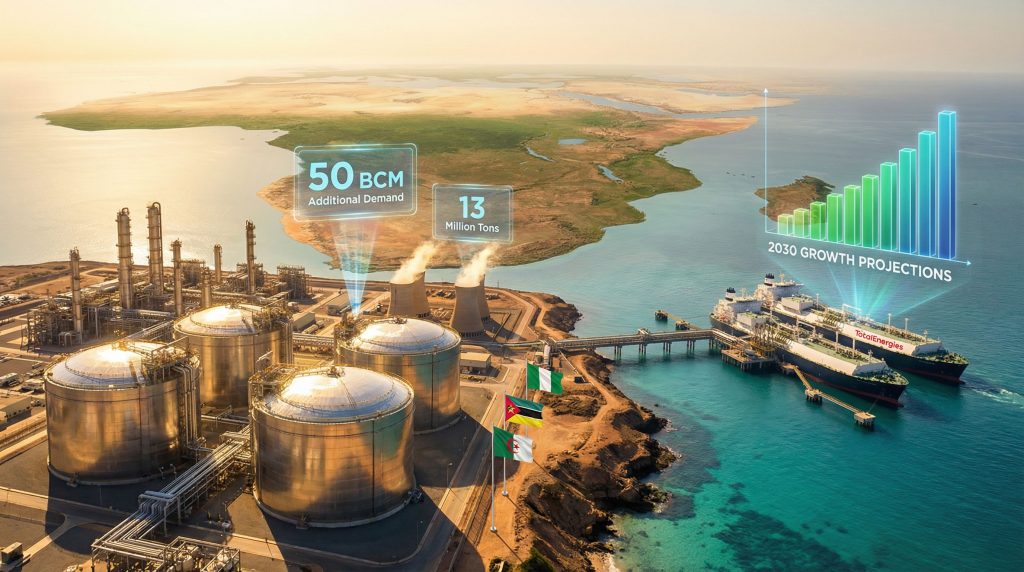
Mozambique represents the most significant LNG capacity expansion opportunity in Africa, with the TotalEnergies-led project designed for 13 million metric tons per annum (MTPA) production capacity. However, the project's economics have been substantially impacted by security challenges and cost escalations that provide important lessons for large-scale LNG development across the continent.
The project's ownership structure reflects international confidence in Mozambique's long-term potential despite near-term challenges:
Mozambique LNG Project Ownership Structure
| Partner | Ownership Percentage | Strategic Role |
|---|---|---|
| TotalEnergies | 26.5% | Operator, technology lead |
| Mitsui (Japan) | 20% | Financing, Asian market access |
| ENH (Mozambique) | 15% | State participation, local content |
| Bharat Petroleum | 10% | Indian market development |
| Oil India | 10% | Technical expertise, financing |
| ONGC Videsh | 10% | Exploration, development experience |
| PTTEP (Thailand) | 8.5% | Southeast Asian market access |
The project timeline has been significantly impacted by security challenges in Cabo Delgado province, where nearly a decade of insurgency activity has created operational risks. TotalEnergies announced a $4.5 billion cost increase in October 2025, reflecting the financial impact of a four-year project suspension triggered by security concerns. Consequently, this demonstrates how regional stability affects the Ukraine energy crisis Africa LNG supply dynamic, as delays in African capacity additions limit alternatives for European importers.
Despite these challenges, the January 2026 project restart announcement demonstrates sustained investor commitment to Mozambique's LNG potential. The revised project economics, whilst higher than originally projected, remain competitive in current global LNG markets where supply security commands significant premiums. Furthermore, this aligns with oil price volatility trends that favour secure, long-term supply arrangements.
The production scaling pathway from current development status to full 13 MTPA capacity represents a multi-year construction and commissioning process. Industry analysis suggests first LNG exports could commence in 2028-2029, with full production capacity achieved by 2030-2031, assuming continued security improvements and construction progress.
Nigeria's Established Infrastructure Advantage
Nigeria's position as an established LNG producer provides significant competitive advantages over emerging African suppliers. The country benefits from existing terminal infrastructure, operational experience, established supply relationships, and proven transportation logistics that reduce development timelines and execution risks.
The Nigeria LNG Limited (NLNG) complex on Bonny Island represents decades of operational refinement and technical optimisation. Current production capacity utilisation rates and expansion potential through the Train 7 project position Nigeria to capture market share during the current supply shortage period whilst other African projects complete development phases.
Nigeria's geographic positioning offers particular advantages for European market access. Atlantic shipping routes from Nigerian terminals provide reliable delivery timelines and established logistics networks that importing nations value during periods of supply uncertainty. The country's experience managing complex LNG operations provides operational reliability that newer projects require years to achieve.
The established infrastructure base enables Nigeria to respond more rapidly to market demand increases than greenfield developments elsewhere in Africa. This responsiveness becomes particularly valuable in volatile market conditions where supply flexibility commands premium pricing.
Algeria's Pipeline-to-LNG Transition Strategy
Algeria's energy strategy increasingly emphasises LNG export capability alongside traditional pipeline infrastructure. The country's existing gas production capacity provides a foundation for LNG development that many other African nations lack, potentially enabling more rapid capacity scaling than purely greenfield approaches.
Algeria's strategic positioning in North Africa offers unique advantages for European supply relationships. The combination of existing production infrastructure, Mediterranean proximity, and established energy partnerships creates opportunities for accelerated LNG capacity development compared to sub-Saharan alternatives.
The country's domestic energy balance between internal consumption and export optimisation represents a key strategic consideration. Managing domestic demand growth whilst maximising export revenues requires sophisticated capacity planning and infrastructure investment that Algeria is actively addressing through energy sector modernisation programmes. However, these considerations intersect with global energy transition challenges that affect long-term planning decisions.
How Do Infrastructure Bottlenecks Shape African LNG Market Dynamics?
Investment Gap Analysis: The $50 Billion Infrastructure Challenge
African LNG development faces substantial infrastructure investment requirements that create both opportunities and constraints for market expansion. Recent project developments illustrate the scale and complexity of financing challenges that must be addressed to realise the continent's LNG export potential.
The financial landscape for African LNG has been significantly impacted by risk reassessment following security challenges in Mozambique. The UK's withdrawal of $1.15 billion in export credit support in December 2025 reflects broader concerns about project execution risks in challenging operating environments.
British Business Minister Peter Kyle stated that the UK government's decision was based on comprehensive assessment of project risks and UK taxpayer interests, indicating that sovereign financing mechanisms are becoming more selective regarding African LNG projects. This withdrawal follows similar risk reassessments by other international financing institutions.
Major African LNG Investment Requirements and Status
| Project | Country | Estimated Investment | Current Status | Key Challenges |
|---|---|---|---|---|
| TotalEnergies LNG | Mozambique | $24.5+ billion | Restarted 2026 | Security, cost escalation |
| Rovuma LNG | Mozambique | $30 billion | Suspended Oct 2025 | Security concerns |
| Nigeria Train 7 | Nigeria | $10+ billion | Development phase | Financing, capacity optimisation |
| Algeria LNG Expansion | Algeria | $8-12 billion | Planning stage | Domestic demand balance |
The cumulative investment requirements across major African LNG projects exceed $70 billion, representing one of the largest infrastructure development challenges in contemporary energy markets. Successful project financing requires sophisticated risk mitigation mechanisms, international partnerships, and long-term supply agreements that provide revenue certainty.
ExxonMobil's suspension of the $30 billion Rovuma LNG project in October 2025 demonstrates how security concerns can impact even the largest international energy companies. This suspension, combined with the UK financing withdrawal, illustrates the interconnected nature of political risk, security challenges, and project economics in African LNG development.
Security Infrastructure: Lessons from Mozambique's Cabo Delgado Experience
The Cabo Delgado province insurgency provides critical insights into security infrastructure requirements for large-scale LNG projects in challenging environments. Nearly a decade of conflict has created operational challenges that extend beyond immediate project sites to encompass regional stability, workforce security, and international partnership frameworks.
The four-year suspension of Mozambique's LNG project demonstrates how regional security challenges can impact global energy supply chains. The $4.5 billion cost increase announced by TotalEnergies reflects not only construction delays but also enhanced security infrastructure requirements that are now recognised as essential components of project development.
Security infrastructure integration encompasses multiple dimensions:
• Perimeter security systems for LNG facilities and supporting infrastructure
• Transportation security for personnel, equipment, and materials
• Regional cooperation frameworks with government and international security forces
• Emergency response protocols for various threat scenarios
• Insurance and risk mitigation mechanisms for operational continuity
The persistent nature of security challenges in northern Mozambique has created uncertainty that extends beyond individual projects to affect investor confidence in the broader region. This uncertainty contributes to higher risk premiums and more stringent financing requirements that increase overall project costs.
International security partnerships have become essential components of African LNG project development. The complexity of these arrangements requires coordination between project developers, host governments, international partners, and security providers to create sustainable operational frameworks.
Technical Capacity Building: Local Content Requirements vs. International Expertise
African LNG projects must balance local content development with technical expertise requirements that ensure operational efficiency and safety standards. This balance affects project timelines, costs, and long-term sustainability whilst contributing to broader economic development objectives.
Local content requirements vary significantly across African jurisdictions, creating different implementation approaches for international developers. Mozambique's 15% state ownership through ENH exemplifies efforts to ensure national participation in LNG project benefits whilst maintaining international technical standards.
Technology transfer mechanisms represent critical components of sustainable LNG development in Africa. These mechanisms must address immediate operational requirements whilst building long-term technical capacity that supports project maintenance, expansion, and eventual local ownership transition.
Workforce development programmes require multi-year implementation timelines that must be coordinated with project construction schedules. The technical complexity of LNG operations demands specialised training that often requires international partnerships and technology transfer agreements.
What Economic Models Drive African LNG Competitiveness?
Cost Structure Analysis: African LNG vs. Global Benchmarks
African LNG projects demonstrate variable cost structures that reflect different resource qualities, infrastructure requirements, and operating environments. Understanding these cost dynamics is essential for evaluating competitive positioning in global markets where delivered price competitiveness determines market access.
Comparative Delivered Cost Analysis: African LNG vs. Alternative Sources
| Supply Source | Production Cost ($/MMBtu) | Transportation Cost | Delivered Cost Range | Security Premium |
|---|---|---|---|---|
| Mozambique LNG | $3.5-4.5 | $1.5-2.0 | $5.0-6.5 | Low-Medium |
| Nigeria LNG | $2.8-3.8 | $1.2-1.8 | $4.0-5.6 | Low |
| Algeria LNG | $3.0-4.0 | $0.8-1.2 | $3.8-5.2 | Low |
| Middle East LNG | $2.5-3.5 | $2.0-3.0 | $4.5-6.5 | Medium-High |
| US LNG | $3.0-4.0 | $2.5-3.5 | $5.5-7.5 | Low-Medium |
Production cost advantages in established African projects like Nigeria LNG reflect operational maturity and infrastructure amortisation. Newer projects in Mozambique face higher initial costs due to greenfield development requirements and enhanced security infrastructure needs. Nevertheless, these costs must be evaluated against broader US natural gas forecasts that influence global pricing dynamics.
Transportation advantages for African suppliers to European markets become particularly significant when compared to longer-haul alternatives. Shorter shipping distances translate into lower transportation costs and reduced market price exposure during delivery periods.
The security premium component represents market recognition of supply reliability factors that extend beyond pure cost considerations. African LNG suppliers benefit from geographic diversity and maritime transport flexibility that traditional pipeline-dependent sources cannot provide.
Contract Structure Evolution: From Oil-Indexed to Hub-Based Pricing
African LNG contract structures are evolving toward more flexible pricing mechanisms that reflect market dynamics and buyer preferences for supply security. This evolution represents a fundamental shift from traditional oil-indexed pricing toward hub-based mechanisms that provide greater price transparency and market responsiveness.
Hub-based pricing mechanisms enable more dynamic price discovery and reduce the lag effects associated with oil-indexed contracts. For African suppliers, this evolution creates opportunities to capture market premiums during supply shortage periods whilst providing buyers with more transparent pricing mechanisms.
Flexibility premiums in contemporary LNG contracts reflect buyer willingness to pay for supply security and delivery flexibility. African suppliers are well-positioned to capture these premiums through maritime transport capabilities and geographic positioning that enable responsive supply management.
Long-term supply agreement negotiations increasingly incorporate flexibility mechanisms that benefit both suppliers and buyers. These mechanisms include delivery window flexibility, volume adjustments, and destination flexibility that create value for both contracting parties.
How Could European Energy Security Reshape African LNG Development?
The REPowerEU Impact: 50 BCM Additional Demand Projection
European energy security priorities are driving substantial increases in LNG import requirements that create significant market opportunities for African suppliers. The European Union's REPowerEU strategy targets 50 billion cubic metres of additional LNG imports to replace Russian gas dependencies, representing approximately 40 million tons per annum of LNG demand.
This demand increase occurs within a context where European import terminal capacity is expanding rapidly to accommodate higher LNG volumes. New terminals in Germany, the Netherlands, and other European nations are specifically designed to receive diverse supplier sources, creating market access opportunities for African LNG projects.
The Ukraine energy crisis demonstrates the urgency of European supply diversification efforts. Ukraine's domestic production cuts of 50% due to infrastructure attacks illustrate the vulnerability of pipeline-dependent systems and the strategic value of maritime LNG alternatives. Consequently, the Ukraine energy crisis Africa LNG connection represents a critical supply relationship for European energy security.
European policy frameworks increasingly prioritise supply source diversification, creating market opportunities for African suppliers that can provide reliable long-term supply relationships. These frameworks include financial support mechanisms, infrastructure development programmes, and diplomatic initiatives that facilitate energy partnership development.
Strategic Partnership Models: Beyond Traditional Buyer-Seller Relationships
Contemporary European-African energy relationships are evolving beyond traditional commodity trading toward comprehensive strategic partnerships that encompass technology transfer, infrastructure development, and security cooperation. The recent meeting between Ukrainian President Volodymyr Zelensky and Mozambique President Daniel Chapo exemplifies this trend.
Zelensky confirmed Ukraine's interest in additional energy supplies whilst expressing Mozambique's interest in Ukrainian experience and technologies to strengthen internal security and protect people from terror. This represents a sophisticated partnership model that addresses both energy security and regional stability challenges through integrated cooperation frameworks.
Equity partnership structures enable European companies and governments to participate directly in African LNG project development whilst providing African nations with access to European markets, technology, and financing. These partnerships create aligned incentives for project success and long-term supply relationship stability.
Technology transfer agreements represent increasingly important components of European-African energy partnerships. These agreements facilitate knowledge sharing in areas including LNG technology, security infrastructure, environmental management, and operational excellence that benefit both partnering regions.
Joint venture structures enable risk sharing between European importers and African suppliers whilst facilitating market access and supply security objectives. These structures often include European participation in upstream development, infrastructure investment, and long-term supply arrangements.
Emergency Supply Protocols: Building Resilient Supply Chains
European energy security frameworks increasingly emphasise rapid response mechanisms for supply disruptions that leverage African LNG suppliers' maritime transport flexibility. These mechanisms enable dynamic supply reallocation during crisis periods whilst providing African suppliers with market access during normal operating conditions.
"Emergency supply protocols must balance immediate response capabilities with sustainable long-term supply relationships that provide African suppliers with investment certainty and revenue predictability."
Strategic storage integration enables European importers to optimise African LNG deliveries whilst providing buffer capacity during supply disruptions. Storage facilities enable temporal arbitrage opportunities that benefit both suppliers and importers whilst enhancing overall system resilience.
Distribution network optimisation requires coordination between European terminal operators, pipeline companies, and African suppliers to ensure efficient delivery to final consumers. This optimisation becomes particularly important during emergency response periods when rapid supply reallocation is essential.
Communication protocols enable real-time coordination between African suppliers and European importers during crisis periods. These protocols encompass commercial arrangements, logistical coordination, and regulatory compliance mechanisms that facilitate rapid response implementation. Furthermore, European energy markets are experiencing unprecedented disruption as traditional suppliers face increasing reliability challenges.
The next major ASX story will hit our subscribers first
What Investment Strategies Are Emerging in African LNG Markets?
Risk-Adjusted Return Analysis: Evaluating African LNG Investment Opportunities
African LNG investment opportunities require sophisticated risk assessment frameworks that balance potential returns against political, operational, and market risks. Recent developments in Mozambique provide important case studies for understanding these risk-return dynamics.
Investment Risk-Return Matrix for Major African LNG Projects
| Project | Expected IRR | Political Risk | Operational Risk | Market Risk | Overall Risk Rating |
|---|---|---|---|---|---|
| Mozambique LNG | 12-18% | Medium-High | High | Low-Medium | High |
| Nigeria Train 7 | 14-20% | Medium | Low-Medium | Low | Medium |
| Algeria Expansion | 10-16% | Low-Medium | Medium | Low-Medium | Medium |
| Tanzania LNG | 15-22% | Medium | Medium | Medium | Medium |
Political risk insurance mechanisms have become essential components of African LNG investment structures following recent financing withdrawals. The UK's $1.15 billion withdrawal from Mozambique LNG demonstrates how sovereign financing mechanisms reassess risk tolerance based on evolving security conditions.
Operational risk factors encompass security challenges, infrastructure constraints, and technical execution risks that vary significantly across African jurisdictions. Mozambique's four-year project suspension and $4.5 billion cost increase illustrate how operational risks translate into financial impacts.
Market risk considerations include demand volatility, price fluctuations, and competitive dynamics that affect long-term project economics. African LNG projects benefit from current supply shortage conditions but must evaluate sustainability of favourable market conditions over project lifecycles.
Revenue guarantee mechanisms enable risk mitigation through long-term supply contracts, government backing, and international partnership structures. These mechanisms provide investors with greater certainty regarding project cash flows whilst maintaining market responsiveness.
ESG Considerations: Balancing Energy Security with Climate Commitments
Environmental, social, and governance considerations increasingly influence African LNG investment decisions as international investors integrate sustainability criteria into project evaluation frameworks. These considerations affect financing availability, cost of capital, and market access for African LNG projects.
Environmental compliance requirements encompass carbon intensity measurement, environmental impact mitigation, and alignment with international climate objectives. African LNG projects must demonstrate environmental performance standards that meet international investor requirements whilst contributing to global energy security objectives.
Community benefit programmes represent essential components of sustainable African LNG development. These programmes address local employment, infrastructure development, and social investment objectives that create stakeholder alignment whilst supporting project social licence requirements.
Governance frameworks must address transparency, accountability, and stakeholder engagement requirements that international investors expect from large-scale infrastructure investments. Strong governance frameworks reduce regulatory risks whilst facilitating long-term partnership development.
Carbon intensity considerations reflect growing investor focus on emissions profiles across energy supply chains. African LNG projects benefit from lower carbon intensity compared to some alternative energy sources whilst contributing to displacement of higher-emission alternatives.
Technology Integration: Digital Optimisation and Operational Excellence
Digital technology integration enables African LNG projects to achieve operational excellence whilst reducing costs and enhancing safety performance. Industry 4.0 applications include predictive maintenance, process optimisation, and remote monitoring capabilities that improve project economics.
Predictive maintenance systems reduce unplanned downtime whilst optimising maintenance costs through data-driven scheduling and component replacement strategies. These systems become particularly valuable in remote operating environments where maintenance response times affect overall system availability.
Operational efficiency gains through digital optimisation can significantly impact project economics over multi-decade operating periods. Small percentage improvements in operational efficiency compound over time to create substantial value for investors and stakeholders.
Remote monitoring capabilities enable centralised oversight of multiple facilities whilst reducing personnel requirements in challenging operating environments. These capabilities enhance safety performance whilst reducing operational costs and security exposure.
Automation potential varies across African LNG projects based on design specifications, operating environments, and strategic objectives. Increased automation reduces operational risks whilst requiring higher initial capital investment that must be evaluated against long-term operational benefits.
How Do Regional Dynamics Influence African LNG Export Strategies?
West Africa vs. East Africa: Comparative Market Positioning
Regional positioning significantly influences African LNG export strategies through differences in resource endowments, infrastructure development, market access, and geopolitical dynamics. West African and East African LNG projects offer distinct advantages and face different challenges that shape their competitive positioning.
Regional Comparison: African LNG Development Characteristics
| Factor | West Africa (Nigeria, Algeria) | East Africa (Mozambique, Tanzania) |
|---|---|---|
| Infrastructure Maturity | Established, operational | Developing, greenfield |
| Market Access | Atlantic routes to Europe/Americas | Indian Ocean routes to Asia/Europe |
| Security Environment | Stable, manageable risks | Emerging challenges, insurgency risks |
| Resource Scale | Large, proven reserves | Very large, emerging reserves |
| Production Timeline | Current/near-term expansion | Medium to long-term development |
| Investment Requirements | Moderate (expansion/optimisation) | High (greenfield development) |
Atlantic Ocean positioning provides West African suppliers with advantageous access to European and American markets through established shipping routes and terminal infrastructure. Nigerian LNG benefits from decades of operational experience and established customer relationships that create competitive advantages.
Indian Ocean positioning enables East African suppliers to serve Asian growth markets whilst maintaining European access through alternative routing. Mozambique's projected 13 MTPA capacity targets both Asian and European demand centres through flexible delivery arrangements.
Infrastructure development patterns reflect these regional differences, with West African projects building on existing capabilities whilst East African projects require comprehensive greenfield development. These development approaches create different risk profiles and investment timelines.
Intra-African Energy Integration: Balancing Domestic and Export Markets
African LNG development strategies must balance export revenue optimisation with domestic energy security requirements and regional integration objectives. This balance affects project sizing, infrastructure design, and market allocation decisions that influence long-term project economics.
Domestic energy demand growth across Africa creates competing priorities for gas resource allocation between local consumption and export markets. Gas-to-power projects provide domestic energy security whilst potentially reducing export volumes available for international markets.
Regional power pool development enables gas resource sharing across African borders whilst creating larger domestic market opportunities for gas producers. These arrangements can provide revenue diversification whilst supporting regional economic integration objectives.
Value-added processing alternatives include petrochemical development, fertiliser production, and industrial applications that create higher-value domestic utilisation compared to raw gas export. These alternatives require additional infrastructure investment but provide economic diversification benefits.
Pipeline infrastructure development within Africa enables regional gas trading whilst providing alternative markets for producers facing international market volatility. Intra-African gas trade represents a growing component of continental energy integration strategies.
What Does the Future Hold for African LNG in Global Energy Markets?
2030 Scenario Planning: Production Capacity and Market Share Projections
African LNG production capacity is projected to expand significantly through 2030, with multiple major projects targeting completion during this timeframe. Conservative estimates suggest African LNG production could reach 60-80 million tons per annum by 2030, representing approximately 15-20% of global LNG production.
Mozambique's contribution alone could reach 13-20 MTPA through 2030, assuming successful completion of current projects and potential expansion phases. Nigeria's capacity optimisation and expansion could add 5-10 MTPA over current levels through Train 7 completion and operational improvements.
Algeria's LNG expansion potential could contribute an additional 8-12 MTPA through infrastructure conversion and new development projects. Tanzania and other emerging African suppliers could contribute 10-15 MTPA combined through successful project development.
Market share evolution depends on successful project execution, security conditions, and global demand growth patterns. African suppliers are well-positioned to capture market share during the current supply shortage period whilst building long-term competitive positioning. Moreover, the Ukraine energy crisis Africa LNG relationship suggests sustained European demand for alternative supply sources.
Global LNG demand is projected to reach 550-600 MTPA by 2030, suggesting African production could represent a significant supply component. This demand growth is driven by European diversification requirements, Asian growth markets, and industrial demand expansion.
Technology Disruption Preparedness: Floating LNG and Modular Solutions
Floating LNG (FLNG) technology offers potential advantages for African gas field development by reducing infrastructure requirements and enabling faster development timelines. FLNG applications could unlock smaller gas fields that are uneconomic for traditional onshore LNG development.
Modular development approaches enable phased capacity expansion whilst reducing initial capital requirements and execution risks. These approaches allow African suppliers to match capacity additions with market demand growth whilst maintaining operational flexibility.
Technology cost reductions in LNG production and transportation create opportunities for smaller-scale African projects that previously faced economic challenges. Technological advancement enables more distributed development approaches whilst maintaining cost competitiveness.
Digital technology integration enhances operational efficiency whilst reducing personnel requirements in challenging operating environments. Advanced automation and remote monitoring capabilities enable African projects to achieve operational excellence whilst managing security and logistical constraints.
Innovation partnerships between African suppliers and international technology providers facilitate knowledge transfer whilst advancing technological capabilities. These partnerships enable African projects to access cutting-edge technology whilst building local technical capacity.
Long-term Strategic Positioning: Africa's Role in Global Energy Transition
African LNG development occurs within a broader energy transition context that emphasises lower carbon intensity and sustainable development objectives. Natural gas serves as a transitional fuel that enables displacement of higher-emission alternatives whilst providing time for renewable energy infrastructure development.
Hydrogen potential represents a longer-term opportunity for African gas resources through gas-to-hydrogen conversion processes and renewable hydrogen production. Africa's renewable energy potential and gas resources create synergistic opportunities for hydrogen export development.
"Africa's strategic positioning in global energy markets will increasingly depend on the continent's ability to leverage natural resource endowments whilst building sustainable energy export capabilities that align with international climate objectives and energy security requirements."
Gas-to-hydrogen conversion infrastructure could enable African suppliers to transition toward hydrogen exports whilst utilising existing gas infrastructure and technical capabilities. This transition pathway provides continuity for current LNG investments whilst building future hydrogen market positioning.
Carbon capture and storage integration with African LNG projects could reduce emissions profiles whilst creating competitive advantages in environmentally conscious markets. CCS technology enables continued natural gas utilisation whilst addressing climate objectives.
International partnership frameworks will likely emphasise technology transfer, capacity building, and sustainable development objectives that benefit both African suppliers and international partners. These frameworks create alignment between commercial objectives and broader development goals.
Disclaimer: This analysis incorporates market projections, technological assessments, and strategic scenarios that involve inherent uncertainties. Investment decisions should be based on comprehensive due diligence, current market conditions, and professional advice. Political risks, technological changes, and market dynamics may significantly impact actual outcomes compared to projections presented in this analysis.
Could Your Portfolio Benefit from the Next Major Energy Discovery?
Discovery Alert's proprietary Discovery IQ model delivers real-time notifications on significant ASX mineral discoveries, including critical energy transition opportunities that complement the global shift toward diverse energy portfolios. With African LNG reshaping international energy markets and creating investment opportunities across the supply chain, subscribers gain immediate insights into actionable trading prospects before broader market recognition. Begin your 14-day free trial today to position yourself ahead of these transformative market developments.