
June 13, 2026
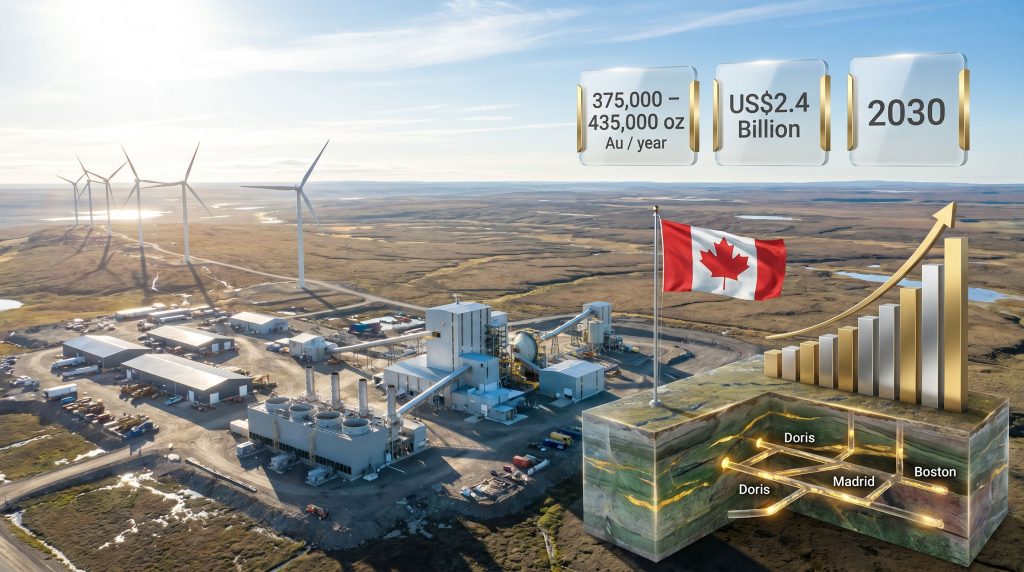
The Arctic Gold Rush Reshaping Canada's Northern Resource Frontier
The economics of large-scale gold mining have shifted dramatically over the past decade. Rising gold prices, tightening supply from depleted legacy mines, and a shrinking global inventory of undeveloped, high-grade deposits in politically stable jurisdictions have collectively redirected Tier 1 capital toward assets once considered too remote or too costly to develop. Canada's Arctic, long bypassed in favour of lower-cost international alternatives, is now firmly in the sights of the world's largest gold producers. The Agnico Eagle Hope Bay redevelopment stands as the most significant expression of this structural reorientation.
When big ASX news breaks, our subscribers know first
Why the Kitikmeot Region Is One of North America's Most Overlooked Gold Corridors
Situated approximately 160 kilometres north of the Arctic Circle in Nunavut's Kitikmeot region, Hope Bay occupies a geological setting that few mining districts anywhere in the world can rival for sheer unexploited potential. The property hosts three primary deposits, Doris, Madrid, and Boston, distributed across an 80-kilometre greenstone belt that remains substantially underexplored relative to comparable orogenic gold systems found in more accessible parts of the globe.
Greenstone belts are among the most productive geological environments for gold mineralisation on Earth. These ancient, metamorphosed volcanic and sedimentary sequences create the structural traps and hydrothermal pathways through which gold-bearing fluids migrate and concentrate over geological time. What makes Hope Bay's belt particularly compelling is its strike length. At 80 kilometres, the system dwarfs many well-known Canadian gold camps, and furthermore, only a fraction of the belt has been tested by modern drilling techniques.
The Doris deposit, situated at the northern end of the belt, was the only zone brought into production during TMAC Resources' tenure. Madrid and Boston remain largely undeveloped, representing substantial resource growth opportunities beyond the current preliminary economic assessment (PEA) mine plan. Exploration targets at Madrid North, Madrid South, and Boston have been identified for Phase 2 underground and open-pit development, suggesting the productive life of Hope Bay could extend well beyond its initial 11-year mine life. For context, gold exploration trends globally indicate that assets with this kind of district-scale potential are becoming increasingly rare.
The distinction between a mine and a mining camp is critical for investors and analysts assessing long-term value. A mine has a defined resource and a finite production schedule. A mining camp is a geological district that generates successive resource discoveries and sustains production for generations. Hope Bay has the geological characteristics to become the latter.
From Suspended Operations to Canada's Next Major Gold Mine: The Five-Year Rebuild
Understanding the Agnico Eagle Hope Bay redevelopment requires appreciating the deliberate, methodical approach Agnico Eagle has taken since acquiring the asset in 2021 through its takeover of TMAC Resources. TMAC had originally purchased Hope Bay in 2013 and, after several years of technical work, brought the Doris deposit into commercial production in 2017. However, achieving commercial production at Doris proved more difficult than anticipated, and TMAC struggled with productivity challenges and cost overruns in Nunavut's demanding operating environment.
When Agnico Eagle completed its acquisition in 2021, the company made a counterintuitive decision: rather than continuing production from Doris, it placed the entire operation on care and maintenance. This choice drew scrutiny at the time but reflected a capital discipline philosophy that has since proven strategically sound. Instead of generating modest near-term cash flow from a suboptimal operation, Agnico invested heavily in understanding the full district potential before committing to a redevelopment pathway.
Between 2021 and 2026, the company deployed more than C$170 million in exploration drilling and care and maintenance activities. This sustained pre-development investment generated several critical outcomes:
- A substantially expanded and better-understood resource base across Doris, Madrid, and Boston
- Improved geological models that de-risked mine planning and underground development sequencing
- Detailed geotechnical and hydrological data required for modern environmental approvals
- Advanced engineering studies, with detailed engineering now approximately 62 per cent complete as of May 2026
This front-loaded technical investment is why the 2026 PEA carries considerably more credibility than many preliminary studies at comparable projects. The engineering completion rate suggests Hope Bay is closer to a feasibility-stage project in terms of technical readiness than the PEA designation might imply.
Breaking Down the 2026 Preliminary Economic Assessment
The PEA released in May 2026 provides the clearest picture yet of what the Agnico Eagle Hope Bay redevelopment will look like at full scale. The key metrics are substantial by any measure.
| Metric | Projected Figure |
|---|---|
| Annual Gold Production (Range) | 375,000 to 435,000 ounces |
| Initial Mine Life | 11 years |
| Target Production Commencement | As early as 2030 |
| Total Capital Investment | US$2.4 billion |
| Processing Plant Capacity | ~6,000 tonnes per day |
| Underground Development Required | ~33 kilometres |
| Detailed Engineering Completion | ~62% complete (May 2026) |
What US$2.4 Billion Actually Builds in the Arctic
Capital intensity at remote Arctic operations is categorically different from more accessible mining environments. The US$2.4 billion budget reflects not just the scale of the mining operation but the comprehensive infrastructure platform required to sustain it in one of the world's most logistically challenging environments. Key infrastructure components include:
- Full reconstruction of the ore processing facility and installation of a new mill circuit capable of handling approximately 6,000 tonnes of ore per day
- A 37-megawatt diesel power plant providing the primary energy anchor for the operation
- Upgrades to the tailings storage facility to meet current environmental standards
- Expansion of the fuel farm and jetty infrastructure to support sealift-dependent supply chains
- Approximately 33 kilometres of underground development to access the ore bodies
- New mobile equipment fleets, warehouse infrastructure, and maintenance facilities
- A water treatment plant integrated into the site's broader environmental management system
The absence of road access to Hope Bay means virtually all construction materials, fuel, and equipment must arrive by sealift during the narrow open-water season or by air. This logistical constraint is a primary driver of the elevated capital cost and one of the most significant execution risks associated with the project.
Processing and Metallurgy: What We Know About the Ore
Hope Bay's gold mineralisation is hosted within a quartz-carbonate vein system typical of orogenic gold deposits. The Doris deposit demonstrated recoverable grades and acceptable metallurgical characteristics during TMAC's production period, providing a foundation of real operating data that Agnico Eagle has incorporated into its technical studies. Orogenic gold deposits of this style generally respond well to conventional milling and carbon-in-leach (CIL) processing, which is consistent with the planned processing facility reconstruction at Hope Bay.
Processing at approximately 6,000 tonnes per day is a meaningful step up from the throughput levels TMAC achieved at Doris, and achieving that capacity will depend on both mill performance and the rate of underground development across multiple deposit zones simultaneously.
The Energy Infrastructure Revolution at Hope Bay
One of the most strategically significant aspects of the Hope Bay redevelopment is the planned transformation of its energy supply. Arctic mining operations have historically been almost entirely dependent on diesel fuel, which must be transported to site by sealift and stored in large quantities to ensure continuity of supply through the winter months. This dependency creates both cost volatility and material greenhouse gas exposure.
Natural Resources Canada (NRCan) has committed $25 million through the Smart Renewables and Electrification Pathways Program to support the Hope Bay Wind Project. This initiative will be led by Inuit-owned Kitikmeot Tugliq Limited Partnership and will integrate 4.2 megawatts of wind generation capacity and 4 megawatts of battery storage into the site's existing power system. The Hope Bay Wind Project represents a landmark model of Inuit-led energy infrastructure within a major Arctic mining development.
The projected environmental and operational benefits are material:
| Environmental Metric | Projected Annual Impact |
|---|---|
| Diesel Consumption Reduction | 3 million litres per year |
| Greenhouse Gas Emissions Reduction | 8,000+ tonnes per year |
| Equivalent Passenger Vehicle Removal | ~1,800 cars annually |
The technical architecture of this hybrid diesel-wind-battery system reflects a broader trend in remote mining operations globally. Battery storage is the critical enabling technology in these configurations, smoothing out the intermittency of wind generation and allowing turbines to contribute meaningfully even in the extreme cold conditions characteristic of Nunavut winters, where wind turbine performance can be affected by icing, lubricant viscosity changes, and temperature-related electrical system stresses.
The integration of Inuit-owned Kitikmeot Tugliq Limited Partnership as the lead entity on the wind project is a structurally significant detail. It represents a model of Indigenous-owned energy infrastructure within a major mining development, distinct from simple contracting arrangements.
Defence, Sovereignty, and the Strategic Dimension of Arctic Mining
The announcement of a co-operation agreement between Agnico Eagle and Canada's Department of National Defence (DND) adds a dimension to the Hope Bay story that goes well beyond conventional mining project analysis. Under this arrangement, Agnico Eagle and the DND will share knowledge on Arctic infrastructure development methodology and operational learnings from working in Canada's High North.
The DND's interest in this agreement reflects a well-established but often underappreciated reality: commercial mining infrastructure in remote northern regions provides a persistent human and logistical presence that has direct value for national defence and sovereignty assertion. Roads, airstrips, fuel storage, communications infrastructure, and skilled Arctic-experienced workforces are assets with dual-use potential. Canada's defence establishment has been increasingly explicit about the strategic importance of northern infrastructure in the context of renewed great power competition over Arctic access and resources.
Minister of National Defence David McGuinty has described the building of essential infrastructure in the North for the Canadian Armed Forces as both a defence and a national priority, with the knowledge-sharing arrangement designed to accelerate the delivery of infrastructure meeting operational and security requirements in the Arctic. Consequently, Canada mining leaders are increasingly recognised as strategic partners in national sovereignty discussions, not merely commercial operators.
The next major ASX story will hit our subscribers first
Economic and Employment Impacts: What the Numbers Mean for Nunavut
The federal government's projections for Hope Bay's broader economic contribution are substantial and warrant careful consideration.
| Economic Indicator | Projected Outcome |
|---|---|
| Jobs Supported | ~2,000 |
| Annual Export Value Increase | ~$2.6 billion |
| Indigenous Community Benefits | Long-term economic opportunities across the Kitikmeot region |
The employment figure of approximately 2,000 jobs is particularly significant for Nunavut, a territory with a small total population. Mining employment in Nunavut carries an outsized economic multiplier relative to southern Canadian jurisdictions because of the limited number of alternative high-wage employment opportunities available in remote communities.
Indigenous participation at Hope Bay extends beyond the wind project. Nuna Group, an Indigenous-affiliated contractor, is actively engaged in quarry development work at the site, including drilling, blasting, and crushing operations near the Naartok open pit at Quarry 2 and Quarry E. This on-site work represents practical skills development and economic activity that precedes the formal construction phase.
The Nunavut Impact Review Board will play an oversight role in Phase 2 approvals covering the Madrid North, Madrid South, and Boston deposit development zones, ensuring that community consultation and environmental assessment processes are completed before that phase of the project advances.
Key Risks Every Investor and Analyst Should Understand
The Agnico Eagle Hope Bay redevelopment is not without material risks, and intellectual honesty demands these be understood clearly alongside the project's considerable upside. In addition, understanding the broader context of the mineral exploration importance in remote jurisdictions helps frame why these risks are nonetheless accepted by Tier 1 operators.
Operational and Environmental Risks
- Permafrost conditions create complex geotechnical challenges for both underground development and surface infrastructure, including tailings storage and water management systems
- Sealift dependency means construction timelines are fundamentally constrained by a narrow annual window, and any disruption to scheduled sealift deliveries can cascade into months-long delays
- Diesel dependency during the construction and early production phase, before the wind project is commissioned, exposes the operation to fuel cost volatility
- Extreme cold affects equipment performance, labour productivity, and the mechanical reliability of processing systems
Regulatory Pathway
Phase 2 development at Madrid North, Madrid South, and Boston requires progression through the Nunavut Impact Review Board process. Environmental assessment in Nunavut has historically involved extensive community consultation timelines, and delays in this process could affect the district-scale production ramp-up that underpins the long-term investment thesis.
Capital Execution at Scale
At US$2.4 billion, Hope Bay represents one of the largest single-asset capital commitments in Canadian gold mining history. Managing a construction programme of this magnitude in a logistically constrained Arctic environment, where cost overruns and schedule delays have affected previous projects, demands exceptional execution discipline.
With engineering approximately 62 per cent complete, significant technical work remains before construction mobilisation can begin. Contractor selection, equipment procurement lead times, and workforce logistics for a fly-in/fly-out operation of this scale all carry execution risk that will only be resolved through the construction phase itself.
How Hope Bay Fits Within the Global Gold Development Landscape
To contextualise the significance of this project, it helps to consider how rare assets of Hope Bay's scale and quality actually are in the current gold development pipeline. For instance, reviewing the largest gold mines globally illustrates just how few operations match Hope Bay's projected output profile.
| Attribute | Hope Bay (Agnico Eagle) |
|---|---|
| Location | Kitikmeot, Nunavut |
| Deposit Style | Greenstone belt-hosted orogenic gold |
| Annual Production Target | 375,000 to 435,000 oz Au |
| Capital Requirement | US$2.4 billion |
| Mine Life (Initial PEA) | 11 years |
| Operator Tier | Tier 1 global gold producer |
| Energy Co-investment | $25M NRCan renewable energy funding |
A 400,000-plus ounce annual producer would rank among the largest gold operations in Canada. The combination of that production scale, a globally significant Tier 1 operator, a politically stable Arctic jurisdiction, and a geological district with decades of exploration upside is genuinely uncommon in today's gold development universe.
The scarcity of large undeveloped gold deposits in safe jurisdictions has been a defining feature of the gold industry for years. Hope Bay's redevelopment is a direct response to that scarcity, and its progression toward a 2030 production target will be watched closely by institutional investors, competing producers, and resource-focused sovereign wealth funds alike.
Frequently Asked Questions: Agnico Eagle Hope Bay Redevelopment
When did Agnico Eagle acquire Hope Bay?
Agnico Eagle acquired Hope Bay in 2021 through its takeover of TMAC Resources. TMAC had purchased the property in 2013 and achieved commercial production at the Doris deposit in 2017 before operational challenges led to the acquisition.
How much gold will Hope Bay produce each year?
The 2026 PEA projects annual gold production of between 375,000 and 435,000 ounces over an initial 11-year mine life, with a processing throughput of approximately 6,000 tonnes per day.
What is the total capital cost of the redevelopment?
Agnico Eagle has outlined a total capital investment of US$2.4 billion covering all infrastructure, processing facility reconstruction, underground development, and energy systems.
When could Hope Bay begin producing gold again?
Subject to regulatory approvals and successful construction execution, initial gold production at Hope Bay could commence as early as 2030.
What role does the federal government play?
Natural Resources Canada has committed $25 million through the Smart Renewables and Electrification Pathways Programme to support the Inuit-owned Hope Bay Wind Project, which will reduce diesel consumption and greenhouse gas emissions at the site. A separate co-operation agreement has also been established between Agnico Eagle and the Department of National Defence focused on knowledge-sharing for Arctic infrastructure development.
What deposits are included in the project?
Hope Bay encompasses the Doris, Madrid, and Boston deposits along an 80-kilometre greenstone belt. Phase 2 development targets include Madrid North, Madrid South, and Boston as underground and open-pit mining zones pending Nunavut Impact Review Board approval. Interpreting the gold drilling results from these zones has been central to building the confidence underpinning the 2026 PEA.
This article contains forward-looking projections based on Agnico Eagle's 2026 preliminary economic assessment. PEA-level studies involve material assumptions and uncertainties. Readers should not rely on these figures as guarantees of future performance. Independent financial and investment advice should be sought before making any investment decisions.
Want To Stay Ahead of the Next Major Gold Discovery on the ASX?
Discovery Alert's proprietary Discovery IQ model delivers real-time alerts on significant ASX mineral discoveries — turning complex geological data into actionable investment insights for both short-term traders and long-term investors. Explore historic examples of exceptional discovery returns and begin your 14-day free trial at Discovery Alert to position yourself ahead of the broader market.