August 25, 2026
Understanding the Regulatory Framework Behind Agricultural Trade Protection
Global agricultural supply chains operate within complex webs of trade protection mechanisms that fundamentally reshape commodity flows between nations. These regulatory frameworks, designed to shield domestic industries from unfair foreign competition, create ripple effects that extend far beyond government offices into farmland across continents. The interconnected nature of global trade means that decisions affecting us tariffs and inflation have profound implications for agricultural producers worldwide.
The intricate dance between international commerce and domestic agricultural protection has reached a pivotal moment as the United States prepares to reassess its approach to phosphate fertilizer imports from Morocco and Russia. This upcoming regulatory review represents more than administrative procedure; it embodies the tension between protecting domestic production capacity and maintaining competitive input costs for American farmers. Furthermore, the tariff economic implications extend beyond direct price effects to influence global supply chain configurations.
Trade protection mechanisms in agriculture serve dual purposes that often conflict. While safeguarding domestic production capabilities ensures supply security during geopolitical disruptions, these same measures can impose significant cost burdens on downstream agricultural producers who depend on affordable inputs to maintain competitive positioning in global markets.
When big ASX news breaks, our subscribers know first
What Are Anti-Dumping Duties and Why Do They Matter for Phosphate Fertilizers?
The Mechanics of Trade Protection in Agricultural Markets
Countervailing duties represent sophisticated policy instruments designed to neutralize the competitive advantages that foreign producers gain through government subsidies. In the phosphate fertilizer imports from Morocco and Russia case, these duties specifically target subsidization programs that allegedly provide unfair cost advantages to overseas producers.
The regulatory architecture involves multiple agencies working in coordination. The US Department of Commerce conducts investigations to determine subsidy levels and calculate appropriate duty rates, while the International Trade Commission assesses whether domestic industries suffer material injury from subsidized imports.
Current Duty Structure:
| Producer | Duty Rate | Implementation Date |
|---|---|---|
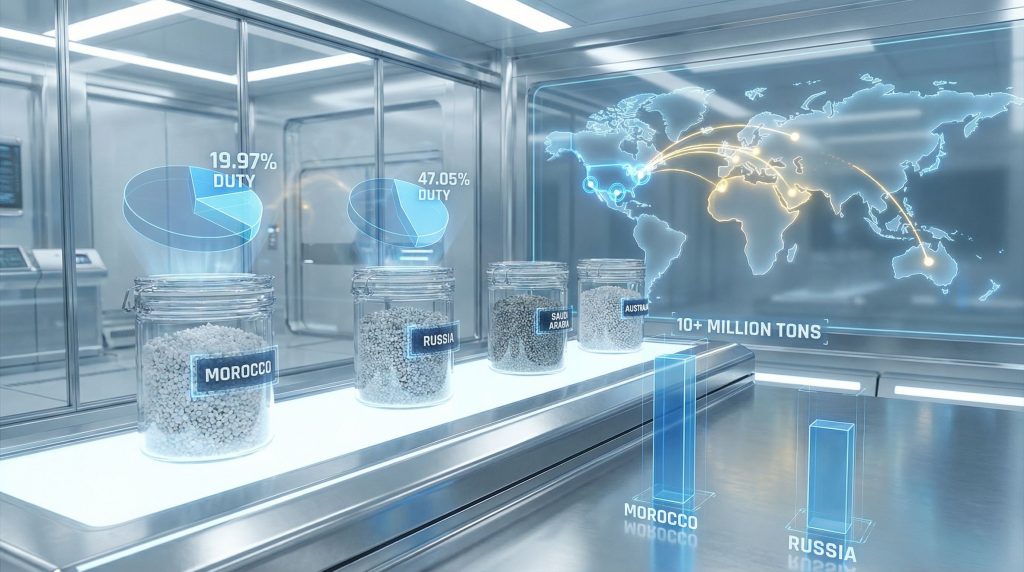
| Morocco (OCP Group) | 19.97% countervailing duty | March 2021 |
| Russia (PhosAgro) | 9.19% | March 2021 |
| Russia (EuroChem) | 47.05% | March 2021 |
The wide variation in Russian producer rates reflects the Commerce Department's detailed analysis of individual company subsidy programs. EuroChem's substantially higher rate of 47.05% compared to PhosAgro's 9.19% indicates significant differences in government support structures between these producers.
Economic Impact Assessment Framework
Material injury determinations require comprehensive economic analysis examining price effects, market share displacement, and production capacity impacts. The investigation process considers whether subsidized imports cause price suppression or depression in domestic markets sufficient to harm US producers. However, the tariffs impact on investments must also be carefully evaluated to understand broader market implications.
The five-year review cycle mandates periodic reassessment of duty effectiveness. Beginning in March 2026, the sunset review process will evaluate whether duty removal would likely lead to renewed dumping or material injury recurrence. This 360-day maximum completion timeframe provides structured timelines for stakeholder input and regulatory decision-making.
Senator Chuck Grassley emphasized the agricultural implications during October 2025 Senate testimony, noting that removing countervailing duties against Moroccan phosphate would provide immediate relief for farmer input costs. This legislative attention underscores the political dimensions of trade protection policies.
Which Countries Dominate Global Phosphate Fertilizer Production and Export?
Morocco's Market Position and Strategic Advantages
Morocco's OCP Group represents one of the most significant players in global phosphate markets, with established production capacity exceeding 10 million tons annually of solid fertilizer products. The company's strategic positioning combines low-cost phosphate rock access with favorable geographic location for major import markets.
Geographic Transit Advantages:
- Morocco to New Orleans: 15-20 days transit time
- Competitive freight positioning versus alternative suppliers
- Established port infrastructure at Jorf Lasfar facility
OCP's integrated supply chain encompasses phosphate rock mining, phosphoric acid production, and finished fertilizer manufacturing. This vertical integration provides cost efficiency advantages while enabling production flexibility across different fertilizer grades and specifications.
The company's market diversification strategy spans multiple continents, serving demand in the United States, European Union, India, and Brazil. This geographic spread provides market resilience while reducing dependency on any single import market.
Russia's Export Performance Despite Geopolitical Constraints
Russian fertilizer producers have demonstrated remarkable adaptability in maintaining export positions despite Western sanctions and phosphate fertilizer imports from Morocco and Russia facing US tariff barriers. Pre-invasion market data shows Russia commanding 12% of global phosphate exports, a position that producers have worked to defend through supply chain reconfiguration. The trade war global effects demonstrate how geopolitical tensions reshape international commodity flows.
Post-Invasion Performance Metrics:
- 70,000 nutrient metric tons increase in DAP exports (2021-2023)
- 10% market share in India's phosphate imports
- 26% market presence in EU phosphate markets
- 5% projected growth to 44 million tons annual fertilizer exports
Russian producers PhosAgro and EuroChem maintain integrated production systems that combine phosphate rock mining, energy resources, and downstream processing capabilities. Russia's substantial natural gas reserves provide cost advantages for energy-intensive ammonia and phosphoric acid production processes.
"Despite facing sanctions and payment restrictions, Russian fertilizer exports have shown resilience by reorienting toward non-sanctioning markets, particularly in Asia and other regions where demand remains strong."
Geopolitical Constraints and Adaptations:
Russian fertilizer exports face significant operational challenges including payment mechanism restrictions due to Western banking sanctions and SWIFT transaction limitations. EU sanctions maintain restrictions on Russian phosphate imports through EU ports, forcing supply chain reconfigurations.
Port access limitations, particularly restrictions through Lithuanian facilities and other EU infrastructure, have required Russian producers to develop alternative logistics pathways. These constraints increase operational costs while extending delivery timelines to traditional European customers.
Comparative Production Cost Analysis
Cost Structure Advantages by Region:
Morocco:
- Access to low-cost phosphate rock reserves
- Established port infrastructure and logistics networks
- Strategic geographic proximity reducing freight costs to major markets
Russia:
- Integrated energy production providing natural gas cost advantages
- Vertically aligned supply chains from raw materials through finished products
- Domestic resource base supporting fertilizer production economics
Saudi Arabia:
- Energy cost advantages from petroleum sector integration
- Modern production facilities with advanced technology
- Challenge: Greater freight distances increasing costs to US markets
Australia:
- Reputation for consistent product quality standards
- Stable political environment ensuring supply reliability
- Challenge: Geographic distance from major demand centers increases logistics costs
How Do Current US Import Duties Affect Market Dynamics?
Duty Structure and Rate Analysis
The complexity of current duty structures reflects detailed Commerce Department investigations into specific subsidy programs affecting different producers. Morocco faces a unified 19.97% countervailing duty rate applied to OCP Group products, while Russian producers encounter differentiated rates based on individual company circumstances.
Historical Duty Evolution:
The duty landscape has evolved significantly since initial March 2021 implementation. Administrative reviews, appeals processes, and producer-specific adjustments have created dynamic rate structures that respond to changing subsidy programs and dumping margin calculations.
A critical development occurred in September 2024 when Mosaic withdrew its 2023 duty review request against Morocco while maintaining its Russian review position. This strategic shift suggested potential accommodation toward Moroccan imports while maintaining pressure on Russian suppliers.
However, the October 2024 Commerce Department decision to raise final 2022 countervailing duty rates against Morocco created uncertainty about near-term market access conditions for OCP products.
Market Distortion Effects and Price Implications
Current duty structures have fundamentally altered US phosphate fertilizer imports from Morocco and Russia sourcing patterns. Industry participants report that the majority of US phosphate sourcing has shifted to "east of Suez" suppliers, primarily Saudi Arabia and Australia. Additionally, commodities market volatility has increased due to reduced supplier diversity.
Freight Cost Comparison:
- Morocco to US Gulf: $40-60 per metric ton lower freight costs
- Saudi Arabia to US Gulf: 35-40 days transit time versus 15-20 days from Morocco
- Extended supply chains increase working capital requirements
- Higher inventory carrying costs due to longer lead times
Market participants note that having access to the two leading producers west of the Suez Canal would create substantially more market competition. This competitive dynamic could provide US importers with enhanced negotiating leverage and pricing flexibility.
Supply chain reconfiguration costs extend beyond direct freight impacts. Longer transit times require increased inventory management, larger working capital commitments, and more complex logistics coordination. These factors compound the direct cost impacts of protective duties.
What Are the Agricultural and Economic Consequences?
Farm-Level Cost Impact Assessment
American agricultural producers face direct cost pressures from restricted phosphate fertilizer imports from Morocco and Russia access. Input cost increases translate into reduced farm profitability, particularly for crop production systems requiring significant phosphate applications.
Regional variations in fertilizer distribution networks mean that duty impacts affect different agricultural areas unequally. Farming operations with access to diverse supplier networks may experience less severe cost impacts compared to regions dependent on specific import channels.
Crop Production Economics Effects:
- Increased per-acre input costs for phosphate-intensive crops
- Potential substitution toward lower-phosphate production systems
- Competitive disadvantage versus international agricultural producers with lower input costs
Market Competition Analysis
Reduced supplier diversity creates concentration risk in US phosphate markets. Dependence on fewer import sources increases vulnerability to supply disruptions, whether from production issues, logistics constraints, or geopolitical developments affecting alternative supplier countries. The International Food Policy Research Institute has highlighted how high phosphate prices create food security risks globally.
Limited competition may reduce innovation incentives among suppliers while potentially weakening US importers' negotiating positions. Market concentration effects can persist beyond the duty period if alternative supply relationships become entrenched.
Legislative and Policy Response
Congressional attention to farmer input costs has intensified as duties maintain upward pressure on fertilizer pricing. Agricultural state legislators particularly emphasise the competitive implications for US crop producers competing in global markets with higher input cost structures.
State-level agricultural organisations have increasingly advocated for duty review acceleration, citing the cumulative economic burden on farming operations already facing commodity price volatility and weather-related production risks.
When Will the March 2026 Sunset Review Process Begin?
Regulatory Timeline and Procedural Requirements
The mandatory five-year sunset review represents a comprehensive evaluation process designed to determine whether duty continuation serves its intended protective purposes. The International Trade Commission will establish review schedules through Federal Register publication, initiating formal stakeholder engagement procedures.
Key Process Milestones:
- March 2026: Review initiation scheduled
- Federal Register Notice: ITC schedule publication
- Stakeholder Response Period: Parties file effect assessments
- 360-Day Maximum: Completion timeframe for full reviews
Response adequacy standards require detailed economic analysis demonstrating likely effects of duty removal. Stakeholders must present evidence regarding dumping recurrence probability and material injury likelihood if protective measures are eliminated.
Decision Factors for Review Outcomes
The ITC evaluation framework considers multiple analytical dimensions when assessing whether duty removal would likely result in renewed dumping or material injury. Changed market circumstances since the original 2021 investigation receive particular attention.
Critical Assessment Areas:
- Market conditions evolution over the five-year duty period
- Domestic industry competitive position changes
- Import volume and pricing pattern analysis
- Global supply and demand balance shifts
Industry consolidation patterns and competitive landscape evolution provide important context for injury likelihood assessments. The review process examines whether domestic producers have strengthened competitive positions sufficiently to withstand renewed import competition.
The next major ASX story will hit our subscribers first
How Might Duty Removal Transform US Phosphate Markets?
Supply Chain Rebalancing Scenarios
Duty elimination could restore 2+ million tons of Moroccan phosphate capacity to US markets, representing significant supply addition relative to current import volumes. This capacity restoration would provide importers with enhanced sourcing flexibility while potentially moderating price levels.
Russian supply restoration possibilities depend on resolution of payment mechanism constraints and sanctions-related restrictions. While Russian producers maintain export capacity, banking limitations and geopolitical considerations create uncertainty around market re-entry timelines.
Geographic Diversification Benefits:
- Restored access to Atlantic Basin suppliers
- Reduced dependence on Middle East and Asia-Pacific sources
- Improved supply chain resilience through supplier diversification
Price Impact Modelling
Immediate cost reduction estimates suggest substantial potential savings for US agricultural producers. Industry analysts anticipate that increased supplier competition could generate meaningful downward pressure on fertiliser pricing, particularly during peak application seasons.
Market competition intensification effects extend beyond direct pricing impacts. Enhanced supplier competition typically improves service levels, delivery flexibility, and contract terms while providing buyers with stronger negotiating positions.
Long-term pricing stability improvements could result from supplier diversification reducing vulnerability to individual supplier disruptions or strategic pricing actions.
Strategic Implications for Market Participants
Import Strategy Optimisation:
Importers would gain substantial strategic flexibility through restored access to competitive Atlantic Basin suppliers. Sourcing strategy optimisation opportunities include seasonal supplier rotation, competitive sourcing initiatives, and risk management through geographic diversification.
Inventory management implications include potential working capital reduction through shorter supply chains and more responsive delivery schedules. Contract negotiation leverage improvements could provide importers with enhanced commercial terms.
Domestic Producer Considerations:
US phosphate producers face intensified competitive pressure requiring operational efficiency improvements and market positioning adjustments. Competitive response strategies may include cost reduction initiatives, product differentiation efforts, and customer relationship strengthening.
Market share defence strategies become critical as imported product availability increases. Domestic producers may emphasise supply reliability, customer service quality, and technical support advantages to maintain competitive positioning.
What Alternative Scenarios Could Emerge?
Partial Duty Modification Possibilities
Regulatory flexibility allows for graduated adjustment mechanisms rather than complete duty elimination. Selective duty reduction possibilities include product-specific modifications, producer-specific rate adjustments, or conditional suspension arrangements tied to market conditions.
Potential Modification Approaches:
- Graduated Phase-Out: Step-down duty reduction over multiple years
- Conditional Suspension: Temporary duty relief with reinstatement triggers
- Product-Specific Relief: Targeted reductions for specific fertiliser grades
- Volume-Based Quotas: Limited duty-free import allowances
Such intermediate approaches could provide market adjustment time while maintaining some domestic industry protection. However, partial measures may create administrative complexity and market uncertainty compared to complete duty removal.
Geopolitical Risk Considerations
Russian supply reliability faces ongoing uncertainty due to sanctions maintenance and payment system restrictions. EU sanctions persistence and potential banking channel limitations create structural impediments to normalised trade relationships.
Port access restrictions, particularly through EU facilities, constrain Russian export logistics while increasing operational costs. These factors affect competitive positioning even if US duties are reduced or eliminated.
Risk Mitigation Factors:
- Alternative payment mechanism development
- Non-sanctioning port utilisation
- Third-country transshipment arrangements
- Barter and commodity exchange agreements
Technology and Sustainability Factors
Environmental compliance requirements continue evolving, potentially affecting production cost structures across different supplier countries. Carbon footprint considerations may influence sourcing decisions as sustainability metrics gain importance in procurement processes.
Production technology advancement impacts create competitive dynamics independent of trade policy frameworks. Suppliers investing in efficiency improvements and environmental compliance may gain advantages regardless of duty status.
Industry Outlook: Balancing Protection with Market Efficiency
Long-term Market Structure Evolution
Global phosphate fertilizer imports from Morocco and Russia trade patterns reflect broader shifts toward regional supply security considerations alongside economic efficiency objectives. The US market evolution will influence global trade flows while affecting international competitive dynamics.
Regional supply security considerations may increasingly compete with pure cost optimisation in sourcing decisions. Supply chain resilience optimisation strategies emphasise diversification benefits while maintaining competitive input costs.
Policy Recommendation Framework
Balanced transition mechanisms could address both domestic industry concerns and agricultural sector competitiveness requirements. Gradual adjustment approaches provide adaptation time while moving toward more competitive market structures.
Strategic Balance Considerations:
- Agricultural competitiveness versus domestic industry protection
- Supply chain resilience through diversification
- Market efficiency promotion while maintaining supply security
- Innovation incentive preservation through appropriate competitive pressure
The March 2026 sunset review represents a critical juncture for US phosphate markets, with implications extending far beyond regulatory procedures to fundamental questions of agricultural competitiveness and supply chain resilience in an interconnected global economy.
This analysis is based on current market conditions and regulatory frameworks as of early 2026. Trade policy outcomes remain subject to regulatory determination and may be influenced by changing geopolitical and economic circumstances.
Ready to Capitalise on Commodity Market Shifts?
Discovery Alert's proprietary Discovery IQ model delivers real-time alerts on significant ASX mineral discoveries, instantly empowering subscribers to identify actionable opportunities ahead of the broader market as global supply chains and trade policies reshape commodity landscapes. Begin your 30-day free trial today and secure your market-leading advantage in an evolving fertiliser and mining sector.