May 22, 2026
Machine learning algorithms now process geological datasets at unprecedented scales, identifying rare earth element deposits through patterns invisible to traditional exploration methods. Advanced computational platforms integrate multiple data streams to accelerate discovery timelines while reducing exploration costs across diverse geological terrains. Furthermore, this technological convergence represents a fundamental shift in how AI to accelerate rare earth technology reaches commercial production, transforming speculative mining ventures into data-driven mining operations across the industry.
Understanding Computational Foundations in Critical Materials Processing
Modern rare earth element processing relies on sophisticated computational frameworks that synthesize geological, chemical, and operational data into actionable intelligence. These systems process thousands of variables simultaneously, enabling operators to optimise extraction parameters before physical implementation begins. Moreover, the integration of machine learning with traditional metallurgical knowledge creates predictive models that anticipate processing challenges across varying feed compositions.
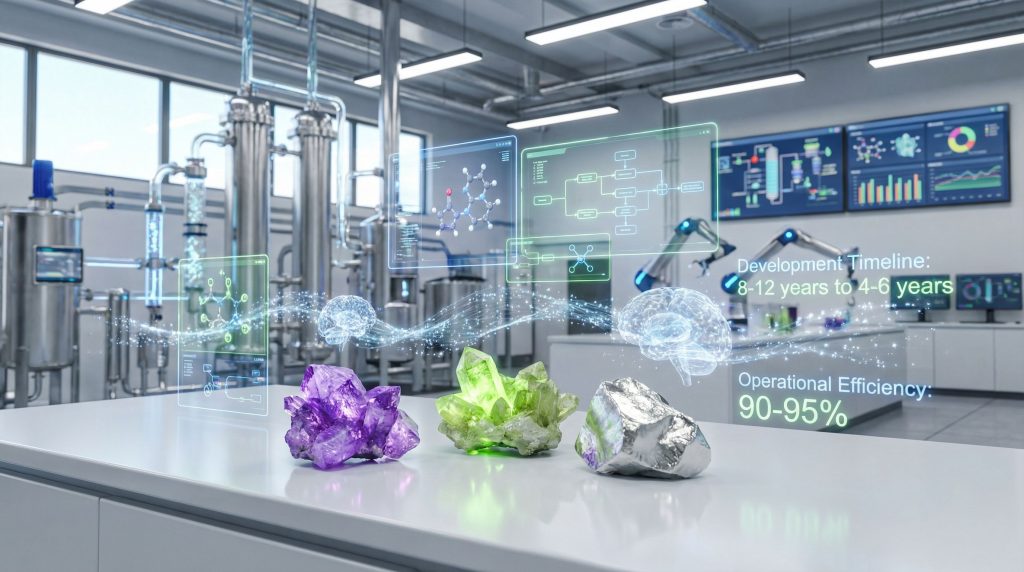
Contemporary processing facilities employ neural networks to analyse complex chemical interactions during separation processes. These algorithms identify optimal pH ranges, temperature gradients, and solvent concentrations based on historical performance data. Consequently, the computational approach reduces development timelines from traditional 8-12 year cycles to 4-6 year pathways, representing cost savings that can exceed $50 million in pilot plant expenses alone.
Advanced Computing Applications Include:
- Pattern recognition systems for geological survey analysis
- Predictive modelling platforms for equipment performance optimisation
- Real-time process control through continuous data integration
- Quality assessment algorithms for product specification compliance
The Aclara-Argonne collaboration demonstrates practical implementation of these concepts through their SolventX modelling platform, specifically engineered for heavy rare earth solvent extraction processes. This partnership targets commercial production by 2028, utilising data from Virginia Tech's pilot facility scheduled to begin operations in March 2026.
When big ASX news breaks, our subscribers know first
Digital Twin Architecture for Materials Processing Optimisation
Digital twin technology creates comprehensive virtual replicas of physical processing systems, enabling simulation of thousands of operational scenarios without associated costs and risks. In rare earth applications, these models integrate process chemistry parameters, equipment performance metrics, environmental impact variables, and economic optimisation factors into unified computational frameworks.
The Carina project exemplifies digital twin implementation for commercial rare earth processing. Furthermore, Argonne National Laboratory's digital twin will support Project Dynamo operations by end of 2028, representing a two-year development window from pilot data collection to commercial deployment readiness. The system enables virtual testing across diverse operating conditions to optimise performance while reducing scale-up risks.
Digital Twin Components Include:
- Process chemistry modelling with pH optimisation and temperature control
- Equipment simulation for separation efficiency and throughput analysis
- Environmental monitoring covering waste generation and energy consumption
- Economic modelling for operational cost optimisation and yield maximisation
Production capacity data from Carina's prefeasibility study reveals specific targets: 1,170 metric tons of neodymium-praseodymium annually, 149 metric tons of dysprosium annually, and 26 metric tons of terbium annually. These magnet rare earths represent approximately one-third of the proposed mine's annual output, with six additional high-value elements accounting for another 31% of production.
Digital twins continuously learn from operational data, automatically adjusting processing parameters to maintain optimal performance as feed compositions vary or equipment conditions change.
However, the technology addresses supply chain vulnerabilities by enabling rapid optimisation of processing parameters for varying feed compositions, reducing dependence on single-source materials while maintaining consistent product quality standards.
Machine Learning Applications in Solvent Extraction Technology
Heavy rare earth elements require sophisticated separation techniques due to similar chemical properties across the lanthanide series. Machine learning platforms analyse historical extraction data to predict optimal solvent ratios, contact times, and separation sequences for different rare earth mixtures. For instance, these predictive capabilities enable proactive parameter adjustment rather than reactive troubleshooting.
Argonne's SolventX platform represents domain-specific computational infrastructure designed for heavy rare earth solvent extraction optimisation. The system incorporates supervised learning algorithms that process pilot plant data to identify optimal operating conditions for commercial-scale implementation. Additionally, this approach reduces the extensive pilot testing traditionally required for process validation.
Machine Learning Technologies Include:
- Neural networks for chemical interaction pattern recognition
- Genetic algorithms for multi-variable process optimisation
- Reinforcement learning for adaptive control system implementation
- Computer vision for automated quality assessment procedures
The focus on heavy rare earth elements addresses critical supply chain challenges, as deposits enriched in dysprosium and terbium are geologically rare outside China and Southeast Asia. Aclara's ionic clay deposit at Carina provides access to these strategically important materials through domestically controlled processing technology.
Separation Efficiency Improvements:
| Parameter | Traditional Methods | AI-Enhanced Approach | Improvement Range |
|---|---|---|---|
| Development Timeline | 8-12 years | 4-6 years | 40-50% reduction |
| Pilot Plant Investment | $50-100M | $20-40M | 60-80% reduction |
| Processing Efficiency | 75-85% | 90-95% | 10-15% improvement |
| Chemical Waste Generation | 15-25% | 5-10% | 50-70% reduction |
Consequently, predictive modelling capabilities enable operators to anticipate separation challenges before they impact production, maintaining consistent product quality while minimising operational disruptions.
Supply Chain Risk Mitigation Through Geographic Diversification
Contemporary rare earth supply chains concentrate production in specific geographic regions, creating vulnerabilities for industries requiring consistent access to critical materials. Machine learning platforms identify potential deposits through geological pattern analysis, enabling development of alternative sources outside traditional mining areas.
The Carina project addresses supply chain concentration by developing ionic clay deposits enriched in heavy and magnet rare earths outside established Asian production centres. According to company leadership, this resource will serve as the anchor supply source for Aclara's integrated platform, supporting a vertically integrated mine-to-magnets supply chain in the Americas.
Supply Chain AI Applications Include:
- Risk assessment algorithms evaluating geopolitical supply disruptions
- Demand forecasting models for technology sector requirements
- Logistics optimisation for multi-source supply chain management
- Quality prediction systems for incoming material assessment
Alternative source development incorporates machine learning identification of rare earth recovery opportunities from unconventional sources, including industrial waste streams, coal processing byproducts, and end-of-life technology components. In addition, these applications expand potential supply sources while reducing primary mining requirements.
The strategic importance of heavy rare earth elements in clean energy, high-tech, defence, and electric mobility sectors drives continued investment in supply chain diversification technologies. Aclara anticipates receiving feasibility study results and environmental permits in early 2026, positioning the company for commercial production by 2028.
Commercial Processing Improvements Through Predictive Analytics
AI to accelerate rare earth technology delivers measurable improvements in commercial rare earth operations through predictive maintenance, quality control enhancement, and operational efficiency optimisation. These systems monitor equipment performance indicators to predict maintenance requirements before failures occur, minimising unplanned downtime in continuous processing environments.
Quality control systems integrate computer vision with spectroscopic analysis for real-time assessment of separated rare earth products. This approach ensures consistent purity levels while reducing manual testing requirements and associated labour costs. Furthermore, automated quality assessment enables immediate process adjustments when product specifications deviate from target ranges.
Operational Improvements Include:
- Yield optimisation through dynamic parameter adjustment
- Energy consumption reduction via intelligent process scheduling
- Waste minimisation through precise chemical dosing algorithms
- Throughput maximisation using bottleneck identification systems
The integration of artificial intelligence with traditional metallurgical processes creates opportunities for continuous optimisation that traditional control systems cannot achieve. However, machine learning algorithms identify subtle correlations between operating parameters and product quality that manual analysis typically misses.
Project Dynamo represents practical implementation of these concepts, combining commercial-scale separation capacity with metal upgrading capabilities to transform rare earth oxides into magnet metals required for electric vehicles, wind turbines, and advanced defence applications. This connects directly to the broader mining industry evolution towards technologically integrated operations.
National Laboratory Infrastructure for Critical Materials Research
National research facilities provide computational resources and technical expertise that accelerate artificial intelligence development for critical materials applications. These institutions offer high-performance computing infrastructure specifically configured for materials science research, enabling collaborative development between private industry and government research programmes.
The Cooperative Research and Development Agreement (CRADA) between Aclara and Argonne National Laboratory exemplifies effective public-private partnership structure for technology development. This framework enables technology transfer while protecting proprietary information and intellectual property rights for commercial applications.
Research Infrastructure Components:
- High-performance computing clusters for computational modelling
- Materials characterisation facilities for product validation
- Process development laboratories for technology validation
- Environmental assessment capabilities for lifecycle analysis
Seth Darling, Chief Science and Technology Officer at Argonne's Advanced Energy Technologies division, noted that collaborative partnerships exemplify how combining complementary strengths of industry, academia, and national laboratories can accelerate advanced technology development and deployment.
Research focus areas encompass fundamental separation science using quantum mechanical modelling, process scale-up methodologies for pilot-to-commercial transitions, environmental impact assessment through lifecycle analysis, and economic feasibility modelling for new processing technologies. These developments support the evolution of AI in mining technology across multiple applications.
The next major ASX story will hit our subscribers first
Economic Impact Analysis of AI-Enhanced Processing Systems
Digital twin technology reduces capital investment requirements for new processing facilities by minimising extensive pilot plant testing while maintaining technical confidence levels. This approach enables companies to proceed directly from laboratory-scale development to commercial implementation with reduced financial risk.
Operational cost optimisation through artificial intelligence delivers sustained improvements throughout facility lifecycles. Consequently, machine learning systems continuously optimise chemical consumption, energy usage, and labour requirements based on real-time performance data and market conditions.
Economic Benefits Analysis:
| Optimisation Category | Traditional Approach | AI-Enhanced Methods | Performance Improvement |
|---|---|---|---|
| Technology Development | 8-12 years | 4-6 years | 40-50% timeline reduction |
| Pilot Plant Investment | $50-100 million | $20-40 million | 60-80% cost reduction |
| Operational Efficiency | 75-85% | 90-95% | 10-15% improvement |
| Waste Stream Reduction | 15-25% loss | 5-10% loss | 50-70% improvement |
The economic advantages extend beyond direct cost savings to include risk mitigation benefits. Predictive modelling reduces the probability of process failures during commercial implementation, protecting capital investments while ensuring consistent product delivery to downstream customers.
Capital allocation efficiency improves through data-driven decision making that prioritises investments based on quantified performance improvements rather than empirical estimates. These improvements align with broader decarbonisation in mining initiatives that emphasise efficiency gains.
Heavy Rare Earth Production for Strategic Applications
Heavy rare earth elements including dysprosium and terbium enable high-performance permanent magnet production for electric vehicle motors and wind turbine generators. AI to accelerate rare earth technology optimises separation processes specifically for these high-value elements, ensuring consistent quality for applications where material performance requirements are particularly demanding.
Defence and aerospace applications require ultra-high purity rare earth materials with strict traceability requirements. AI-enhanced processing ensures consistent quality while maintaining comprehensive documentation for military and aerospace component manufacturing.
Strategic Application Areas:
- Electric vehicle motors requiring precise neodymium-dysprosium alloy compositions
- Wind turbine generators using optimised permanent magnet formulations
- Military electronics demanding ultra-high purity material specifications
- Aerospace components with comprehensive material traceability requirements
The Carina project specifically targets heavy rare earth production with annual targets of 149 metric tons of dysprosium and 26 metric tons of terbium. These production levels address significant portions of Western supply requirements for these strategically important materials.
Magnet material supply chain optimisation ensures consistent availability of rare earth elements for permanent magnet manufacturing. In addition, artificial intelligence coordinates production schedules with downstream demand patterns, minimising inventory costs while maintaining supply security. This approach directly supports the critical minerals energy transition by ensuring reliable material supplies.
Environmental Benefits Through Process Optimisation
Machine learning algorithms minimise waste generation by optimising chemical usage while maintaining separation efficiency standards. These systems reduce environmental impact and disposal costs through precise control of processing parameters and material consumption rates.
Energy consumption optimisation identifies energy-intensive process steps and develops alternative operating strategies that maintain product quality while reducing power requirements. This approach delivers both environmental and economic benefits through reduced utility costs and carbon footprint reduction.
Environmental Performance Improvements:
- Water consumption reduction through recycling system optimisation
- Chemical usage minimisation via precise dosing control algorithms
- Carbon footprint reduction through energy efficiency improvements
- Waste heat recovery using thermal optimisation systems
Lifecycle assessment integration enables comprehensive environmental impact evaluation throughout processing operations. Machine learning platforms identify opportunities for resource recovery and waste minimisation that traditional analysis methods typically overlook.
However, the integration of environmental monitoring with operational optimisation ensures that efficiency improvements do not compromise environmental performance standards. According to recent research, AI tools are increasingly important for accelerating critical mineral exploration while maintaining environmental standards.
Future Technology Development Pathways
Autonomous processing systems represent the next evolution in rare earth technology, incorporating fully automated operations that adjust parameters in real-time based on feed composition changes and market demand fluctuations. These systems will minimise human intervention while maximising operational efficiency and product consistency.
Integration with renewable energy systems will coordinate energy-intensive separation processes with optimal renewable generation periods, reducing operational costs while supporting grid stability objectives. This approach enables facilities to function as flexible industrial loads that support rather than strain electrical infrastructure.
Emerging Technology Trends:
- Fully automated separation facilities with minimal human oversight requirements
- Real-time market response systems adjusting production based on demand signals
- Integrated recycling platforms recovering rare earths from end-of-life products
- Distributed processing networks reducing transportation and logistics costs
Future development will emphasise modular processing systems that can be rapidly deployed and scaled based on local resource availability and market requirements. These systems will incorporate standardised AI platforms that can be adapted for different geological conditions and product specifications.
The convergence of AI to accelerate rare earth technology with renewable energy and circular economy principles will create processing systems that minimise environmental impact while maximising resource efficiency and economic performance. As highlighted by industry analysis, the AI-driven demand for energy transition metals continues to accelerate, making these technological developments increasingly critical for future supply chain security.
Could Artificial Intelligence Transform Your Critical Materials Investment Strategy?
Discovery Alert's proprietary Discovery IQ model delivers real-time alerts on significant ASX mineral discoveries, instantly empowering subscribers to identify actionable opportunities in critical materials and technology metals ahead of the broader market. Begin your 30-day free trial today at Discovery Alert and secure your market-leading advantage in the evolving rare earth and critical minerals sector.