
July 25, 2026
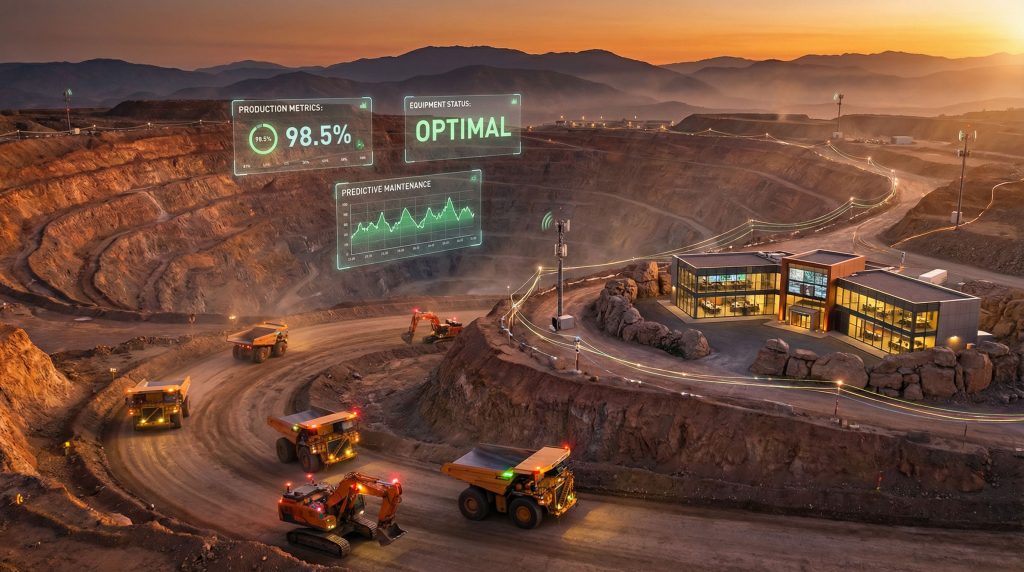
Modern industrial sectors are experiencing unprecedented transformation through intelligent predictive technologies that process complex variables and anticipate operational challenges. The mining industry has emerged as a leading adopter of these sophisticated systems. AI-based forecasting tools in mining have revolutionised how operations predict equipment failures, optimise resource extraction, and enhance safety protocols through continuous monitoring and real-time analysis.
Furthermore, these advanced systems represent a paradigm shift from traditional reactive models toward proactive optimization strategies. Mining operations can now anticipate challenges before they manifest, enabling significant improvements in operational efficiency and cost management.
How Machine Learning Architectures Enable Mining Intelligence
The Foundation of Predictive Mining Systems
Mining operations generate massive volumes of heterogeneous data from geological surveys, equipment sensors, environmental monitoring systems, and market fluctuations. Advanced machine learning architectures have been specifically adapted to process this complexity through ensemble methods that combine multiple algorithmic approaches. Random Forest models excel at handling the sparse, high-dimensional datasets typical of geological exploration.
Moreover, gradient boosting techniques optimise sequential decision-making processes essential for production scheduling. The implementation of AI in drilling & blasting has revolutionised visual pattern recognition applications throughout mining operations.
These systems can analyse satellite imagery to identify subtle geological features, process drill core photographs to assess mineral composition, and monitor equipment through computer vision. Additionally, they detect early signs of mechanical deterioration with remarkable precision.
Unsupervised learning techniques have proven particularly valuable for discovering hidden correlations within complex mining datasets. K-means clustering algorithms can identify previously unknown patterns in ore grade distribution, while neural network approaches reveal non-linear relationships between operational parameters.
Real-Time Data Processing and Edge Computing
The effectiveness of AI-based forecasting tools in mining depends critically on their ability to process information in real-time while operating in challenging industrial environments. Edge computing architectures enable local processing of sensor data, reducing communication latency and ensuring continuous operation even during network disruptions.
These distributed systems can make critical safety decisions within milliseconds. Consequently, they automatically trigger equipment shutdowns or personnel evacuations when dangerous conditions are detected through AI-powered efficiency protocols.
Key Components of Mining AI Data Processing:
• Geological sensors collecting continuous measurements of rock stability, ground movement, and seismic activity
• Equipment monitoring systems tracking vibration patterns, temperature fluctuations, and performance metrics
• Environmental sensors measuring air quality, water contamination levels, and weather conditions
• Market data feeds providing real-time commodity pricing and demand forecasting information
• Satellite imagery offering regular updates on surface conditions and large-scale geological changes
The integration of these diverse data sources requires sophisticated fusion algorithms that can weight information based on reliability, relevance, and temporal significance. Advanced systems employ Bayesian inference techniques to combine probabilistic estimates from multiple sensors.
When big ASX news breaks, our subscribers know first
Which Mining Operations Achieve Maximum Benefit from AI Forecasting?
Production Optimisation and Scheduling Enhancement
AI-based forecasting tools in mining have demonstrated their greatest impact in production planning and operational scheduling. These systems can process thousands of variables simultaneously, including geological constraints, equipment availability, weather forecasts, and market demand projections. As a result, they generate optimal extraction sequences that maximise both short-term productivity and long-term resource recovery.
The transition from static planning models to dynamic scheduling systems represents a fundamental operational evolution. Modern platforms can automatically adjust production targets based on real-time conditions, redirecting resources to high-value areas when equipment becomes available.
Furthermore, data-driven operations enable mining companies to maintain consistent output despite inherent variability in geological conditions and operational constraints.
Table: Production Planning Applications
| Planning Horizon | Key Variables | Optimisation Targets | AI Techniques |
|---|---|---|---|
| Shift-level | Equipment status, weather, personnel | Throughput maximisation | Reinforcement learning |
| Daily | Ore grade variation, maintenance windows | Cost minimisation | Linear programming with ML |
| Weekly | Market prices, inventory levels | Revenue optimisation | Multi-objective optimisation |
| Monthly | Geological models, capital constraints | Resource allocation | Genetic algorithms |
Predictive Maintenance and Asset Reliability
The application of artificial intelligence to equipment maintenance has transformed mining operations from reactive repair strategies to predictive intervention models. Advanced sensor networks continuously monitor critical equipment components, creating detailed performance profiles that enable precise failure prediction.
These systems can identify specific failure modes, such as bearing deterioration or hydraulic system degradation, weeks or months before actual failures occur. Acoustic analysis techniques have proven particularly effective for diagnosing mechanical problems in rotating equipment.
Machine learning algorithms can distinguish between normal operational sounds and anomalous patterns that indicate developing issues. Vibration analysis provides complementary insights, detecting imbalances, misalignments, and structural problems that may not be audible.
The implementation of condition-based maintenance strategies powered by AI forecasting has enabled mining operations to reduce unplanned downtime by significant margins while optimising maintenance resource allocation and extending equipment lifespan through precisely timed interventions.
Geological Modelling and Resource Estimation
AI-based forecasting tools in mining have revolutionised geological modelling by enabling continuous refinement of resource estimates based on new drilling data and production information. Traditional geological models relied on sparse sampling points and interpolation techniques that often failed to capture complex ore body geometries.
Modern AI systems can process continuous streams of geological data to update three-dimensional models in real-time. Implicit modelling techniques utilise machine learning algorithms to infer geological structures from limited data points.
Advanced Geological AI Applications:
• Grade continuity forecasting using neural networks to predict ore quality variations
• Structural geology modelling through deep learning analysis of seismic and drilling data
• Mineral classification using spectral analysis and computer vision techniques
• Exploration targeting through pattern recognition in geochemical and geophysical datasets
• Uncertainty quantification providing confidence intervals for resource estimates
How Do AI Systems Integrate Complex Operational Variables?
Multi-Modal Data Fusion Strategies
The complexity of mining operations requires AI systems capable of processing diverse data types simultaneously while maintaining coherent predictive capabilities. Multi-modal data fusion represents one of the most challenging aspects of implementing AI-based forecasting tools in mining environments.
These systems must integrate numerical sensor data, visual imagery, textual reports, and categorical information into unified predictive models. Advanced fusion architectures employ hierarchical processing strategies that extract features from individual data modalities before combining them at higher abstraction levels.
Convolutional neural networks process visual data streams, recurrent neural networks handle sequential sensor measurements, and natural language processing techniques extract insights from operational reports. The weighting and prioritisation of different data sources requires sophisticated attention mechanisms.
Uncertainty Quantification and Risk Assessment
Professional mining operations require AI forecasting systems that not only provide predictions but also quantify the uncertainty associated with those predictions. Bayesian neural networks and ensemble methods enable robust uncertainty estimation by generating probability distributions rather than point estimates.
This capability allows operations teams to make risk-informed decisions based on confidence intervals and probability assessments. However, implementing predictive maintenance solutions requires comprehensive understanding of system limitations and operational contexts.
Risk Assessment Framework:
1. Geotechnical Risks
- Slope stability monitoring with continuous probability updates
- Ground movement prediction with confidence intervals
- Structural failure forecasting using sensor fusion
2. Operational Risks
- Equipment failure probability with remaining useful life estimates
- Production variance forecasting with scenario planning
- Weather impact assessment with contingency recommendations
3. Environmental Risks
- Emissions prediction with regulatory compliance monitoring
- Water quality forecasting with contamination risk assessment
- Ecosystem impact modelling with mitigation planning
4. Market Risks
- Commodity price volatility analysis with hedging recommendations
- Demand forecasting with supply chain optimisation
- Economic scenario modelling with strategic planning support
The integration of risk assessment into operational decision-making requires sophisticated optimisation algorithms. These systems can balance multiple objectives while respecting operational constraints and safety requirements through multi-criteria decision analysis techniques.
What Implementation Barriers Affect Mining AI Deployment?
Data Infrastructure and Quality Challenges
The successful deployment of AI-based forecasting tools in mining requires robust data infrastructure capable of collecting, storing, and processing vast amounts of information from diverse sources. Many mining operations struggle with legacy systems that generate data in incompatible formats.
Data quality issues represent another significant barrier to successful implementation. Mining operations often contend with incomplete sensor records, inconsistent measurement protocols across different areas of operation, and gaps in historical data that limit training effectiveness.
The harsh industrial environment of mining operations can also lead to sensor malfunctions and data corruption that compromise system reliability. Consequently, mining industry evolution requires addressing these fundamental infrastructure challenges.
Critical Data Quality Requirements:
• Temporal consistency ensuring regular sampling intervals and synchronised timestamps
• Spatial accuracy providing precise location information for all measurements
• Calibration management maintaining sensor accuracy through regular validation procedures
• Metadata completeness documenting measurement conditions and equipment specifications
• Version control tracking changes in data collection procedures and equipment configurations
Organisational Change Management
The introduction of AI forecasting systems requires significant changes in operational workflows, decision-making processes, and personnel responsibilities. Mining operations must develop new technical competencies while modifying existing procedures to accommodate AI-generated insights and recommendations.
Resistance to technological change represents a common barrier in traditional mining environments where operational decisions have historically relied on human experience and intuition. Successful implementations require comprehensive change management programmes that demonstrate the value of AI systems.
The skills gap in data science and machine learning represents another significant challenge for mining companies. These operations must either develop internal capabilities or establish partnerships with technology providers to ensure effective system deployment and ongoing maintenance.
How Do Surface and Underground Operations Differ in AI Implementation?
Surface Mining Technology Applications
Surface mining operations benefit from GPS availability, open communication networks, and relatively unrestricted access for sensor installation and maintenance. AI-based forecasting tools in mining surface operations typically focus on large-scale equipment coordination, blast optimisation, and material handling efficiency.
Autonomous haulage systems represent one of the most mature applications of AI forecasting in surface mining. These systems utilise predictive algorithms to optimise routing decisions based on real-time traffic conditions, weather forecasts, and terrain characteristics.
Advanced platforms can anticipate bottlenecks in material flow and automatically adjust equipment deployment to maintain optimal productivity levels. For instance, AI applications in mining have demonstrated significant improvements in fleet management efficiency.
Surface Mining AI Specialisations:
• Fleet management optimising truck routing and equipment utilisation
• Blast optimisation predicting fragmentation outcomes and adjusting parameters
• Slope monitoring using satellite data and ground-based sensors for stability assessment
• Dragline operation optimising excavation patterns and material placement
• Processing plant integration coordinating extraction with downstream capacity
Underground Mining Considerations
Underground mining environments present unique challenges for AI implementation due to GPS denial, limited communication infrastructure, and restricted access for equipment installation and maintenance. AI systems designed for underground applications must operate reliably in environments with intermittent connectivity and limited power availability.
Ventilation optimisation represents a critical application area for underground AI systems. These platforms must continuously monitor air quality, temperature, and humidity while predicting optimal airflow patterns to maintain safe working conditions.
Ground stability monitoring assumes paramount importance in underground operations where structural failures can have catastrophic consequences. AI systems must process continuous streams of seismic data, ground movement measurements, and stress indicators to predict potential rockfalls.
Underground-Specific Technologies:
• Alternative positioning systems using inertial navigation and landmark recognition
• Mesh networking enabling communication in GPS-denied environments
• Explosion-proof sensors meeting safety requirements for underground deployment
• Emergency response systems providing automated evacuation guidance and personnel tracking
• Integrated safety monitoring combining multiple sensor types for comprehensive risk assessment
What Emerging Developments Will Transform Mining AI Forecasting?
Autonomous Decision-Making Integration
The evolution toward fully autonomous mining operations represents the next frontier in AI forecasting applications. Future systems will enable closed-loop decision-making where predictive insights automatically trigger operational adjustments without human intervention.
This advancement requires AI platforms capable of managing complex trade-offs between production objectives, safety requirements, and environmental constraints. Reinforcement learning algorithms show particular promise for autonomous mining applications.
These systems can learn optimal decision-making strategies through continuous interaction with the mining environment, improving their performance over time based on operational outcomes. Advanced reinforcement learning implementations can handle multi-objective optimisation problems while adapting to changing operational conditions.
Environmental and Sustainability Forecasting
The mining industry's increasing focus on environmental, social, and governance considerations is driving the development of AI systems capable of predicting and optimising sustainability metrics. Modern AI-based forecasting tools in mining are expanding beyond traditional operational metrics to incorporate environmental impact prediction.
Furthermore, mining sustainability transformation initiatives require sophisticated carbon emissions forecasting and regulatory compliance monitoring capabilities.
Next-generation AI forecasting platforms are integrating environmental impact models with production optimisation algorithms, enabling mining operations to make decisions that balance profitability with ecological responsibility and regulatory compliance requirements.
Energy optimisation represents a particularly important application area as mining operations seek to reduce their carbon footprint and energy costs. AI systems can predict optimal production scheduling based on renewable energy availability, adjusting operations to maximise the use of clean power sources.
Water management and waste reduction forecasting are becoming increasingly sophisticated as environmental regulations become more stringent. AI systems can predict water treatment requirements, optimise recycling processes, and minimise waste generation through improved resource utilisation strategies.
Advanced Sensing and IoT Integration
The proliferation of Internet of Things sensors and advanced monitoring technologies is expanding the data available for AI forecasting systems. Next-generation sensor networks will provide unprecedented visibility into mining operations, enabling more accurate predictions and finer-grained operational control.
Hyperspectral imaging technology is revolutionising mineral identification and ore grade assessment. AI systems can process hyperspectral data to identify mineral compositions and predict ore quality in real-time, enabling dynamic adjustments to processing parameters.
Emerging Sensor Technologies:
• Quantum sensors providing ultra-precise measurements of magnetic and gravitational fields
• Distributed fiber optic sensing enabling continuous monitoring along entire cable lengths
• Wireless sensor networks reducing installation costs and improving deployment flexibility
• Drone-based monitoring providing aerial surveillance and data collection capabilities
• Wearable devices monitoring personnel safety and health in real-time
The integration of these advanced sensing technologies with AI forecasting platforms will enable more comprehensive operational monitoring and more accurate predictive capabilities. The resulting systems will provide mining operations with unprecedented visibility into their operations.
The next major ASX story will hit our subscribers first
Conclusion: The Strategic Transformation of Mining Through AI Forecasting
The implementation of AI-based forecasting tools in mining represents a fundamental transformation in how extractive industries approach operational planning, risk management, and resource optimisation. These sophisticated systems have demonstrated their capability to reduce operational costs, improve safety outcomes, and enhance environmental performance across diverse mining applications.
The success of AI forecasting deployments depends on careful attention to data quality management, robust infrastructure development, and comprehensive organisational change management programmes. Mining operations that invest in these foundational capabilities while developing internal technical competencies position themselves to capitalise on competitive advantages.
As AI technologies continue to advance, the integration of predictive analytics with autonomous systems and environmental monitoring capabilities will create more efficient, safer, and more sustainable mining operations. The future of the mining industry lies in the intelligent synthesis of human expertise with AI-powered insights.
Disclaimer: This article contains forward-looking statements and predictions about technology adoption and industry trends. These projections are based on current information and analysis but may not reflect actual future outcomes. Mining operations considering AI implementation should conduct thorough due diligence and consult with technology specialists before making significant investments.
Looking to Capitalise on Mining's AI Revolution?
Discovery Alert's proprietary Discovery IQ model identifies significant mineral discoveries across the ASX in real-time, empowering investors to capitalise on companies implementing cutting-edge AI technologies and operational innovations. Experience how Discovery Alert's discoveries page showcases the exceptional returns achievable from early identification of major mineral breakthroughs, and begin your 14-day free trial today to gain a decisive market advantage.