May 21, 2026
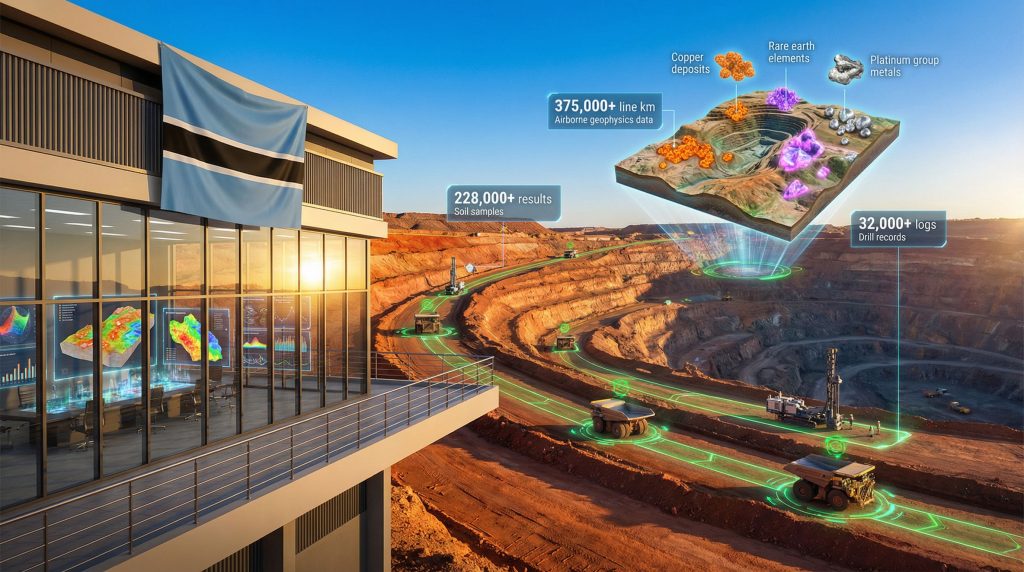
The implementation of AI-driven mineral exploration in Botswana represents a paradigm shift in how mining companies identify and evaluate potential mineral deposits across the country's diverse geological terranes. Machine learning algorithms are revolutionising how geologists identify mineral deposits, transforming traditional prospecting methods that relied heavily on manual interpretation and field reconnaissance. Advanced computational models now process vast geological datasets at unprecedented speeds, detecting subtle patterns and correlations that human analysis might overlook. This technological shift represents a fundamental change in how mineral exploration companies approach target identification, risk assessment, and resource allocation across diverse geological terranes.
Advanced Computational Methods in Geological Data Processing
Modern exploration programs rely on sophisticated AI systems that can integrate multiple data streams simultaneously. These systems process geophysical surveys, geochemical analyses, satellite imagery, and historical drilling records to create comprehensive geological models. Supervised learning algorithms trained on known mineral occurrences can identify similar geological signatures across unexplored territories, while unsupervised clustering techniques reveal previously unrecognized patterns in complex datasets.
Machine learning models excel at processing high-dimensional geological data where traditional statistical methods struggle. Neural networks can analyse satellite imagery to identify structural features indicative of mineralisation, while ensemble methods combine predictions from multiple algorithms to improve accuracy and reduce false positives. Furthermore, these data-driven mining operations enable real-time processing capabilities that were previously impossible.
The integration of real-time data acquisition with AI processing capabilities enables exploration teams to make rapid decisions in the field. Portable analytical equipment now generates geochemical data that can be immediately processed through cloud-based machine learning platforms, providing instant feedback on sampling strategies and target prioritisation. Additionally, AI transforming drilling techniques enhances precision in exploration activities.
When big ASX news breaks, our subscribers know first
Botswana's Geological Database Infrastructure
Botswana's exploration sector benefits from an extensive foundation of geological data accumulated over multiple decades. The country's database infrastructure represents one of Africa's most comprehensive private exploration datasets, covering approximately 95,000 square kilometres with detailed geoscientific information. This comprehensive approach to AI-driven mineral exploration in Botswana leverages decades of accumulated geological knowledge.
| Data Category | Volume | Coverage Scope | Primary Applications |
|---|---|---|---|
| Airborne Geophysics | 375,000+ line km | Regional surveys | Magnetic anomaly mapping |
| Ground Surveys | Extensive coverage | Targeted areas | Detailed geological mapping |
| Soil Sampling | Multi-decade accumulation | Systematic grids | Geochemical target generation |
| Drilling Records | Historical compilation | Known prospects | Subsurface validation |
The systematic collection and digitisation of geological information provides AI systems with training datasets that span multiple geological environments and mineral systems. This comprehensive data foundation enables machine learning models to recognise patterns across different terranes and geological settings within Botswana's diverse mineral landscape.
Database compilation strategies focus on maintaining data quality and consistency across different collection periods and methodologies. Standardised formatting protocols ensure that historical datasets remain compatible with modern AI analysis techniques, while ongoing data validation processes maintain accuracy standards essential for reliable machine learning outcomes. Consequently, this thorough approach supports the broader context of mining industry innovation across the region.
The integration of government geological surveys with private exploration datasets creates synergies that enhance the effectiveness of AI-driven target generation. Public-private data sharing arrangements provide broader geological context while respecting proprietary commercial information requirements.
Multi-Algorithm Approach to Target Identification
Effective mineral exploration AI systems employ multiple machine learning methodologies simultaneously to maximise discovery potential. Classification algorithms distinguish between ore-bearing and barren geological formations by analysing geochemical signatures and structural patterns. Regression models predict mineral grades based on geophysical responses and surface geochemistry relationships.
Pattern recognition techniques identify subtle geological indicators that traditional exploration methods might overlook:
• Spectral analysis of satellite imagery reveals alteration minerals associated with hydrothermal systems
• Magnetic signature interpretation identifies buried intrusive bodies potentially hosting mineralisation
• Geochemical pathway modelling traces element dispersion patterns from primary sources
• Structural geology algorithms map fault systems and geological contacts controlling ore placement
Deep learning applications process complex geological relationships through multi-layered neural networks. Convolutional neural networks analyse gridded geophysical data to identify anomalous patterns, while recurrent neural networks process sequential data such as drill hole logs to predict downhole continuation of mineralisation. Moreover, these advanced techniques contribute to an AI-powered efficiency boost in exploration activities.
The combination of multiple AI approaches through ensemble modelling reduces individual algorithm biases and improves overall prediction reliability. Model validation protocols test algorithm performance against known mineral occurrences while withholding portions of the dataset to assess predictive accuracy on unseen geological settings.
Operational Workflow Transformation
Traditional mineral exploration follows sequential phases that can extend project timelines significantly. Conventional approaches typically require extensive field mapping, systematic sampling programs, and iterative target refinement before drilling programs commence. This methodology, while thorough, often demands substantial capital investment before generating actionable exploration targets.
AI-enhanced exploration workflows compress traditional timelines through automated data processing and intelligent target prioritisation. However, successful implementation of AI-driven mineral exploration in Botswana requires careful consideration of local geological conditions and regulatory frameworks.
Accelerated Target Generation Process:
- Database preprocessing and integration (4-6 weeks)
- Machine learning model development (6-10 weeks)
- Automated prospect identification (1-3 weeks)
- Ground validation of selected targets (4-8 weeks)
- Drill-ready prospect delivery (2-3 weeks)
This compressed timeline enables exploration companies to evaluate significantly more prospects within equivalent timeframes and budgets compared to traditional methods. Cost efficiency improvements result from reduced preliminary fieldwork requirements and more focused ground investigation programs targeting AI-identified high-probability areas.
The elimination of low-potential exploration areas early in the process prevents unnecessary expenditure on detailed investigations of unfavourable geological settings. AI systems can rapidly screen large areas to identify the most promising targets for detailed follow-up work. Furthermore, 3D geological modelling enhances visualisation and understanding of subsurface geology.
Quality assurance protocols ensure that accelerated workflows maintain geological rigour through systematic validation of AI-generated targets against established geological principles and local mineralisation models.
Polymetallic Exploration Capabilities
Modern AI systems excel at identifying multiple commodity types simultaneously within single geological datasets. Multi-target algorithms analyse geological signatures for copper, nickel, platinum group metals, rare earth elements, and precious metals concurrently, maximising the value extraction from exploration investments.
Critical minerals targeting addresses growing demand for battery metals and technology elements:
• Copper exploration in Botswana's Damaran Belt geological formations using structural and geochemical indicators
• Rare earth element identification through spectral analysis of satellite imagery and surface geochemistry
• Platinum group metals detection via magnetic anomaly interpretation and ultramafic rock identification
• Base metals prospectivity across zinc, lead, and silver occurrences in sedimentary sequences
The Damaran Belt represents a particularly prospective geological environment where AI analysis has identified multiple high-priority targets. This regional geological structure hosts known copper mineralisation and exhibits favourable characteristics for additional discoveries through systematic AI-driven target generation. In fact, companies like Botswana Minerals are leveraging AI approaches to enhance their exploration strategies.
Diamond exploration enhancement utilises AI pattern recognition to identify kimberlite pipe signatures and indicator mineral pathways. Machine learning models trained on magnetic survey data can distinguish kimberlite geophysical responses from other geological features, improving target definition for diamond exploration programs.
Integration of geochemical and geophysical datasets through AI processing reveals previously unrecognised relationships between different mineral systems, potentially identifying polymetallic deposits with multiple revenue streams. Additionally, Mining Technology reports on recent successes in AI-enhanced exploration licensing.
Strategic Partnership and Risk-Sharing Models
The capital-intensive nature of mineral exploration creates opportunities for innovative partnership structures that leverage AI capabilities while managing financial risk. Farm-in agreements enable technology providers to earn project equity through successful AI target generation, aligning incentives between exploration companies and AI service providers.
Joint venture frameworks facilitate risk distribution across multiple parties while preserving access to proprietary datasets and analytical capabilities. These arrangements typically involve:
• Staged exploration programs with AI-defined milestone achievements triggering additional investment commitments
• Revenue-sharing models based on discovery success rates and commercial viability assessments
• Technology licensing agreements for proprietary algorithm deployment across multiple projects
• Data sharing protocols that protect competitive advantages while enabling collaborative analysis
Government partnership initiatives support exploration activities through streamlined permitting processes and geological data access agreements. Botswana's regulatory framework facilitates rapid licence acquisition for AI-identified targets, enabling companies to secure prospective ground quickly following target generation.
The risk mitigation benefits of AI-driven exploration include reduced drilling requirements through improved target accuracy, accelerated permitting processes for well-defined prospects, and enhanced due diligence capabilities for investment decisions. Consequently, the success of AI-driven mineral exploration in Botswana depends significantly on effective partnership models and collaborative frameworks.
International partnership arrangements enable technology transfer and knowledge sharing between established mining jurisdictions and emerging exploration territories, promoting best practice adoption and capability development.
The next major ASX story will hit our subscribers first
Performance Measurement and Validation Protocols
Quantifying AI exploration effectiveness requires comprehensive performance metrics that capture both technical accuracy and commercial viability. Success rate measurements compare AI-generated targets against traditional exploration methods across multiple geological settings and commodity types.
| Performance Indicator | Traditional Methods | AI-Enhanced Approaches | Efficiency Gain |
|---|---|---|---|
| Target Generation Speed | 8-14 months | 2-5 months | 3-5x improvement |
| Data Processing Capacity | Limited integration | Comprehensive synthesis | 10-50x expansion |
| Geological Coverage | Selective sampling | Systematic analysis | Complete area evaluation |
| Cost per Prospect | $150K-400K | $40K-120K | 60-70% reduction |
Quality validation protocols assess AI model performance through:
• Cross-validation testing using independent geological datasets not included in model training
• Blind prediction exercises comparing AI target identification against expert geological interpretation
• Historical validation studies evaluating AI performance against known mineral occurrences discovered through traditional methods
• Reproducibility assessments testing algorithm consistency across different geological terranes
Statistical accuracy metrics including precision, recall, and F1-scores provide quantitative measures of model performance, while geological validation ensures that AI-identified targets conform to established mineralisation models and exploration principles.
Continuous improvement processes incorporate new geological data and exploration results into AI model training, enhancing predictive accuracy over time and adapting to evolving understanding of regional geology and mineralisation processes.
Investment Decision-Making and Competitive Positioning
AI-driven exploration capabilities fundamentally alter investment decision-making processes by providing quantitative risk assessments and probabilistic resource estimates early in project evaluation. Portfolio optimisation algorithms enable exploration companies to allocate capital across multiple prospects based on quantitative success probability rankings rather than subjective geological assessments.
Competitive advantages derived from AI implementation include:
• First-mover positioning in underexplored geological regions through rapid systematic target generation
• Proprietary dataset development creating sustainable competitive advantages and partnership opportunities
• Technology differentiation attracting joint venture partners and investment capital
• Scalable exploration capabilities enabling simultaneous evaluation of multiple jurisdictions and geological settings
Due diligence acceleration through automated geological assessment reduces transaction timelines for asset acquisitions and partnership negotiations. AI-generated geological models provide standardised evaluation frameworks that facilitate comparison between different exploration opportunities.
Real-time monitoring capabilities enable continuous assessment of exploration progress and budget allocation optimisation throughout project lifecycles. Machine learning models can adjust target prioritisation based on ongoing exploration results, optimising resource allocation toward the most promising prospects.
The strategic value proposition of AI-enabled exploration includes reduced capital requirements for target generation, accelerated pathway to drilling decision points, and enhanced ability to maintain larger exploration portfolios within equivalent budget constraints.
Investment institutions increasingly recognise AI capabilities as value-creating differentiators in exploration company evaluations, potentially improving access to capital and reducing financing costs for technology-enabled exploration programs.
This analysis is provided for informational purposes and should not be construed as investment advice. Mineral exploration involves significant risks, and AI-enhanced methods, while promising, do not guarantee exploration success. Prospective investors should conduct their own due diligence and consult qualified professionals before making investment decisions.
Ready to Capitalise on AI-Enhanced Mineral Discoveries?
Discovery Alert's proprietary Discovery IQ model delivers instant notifications on significant ASX mineral discoveries, enabling subscribers to identify breakthrough opportunities like AI-driven exploration successes before the broader market responds. Explore how major mineral discoveries generate substantial returns and begin your 14-day free trial today to secure your competitive advantage in the evolving mining sector.