
August 14, 2026
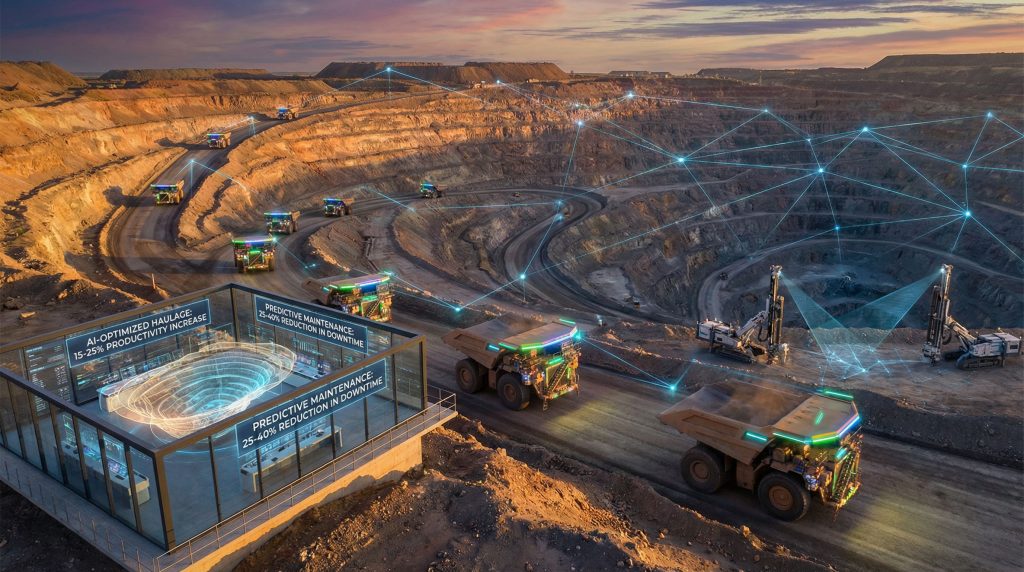
Understanding AI's Role in Modern Mining Infrastructure
The AI in mining industry landscape represents a fundamental shift from traditional extraction methodologies toward data-driven mining operations. Modern mining enterprises deploy sophisticated technological ecosystems that transform raw geological data into actionable intelligence, creating unprecedented efficiency gains across the extraction value chain.
The global mining automation market reached approximately USD 1.23 billion in 2021 and continues expanding at a compound annual growth rate (CAGR) of 8.3% through 2030, according to Grand View Research. This growth trajectory reflects the industry's strategic pivot toward intelligent systems that optimize everything from exploration targeting to processing plant efficiency.
Core Technologies Driving Mining Intelligence
Machine learning algorithms now analyze geological patterns with precision that surpasses traditional statistical methods. These systems process vast datasets encompassing drill hole logs, geophysical surveys, and geochemical assays to identify mineralization patterns that human analysts might overlook.
Computer vision systems monitor equipment performance through continuous image analysis, detecting anomalies in conveyor belt operations, crusher wear patterns, and mill liner degradation. Leading mining operations have deployed 50,000 to 100,000+ sensors across single mine sites, creating comprehensive monitoring networks that generate real-time operational intelligence.
Furthermore, Internet of Things (IoT) sensor networks create integrated data ecosystems where temperature sensors, vibration monitors, and flow meters communicate through industrial wireless protocols. This connectivity reduces operational decision-making time from 24-48 hours to 15-30 minutes, enabling rapid response to changing conditions.
Digital twin technology creates virtual representations of entire mining operations, from pit geometry and ore body models to processing circuit simulations. These digital replicas enable scenario testing and optimization without disrupting actual production.
Integration Challenges and Technical Requirements
Data standardisation across legacy mining systems presents significant technical hurdles. Mining operations historically operated with fragmented systems from multiple equipment manufacturers, each using proprietary data formats and communication protocols.
ISO 20922-1:2021 provides standardised communication frameworks for industrial automation systems, offering a pathway for integrating heterogeneous equipment into unified monitoring platforms. However, implementation requires substantial engineering effort to bridge compatibility gaps between legacy and modern systems.
Remote mining locations face bandwidth constraints that limit real-time data transmission. Operations in regions like the Atacama Desert or Australian outback typically access 10-20 Mbps bandwidth, compared to urban industrial facilities with 100+ Mbps capacity. Consequently, this necessitates edge computing architectures that process data locally and transmit only essential insights.
Cybersecurity considerations for connected mining equipment have become paramount as operational technology (OT) systems connect to corporate networks. Mining companies must implement robust security protocols to protect against distributed denial-of-service (DDoS) attacks and ransomware targeting critical infrastructure, as highlighted by artificial intelligence research developments.
When big ASX news breaks, our subscribers know first
What Are the Primary AI Applications Transforming Extraction Processes?
Autonomous equipment systems represent the most visible manifestation of AI in mining industry applications. These technologies fundamentally alter the human-machine relationship by transferring decision-making authority from operators to intelligent control systems.
Autonomous Equipment Systems
Self-driving haul trucks eliminate human exposure to hazardous mining environments while improving operational consistency. Rio Tinto's autonomous haul truck fleet at Pilbara operations achieved a 13% productivity improvement and maintained zero fatalities attributed to autonomous vehicle incidents over 15+ years of operation, demonstrating the effectiveness of autonomous haulage safety systems.
Robotic drilling platforms utilise precision targeting capabilities that exceed human operator accuracy. Autonomous drill systems at Cobar copper-gold mine demonstrated 15-22% faster hole placement and reduced collar deviation by 35% compared to operator-controlled drilling.
In addition, automated loading systems optimise material handling workflows through real-time bucket-fill monitoring. Electric Rope Shovels (ERS) equipped with AI systems feature strain gauges and load cells that adjust bucket engagement angles and penetration depth to maximise material capture within optimal energy parameters.
Remote-controlled excavation in dangerous mining zones enables operations to continue in areas where human presence would create unacceptable safety risks, such as unstable highwalls or zones with elevated gas concentrations.
| Equipment Type | Productivity Increase | Safety Incident Reduction | Cost Savings |
|---|---|---|---|
| Haul Trucks | 15-25% | 60-80% | 12-18% |
| Drilling Rigs | 20-30% | 70-85% | 15-22% |
| Loading Equipment | 10-20% | 50-70% | 8-15% |
Intelligent Processing and Ore Classification
Real-time mineral identification through spectral analysis revolutionises ore classification accuracy and speed. Short-Wave Infrared (SWIR) and Visible-Near-Infrared (VNIR) spectroscopy combined with machine learning models identify 15-25 distinct mineral species simultaneously, compared to traditional X-ray fluorescence (XRF) analysis requiring 3-5 minute scan times per sample.
Spectral analysis AI systems achieve mineral identification accuracy rates of 92-97% compared to laboratory analysis accuracy of 95%, while reducing processing time from 2-4 hours to 15-30 minutes. This rapid feedback enables immediate adjustment of processing parameters based on feed ore characteristics.
Furthermore, AI mill drive optimization systems optimise reagent dosing and air flow rates dynamically based on ore composition variations. These systems improve concentrate grade by 2-4% and recovery by 3-6%, delivering significant economic benefits through enhanced metallurgical performance.
Predictive metallurgical modelling employs ensemble machine learning approaches, including gradient boosting and random forests, trained on historical processing data. These models achieve recovery rate prediction accuracy of ±2-3% when validated against actual plant performance.
Automated quality control in processing facilities continuously monitors product specifications and adjusts operational parameters to maintain consistent output quality. This real-time adjustment capability reduces off-specification production and improves customer satisfaction.
How Does Predictive Maintenance Transform Mining Equipment Management?
Predictive maintenance represents a paradigm shift from reactive and preventive maintenance strategies toward condition-based maintenance that anticipates failures before they occur. This transformation delivers substantial economic benefits while improving operational reliability.
58% of mining companies have implemented or are piloting predictive maintenance systems as of 2024, according to Deloitte research. Operations deploying these systems report mean time between failures (MTBF) improvements of 23-35%.
Sensor-Based Monitoring Systems
Vibration analysis employs accelerometer sensors mounted on rotating equipment such as ball mills and conveyor drive motors. These sensors collect vibration data at 2,000-5,000 Hz sampling rates, enabling machine learning algorithms to detect anomalies through frequency spectrum analysis.
Fast Fourier Transform (FFT) and wavelet decomposition techniques identify elevated vibration at specific bearing fault frequencies. Outer race bearing failures typically manifest at 1-4x shaft speed, while inner race failures appear at 3-8x shaft speed, providing 7-14 days advance warning before catastrophic failure.
Temperature monitoring systems integrate infrared sensors and resistance temperature detectors (RTDs) embedded in motor windings, bearing housings, and hydraulic systems. Machine learning models trained on failure history predict thermal runaway 3-5 days in advance by detecting exponential temperature increase patterns.
Fluid analysis combines traditional oil analysis parameters (viscosity, acid number, particle count) with sensor-based fluid temperature and contamination detection. This integrated approach enables hydraulic system failure prediction 10-21 days before seal failure or pump degradation occurs.
Acoustic monitoring utilises high-frequency sensors operating in the 100 kHz – 1 MHz range to detect stress wave emissions from crack initiation in metal components. These systems identify early-stage fatigue cracks in haul truck frames 14-30 days before mechanical failure.
Machine Learning Algorithms for Equipment Prediction
Pattern recognition algorithms analyse equipment degradation cycles by processing continuous sensor data streams and identifying subtle changes in operational parameters that precede failures. These algorithms distinguish between normal operational variations and genuine deterioration patterns.
Failure probability calculations integrate multiple data sources to assess the likelihood of component failure within specific time horizons. These probabilistic models enable maintenance planners to optimise intervention timing and resource allocation.
Optimal maintenance scheduling algorithms balance failure risk against maintenance costs, determining the most cost-effective timing for component replacement or overhaul. This optimisation considers factors such as equipment availability requirements, maintenance crew scheduling, and spare parts inventory levels.
Parts inventory optimisation through demand forecasting utilises predictive maintenance insights to anticipate component replacement requirements. This capability reduces inventory carrying costs while ensuring critical spare parts availability.
Leading mining operations report 25-40% reductions in unplanned downtime, 15-30% decreases in maintenance costs, and 20-35% improvements in equipment availability through AI-powered predictive maintenance systems.
Antofagasta Minerals' El Toco and Los Pelambres operations reduced unplanned maintenance events by 31% through sensor-based predictive systems. Newmont Corporation's Tanami Operations achieved 18% improvement in equipment availability through machine learning maintenance algorithms.
What Safety Enhancements Does AI Bring to Mining Operations?
Safety represents the most critical application of AI in mining industry operations, where hazardous working conditions historically resulted in elevated injury and fatality rates. Intelligent systems now provide unprecedented capability to predict, prevent, and mitigate safety risks.
Mining fatality rates in operations deploying AI safety systems decreased by 18-28% between 2018-2023, according to International Labour Organisation data. Underground mining operations with advanced atmospheric monitoring systems reduced gas-related incidents by 42%.
Environmental Hazard Detection
Real-time atmospheric sensors measure concentrations of methane (CH₄), carbon monoxide (CO), hydrogen sulfide (H₂S), and oxygen levels using electrochemical and infrared detection technologies. AI algorithms analyse temporal patterns and spatial distributions across underground zones, identifying anomalous accumulation 45-90 minutes before dangerous concentrations develop.
Ground stability analysis employs microseismic monitoring networks with 50-200 geophones deployed in rock surrounding pit walls. These systems detect small-magnitude seismic events (magnitude -2 to +1) associated with stress redistribution and potential slope failures.
Machine learning classification of seismic event characteristics enables differentiation between benign stress adjustments and precursory signals indicating impending rockfalls or slope instability. This capability provides hours to days of advance warning for evacuation procedures.
Air quality management in underground operations integrates multiple atmospheric sensors with ventilation control systems. AI algorithms optimise airflow patterns to maintain safe working conditions while minimising energy consumption for ventilation fans.
Water contamination detection in processing circuits monitors chemical concentrations in process water streams, tailings discharge, and groundwater monitoring wells. These systems ensure compliance with environmental discharge standards and protect surrounding water resources.
Worker Safety Monitoring Systems
Proximity detection systems prevent equipment-personnel collisions through integrated GPS and radio frequency identification (RFID) technologies. Rio Tinto's proximity detection systems reduced haul truck-personnel interactions from 2-4 incidents per 100,000 operating hours to 0.3-0.8 incidents per 100,000 operating hours.
Fatigue detection through biometric monitoring represents an emerging application area, though specific statistical data on implementation effectiveness remains limited in published mining safety reports. These systems typically monitor heart rate variability, eye movement patterns, and reaction times to assess worker alertness levels.
Emergency response coordination through AI communication systems integrates various safety monitoring systems to provide comprehensive situational awareness during emergency situations. These platforms automatically notify appropriate response teams and guide evacuation procedures based on real-time hazard assessments.
Personal protective equipment compliance monitoring uses computer vision systems to verify that workers wear required safety equipment before entering hazardous areas. These systems can detect missing hard hats, safety glasses, or breathing apparatus with 95%+ accuracy.
Risk Assessment and Mitigation Protocols
Geotechnical stability modelling for slope management combines geological data, groundwater monitoring, and seismic activity to assess pit wall stability continuously. These models provide quantitative risk assessments that inform decisions about equipment positioning and worker access zones.
Weather pattern analysis integrates meteorological forecasts with operational safety protocols. AI systems automatically trigger safety procedures when weather conditions exceed predetermined thresholds for wind speed, visibility, or precipitation that could impact safe operations.
Traffic management systems coordinate mining vehicle movements through intelligent routing and scheduling algorithms. These systems prevent vehicle conflicts at intersections and optimise traffic flow to reduce accident risks while maintaining productivity.
Emergency evacuation route optimisation utilises real-time hazard mapping to identify the safest egress paths during emergency situations. These systems consider factors such as fire spread patterns, gas accumulation zones, and structural stability when directing personnel to safety.
How Are AI-Powered Exploration Techniques Changing Resource Discovery?
Exploration represents the foundation of mining operations, where AI technologies deliver transformative improvements in target identification accuracy and exploration efficiency. These advances significantly reduce exploration costs and timeframes while improving discovery success rates.
Geological Data Analysis and Pattern Recognition
Satellite imagery interpretation for mineral prospecting utilises machine learning algorithms to analyse spectral signatures from remote sensing data. These systems identify alteration minerals and geological structures associated with mineralisation that may not be apparent through conventional interpretation methods.
Geophysical data integration combines magnetic, gravitational, electromagnetic, and seismic survey data to create comprehensive subsurface models. AI algorithms identify subtle anomalies that indicate potential mineral deposits by analysing patterns across multiple geophysical datasets simultaneously.
Historical drilling data analysis leverages decades of accumulated exploration information to identify previously overlooked prospects. Machine learning models analyse spatial relationships between known deposits and geological features to predict locations of similar mineralisation.
Geochemical pattern recognition in soil and rock samples employs multivariate statistical analysis to identify element associations and anomaly patterns that indicate proximity to mineralisation. These techniques detect subtle geochemical signatures that traditional single-element analysis might miss.
Advanced Modelling for Resource Estimation
3D geological modelling with uncertainty quantification creates probabilistic representations of ore body geometry and grade distribution. These models incorporate geological interpretation uncertainty and data density variations to provide confidence intervals for resource estimates.
Grade distribution prediction using machine learning improves upon traditional geostatistical methods by incorporating complex geological relationships and spatial patterns. These models achieve higher prediction accuracy, particularly in geologically complex deposits.
Resource block modelling with AI-enhanced accuracy utilises advanced interpolation algorithms that consider geological continuity, structural controls, and grade correlation patterns. This approach reduces resource estimate uncertainty and improves mine planning reliability.
Economic viability assessment integrates resource models with commodity price forecasts, operating cost estimates, and capital expenditure projections. AI systems continuously update economic assessments based on changing market conditions and operational parameters.
| Exploration Phase | Traditional Timeline | AI-Enhanced Timeline | Accuracy Improvement |
|---|---|---|---|
| Target Generation | 6-12 months | 2-4 months | 35-50% |
| Resource Modelling | 3-6 months | 1-2 months | 25-40% |
| Feasibility Analysis | 12-18 months | 6-10 months | 20-30% |
What Environmental Benefits Does AI Deliver in Mining Operations?
Environmental stewardship represents a critical application of AI technologies, where intelligent systems enable more precise resource utilisation and environmental impact monitoring. These capabilities support sustainable mining transformation while reducing operational environmental footprints.
Energy Optimisation and Carbon Reduction
Power consumption monitoring algorithms continuously analyse energy usage patterns across mining operations, identifying opportunities for efficiency improvements. These systems optimise equipment scheduling and load distribution to minimise peak demand charges and reduce overall energy consumption.
Renewable energy integration for mining operations utilises AI forecasting systems to predict solar and wind energy availability, enabling optimal coordination between renewable generation and mining equipment operation schedules. This integration reduces dependence on fossil fuel-based electricity generation.
Equipment efficiency optimisation reduces fuel consumption through intelligent route planning for haul trucks, optimal blasting patterns that minimise re-handling, and coordinated equipment operation that eliminates idle time. These optimisations deliver 12-18% cost savings while reducing emissions.
Carbon footprint tracking systems integrate energy consumption data with emission factors to provide real-time carbon intensity monitoring. These systems enable mining operations to demonstrate progress toward carbon reduction targets and identify high-impact emission reduction opportunities.
Waste Management and Environmental Monitoring
Tailings management through predictive modelling analyses geotechnical stability, water balance, and environmental impacts of tailings storage facilities. AI systems predict settlement patterns and seepage behaviour, enabling proactive management to prevent environmental incidents.
Water treatment optimisation uses AI control systems to adjust chemical dosing, pH levels, and treatment processes based on influent water quality variations. These systems maintain discharge quality standards while minimising reagent consumption and treatment costs.
Land rehabilitation planning employs ecological modelling to design post-mining landscapes that support biodiversity and ecosystem function. AI systems analyse soil conditions, hydrological patterns, and species requirements to optimise revegetation strategies.
Biodiversity impact assessment utilises image recognition and acoustic monitoring to track wildlife populations and habitat quality around mining operations. These systems provide early warning of environmental impacts and support adaptive management strategies.
Regulatory Compliance and Reporting
Automated environmental data collection systems continuously monitor air quality, water discharge, noise levels, and dust emissions. These systems ensure real-time compliance with regulatory standards and generate automated reports for regulatory submissions.
Real-time emissions tracking combines continuous monitoring equipment with meteorological data to model pollutant dispersion and concentration patterns. This capability enables immediate response to emission exceedances and demonstrates environmental performance to stakeholders.
Environmental impact prediction modelling integrates operational planning data with environmental sensitivity mapping to assess potential impacts of proposed mining activities. These models support environmental assessment processes and inform operational modifications to minimise impacts.
The next major ASX story will hit our subscribers first
How Do Mining Companies Implement AI Solutions Successfully?
Successful AI implementation requires strategic planning that addresses technical, organisational, and financial considerations. Mining companies must develop comprehensive technology roadmaps that align AI initiatives with operational priorities and business objectives, considering broader mining industry innovation trends.
Strategic Planning and Technology Roadmaps
Pilot project identification focuses on high-impact, low-risk applications where AI technologies can demonstrate clear value propositions. Successful pilots typically target specific operational challenges with measurable performance metrics and defined success criteria.
Technology vendor evaluation requires assessment of solution maturity, industry experience, integration capabilities, and long-term support commitments. Mining companies must evaluate vendors' understanding of mining-specific requirements and their ability to deliver scalable solutions.
Change management strategies address organisational resistance to technology adoption through communication, training, and stakeholder engagement programmes. Successful implementations involve operational personnel in solution design and provide clear pathways for skill development.
Investment prioritisation frameworks evaluate AI initiatives based on risk-adjusted returns, implementation complexity, and strategic alignment. These frameworks help mining companies allocate limited capital and technical resources to highest-value opportunities.
Data Infrastructure and Integration Requirements
Data governance frameworks establish standards for data quality, access controls, and integration protocols across mining operations. These frameworks ensure consistent data management practices that support reliable AI system performance.
Cloud computing infrastructure provides scalable processing capability for AI applications while enabling centralised data storage and management. However, remote mining locations may require hybrid architectures that combine cloud services with edge computing capabilities.
Edge computing solutions process data locally at mining sites, reducing bandwidth requirements and enabling real-time decision-making for time-critical applications such as autonomous equipment control and safety monitoring systems.
Data security protocols protect sensitive operational and business information while enabling necessary data sharing for AI applications. These protocols must address both cybersecurity threats and proprietary information protection requirements.
Workforce Development and Training Programmes
AI literacy programmes educate mining professionals about AI capabilities, limitations, and applications relevant to their roles. These programmes build organisational understanding and support for AI initiatives while identifying potential champions and early adopters.
Technical skills development programmes provide specialised training for personnel responsible for AI system operation, maintenance, and troubleshooting. These programmes ensure organisations maintain necessary technical capabilities to support AI implementations.
Leadership training addresses executive decision-making in data-driven environments, including interpretation of AI-generated insights, risk assessment for AI initiatives, and strategic planning for digital transformation.
Collaboration protocols establish clear roles and responsibilities for interaction between human operators and AI systems. These protocols ensure effective human-machine collaboration while maintaining operational safety and efficiency.
What Does the Future Hold for AI in Mining?
The trajectory of AI in mining industry development points toward increasingly autonomous operations supported by advanced technologies that are currently emerging from research and development environments into commercial applications.
Emerging Technologies and Applications
Quantum computing applications for complex optimisation problems represent a potential breakthrough for mining operations. These systems could solve resource allocation, scheduling, and logistics problems that are computationally intractable with current technologies.
Advanced robotics for hazardous environment operations will extend autonomous capabilities into areas currently inaccessible to human workers. These systems will enable resource extraction from extreme environments while eliminating human exposure to dangerous conditions.
Blockchain integration for supply chain transparency provides immutable tracking of mineral provenance from extraction through processing to final products. This capability addresses increasing demands for responsible sourcing and ethical supply chain management.
Augmented reality interfaces for equipment operation overlay digital information onto physical environments, enhancing operator situational awareness and decision-making capabilities. These interfaces integrate AI-generated insights directly into operational workflows.
Industry Transformation Scenarios
Fully autonomous mining operations represent the ultimate integration of AI technologies across all operational functions. Industry experts project significant progress toward this goal over the next 10-15 years, though complete autonomy will likely emerge gradually across different operational areas, as discussed in current mining technology evolution research.
Integration with smart city infrastructure enables mining operations to optimise logistics and resource flows based on broader urban planning and infrastructure capacity. This integration supports more efficient material movement and processing coordination.
Circular economy applications utilise AI to optimise material recovery, recycling, and reuse throughout the mining value chain. These applications support sustainable resource utilisation and waste minimisation objectives.
Global supply chain optimisation through AI coordination enables mining companies to optimise production, inventory, and logistics decisions based on global market conditions and supply-demand dynamics. This capability improves profitability while enhancing supply security.
Frequently Asked Questions About AI in Mining
What are the main benefits of AI in mining?
AI in mining delivers four primary benefits: Enhanced safety through hazard detection and autonomous equipment operation, improved efficiency via predictive maintenance and process optimisation, environmental protection through monitoring and resource optimisation, and cost reduction through automated decision-making and operational streamlining.
Implementation and Investment Considerations
What is the typical ROI timeline for AI mining investments?
Most mining companies observe initial returns within 12-18 months for focused applications such as predictive maintenance or autonomous equipment deployment. Comprehensive digital transformation initiatives typically achieve full ROI within 3-5 years, depending on implementation scope and operational complexity.
How do mining companies prioritise AI implementation areas?
Successful prioritisation focuses on applications with clear value propositions, measurable outcomes, and manageable implementation risk. Safety-critical applications often receive highest priority, followed by high-impact operational efficiency improvements and regulatory compliance enhancements.
What are the main barriers to AI adoption in mining?
Primary barriers include organisational change resistance, technical integration challenges with legacy systems, skilled workforce shortages, and capital allocation constraints. Addressing these barriers requires comprehensive change management and strategic investment in both technology and human resources.
How does AI integration affect mining workforce requirements?
AI implementation shifts workforce requirements toward higher-skilled technical roles while reducing demand for routine operational positions. However, total employment often remains stable as companies redeploy personnel into equipment monitoring, data analysis, and system maintenance functions.
Technical and Operational Questions
Which mining processes benefit most from AI implementation?
Equipment maintenance, autonomous haulage, ore processing optimisation, and exploration targeting demonstrate the highest returns from AI implementation. These applications offer clear performance metrics and substantial economic benefits that justify technology investments.
How reliable are AI systems in harsh mining environments?
Modern AI systems designed for mining applications achieve 95%+ uptime in properly maintained installations. However, success requires appropriate hardware selection, environmental protection measures, and regular maintenance protocols adapted to specific operational conditions.
What data requirements are needed for effective AI deployment?
Effective AI systems require consistent, high-quality data from multiple sources including operational sensors, maintenance records, geological models, and production metrics. Data integration and standardisation represent critical prerequisites for successful implementation.
How do AI systems handle unexpected operational scenarios?
Advanced AI systems incorporate uncertainty quantification and anomaly detection capabilities that trigger human intervention when encountering unfamiliar situations. Robust implementations include fail-safe protocols that ensure operational safety during unexpected conditions.
This article provides general information about AI applications in mining and should not be considered as specific technical or investment advice. Mining operations considering AI implementation should consult qualified technical specialists and conduct thorough feasibility assessments appropriate to their specific operational requirements and risk profiles.
Readers interested in learning more about AI applications in mining can explore additional industry resources and technical publications that discuss automation, predictive analytics, and digital transformation in the extractive industries.
Ready to capitalise on mineral discoveries before they transform the market?
Discovery Alert's proprietary Discovery IQ model delivers instant notifications when significant ASX mineral discoveries are announced, giving you the market edge needed to act on opportunities ahead of the broader investment community. Explore historic examples of major discoveries that have delivered exceptional returns and begin your 14-day free trial today to position yourself at the forefront of mineral discovery investing.