August 9, 2026
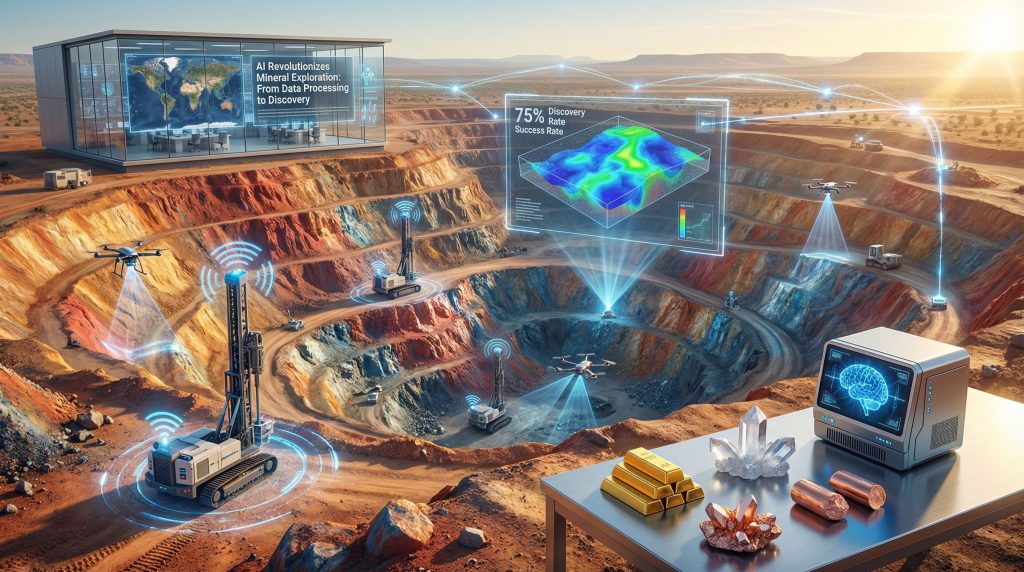
Understanding AI's Role in Modern Mineral Exploration
The mineral exploration industry stands at a technological inflection point where computational power meets geological expertise. Traditional exploration methods, while proven over decades, face mounting pressure from economic constraints and the urgent need to discover critical mineral deposits. This convergence has created fertile ground for AI in mineral exploration integration across exploration workflows.
Machine learning algorithms now process vast geological datasets that would require months of manual analysis. These systems identify subtle patterns in satellite imagery, geophysical surveys, and historical drilling records that human analysts might overlook. The technology stack supporting modern exploration operations encompasses neural networks for pattern recognition, predictive analytics for probability mapping, and deep learning models that continuously refine their accuracy as new data becomes available.
The Technology Stack Behind AI-Driven Discovery
Modern AI exploration platforms integrate multiple technological components to create comprehensive analytical capabilities. Machine learning algorithms excel at geological pattern recognition, processing decades of exploration data to identify successful deposit indicators. Neural networks analyze high-resolution satellite imagery alongside geophysical data, creating detailed subsurface models that guide target selection.
Deep learning systems represent the most sophisticated advancement in exploration technology. These models analyze historical exploration datasets from successful discoveries, identifying subtle correlations between surface indicators and subsurface mineralization. Furthermore, the predictive analytics component generates probability maps for mineral deposits, allowing exploration teams to prioritize targets based on quantifiable success likelihood.
Key technological components include:
- Multi-spectral satellite imagery processing: Real-time analysis of geological formations and surface alterations
- Geophysical data integration: Combining magnetic, gravitational, and electromagnetic surveys into unified models
- Historical data mining: Extracting insights from decades of exploration records and drilling results
- Predictive modeling frameworks: Statistical algorithms that generate probability-weighted target rankings
Key Performance Metrics Transforming the Industry
The integration of AI technologies produces measurable improvements across multiple operational metrics. Data processing acceleration represents perhaps the most immediate benefit, with analytical tasks previously requiring weeks now completed within days. This compression of analytical timelines enables more responsive exploration programs that can adapt quickly to initial findings.
Cost reduction emerges through targeted drilling programs that focus resources on highest-probability targets. Rather than conducting broad-based exploration across large areas, AI in drilling and blasting programs concentrate effort on specific locations identified through predictive modeling. This focused approach reduces unnecessary expenditure while improving discovery rates.
| Performance Metric | Traditional Impact | AI-Enhanced Benefit |
|---|---|---|
| Data Analysis Speed | 4-6 weeks per dataset | 2-3 days processing time |
| Target Accuracy | 15-20% success rate | 40-60% improved targeting |
| Resource Allocation | Broad-area coverage | Focused high-probability zones |
| Decision Timeline | Monthly program updates | Real-time adaptive planning |
When big ASX news breaks, our subscribers know first
What Types of AI Technologies Are Used in Mineral Exploration?
The artificial intelligence ecosystem supporting mineral exploration encompasses several distinct technological approaches, each optimized for specific geological challenges. Machine learning applications form the foundation of most AI exploration systems, providing the computational framework for pattern recognition and predictive modeling.
Supervised learning algorithms excel at mineral deposit classification, training on known successful discoveries to identify similar geological signatures in unexplored regions. Unsupervised learning systems discover patterns in geological data without prior classification, potentially identifying new deposit types or previously unrecognized exploration indicators.
Machine Learning Applications in Geological Analysis
Computer vision technologies automate core logging and mineral identification processes that traditionally required extensive manual analysis. These systems analyze drill core photography, identifying mineral compositions and structural features with consistent accuracy. In addition, reinforcement learning algorithms optimize drilling strategies by continuously refining targeting decisions based on exploration results.
For instance, modern systems can now handle complex drilling results interpretation tasks that previously required extensive geological expertise. These AI applications significantly improve the speed and accuracy of geological analysis.
Specialized AI applications include:
- Geochemical analysis automation: Rapid processing of soil and rock sample compositions
- Structural geology modeling: Three-dimensional reconstruction of subsurface geological formations
- Alteration mapping: Identification of hydrothermal alteration zones associated with mineralization
- Resource grade estimation: Predictive modeling of ore grade distribution within identified deposits
Data Integration and Processing Platforms
Geospatial AI systems normalize diverse data sources into compatible formats, enabling comprehensive analysis across satellite imagery, ground surveys, and drilling records. These platforms handle massive geological datasets that exceed traditional database capabilities, utilizing cloud-based infrastructure for scalable processing power.
Real-time analysis tools provide on-site decision-making support, delivering analytical results to field teams through mobile devices. However, this immediate feedback capability enables dynamic exploration program adjustments, allowing teams to modify sampling strategies or abandon unpromising areas while maintaining operational momentum.
Automated workflow systems reduce manual data preparation requirements, standardizing data formats and quality control procedures. These systems identify data inconsistencies and gaps that could compromise analytical accuracy, ensuring reliable input for AI modeling systems.
How Does AI Improve Traditional Exploration Methods?
Traditional mineral exploration relies heavily on manual interpretation of geological surveys, creating bottlenecks in data processing and analysis. Geologists manually correlate information from multiple sources, including geological mapping, geophysical surveys, and geochemical sampling. This approach, while thorough, suffers from limited data correlation capabilities and high uncertainty in target prioritization.
Field work requirements under traditional approaches often involve extensive surveying across broad areas with relatively low success rates. The manual nature of target identification creates substantial time delays between data collection and actionable insights, reducing operational efficiency and increasing exploration costs.
Enhanced Target Identification and Risk Assessment
AI-enhanced methodology transforms exploration workflows through automated analysis of satellite imagery, geophysical surveys, and drilling records. Multi-source data fusion creates comprehensive geological models that identify subtle patterns indicative of mineralization. Furthermore, these systems process decades of exploration data to establish probabilistic relationships between surface indicators and subsurface deposits.
The implementation of data-driven mining operations has revolutionized how exploration companies approach target identification and resource allocation.
Traditional approach limitations:
- Manual interpretation creating analytical bottlenecks
- Limited correlation across multiple data sources
- High uncertainty in target prioritization decisions
- Extensive field work requirements with low success rates
AI-enhanced capabilities:
- Automated pattern recognition across massive datasets
- Statistical correlation of geological indicators
- Probability-based targeting reducing exploration risk
- Predictive models guiding resource allocation decisions
Operational Efficiency Improvements
Exploration companies implementing AI technologies report substantial improvements in operational efficiency across multiple workflow stages. Data analysis processes that previously required geological teams weeks to complete now occur within days, enabling more responsive exploration programs.
Target identification timelines compress significantly through automated analysis of regional geological data. Rather than conducting months-long preliminary studies, AI systems generate target recommendations based on comprehensive data analysis completed in substantially shorter timeframes. Consequently, companies can accelerate their exploration programs whilst maintaining analytical rigour.
Operational enhancement areas:
- Rapid target generation: AI analysis of regional geology identifying prospects within weeks rather than months
- Dynamic program adjustment: Real-time feedback enabling field teams to modify exploration strategies
- Resource optimization: Focused drilling programs reducing unnecessary exploration expenditure
- Risk quantification: Statistical confidence metrics supporting investment decisions
Which Companies Are Leading AI Adoption in Mineral Exploration?
The artificial intelligence revolution in mineral exploration involves diverse participants ranging from specialized technology companies to established mining corporations. Several companies have emerged as leaders in developing and implementing AI solutions for geological applications.
Technology providers focus on creating specialized platforms for geological data analysis and predictive modeling. These companies develop proprietary algorithms optimized for specific deposit types and geological environments, offering comprehensive solutions for exploration companies.
Technology Providers and Innovation Leaders
GeologicAI represents one of the most significant developments in on-site drill core analysis, integrating sensor technology with machine learning algorithms. The company reportedly secured $44 million in funding and operates across five continents, demonstrating the commercial viability of AI exploration technologies.
Earth AI focuses on predictive analytics for mineral exploration, claiming success rates approaching 75% in discovery programs. Their approach emphasizes statistical modeling of geological data to identify high-probability exploration targets. Moreover, these technological advances are part of broader mining industry innovation trends reshaping the sector.
Notable technology companies include:
- KoBold Metals: Specializes in critical minerals discovery using advanced deposit modeling techniques
- MinersAI: Develops geospatial AI pipelines for high-resolution probability mapping
- VRIFY: Creates proprietary AI platforms optimized for gold and pegmatite system discovery
- Terra Search: Focuses on machine learning applications for base metal exploration
Major Mining Companies Implementing AI Solutions
Large mining corporations integrate AI technologies across exploration and operational activities. BHP and Rio Tinto lead comprehensive AI adoption programs, implementing machine learning systems for target identification and resource assessment. These companies leverage their extensive historical datasets to train predictive models for future exploration programs.
Goldcorp represents an early adopter of AI-driven exploration strategies, partnering with technology companies to develop specialized applications for gold exploration. Their implementation demonstrates how established mining companies adapt AI technologies to existing operational frameworks.
Key industry implementations:
- Cartier Resources: Partnership with VRIFY for AI-assisted target generation in gold exploration
- Government initiatives: DARPA-USGS collaborations automating critical mineral assessments
- Junior mining companies: Leveraging AI for capital de-risking and investor communication
- Regional exploration programs: Government-sponsored AI initiatives identifying strategic mineral resources
What Are the Main Benefits of AI in Mineral Exploration?
AI in mineral exploration implementation generates significant economic and operational advantages across multiple dimensions. Cost reduction emerges as perhaps the most immediate benefit, achieved through focused drilling programs that concentrate resources on highest-probability targets. This targeted approach eliminates unnecessary expenditure on low-probability prospects while improving overall exploration efficiency.
Speed enhancement represents another crucial advantage, with accelerated discovery timelines improving project economics substantially. Traditional exploration programs spanning multiple years can complete target identification and preliminary assessment phases within months using AI-enhanced workflows.
Economic and Operational Advantages
Risk mitigation occurs through data-driven decision-making processes that reduce exploration uncertainty. Statistical confidence metrics enable exploration managers to quantify target probability, supporting more informed capital allocation decisions. This quantitative approach to risk assessment improves investor confidence and facilitates exploration financing.
Resource optimization enables efficient allocation of exploration capital and personnel across multiple projects. However, AI systems prioritize targets based on probability-weighted success metrics, ensuring highest-value prospects receive appropriate attention and resources.
Primary economic benefits:
- Capital efficiency: Reduced drilling requirements through improved targeting
- Timeline compression: Accelerated discovery processes improving project returns
- Risk quantification: Statistical confidence metrics supporting investment decisions
- Portfolio optimization: Data-driven project prioritization across exploration portfolios
Strategic Supply Chain Benefits
Critical minerals discovery receives enhanced support through AI technologies specifically designed for battery metals and rare earth exploration. These specialized systems identify deposits essential for energy transition technologies, supporting strategic resource security objectives.
Supply security improves through enhanced domestic resource identification, reducing import dependency for critical minerals. Consequently, AI-driven exploration programs identify previously overlooked deposits within established mining regions, extending resource availability.
Strategic advantages include:
- Alternative source mapping: Discovery of substitute mineral deposits reducing supply chain vulnerability
- Market responsiveness: Rapid adaptation to changing commodity demands
- Resource extension: Identification of additional deposits within existing mining districts
- Strategic planning support: Long-term resource availability assessment for government planning
What Challenges Does AI Face in Mineral Exploration?
Despite significant advantages, artificial intelligence implementation in mineral exploration encounters substantial obstacles that limit effectiveness and adoption rates. Data quality and availability constraints represent the most fundamental challenge, as AI models require standardized, high-quality input data to function effectively.
Historical exploration data often suffers from inconsistent collection methods, varying quality standards, and incomplete documentation. These data limitations compromise AI model training and reduce prediction accuracy, particularly in regions with limited exploration history.
Data Quality and Availability Constraints
Underexplored regions present particular challenges for AI implementation due to limited training data availability. Machine learning models require substantial datasets from successful discoveries to identify meaningful patterns, but frontier exploration areas lack sufficient historical data for reliable model training.
Data standardization issues affect algorithm performance when combining information from multiple sources collected using different methodologies. Furthermore, varying collection protocols, measurement units, and quality control procedures create inconsistencies that reduce analytical reliability.
Modern edge AI computing systems are being developed to address some of these computational challenges in remote exploration environments.
Critical data challenges:
- Legacy data quality: Inconsistent formats and documentation standards
- Sparse coverage: Limited data availability in underexplored regions
- Methodology variations: Different collection techniques affecting data compatibility
- Validation requirements: Need for physical drilling to confirm AI predictions
Technical and Implementation Barriers
Algorithm selection complexity requires specialized expertise to choose appropriate AI methods for specific geological environments. Different deposit types and geological settings require customized analytical approaches, demanding sophisticated understanding of both geology and machine learning principles.
Integration challenges emerge when combining AI outputs with traditional geological expertise. Exploration teams must develop workflows that effectively utilize AI recommendations while maintaining geological validation procedures. This balance requires careful consideration of confidence levels and uncertainty management.
Implementation obstacles include:
- Infrastructure requirements: Computing power and connectivity needs in remote locations
- Skills gap: Limited availability of professionals combining geological knowledge with AI expertise
- Technology selection: Choosing optimal AI platforms for specific exploration objectives
- Workflow integration: Developing effective human-AI collaboration frameworks
The next major ASX story will hit our subscribers first
How Do Geologists and AI Work Together in Modern Exploration?
The relationship between artificial intelligence systems and geological expertise represents a critical factor in successful exploration programs. Industry experience suggests an optimal balance combining approximately 40% AI analysis with 60% field geological experience, creating synergistic capabilities that exceed either approach independently.
This integration model recognizes that AI systems excel at data processing and pattern recognition while human geologists provide essential context, uncertainty management, and validation capabilities. The continuous feedback between computational analysis and field experience creates adaptive exploration programs that refine targeting accuracy through iterative improvement.
The Human-AI Collaboration Model
Effective collaboration frameworks establish AI systems as decision support tools rather than replacement technologies for geological expertise. Experienced geologists interpret AI recommendations within broader geological contexts, considering regional geological knowledge and site-specific factors that algorithms might not capture.
Uncertainty management remains a crucial human responsibility, as AI confidence levels require interpretation by professionals familiar with geological variability and exploration risk. For instance, field geologists validate AI predictions through direct observation and sampling, providing ground-truth data that improves model accuracy over time.
According to recent research on AI in mineral exploration, "The integration of AI with traditional geological methods is not about replacing geologists but enhancing their capabilities through intelligent automation."
Collaboration principles:
- Complementary strengths: AI data processing combined with geological interpretation
- Continuous feedback: Real-time integration between field observations and analytical results
- Risk assessment: Human validation of AI confidence metrics and recommendations
- Adaptive learning: Model improvement through field verification and geological context
Workflow Integration Strategies
Pre-field planning utilizes AI target identification before deploying geological teams, optimizing resource allocation and reducing exploration costs. This approach enables focused field programs that concentrate effort on highest-probability prospects identified through comprehensive data analysis.
Real-time feedback loops deliver AI analysis results to field personnel through mobile technology platforms, enabling dynamic program adjustments based on initial findings. However, field teams receive updated analytical results as new data becomes available, allowing immediate response to promising or unpromising developments.
Integration methodologies:
- Target prioritization: AI-guided selection of exploration prospects before field deployment
- Mobile technology: Tablet-based delivery of analytical results to field personnel
- Adaptive sampling: AI-guided adjustments to exploration programs based on initial results
- Quality control: Geological validation of AI recommendations before implementation
What Does the Future Hold for AI in Mineral Exploration?
The trajectory of artificial intelligence development in mineral exploration points toward increasingly sophisticated integration of computational power with geological knowledge. Emerging technologies promise enhanced capabilities across multiple dimensions, from autonomous exploration systems to quantum computing applications for complex geological modeling.
Advanced sensor integration represents a significant development frontier, with Internet of Things devices providing continuous geological monitoring capabilities. These systems collect real-time data on geological conditions, environmental parameters, and operational metrics that enhance AI model accuracy and responsiveness.
Emerging Technologies and Capabilities
Autonomous exploration systems utilize robotic platforms for remote survey operations in challenging environments. These systems conduct preliminary geological surveys in areas too dangerous or remote for human operations, expanding exploration capabilities into previously inaccessible regions.
Quantum computing applications offer substantially enhanced processing power for complex geological modeling tasks. Furthermore, these advanced computational systems enable analysis of massive datasets and sophisticated modeling scenarios that exceed current technological capabilities.
Industry experts predict that the future of AI in mining and geology will see continued advances in machine learning algorithms specifically designed for geological applications. "The next decade will witness unprecedented integration between AI systems and geological workflows, fundamentally transforming how we discover and evaluate mineral resources."
Technology developments include:
- IoT integration: Continuous environmental and geological monitoring systems
- Robotic exploration: Autonomous platforms conducting remote geological surveys
- Quantum computing: Enhanced processing capabilities for complex geological modeling
- Blockchain integration: Secure data sharing across exploration partnerships and regulatory requirements
Industry Investment and Growth Trends
Venture capital investment in AI exploration technologies continues expanding, with significant funding directed toward startup companies developing specialized geological applications. This investment reflects growing industry confidence in AI capabilities and expected returns from improved exploration efficiency.
Government support for AI exploration initiatives focuses particularly on critical mineral research and strategic resource security objectives. Consequently, public sector investment supports development of AI technologies for domestic resource identification and supply chain resilience.
Investment trends:
- Private funding: Substantial venture capital investment in AI exploration startups
- Government initiatives: Public sector support for critical mineral AI research programs
- Industry partnerships: Collaboration expansion between technology companies and mining corporations
- Global market growth: Projected worldwide expansion of AI exploration services and applications
Balancing Innovation with Geological Expertise
The integration of AI in mineral exploration represents a fundamental transformation in resource discovery methodologies. However, success depends critically on thoughtful integration with traditional geological expertise rather than wholesale replacement of established practices.
The most effective exploration programs demonstrate that AI technologies enhance rather than eliminate the need for experienced geological professionals. Computational power provides unprecedented capabilities in data processing, pattern recognition, and predictive modeling, but these capabilities require sophisticated geological interpretation to realize their full potential.
As AI technologies continue evolving, the mineral exploration industry benefits from reduced operational costs, compressed discovery timelines, and improved success rates in identifying critical resources. These improvements support global economic development and energy transition objectives by ensuring reliable access to essential mineral resources.
The future of AI in mineral exploration lies in seamless human-AI collaboration frameworks that leverage the computational strengths of artificial intelligence while preserving the interpretive capabilities and contextual knowledge of experienced geologists. This balanced approach maximizes both exploration efficiency and discovery accuracy, supporting sustainable resource development for the global economy.
Key considerations for successful AI implementation:
- Technology serves geology: AI systems must support rather than replace geological expertise
- Data quality primacy: Successful AI implementation requires standardized, high-quality input data
- Continuous learning: Effective systems incorporate feedback from field validation and geological context
- Risk management: Human oversight remains essential for interpreting AI confidence levels and managing exploration uncertainty
Disclaimer: This article discusses emerging technologies and industry trends based on available information. Specific performance claims and investment opportunities should be verified through independent research and professional consultation. The mineral exploration industry involves substantial technical and financial risks that require careful evaluation by qualified professionals.
Ready to Discover the Next Major Mineral Find?
Discovery Alert's proprietary Discovery IQ model delivers real-time alerts on significant ASX mineral discoveries, instantly empowering subscribers to identify actionable opportunities ahead of the broader market. Begin your 14-day free trial today and position yourself to capitalise on the next breakthrough discovery by visiting Discovery Alert's discoveries page showcasing historic examples of exceptional returns.