
August 14, 2026
The Strategic Imperative Behind Alberta's Carbon Capture Acceleration
The global energy sector stands at an inflection point where technological adaptation determines long-term viability. While geopolitical shifts create uncertainty around climate policy frameworks, forward-thinking jurisdictions are positioning themselves for sustained competitiveness regardless of regulatory volatility. Alberta's carbon capture buildout in Alberta represents this strategic positioning, driven by recognition that industrial future-proofing requires proactive technology deployment rather than reactive policy compliance.
Future-Proofing Against Global Energy Transition Risks
Alberta's approach reflects deep understanding of asset stranding risks in an evolving global energy market. The province's commitment to carbon capture and utilisation/storage (CCUS) technology deployment addresses concerns that jurisdictions failing to adopt best-in-class emission reduction technologies face billions in stranded industrial assets. This strategic imperative extends beyond environmental compliance to encompass economic competitiveness in international markets where carbon intensity increasingly influences procurement decisions.
Energy Minister Tim Hodgson articulated this rationale during a February 2026 Calgary industry event, emphasising that Alberta's carbon capture buildout ensures the province avoids becoming a jurisdiction with stranded assets due to technological stagnation. The minister's comments, made one day after President Trump's EPA reversal of greenhouse gas endangerment findings, underscore Canada's commitment to maintaining climate technology leadership despite shifting U.S. policy directions.
Furthermore, Alberta's strategy directly addresses energy transition security concerns by developing domestic capabilities in advanced emission reduction technologies. This positioning protects against future supply chain disruptions while creating export opportunities in the rapidly expanding global carbon management market.
Economic Diversification Through Climate Technology Leadership
The carbon capture buildout in Alberta serves dual purposes: decarbonising existing industrial operations while establishing the province as a global leader in CCUS technology and expertise. This positioning creates opportunities for technology export, engineering services, and knowledge transfer to other jurisdictions pursuing similar decarbonisation strategies. Alberta's geological advantages, combined with industrial expertise in large-scale energy infrastructure projects, provide competitive advantages in the emerging global carbon management market.
International market access considerations drive much of Alberta's strategic calculus. The province recognises that maintaining energy export relationships with rapidly growing economies like India and China requires demonstrating commitment to emission reduction technologies. European markets, actively diversifying energy sources while implementing carbon border adjustment mechanisms, increasingly favour suppliers with credible decarbonisation strategies.
Moreover, the province's focus on renewable energy transformation complements carbon capture initiatives by creating integrated clean energy systems. This approach addresses energy export challenges through technology leadership rather than market retreat.
Competitive Positioning in Post-Biden Policy Landscape
The timing of Alberta's carbon capture acceleration reflects strategic awareness of U.S. policy volatility. While the Trump administration has abandoned Biden-era climate policies including the Inflation Reduction Act, Alberta's government views this reversal as temporary rather than permanent. The province's continued CCUS investment during U.S. policy retrenchment positions Alberta advantageously for future policy shifts while maintaining technological momentum.
This approach contrasts with jurisdictions that might delay emission reduction investments pending clearer policy signals. Alberta's government-industry collaboration through memorandums of understanding and federal-provincial agreements creates regulatory certainty that enables private sector capital deployment despite external policy uncertainty.
However, the federal government's continued backing for carbon capture initiatives demonstrates national commitment to maintaining climate technology leadership regardless of shifting international dynamics.
When big ASX news breaks, our subscribers know first
Investment Capital Mobilising Alberta's Carbon Transformation
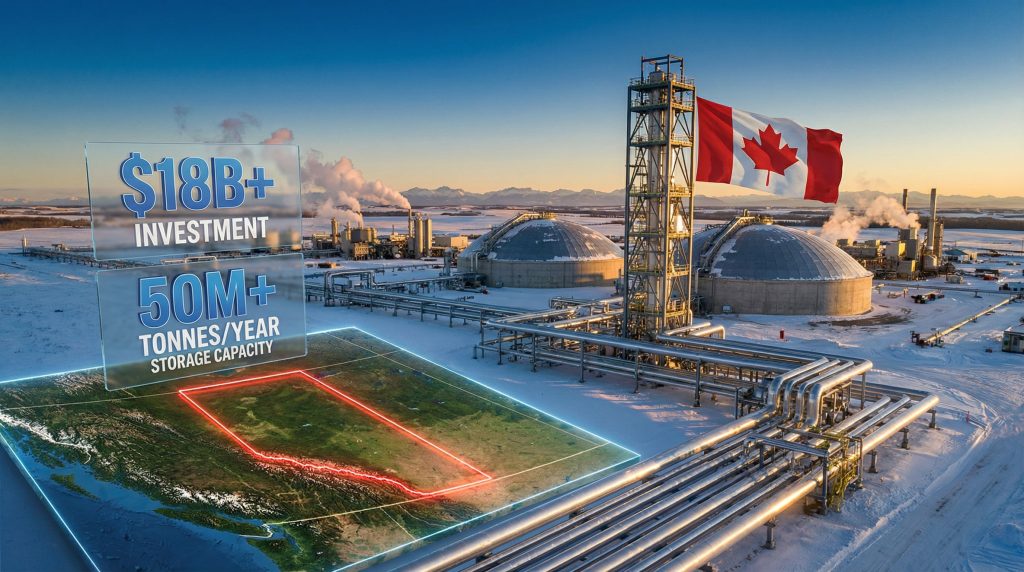
The scale of investment driving Alberta's carbon capture buildout reflects both government commitment and private sector confidence in long-term CCUS economics. The Pathways Alliance, comprising six of Canada's largest oil sands producers, represents the centrepiece of this investment wave with a confirmed C$16.5 billion commitment for integrated carbon capture and underground storage infrastructure.
| Funding Source | Investment Level | Target Applications | Expected Timeline |
|---|---|---|---|
| Pathways Alliance | C$16.5 billion | Oil sands operations | 2026-2030 |
| Federal-Provincial MOU | Government backing | Pipeline infrastructure | 2026-2027 |
| Industrial Hub Development | Multi-billion (estimated) | Diversified emitters | 2025-2030 |
Federal-Provincial Cost-Sharing Mechanisms
The federal-provincial memorandum of understanding signed in late 2025 establishes innovative cost-sharing arrangements that leverage government infrastructure investments to catalyse private sector CCUS deployment. The agreement provides federal backing for new pipeline infrastructure in exchange for provincial commitments to elevated industrial carbon pricing and specific timelines for carbon capture project completion.
This exchange mechanism addresses two critical challenges: reducing private sector infrastructure costs while ensuring policy certainty for long-term capital deployment. The federal government's pipeline backing reduces individual project economics by providing shared transportation infrastructure, while provincial carbon pricing escalation creates sustained economic incentives for CCUS investment over compliance cost payments.
Private Sector Capital Mobilisation Strategies
The Pathways Alliance consortium model demonstrates sophisticated private sector capital mobilisation for large-scale CCUS deployment. By pooling resources across six major producers, the consortium achieves economies of scale in capture technology procurement, pipeline infrastructure development, and storage site preparation that would be economically challenging for individual operators.
This collaborative approach reduces per-tonne carbon capture costs through shared infrastructure while distributing technical and regulatory risks across multiple participants. The consortium structure also creates stronger negotiating positions with technology suppliers and engineering contractors, potentially reducing overall project costs and implementation timelines.
What Makes This Investment Framework Unique?
Alberta's carbon capture buildout benefits from targeted innovation funding that addresses specific technical challenges in harsh operating environments. The province's extreme weather conditions, geological complexity, and integration requirements with existing industrial operations create unique engineering challenges requiring customised solutions.
Innovation investments focus on capture efficiency optimisation, pipeline integrity in freeze-thaw cycles, compression technology for varying gas compositions, and monitoring systems for long-term storage security. These technical developments position Alberta-based companies as global leaders in cold-climate CCUS applications, creating export opportunities for specialised equipment and expertise.
In addition, these decarbonisation benefits extend beyond immediate emission reductions to encompass long-term economic competitiveness and technology leadership positioning.
Industrial Transformation Through Strategic Hub Development
Alberta's carbon sequestration hub strategy transforms the province's industrial landscape by creating centralised infrastructure that serves multiple emitters across diverse sectors. This hub-and-spoke model maximises economic efficiency while enabling smaller industrial operations to participate in carbon capture programmes that would be economically unviable on individual facility basis.
Industrial Heartland Hub Network Development
The Industrial Heartland region northeast of Edmonton represents Alberta's most advanced carbon sequestration hub development, leveraging existing industrial concentration and pipeline infrastructure. This area's petrochemical facilities, refineries, and chemical processing operations generate consistent, high-volume CO₂ streams ideal for centralised capture and storage systems.
Hub development in this region benefits from established industrial infrastructure, skilled workforce availability, and proximity to suitable geological formations for long-term storage. The concentration of large industrial emitters creates economies of scale that justify substantial pipeline and compression infrastructure investments.
Regional hub distribution strategy extends beyond the Industrial Heartland to include central Alberta locations that serve oil sands operations, southern Alberta sites near chemical and fertiliser production, and potential future hubs supporting emerging hydrogen production facilities.
Hub Selection Criteria and Geological Advantages
"Alberta's competitive hub selection process evaluates multiple factors including geological storage suitability, emission source proximity, transportation infrastructure access, and long-term storage security to maximise industrial decarbonisation efficiency across the province."
Geological evaluation criteria prioritise formations with appropriate depth, porosity, and permeability characteristics for permanent CO₂ storage. Successful storage sites require thick, impermeable caprock layers to prevent CO₂ migration, adequate pore space for volume accommodation, and stable geological conditions over multi-decadal timeframes.
Transportation infrastructure considerations include existing pipeline rights-of-way, compression station locations, and interconnection opportunities with broader pipeline networks. Hubs located near existing energy infrastructure benefit from reduced development costs and accelerated permitting timelines.
Cross-Border Integration Opportunities
Alberta's hub development strategy considers potential integration with Saskatchewan's carbon capture initiatives and British Columbia's industrial decarbonisation programmes. Cross-border pipeline connectivity could create regional carbon management networks that optimise storage capacity utilisation and reduce overall system costs.
Saskatchewan's established CCUS operations at Boundary Dam and Quest provide operational experience and technical expertise that complements Alberta's larger-scale development plans. Potential pipeline connections between provinces could enable carbon transport from high-emission sources to optimal storage locations regardless of provincial boundaries.
Consequently, these developments align with broader industry evolution trends toward integrated regional approaches to emission reduction and resource management.
Carbon Pricing Mechanisms Driving CCUS Economics
Alberta's industrial carbon pricing framework creates economic incentives that make carbon capture technology deployment financially attractive compared to compliance cost payments. The Technology Innovation and Emissions Reduction (TIER) system establishes carbon pricing mechanisms specifically designed to encourage technology adoption over penalty payments.
TIER System Enhancement Mechanisms
The TIER framework operates on performance-based standards that reward facilities achieving emission reductions below established baselines while requiring higher-emitting operations to either purchase credits or pay compliance costs. This structure creates direct financial incentives for CCUS investment, as captured carbon reduces facility emission profiles and compliance obligations.
Enhanced TIER mechanisms specifically support carbon capture deployment through:
- Technology credit multipliers that provide additional compliance value for CCUS projects
- Banking provisions that allow facilities to store excess emission reduction credits for future use or sale
- Protocol recognition for various carbon capture and storage methodologies
- Revenue recycling that funds additional emission reduction technology development
Industrial Competitiveness Balance
Alberta's carbon pricing approach balances environmental objectives with industrial competitiveness concerns by providing transition periods, trade-intensive industry accommodations, and competitiveness provisions for facilities competing in global markets. This balanced approach maintains industrial investment attractiveness while creating sustained incentives for emission reduction technology adoption.
The province's carbon pricing escalation schedule provides predictable cost signals that enable long-term capital planning for CCUS projects while avoiding sudden price shocks that could undermine industrial competitiveness. Gradual price increases allow facilities to plan technology deployment timelines that optimise both emission reductions and economic performance.
Revenue Generation for Technology Scaling
Alberta's carbon pricing system generates substantial revenue streams that support additional emission reduction technology development and deployment. Revenue recycling mechanisms fund research and development programmes, provide capital grants for demonstration projects, and support infrastructure development that reduces individual project costs.
This reinvestment approach creates positive feedback loops where carbon pricing revenue accelerates technology development that reduces future compliance costs across the industrial sector. The system's design encourages early adoption of emission reduction technologies while building provincial expertise in carbon management systems.
Oil Sands Sector Leadership in Carbon Capture Integration
Alberta's oil sands producers are demonstrating global leadership in integrating carbon capture technology with large-scale hydrocarbon production operations. The Pathways Alliance consortium represents unprecedented collaboration among competing companies to address shared decarbonisation challenges through coordinated technology deployment and infrastructure development.
Pathways Alliance Consortium Strategy
The six-company Pathways Alliance collaboration creates shared infrastructure that reduces individual member costs while achieving collective emission reduction targets. This consortium approach enables participants to share technical risks, regulatory compliance costs, and infrastructure investments that would be challenging for individual companies to justify independently.
The alliance's underground storage strategy in northern Alberta leverages the region's favourable geology for permanent CO₂ sequestration over multi-decadal timeframes. Storage site selection prioritises formations with appropriate depth, pressure characteristics, and caprock integrity to ensure long-term containment security.
Collaborative benefits extend beyond cost sharing to include technology standardisation, joint procurement advantages, shared engineering expertise, and coordinated regulatory engagement. The consortium's collective negotiating power with technology suppliers and service providers creates opportunities for cost reductions and performance improvements across all participating operations.
Operational Integration Challenges and Solutions
Integrating carbon capture systems with existing oil sands operations requires sophisticated engineering solutions that maintain production efficiency while achieving substantial emission reductions. Key integration challenges include:
- Heat integration between capture equipment and thermal recovery operations
- Power requirements for compression and separation systems without compromising production energy needs
- Process optimisation to minimise energy penalties associated with carbon capture
- Maintenance coordination to prevent operational conflicts between production and capture systems
Solutions development focuses on heat recovery from capture processes, power generation optimisation, process integration modelling, and advanced control systems that optimise combined production and capture performance.
International Market Access Benefits
Oil sands producers increasingly recognise that carbon capture deployment provides competitive advantages in international markets where carbon intensity influences purchasing decisions. The Pathways Alliance project creates opportunities for marketing lower-carbon oil sands production to customers implementing supply chain emission reduction targets.
International social licence benefits extend beyond immediate market access to include investor relations improvements, regulatory risk reduction in export markets, and positioning for future carbon border adjustment mechanisms that may impose trade restrictions based on production emission intensity.
Agricultural Carbon Management Innovation
Alberta's carbon capture buildout extends beyond industrial applications to include agricultural sector innovations that address methane emissions from livestock operations and soil carbon sequestration opportunities. These agricultural applications demonstrate CCUS technology versatility while supporting rural economic development and emission reduction across multiple sectors.
Renewable Natural Gas Development
Agricultural methane capture projects convert livestock waste into renewable natural gas through anaerobic digestion processes that reduce emissions while generating clean energy. These projects address agricultural methane emissions while creating new revenue streams for farming operations and contributing to provincial renewable energy targets.
Typical RNG facilities serve multiple functions:
- Methane emission reduction from livestock waste management
- Grid-quality natural gas production for pipeline injection or local use
- Digestate production for high-quality organic fertiliser
- Odour reduction from concentrated animal feeding operations
Economic viability depends on facility scale, feedstock consistency, gas pricing agreements, and available government incentives for renewable energy production.
Livestock Methane Reduction Technologies
Advanced agricultural carbon management includes feed additives, breeding programmes, and management practices that reduce enteric methane emissions from ruminant livestock. These approaches complement waste-to-energy projects by addressing direct animal emissions through improved feed efficiency and digestive optimisation.
Research initiatives focus on:
- Feed supplement development that reduces methane production during digestion
- Genetic selection programmes for animals with lower emission profiles
- Pasture management systems that optimise carbon sequestration in grasslands
- Monitoring technologies for accurate emission quantification and verification
Soil Carbon Sequestration Potential
Alberta's prairie soils offer substantial carbon sequestration opportunities through improved agricultural practices that increase soil organic matter content. These practices include cover crop adoption, reduced tillage systems, diverse crop rotations, and integrated livestock grazing management.
Soil carbon programmes require robust measurement and verification protocols to ensure sequestration permanence and quantify emission reduction benefits. Satellite monitoring, soil sampling programmes, and modelling systems provide verification frameworks that support carbon credit generation for participating agricultural operations.
The next major ASX story will hit our subscribers first
Global CCUS Leadership Comparison
Alberta's carbon capture buildout positions the province among global leaders in CCUS technology deployment and investment scale. Comparative analysis reveals Alberta's competitive advantages while identifying opportunities for technology transfer and knowledge sharing with other leading jurisdictions.
| Region | Investment Scale | Technology Focus | Policy Framework |
|---|---|---|---|
| Alberta | C$16.5B+ | Oil sands integration | TIER + Federal MOU |
| Texas Gulf Coast | $12B USD | Industrial clusters | 45Q tax credits |
| North Sea | $15B USD | Offshore storage | Net zero mandates |
| Netherlands | $8B EUR | Port integration | EU ETS + subsidies |
Technology Transfer and Knowledge Sharing
Alberta's CCUS development benefits from international collaboration and technology sharing agreements that accelerate deployment timelines while reducing development costs. Partnerships with Norway's offshore storage expertise, Texas industrial cluster experience, and Netherlands port integration knowledge create opportunities for best practice adoption.
Knowledge sharing initiatives include:
- Joint research programmes addressing common technical challenges
- Workforce exchange programmes for specialised skills development
- Equipment standardisation to reduce manufacturing costs
- Safety protocol development for pipeline and storage operations
Export Potential for Alberta CCUS Expertise
Alberta's investment in carbon capture buildout creates export opportunities for specialised equipment, engineering services, and project management expertise in jurisdictions pursuing similar decarbonisation strategies. The province's cold-climate experience addresses unique challenges relevant to northern European, Russian, and Canadian Arctic applications.
Competitive advantages include integrated project experience, harsh environment equipment design, geological storage expertise, and regulatory framework development. These capabilities position Alberta-based companies for international CCUS project participation and technology licensing opportunities.
Long-Term Economic Projections and Impact Assessment
Alberta's carbon capture buildout generates substantial economic impacts through direct investment, employment creation, supply chain development, and positioning for long-term energy sector competitiveness. Economic modelling indicates significant GDP contributions and industrial transformation benefits extending well beyond initial construction periods.
GDP Impact Modelling Through 2030
Direct economic impacts from confirmed CCUS projects include construction employment, equipment procurement, engineering services, and ongoing operations positions. The Pathways Alliance's C$16.5 billion investment creates sustained economic activity across multiple sectors including:
- Construction and installation employment during facility development phases
- Manufacturing and procurement for specialised equipment and materials
- Engineering and professional services for design, permitting, and project management
- Operations and maintenance positions for long-term facility operation
Indirect economic benefits include supply chain development, technology company growth, workforce training programmes, and induced economic activity from increased employment and business revenue. Regional economic impacts concentrate in areas with major project sites while extending throughout the provincial economy through supply chain linkages.
Energy Security and Export Market Diversification
Carbon capture deployment enhances Alberta's energy security by maintaining industrial competitiveness while addressing emission reduction requirements. This positioning protects existing energy sector employment and investment while creating opportunities for technology export and low-carbon energy product development.
Export market diversification benefits include:
- Low-carbon oil and gas products for markets implementing carbon intensity requirements
- CCUS technology and expertise for international project development
- Clean hydrogen production using carbon capture integration
- Carbon management services for other jurisdictions developing CCUS programmes
Climate Risk Mitigation Value
Alberta's carbon capture buildout provides significant climate risk mitigation value by reducing emission intensity across major industrial sectors. This risk reduction protects against potential carbon border adjustments, trade restrictions, and investor divestment while positioning the province for sustained energy sector competitiveness.
Long-term value creation includes regulatory compliance cost avoidance, market access preservation, investor confidence maintenance, and technology leadership positioning that creates economic opportunities as global decarbonisation accelerates.
Technical Excellence Requirements for CCUS Success
Alberta's carbon capture buildout requires addressing complex technical challenges related to capture efficiency, transportation infrastructure, storage security, and system integration. Success depends on continuous innovation and rigorous safety protocols across all system components.
Geological Storage Security and Monitoring
Permanent CO₂ storage requires comprehensive geological characterisation, advanced monitoring systems, and long-term containment verification. Alberta's storage site development prioritises formations with proven integrity, appropriate pressure characteristics, and minimal risk of CO₂ migration.
Monitoring technologies include:
- Seismic monitoring systems for subsurface CO₂ plume tracking
- Pressure monitoring throughout injection and storage zones
- Geochemical analysis for groundwater protection verification
- Surface monitoring for any potential CO₂ seepage detection
Pipeline Infrastructure Safety and Integrity
CO₂ transportation pipeline systems require specialised design considerations for high-pressure gas transport, corrosion prevention, and safety systems that address unique properties of dense-phase CO₂. Alberta's pipeline development incorporates lessons learned from existing CO₂ pipeline networks while addressing cold-climate operational challenges.
"Total Containment Inc.'s CO₂ pipeline fracture prevention technology, supported by provincial innovation funding, addresses critical infrastructure integrity challenges that could otherwise limit CCUS network expansion across Alberta's industrial corridors."
Safety innovations include advanced leak detection systems, automatic shut-off valves, corrosion-resistant materials, and emergency response protocols specifically designed for CO₂ pipeline operations.
Capture Technology Efficiency Optimisation
Carbon capture efficiency optimisation focuses on reducing energy penalties associated with CO₂ separation while maintaining high capture rates across varying operational conditions. Technology development priorities include heat integration, solvent optimisation, and process control systems that maximise performance while minimising operational costs.
Advanced capture technologies under development include:
- Next-generation solvents with reduced energy requirements for regeneration
- Solid sorbent systems for specific industrial applications
- Direct air capture integration for negative emission applications
- Process optimisation software for real-time performance enhancement
Federal Policy Navigation and Implementation Timelines
Alberta's carbon capture buildout proceeds despite federal policy uncertainty in neighbouring jurisdictions, particularly following U.S. climate policy reversals under the Trump administration. The province's strategy emphasises policy certainty through long-term agreements while maintaining flexibility for changing international policy environments.
Cross-Border Policy Coordination
The shift in U.S. climate policy creates both challenges and opportunities for Alberta's CCUS development. While reduced U.S. emission reduction commitments might suggest decreased urgency for Canadian action, Alberta's government recognises that unilateral climate policy reversals are typically temporary and that maintaining technology leadership provides competitive advantages regardless of policy volatility.
Canadian-Alberta federal-provincial coordination focuses on maintaining project momentum through the April 2026 deadline for finalising Pathways Alliance details while providing flexibility for timeline adjustments based on technical requirements rather than policy pressures.
Long-Term Investment Framework Certainty
Regulatory certainty requirements for sustained private sector investment include predictable carbon pricing trajectories, stable storage liability frameworks, and consistent environmental permitting processes. Alberta's approach emphasises creating policy stability that enables long-term capital deployment despite external policy volatility.
Investment protection mechanisms include:
- Grandfathering provisions for projects achieving specific development milestones
- Carbon pricing certainty through multi-year pricing schedules
- Storage liability clarification defining government and private sector responsibilities
- Permitting streamlining for qualified CCUS projects
Implementation Milestone Management
The federal-provincial MOU established April 2026 as the target date for finalising carbon capture plan details and increased industrial carbon pricing frameworks. Government officials indicate flexibility in these timelines provided all parties demonstrate good faith efforts toward completion.
Successful implementation requires coordinating multiple complex processes including environmental assessments, engineering design completion, financing agreements finalisation, and regulatory approval acquisition. Timeline management focuses on critical path optimisation while maintaining technical and safety standards.
Strategic Success Metrics and Future Positioning
Alberta's carbon capture buildout success will be measured through emission reduction achievements, economic impact realisation, technology leadership establishment, and international competitiveness maintenance. These metrics provide accountability frameworks while guiding ongoing programme development and investment allocation.
Emission Reduction Targets and Verification
Quantified emission reduction targets require robust measurement and verification protocols that ensure CCUS projects deliver promised environmental benefits. Alberta's approach emphasises third-party verification, standardised methodologies, and transparent reporting that supports both regulatory compliance and international credibility.
Key performance indicators include:
- Annual CO₂ capture volumes from operational facilities
- Storage security verification through monitoring system data
- Emission intensity reductions across participating industrial sectors
- System reliability metrics measuring operational efficiency and uptime
Economic Transformation Benchmarks
Economic success metrics focus on GDP contribution, employment creation, export revenue generation, and industrial competitiveness maintenance. Regular economic impact assessments track progress against projected benefits while identifying opportunities for programme optimisation.
Benchmark categories include direct investment realisation, job creation across skill levels, supply chain development, technology company growth, and revenue generation from CCUS expertise export. These metrics inform ongoing policy development and resource allocation decisions.
Global Climate Leadership Strategy
Alberta's carbon capture buildout positions the province for global climate leadership through technology development, best practice demonstration, and international collaboration. Success in this area creates opportunities for policy influence, technology export, and partnership development with other jurisdictions pursuing similar strategies.
Leadership indicators include international project participation, technology transfer agreements, knowledge sharing initiatives, and recognition as a centre of excellence for cold-climate CCUS applications. These achievements support long-term economic development while contributing to global emission reduction objectives.
How much CO₂ can Alberta's CCUS network capture annually by 2030?
Current project commitments indicate potential annual capture capacity exceeding 10 million tonnes, with the Pathways Alliance project alone representing substantial volumes from oil sands operations. Additional industrial hub development could increase total provincial capacity significantly beyond initial projections.
Which industries benefit most from Alberta's carbon sequestration hubs?
Oil and gas operations, chemical production, cement manufacturing, and steel production represent primary beneficiaries due to high emission volumes and centralised operations. Agricultural applications through renewable natural gas development provide additional benefits for rural communities.
How does carbon capture technology affect energy production costs?
Initial implementation involves capital expenditure for capture equipment and energy penalties for system operation. However, avoided carbon compliance costs and potential revenue from low-carbon product marketing can offset these costs over project lifetimes.
What geological advantages make Alberta ideal for carbon storage?
Alberta's sedimentary geology provides extensive porous rock formations at appropriate depths with thick caprock layers for long-term CO₂ containment. The province's extensive geological survey data and existing subsurface infrastructure reduce storage development costs and risks.
This analysis reflects current publicly available information regarding Alberta's carbon capture initiatives. Investment decisions should consider additional factors including regulatory changes, technology developments, and market conditions that may affect project outcomes.
Ready to Capitalise on Next-Generation Energy Infrastructure Investments?
Alberta's carbon capture buildout represents the type of transformative industrial development that creates substantial investment opportunities for those positioned to identify them early. Discovery Alert's proprietary Discovery IQ model delivers real-time notifications on significant ASX mineral discoveries, helping investors recognise actionable opportunities in the evolving energy and resources landscape before broader market awareness develops. Begin your 14-day free trial today to ensure you never miss the next major discovery that could reshape investment portfolios.