May 21, 2026
The Industrial Challenge of Alkaline Waste Management
Modern aluminium production creates vast quantities of industrial byproducts that pose complex environmental management challenges. The Bayer process, which converts bauxite ore into alumina feedstock, generates approximately 0.7 to 2 tons of alkaline residue for every ton of alumina produced. This residue, known as red mud, contains concentrated heavy metals, corrosive chemicals, and radioactive materials that require specialised waste management solutions and containment protocols.
Chemical Composition and Environmental Hazards
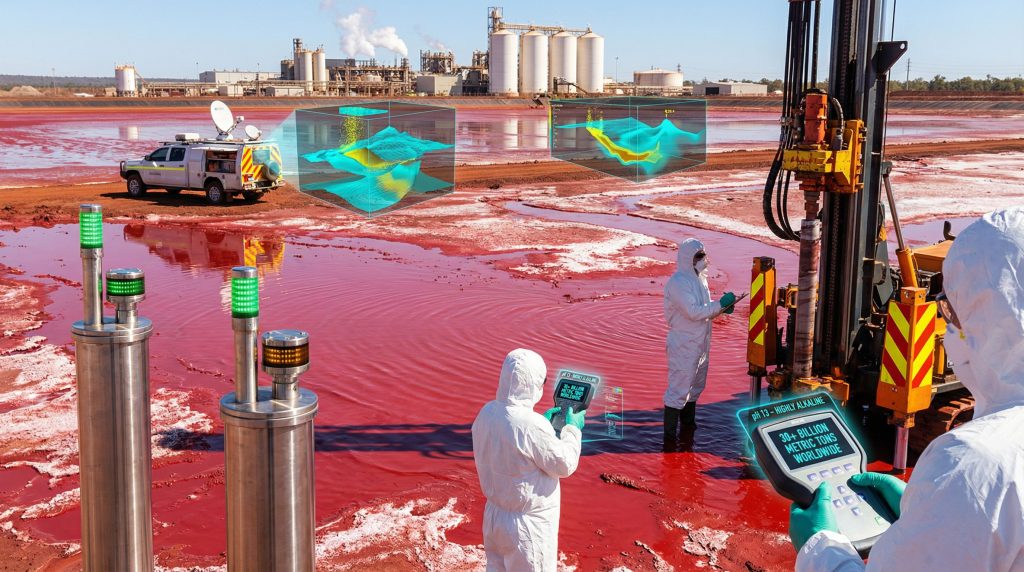
Red mud contamination investigation focuses on a complex mixture of industrial waste containing multiple hazardous substances. The alkaline byproduct maintains pH levels between 10 and 13, creating highly corrosive conditions that can degrade containment infrastructure over time. Laboratory analysis of red mud samples consistently reveals concentrations of cadmium, chromium, and arsenic that exceed both state and federal safety standards established for soil and water quality protection.
The global accumulation of this industrial waste has reached approximately 30 billion metric tons worldwide, representing one of the largest concentrated waste streams in modern manufacturing. Each operational alumina refinery contributes to this growing inventory through continuous production processes that generate fresh red mud daily alongside historical accumulations stored in containment facilities.
Key Contaminants Found in Red Mud:
• Heavy metals including cadmium, chromium, and arsenic
• Radioactive materials such as uranium-238 and thorium-232
• Corrosive chemical compounds from the Bayer process
• Iron oxide, silica, titanium oxides, and calcium compounds
• Dissolved sodium compounds contributing to high alkalinity
The presence of these multiple contamination categories creates compounding environmental risks when containment systems fail. Unlike single-contaminant industrial waste streams, red mud contamination research protocols must address simultaneous heavy metal toxicity, chemical corrosivity, and radioactive material dispersion through environmental pathways.
When big ASX news breaks, our subscribers know first
Environmental Contamination Pathways and Detection Methods
Red mud contamination investigation reveals multiple environmental exposure routes that require comprehensive assessment protocols. When containment systems fail, alkaline waste migrates through groundwater infiltration, surface water discharge, and atmospheric dispersal mechanisms that can impact extensive geographical areas beyond immediate facility boundaries.
Groundwater Infiltration Mechanisms
Subsurface contamination occurs when red mud seepage penetrates soil layers and reaches aquifer systems. The alkaline nature of the waste actively degrades clay-based containment barriers through ion exchange processes that destabilise clay mineral structures and increase permeability. Investigation protocols address this challenge through systematic soil boring programmes that assess contamination at specific depth intervals.
Standard Investigation Depth Protocols:
• 16-foot soil boring depths for comprehensive subsurface assessment
• Two-foot interval screening using handheld analyser technology
• Temporary groundwater monitoring well installation
• Laboratory analysis comparing results to stringent state standards
• Conversion of soil borings to permanent monitoring systems when warranted
The investigation methodology recognises that red mud contamination creates long-term groundwater quality impacts due to the persistent alkaline chemistry and heavy metal mobility under varying pH conditions. Furthermore, groundwater monitoring protocols must account for seasonal variations, aquifer flow patterns, and chemical interactions between red mud constituents and naturally occurring groundwater chemistry.
Surface Water Quality Degradation
Surface water contamination occurs when red mud discharge reaches drainage systems, wetlands, and larger water bodies. The material's high pH creates immediate water quality impacts by elevating receiving water alkalinity to levels between 8.5 and 13, far exceeding natural buffering capacity of most aquatic systems. Heavy metal dispersion occurs through both suspended particulate transport and dissolved-phase contamination depending on water chemistry conditions.
However, contamination assessment studies document cases where alkaline waste eroded large containment levees and flowed through local drainage systems reaching sensitive wetland areas. The corrosive properties of the material destroy vegetation along flow paths while creating erosion channels that facilitate continued discharge during precipitation events.
Surface Water Impact Assessment Parameters:
• pH elevation measurements in receiving waters
• Suspended solids concentration and particle size distribution
• Heavy metal concentrations in water column and sediments
• Aquatic ecosystem impact evaluation
• Vegetation mortality documentation along discharge pathways
Advanced Investigation Technologies and Regulatory Response
Modern red mud contamination investigation employs sophisticated detection technologies that identify contamination at concentrations requiring specialised analytical methods. Regulatory agencies specify investigation protocols that exceed minimum detection requirements by applying the most stringent available environmental quality standards to ensure comprehensive contamination characterisation.
Real-Time Screening and Laboratory Analysis
Field investigation teams utilise handheld X-ray fluorescence analysers for immediate lead screening during soil boring operations. This technology provides real-time elemental analysis feedback that guides sample collection decisions and identifies subsurface contamination zones with vertical precision. Laboratory analysis protocols expand screening to include comprehensive heavy metal panels using inductively coupled plasma mass spectrometry and atomic absorption spectrometry methods.
Environmental analytical chemistry experts recommend investigation methodologies that identify even slight contamination amounts by comparing laboratory results to Environmental Protection Agency highest quality levels rather than minimum remedial standards. In addition, this approach ensures detection sensitivity appropriate for protecting human health and environmental quality in areas with sensitive ecological resources or proximity to residential communities.
Investigation Technology Applications:
• Handheld XRF analysers for rapid field screening
• ICP-MS and AAS laboratory methods for quantitative analysis
• Geophysical survey methods for contamination mapping
• Remote sensing applications for large-scale assessment
• Quality assurance protocols ensuring analytical reliability
Regulatory Enforcement and Compliance Frameworks
Red mud contamination investigation triggers multi-level regulatory response involving both state environmental agencies and federal oversight authorities. Documentation of violations typically encompasses operational record-keeping failures, unauthorised discharge events, and inadequate containment maintenance that allows environmental contamination to occur.
State environmental quality departments maintain primary oversight responsibility for industrial facility compliance while coordinating with federal agencies on enforcement actions involving significant environmental impacts. Consequently, regulatory oversight guidelines require detailed inspection reports, laboratory confirmation of contamination, and assessment of environmental damage extent through formal investigation protocols.
Regulatory Response Timeline and Process:
• Initial violation discovery and documentation
• Formal inspection identifying specific infractions
• Warning letter issuance addressing compliance failures
• Investigation work plan submission and review
• Regulatory oversight of remediation implementation
• Ongoing monitoring and compliance verification
The enforcement approach typically allows facilities to implement corrective actions under regulatory oversight without requiring formal violation admissions, enabling environmental protection while maintaining operational continuity during remediation processes.
Long-Term Environmental and Health Impact Assessment
Red mud contamination investigation reveals persistent environmental impacts that extend far beyond initial discharge events. The alkaline chemistry and heavy metal content create long-term soil quality degradation, groundwater contamination plumes, and ecosystem damage that requires decades for natural recovery processes to restore baseline environmental conditions.
Human Health Risk Evaluation
Carcinogenic exposure pathways include direct contact with contaminated soil, inhalation of alkaline dust particles, and consumption of contaminated groundwater or surface water. The documented presence of cadmium, chromium, and arsenic in red mud samples creates multiple cancer risk categories requiring comprehensive health impact assessment and community exposure monitoring protocols.
Respiratory health impacts result from alkaline dust formation when dried red mud becomes airborne during wind events or mechanical disturbance. The high pH particles cause respiratory tract irritation and can contribute to long-term pulmonary health complications in exposed populations, particularly children and elderly individuals with existing respiratory conditions.
Health Impact Categories:
• Carcinogenic exposure through multiple pathways
• Respiratory irritation from alkaline dust inhalation
• Dermal contact risks from corrosive material exposure
• Contaminated water consumption health threats
• Community-wide exposure monitoring requirements
Ecosystem Recovery and Restoration Challenges
Vegetation destruction occurs immediately upon red mud contact due to the extreme alkalinity that disrupts plant cellular processes and soil microbial communities essential for plant nutrition. Recovery timelines extend over decades as affected soils require extensive pH neutralisation and heavy metal remediation before supporting healthy plant communities again.
Aquatic ecosystem impacts include fish mortality, benthic organism destruction, and food chain contamination that persists as heavy metals accumulate in sediments and bioaccumulate through aquatic food webs. Furthermore, wetland systems demonstrate particular sensitivity to red mud contamination due to their role as critical habitat for wildlife and their function in regional water quality maintenance.
For instance, advanced reclamation strategies have been developed to address these complex restoration challenges, incorporating both technological innovation and natural recovery processes.
Environmental recovery timelines and health impact assessments represent complex scientific analyses that may vary significantly based on site-specific conditions, contamination extent, and remediation effectiveness. These assessments should not be considered predictive of outcomes at specific contamination sites.
Case Study Analysis and Lessons Learned
Historical red mud contamination events provide critical insights into investigation methodologies, regulatory response effectiveness, and long-term environmental management strategies. The most significant documented red mud disaster occurred in Hungary's Ajka region in 2010, when 1 million cubic metres of alkaline waste escaped containment and contaminated 1,017 hectares of agricultural and residential land.
Investigation Methodology Evolution
The Hungary incident demonstrated the importance of comprehensive contamination assessment that addresses both immediate environmental damage and long-term groundwater protection. Investigation protocols developed following this event emphasise rapid response capabilities, community health protection measures, and enhanced containment design standards that prevent similar catastrophic failures.
Investigation Improvements Implemented:
• Enhanced early warning systems for containment structure monitoring
• Improved community evacuation and health protection protocols
• Advanced containment design standards including double-liner technology
• Real-time leak detection systems with automatic response capabilities
• Standardised environmental restoration techniques for large-scale contamination
Modern red mud contamination investigation incorporates these lessons learned through requirements for continuous structural integrity monitoring, enhanced containment systems, and emergency response planning that protects both environmental resources and human health during containment failures.
Prevention Strategies and Technological Solutions
Effective red mud management requires proactive contamination prevention through advanced engineering controls and alternative waste treatment technologies. The alumina industry increasingly focuses on circular economy innovations that convert red mud from waste liability into valuable industrial materials, reducing long-term environmental risk while creating economic value from byproduct streams.
Engineering Controls and Best Practices
Double-liner containment systems provide redundant protection against seepage by incorporating primary and secondary containment barriers with leak detection systems installed between liner layers. This technology enables immediate identification of primary liner failures before contamination reaches groundwater resources, allowing prompt repair and preventing environmental contamination.
Advanced Containment Technologies:
• Double-liner systems with intermediate leak detection
• Structural integrity monitoring using sensor networks
• Automated pH neutralisation systems for discharge control
• Heavy metal extraction and recovery technologies
• Volume reduction through dewatering and consolidation methods
pH adjustment technologies neutralise red mud alkalinity through controlled acid addition or carbon dioxide injection that reduces corrosive properties and heavy metal mobility. Consequently, these treatment methods create more stable waste forms that pose reduced long-term environmental risk while facilitating beneficial reuse applications.
Alternative Uses and Circular Economy Applications
Construction industry applications utilise treated red mud as supplementary cementitious material in concrete production, reducing cement requirements while providing waste volume reduction benefits. Geopolymer concrete development demonstrates promising results using red mud as both alkaline activator and supplementary binding agent in high-performance concrete formulations.
Beneficial Reuse Applications:
• Supplementary cementitious materials for concrete production
• Geopolymer concrete development and commercial application
• Soil amendment research for agriculture and land restoration
• Iron recovery and processing for steel industry feedstock
• Rare earth element extraction from red mud waste streams
Economic feasibility assessments indicate that beneficial reuse applications can offset red mud management costs while reducing environmental liability associated with long-term waste storage. However, these approaches require careful quality control to ensure that alternative uses do not create new environmental contamination pathways.
The next major ASX story will hit our subscribers first
Future Technological Developments and Industry Trends
Red mud contamination investigation methodologies continue evolving through integration of advanced detection technologies, predictive modelling capabilities, and innovative treatment approaches that address both existing contamination and prevention of future environmental impacts.
Emerging Detection and Treatment Technologies
Biotechnology applications utilise specialised microorganisms and engineered biological systems for heavy metal extraction and pH neutralisation in contaminated environments. These biological treatment methods offer potential advantages through lower energy requirements and reduced chemical additive usage compared to conventional remediation approaches.
Artificial intelligence applications in contamination monitoring enable predictive analysis of containment system performance, early warning of potential failures, and optimisation of investigation protocols based on site-specific conditions and historical performance data.
Technological Innovation Areas:
• Biotechnology applications for waste treatment and remediation
• AI-powered contamination monitoring and prediction systems
• Nanotechnology solutions for heavy metal extraction
• Advanced sensor networks for real-time environmental monitoring
• Predictive modelling for leak prevention and risk assessment
Global Industry Regulatory and Economic Trends
International cooperation frameworks increasingly emphasise technology transfer and best practice sharing among alumina-producing nations to improve global red mud management standards. These initiatives promote adoption of advanced containment technologies and investigation methodologies across all major alumina production regions.
Investment trends indicate growing industry commitment to zero-waste production goals through comprehensive byproduct utilisation and environmental impact elimination. For instance, economic incentives support development of profitable red mud utilisation technologies that transform waste management costs into revenue-generating opportunities.
Stability assessments continue to reveal the importance of ongoing monitoring and improvement of containment systems, particularly as existing facilities age and require enhanced maintenance protocols.
Future technology development timelines and regulatory changes represent speculative analysis based on current industry trends. Actual implementation schedules and regulatory requirements may differ significantly from projected scenarios.
Industry Development Priorities:
• Zero-waste alumina production technology development
• International best practice standardisation initiatives
• Economic incentive programmes for environmental compliance excellence
• Research and development investment in sustainable production methods
• Community engagement and transparency improvement programmes
The alumina industry faces increasing pressure to demonstrate environmental stewardship through proactive red mud contamination investigation, advanced prevention technologies, and comprehensive remediation of historical contamination. Success requires integration of technical innovation, regulatory compliance excellence, and community partnership approaches that protect both environmental resources and industrial competitiveness in global markets.
Additionally, sustainable mining practices demonstrate the importance of holistic approaches that address environmental, social, and economic considerations in industrial waste management strategies.
Red mud contamination investigation represents a critical component of responsible alumina production that balances industrial necessity with environmental protection through scientific rigour, technological innovation, and regulatory partnership. The continuing evolution of investigation methodologies, treatment technologies, and prevention strategies demonstrates industry commitment to sustainable production practices that protect human health and environmental quality for future generations.
Concerned About Environmental Risks in Mining and Industrial Sectors?
Discovery Alert's proprietary Discovery IQ model delivers real-time alerts on significant ASX mineral discoveries, helping investors identify companies with strong environmental management practices and sustainable operations. Start your 14-day free trial to discover mining companies leading in environmental stewardship and operational excellence.